Because I Said So
Part of the Parenting Styles Decoded series (Part 1)
When a child asks 'why?' and the authoritarian parent treats the question itself as disobedience.
Explanation
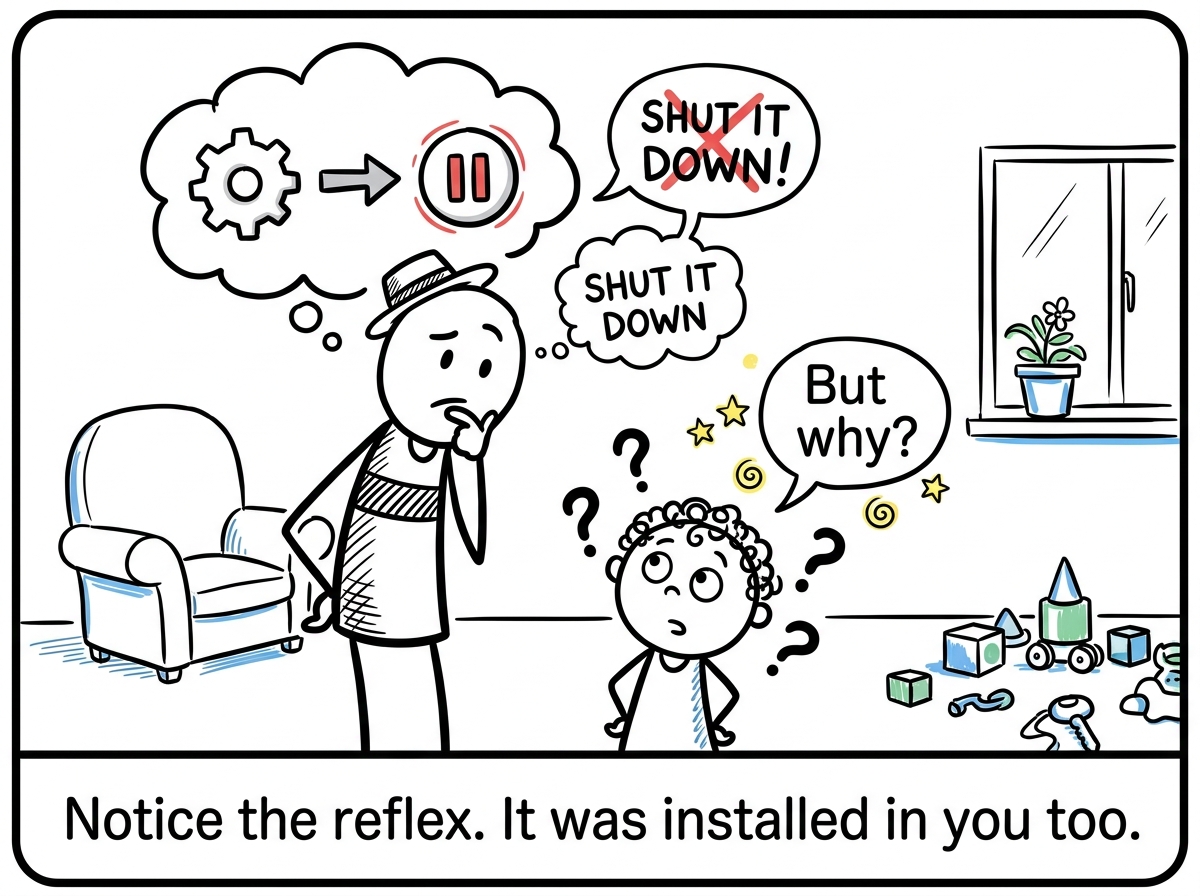
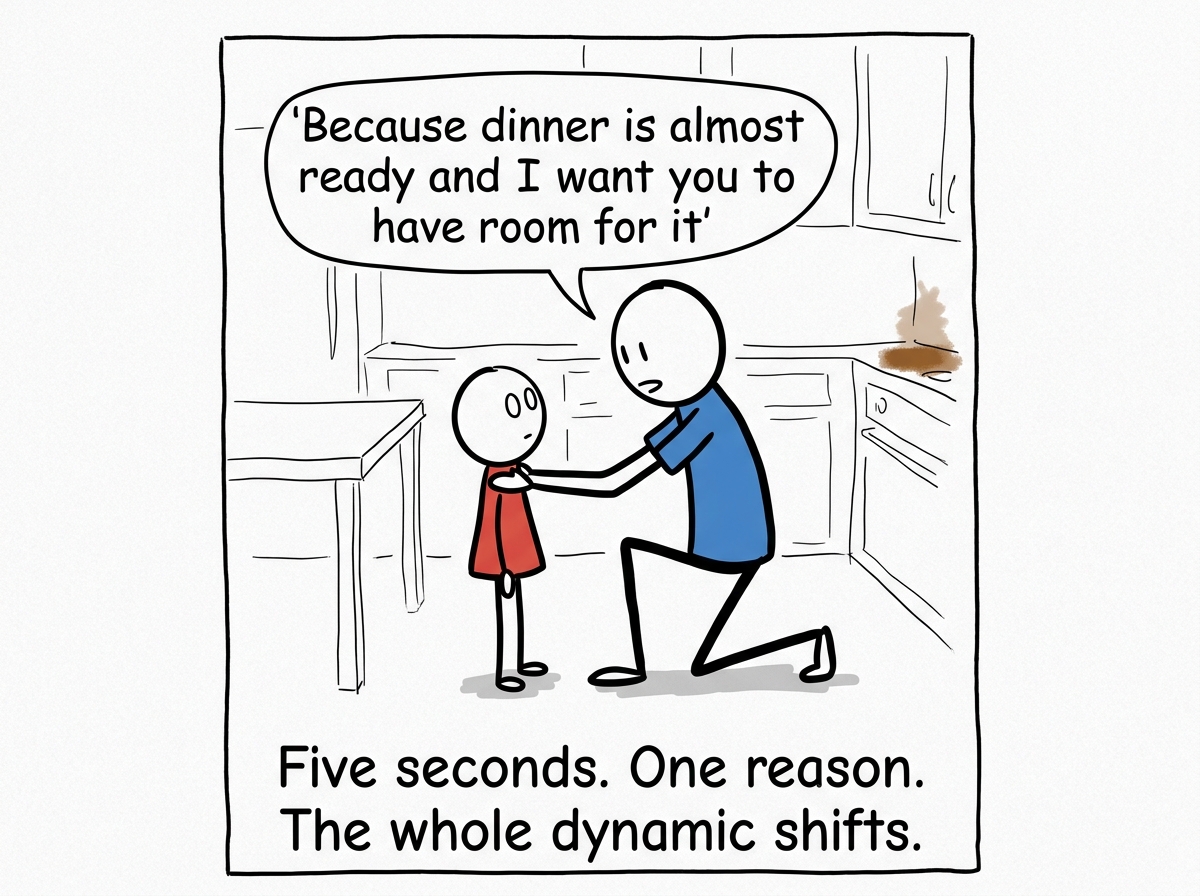
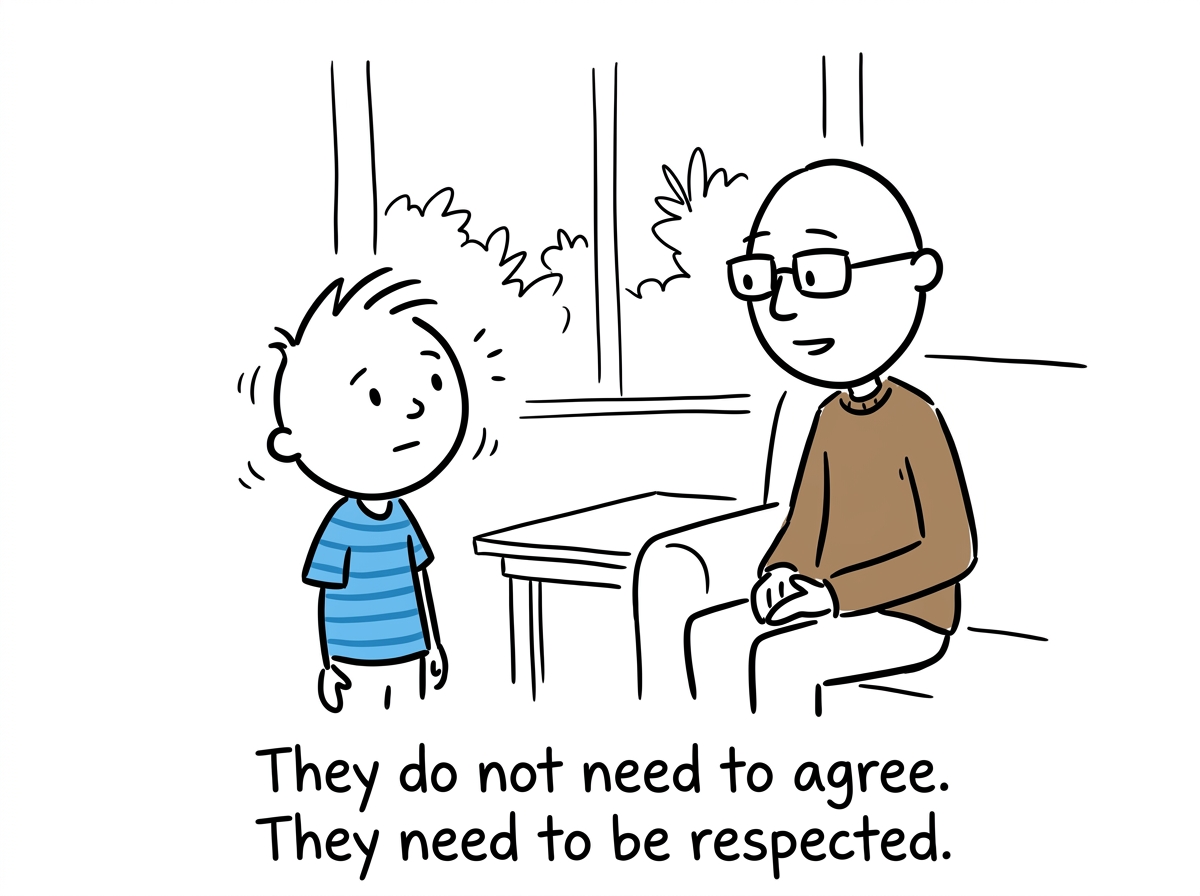
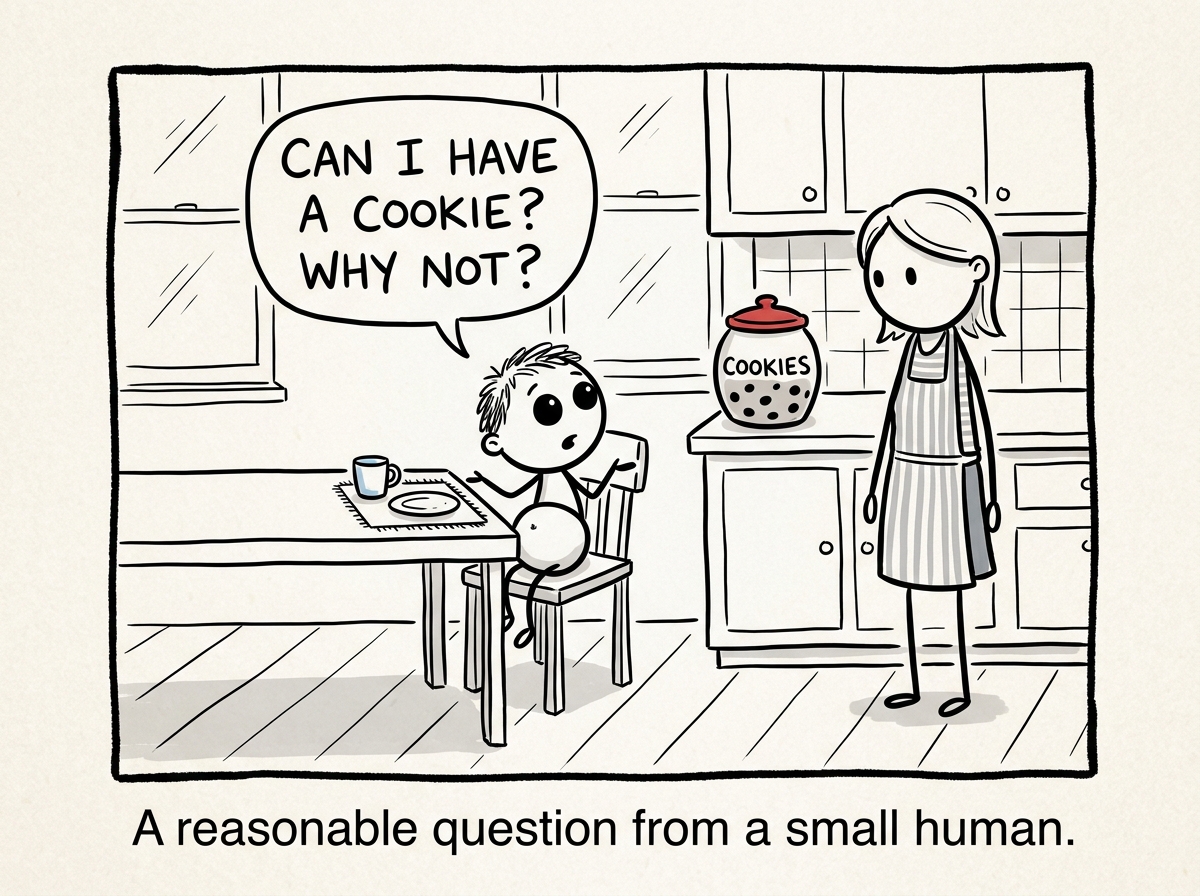
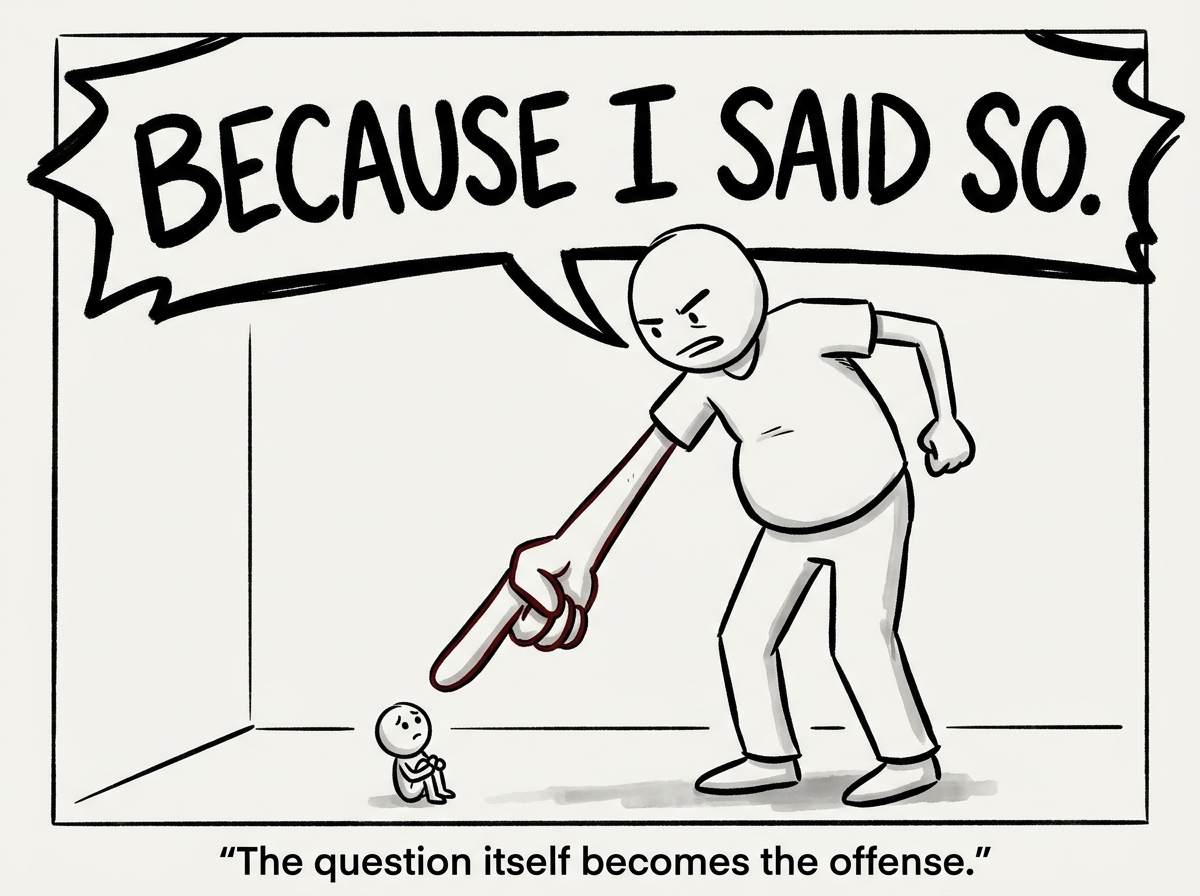
Your child asks you why they cannot have a cookie before dinner. It is a reasonable question from a small person trying to understand the world. But something inside you fires — not logic, but a reflex. 'Because I said so.' The conversation is over. The child learns that asking questions is the same as challenging authority, and authority does not explain itself. This is the hallmark of authoritarian parenting: rules without reasons, obedience without understanding. Diana Baumrind's research showed that authoritarian parents score high on demandingness but low on responsiveness. They enforce standards rigidly but offer little warmth or explanation. The child complies — not because they understand the boundary, but because they fear the consequence. Over time, this breeds either anxious compliance or explosive rebellion, depending on the child's temperament. What it rarely breeds is genuine self-discipline. The authoritative alternative is not removing the rule. The cookie still waits until after dinner. The difference is a five-second explanation: 'Because dinner is almost ready and I want you to be hungry for it.' It costs the parent almost nothing. But it teaches the child that rules have reasons, that their curiosity is welcome, and that authority can be firm without being frightening. That five seconds is the difference between obedience built on fear and cooperation built on trust.
Key Takeaway
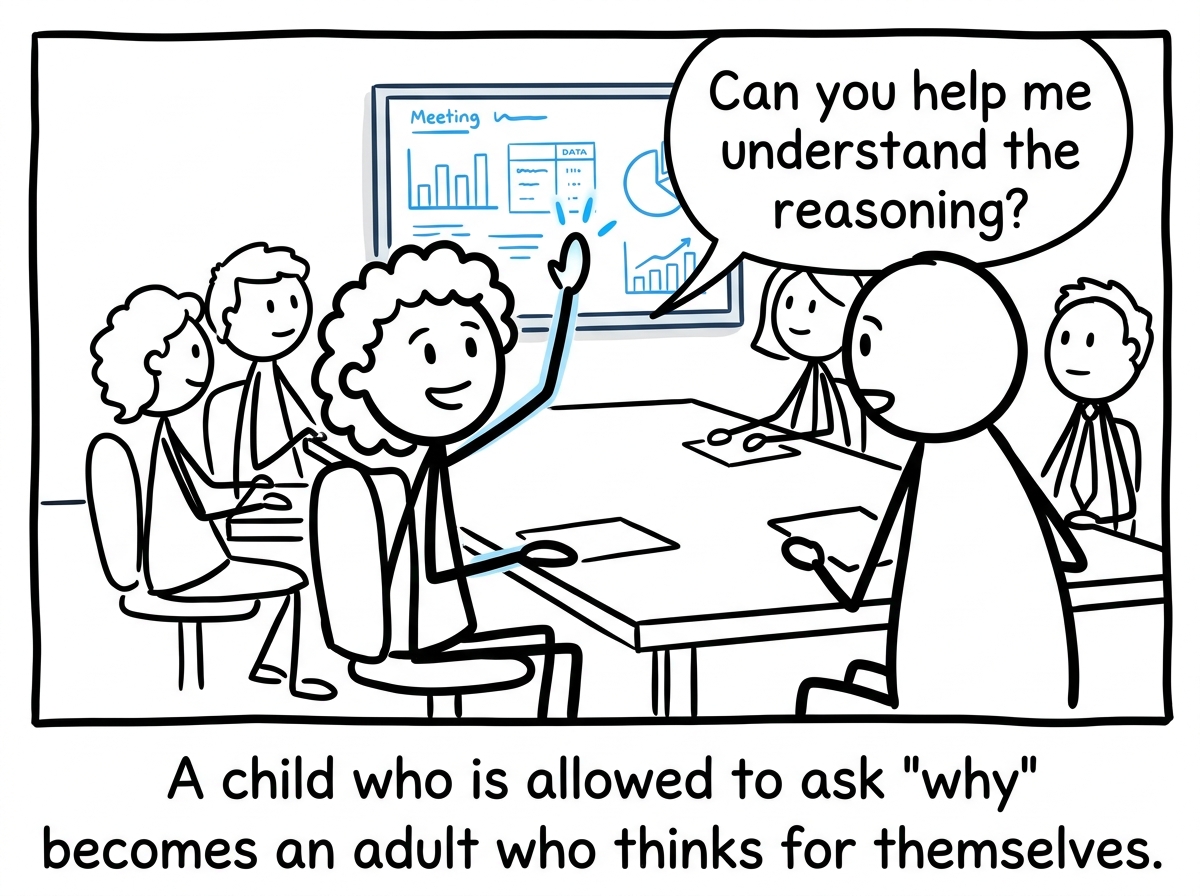
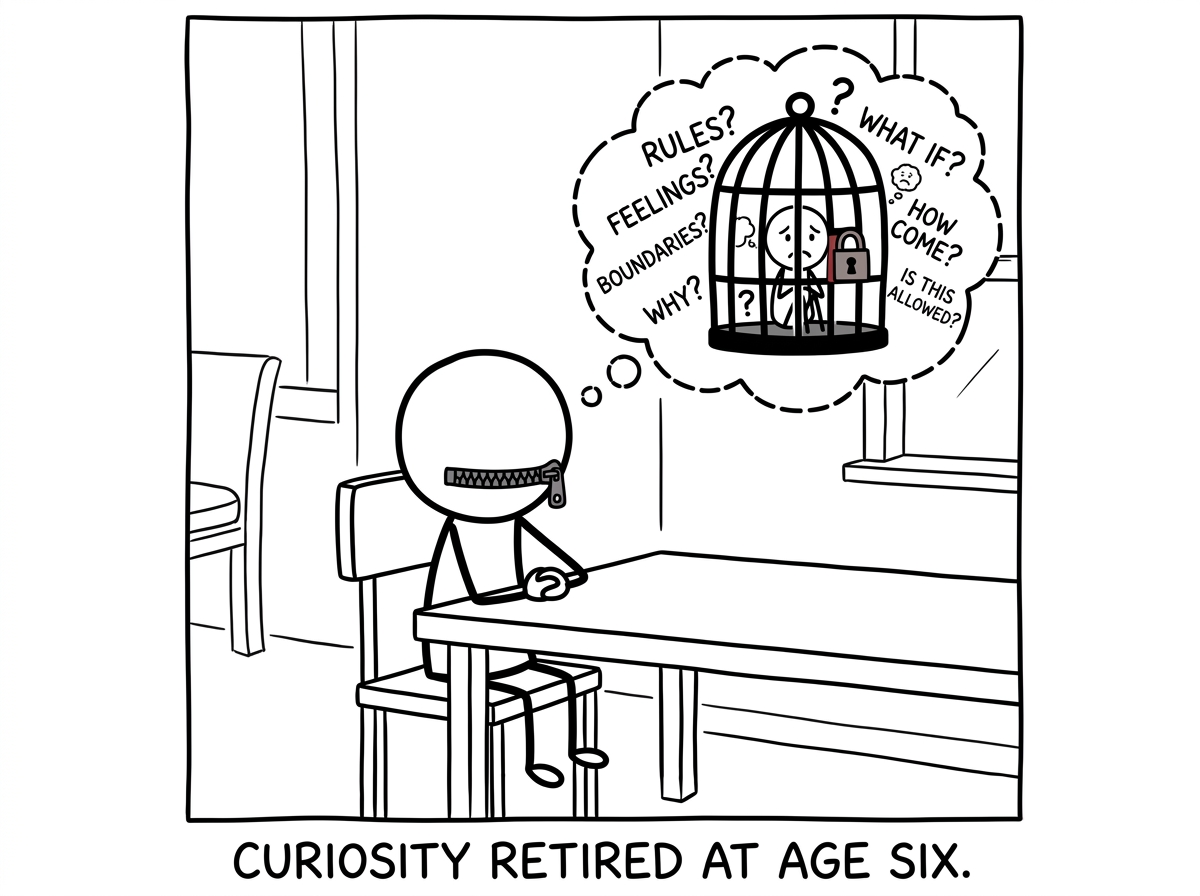
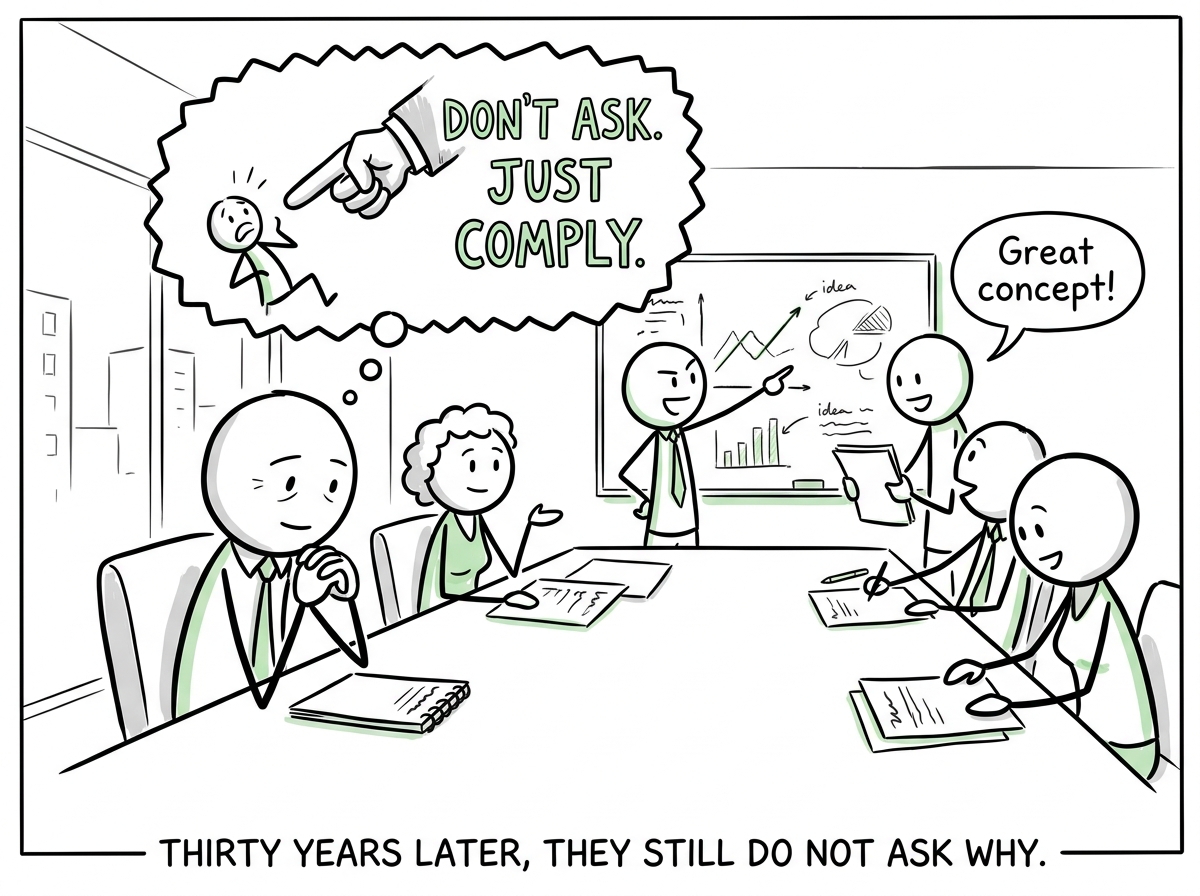
A child who is never allowed to ask 'why' learns that curiosity is disobedience — and carries that silence into adulthood.