
The Boundary Guilt Trap
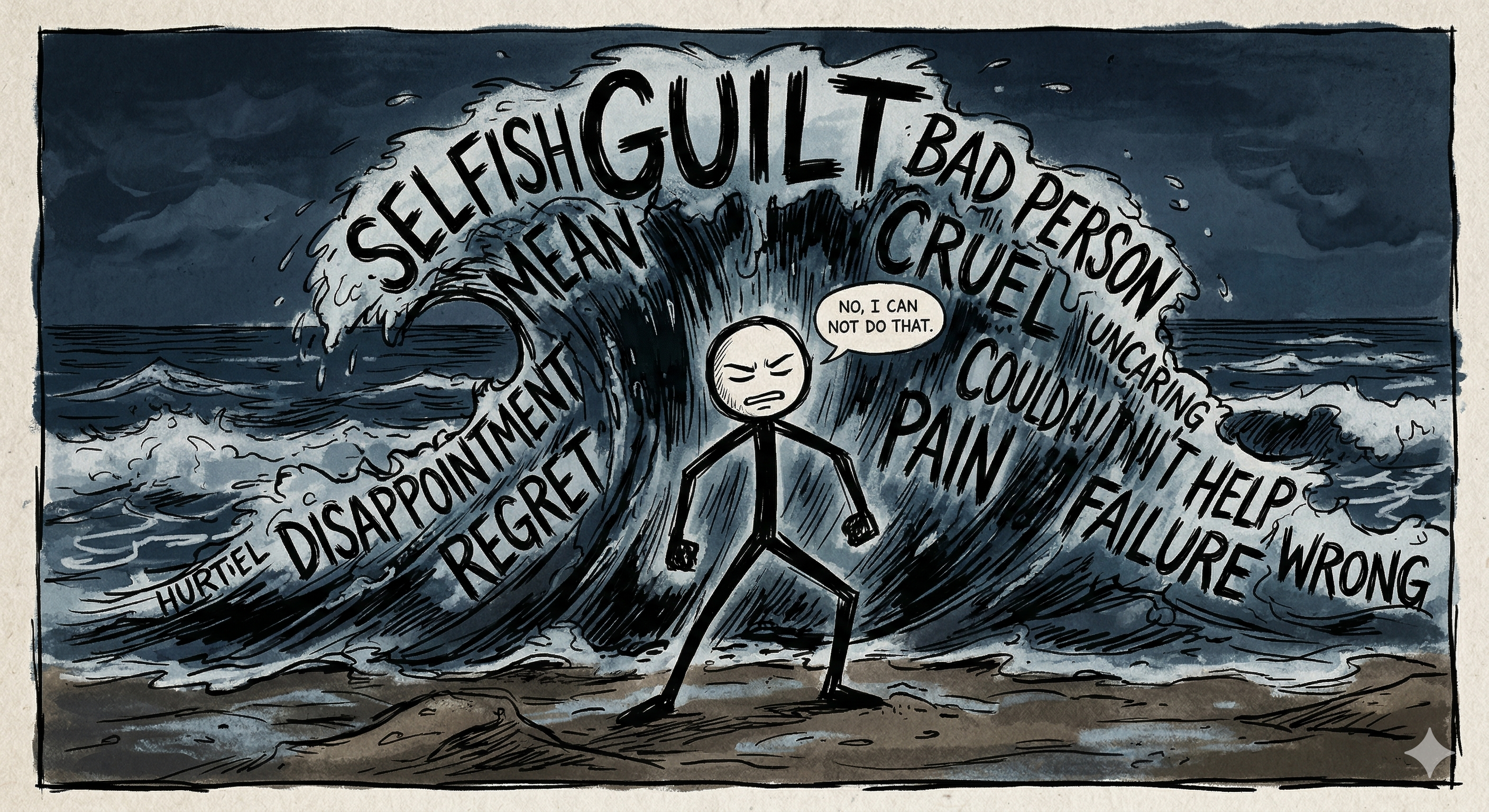
A person sets a healthy boundary and then immediately feels crushing guilt, as if saying no makes them a bad person.
Explanation
You finally said no. You turned down the extra project, declined the invitation you did not want to attend, or told your family member that their comment was not okay. And instead of feeling empowered, you feel terrible. Guilty. Like you just did something wrong. Welcome to the boundary guilt trap -- one of the biggest obstacles people face when learning to set limits. This guilt is almost always a signal that you are doing something new, not that you are doing something wrong. If you grew up in an environment where your needs were secondary -- where saying no meant being punished, shamed, or abandoned -- then your nervous system literally coded boundary-setting as dangerous. The guilt you feel is your old programming trying to pull you back to the familiar pattern. 'Go back! Apologize! Say yes! This is not safe!' your brain screams. But your brain is wrong. It is running an outdated script from a time when people-pleasing was a survival strategy. The guilt does not mean your boundary was wrong. It means your boundary was important. Healthy boundaries will almost always trigger guilt at first, especially if you have spent your life accommodating others. The guilt will decrease over time as your nervous system learns that setting boundaries does not lead to catastrophe. In the meantime, feel the guilt and hold the boundary anyway.
Key Takeaway
Guilt after setting a boundary usually means you did something new, not something wrong.
A stick figure feeling crushing guilt after saying no, recognizing it with a label: 'This is old programming, not proof I did something wrong'
The figure sitting with the guilt instead of retracting the boundary, hands on knees, breathing through the discomfort
Time passing -- the guilt cloud shrinking smaller with each boundary the figure sets and holds
The figure saying no with ease, a tiny wisp of guilt still present but no longer in control, standing tall