
The Nice Guy Contract
Part of the Covert Contracts in Relationships series (Part 2)
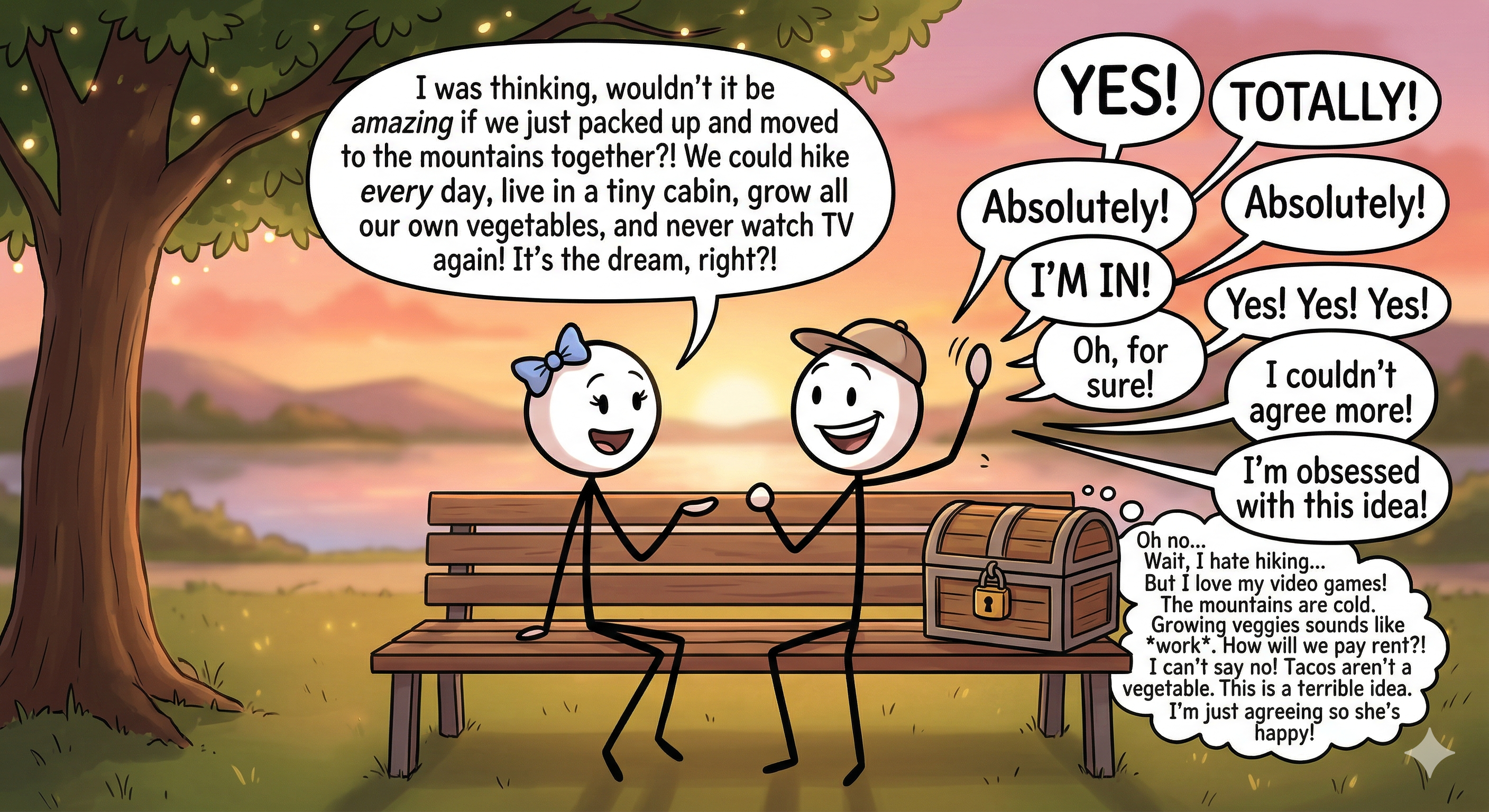
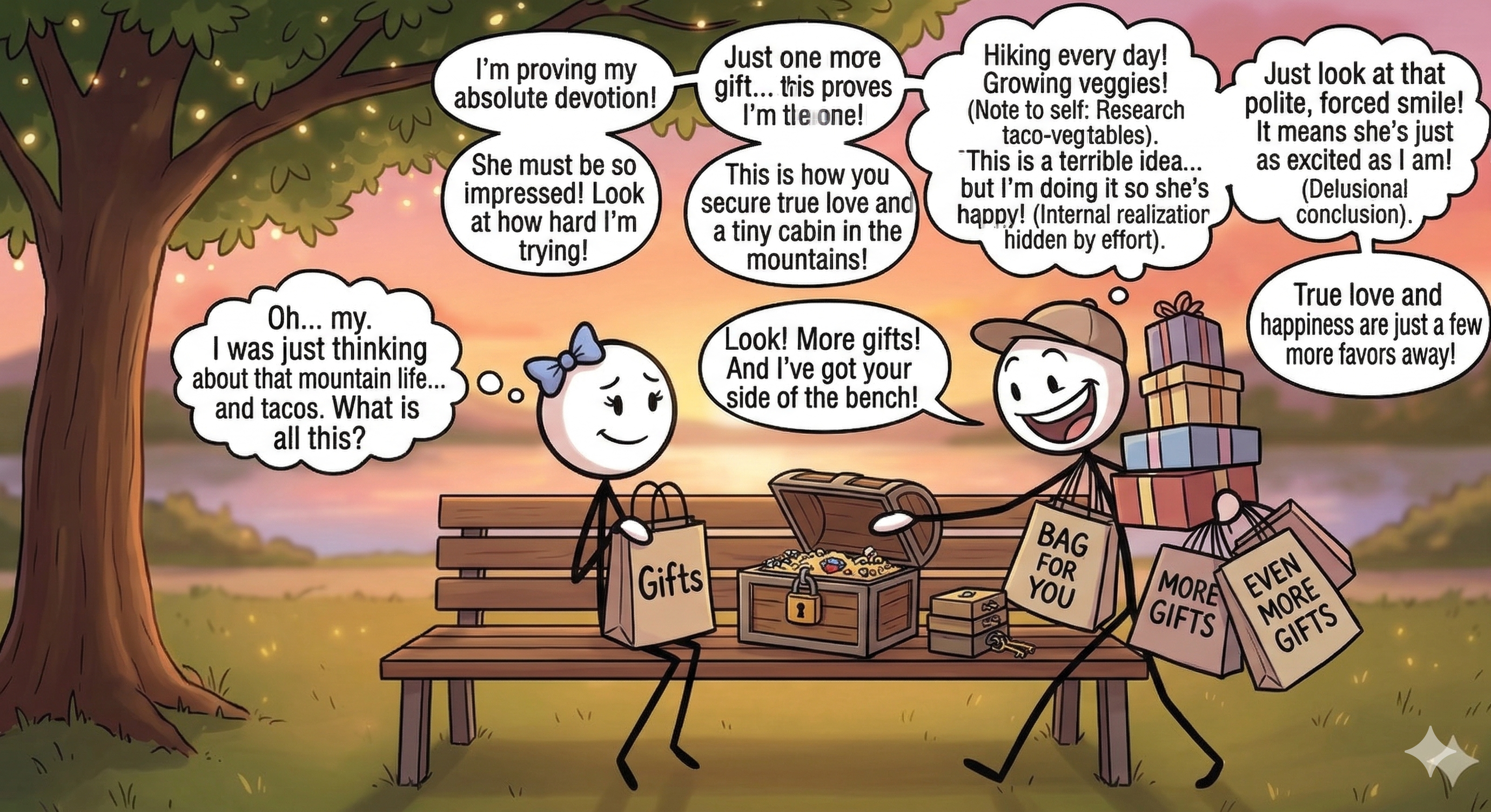
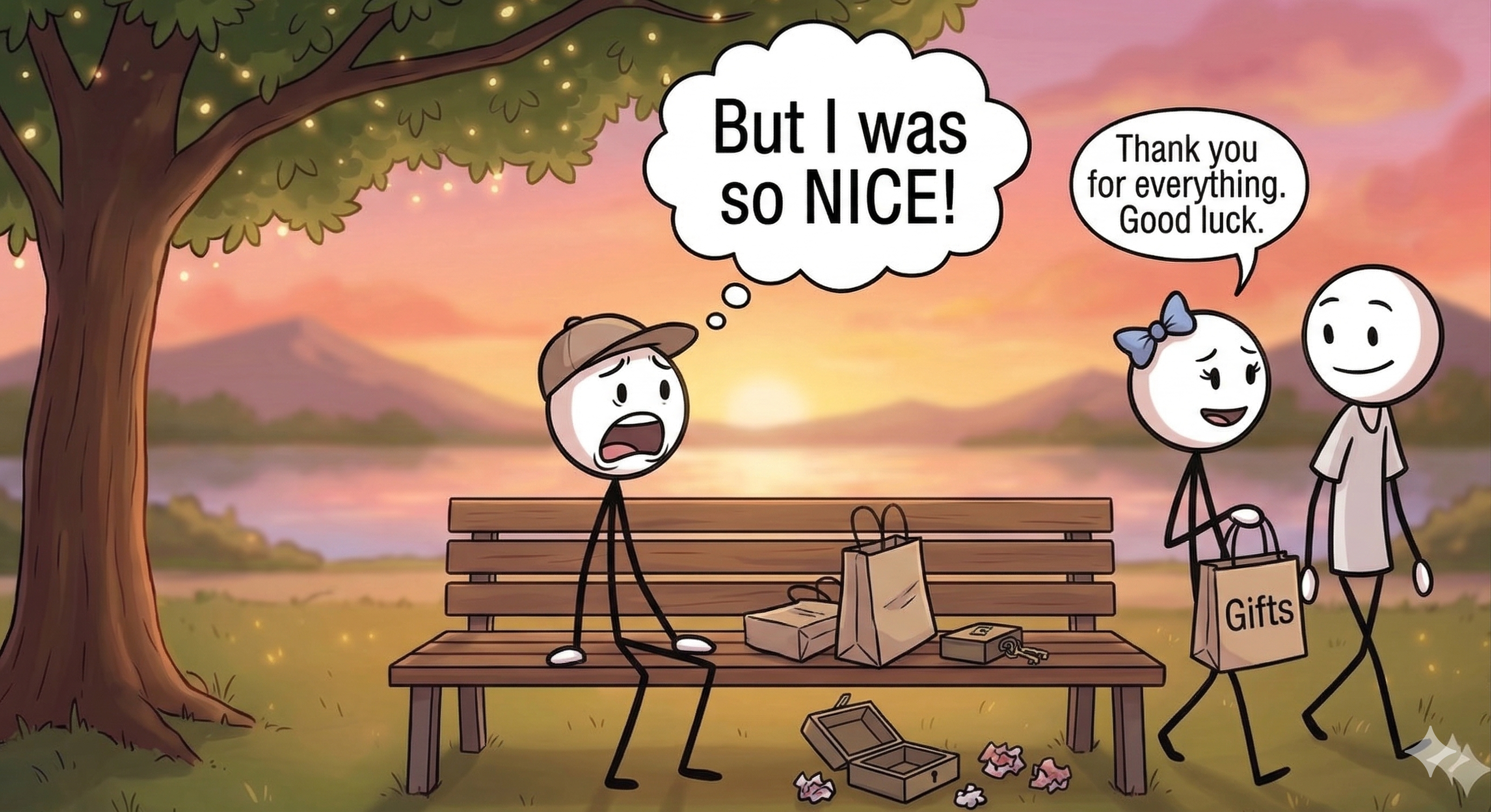
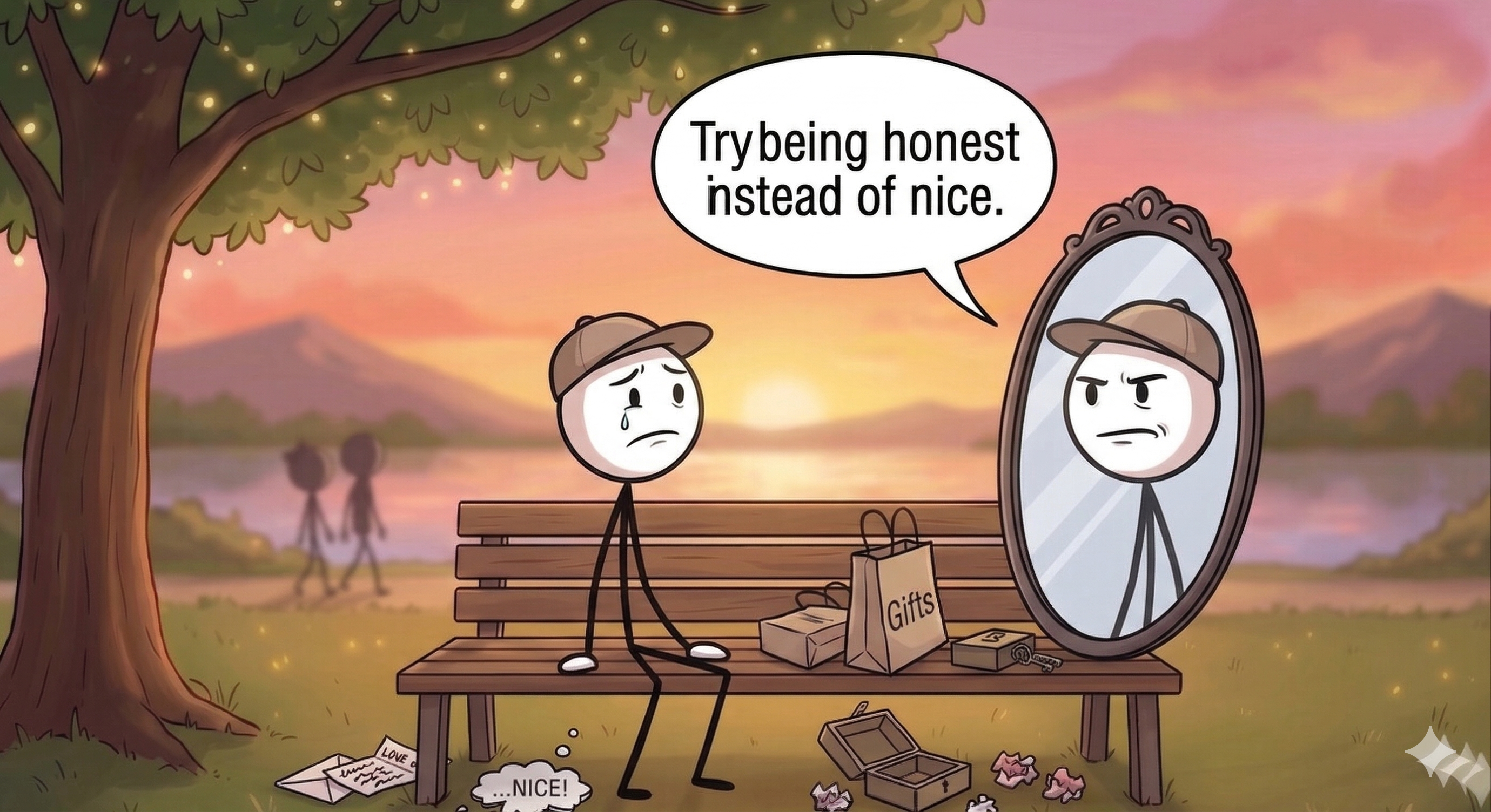
A person is excessively 'nice' with the hidden expectation that their niceness will be rewarded with love, attraction, or special treatment.
Explanation
The Nice Guy (or Nice Girl) Contract is one of the most pervasive covert contracts in dating and relationships. It works like this: 'If I am agreeable, accommodating, and never rock the boat, then the other person should love me, be attracted to me, or treat me as special.' The person suppresses their own opinions, preferences, and boundaries in order to be perceived as easygoing and likable. They say yes to everything. They never express disagreement. They become whoever they think the other person wants them to be. The problem is twofold. First, the other person never agreed to this deal. They are interacting with a curated version of you, not the real you. Second, this strategy is fundamentally dishonest -- not in a malicious way, but in a self-defeating way. You are not being kind because you genuinely want to be kind. You are being kind because you want something in return. When the reward does not come -- when the other person is not attracted to you, or does not treat you as special -- you feel cheated. 'But I did everything right! I was so nice!' The antidote is not to become a jerk. It is to become honest. Express your real opinions. Set real boundaries. Let people see the actual you, not the performance of niceness. Genuine kindness does not keep a ledger. If your niceness comes with an unspoken invoice, it is not kindness -- it is a strategy.
Key Takeaway
Niceness with a hidden agenda is not kindness -- it is a transaction the other person never agreed to.
A stick figure looking at their locked box of real opinions and thinking 'What do I actually think about this?'
The figure expressing a genuine disagreement in a conversation, saying 'Actually, I see it differently' with a nervous but honest face
The figure setting a real boundary, saying 'I can not do that this week' instead of saying yes with hidden resentment
The figure in a conversation being authentically themselves, imperfect but real, and the other person leaning in with genuine interest