The Wrong Kind of Success
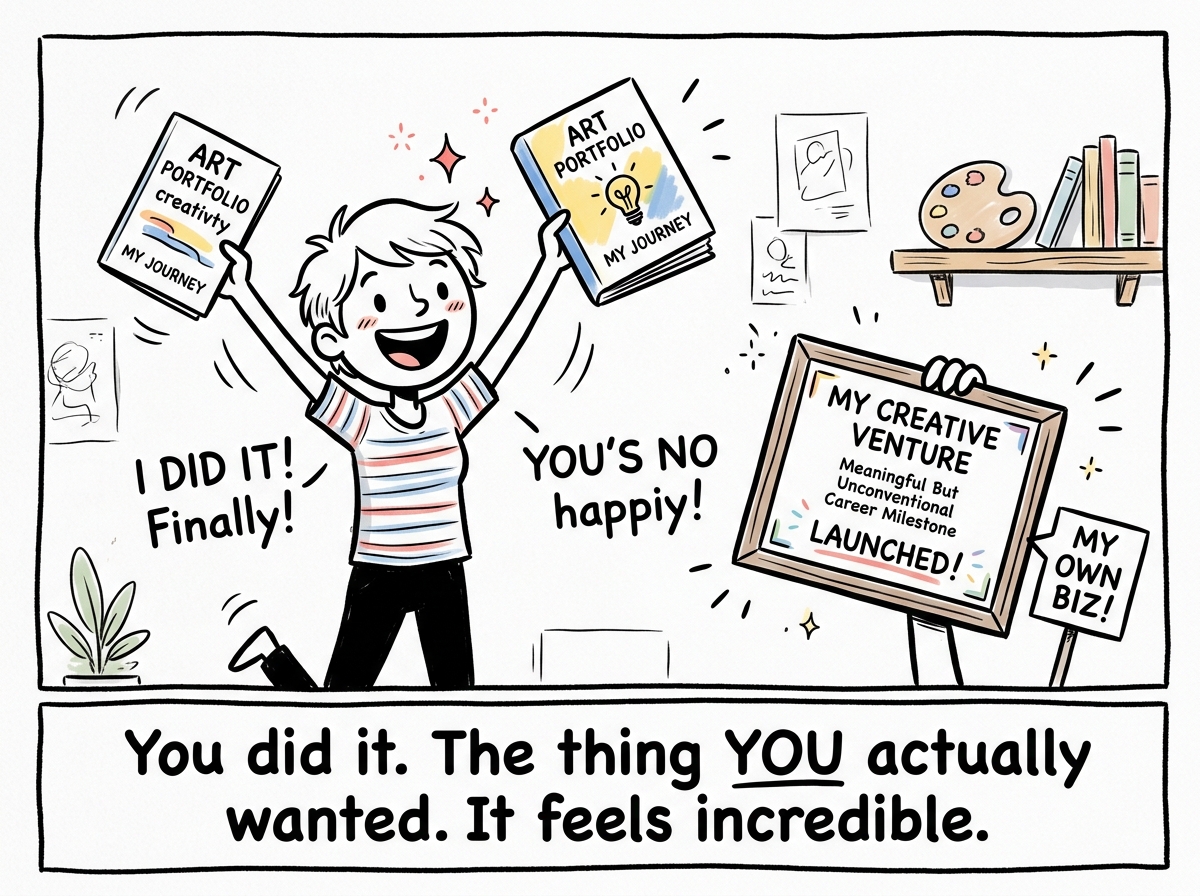
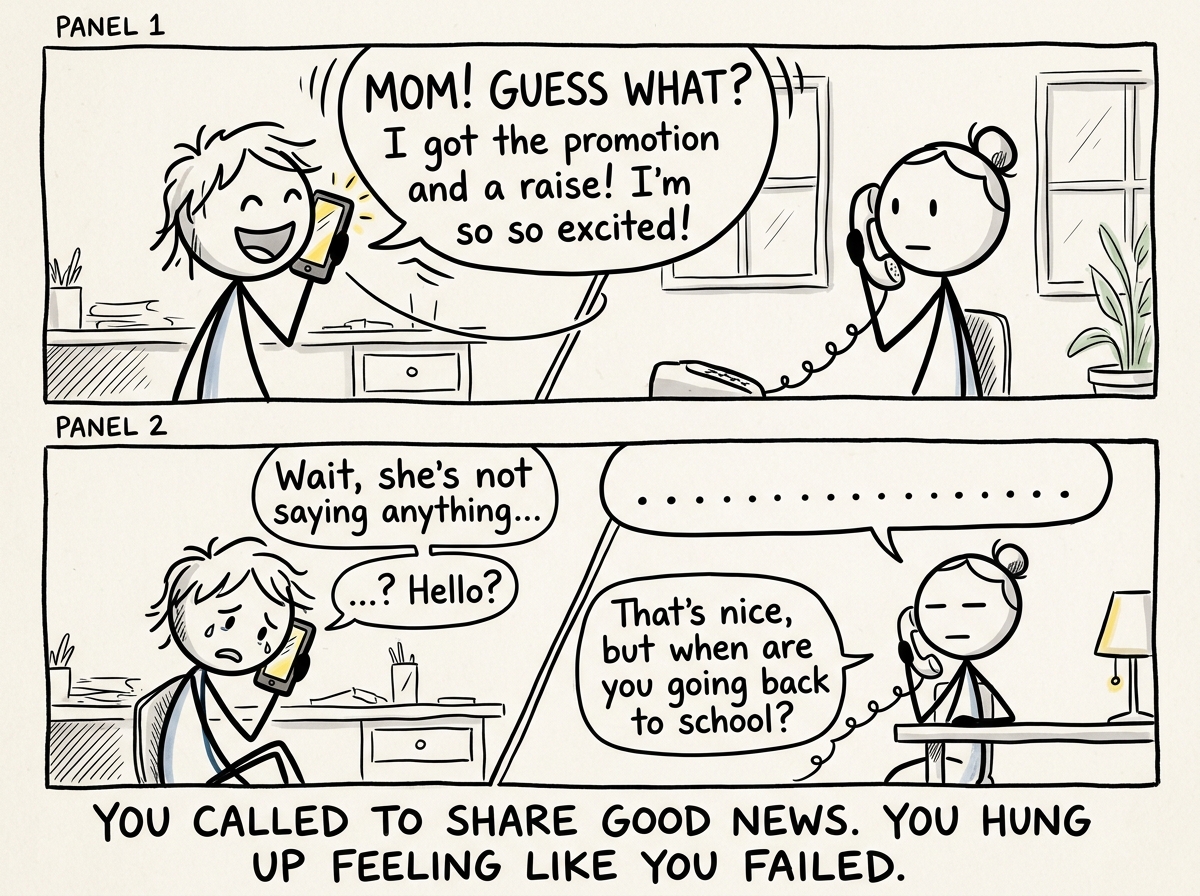
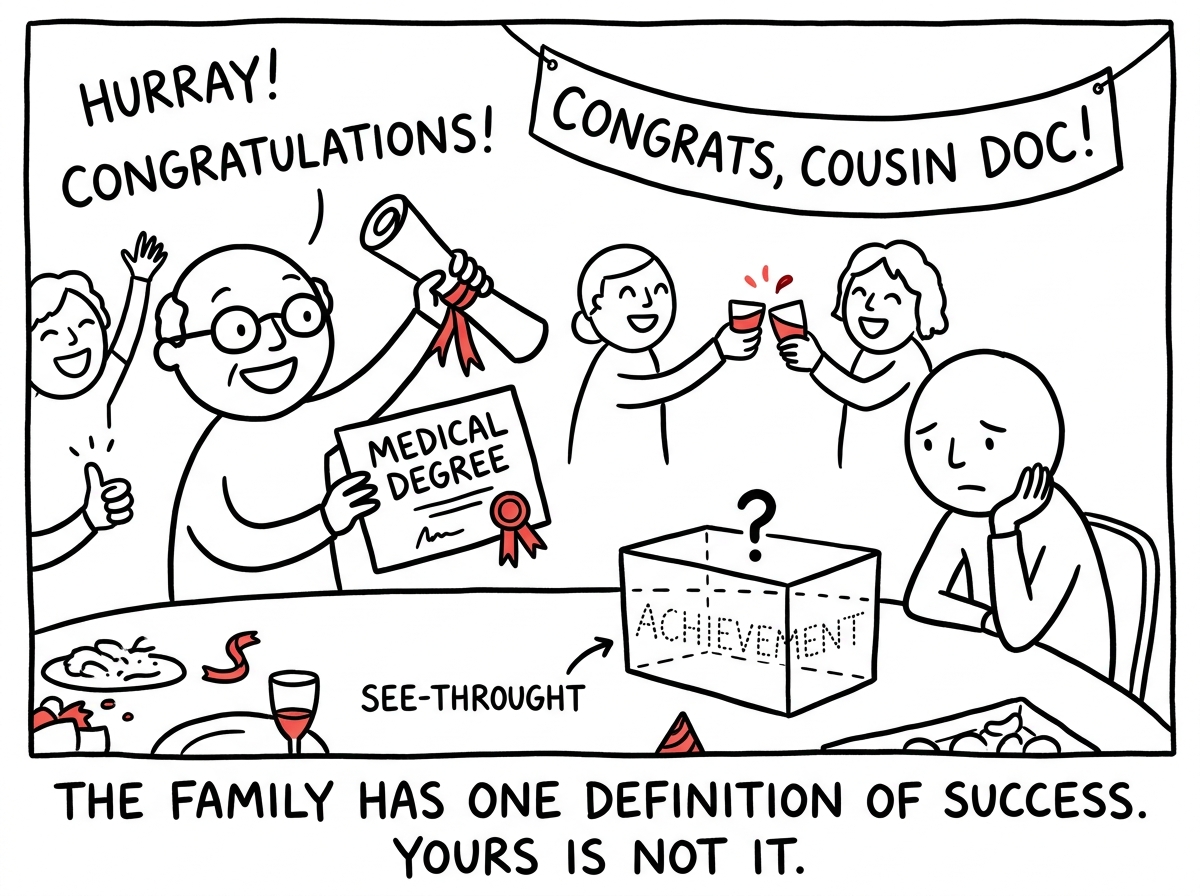
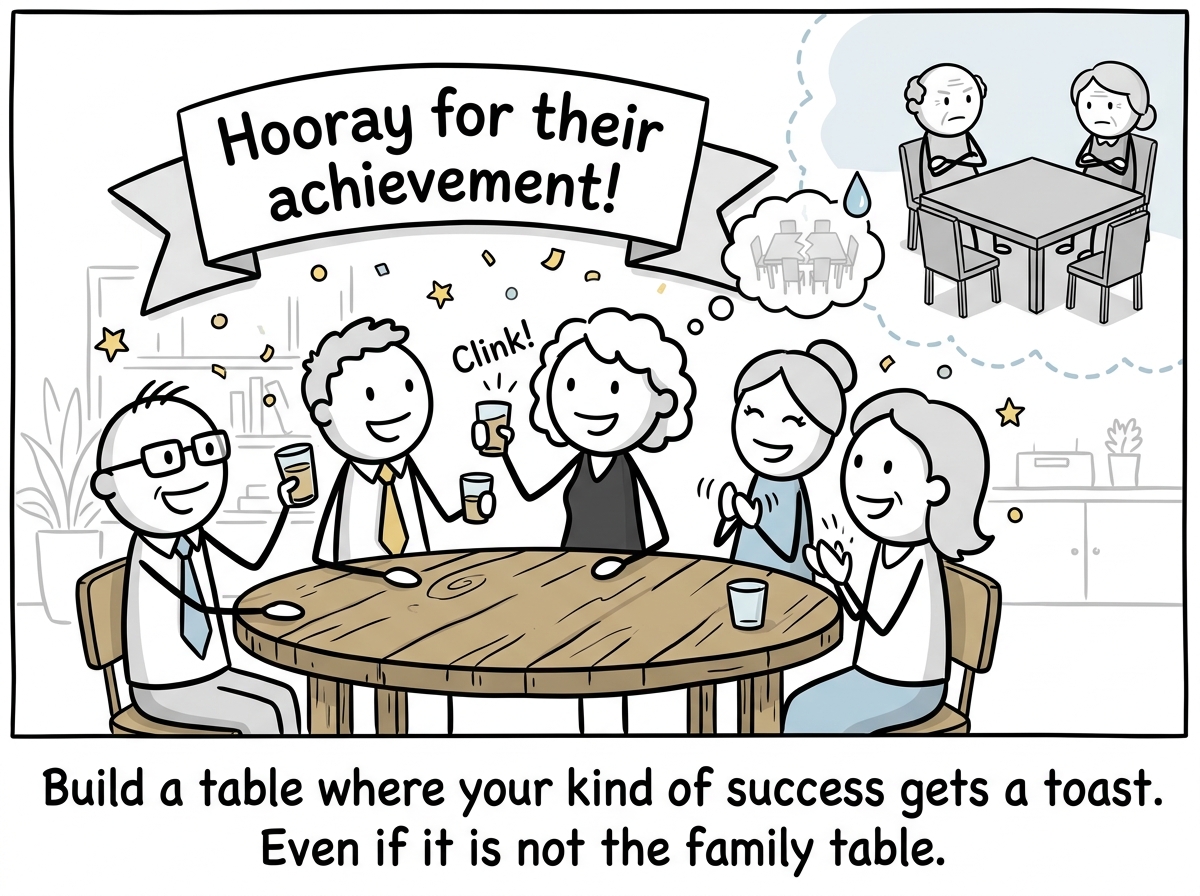
A person achieves something meaningful to them but outside their culture's definition of success, and the pride they feel is immediately replaced by shame when no one celebrates.
Explanation
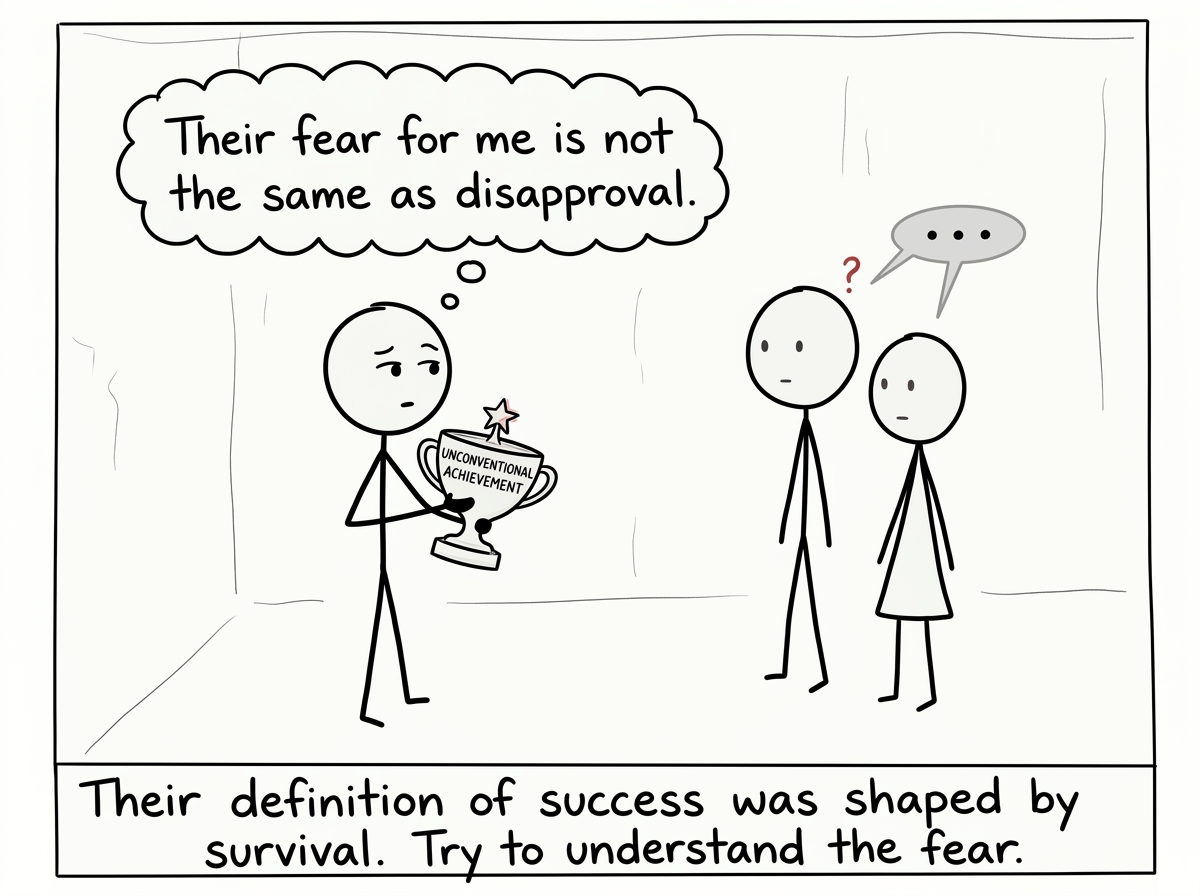
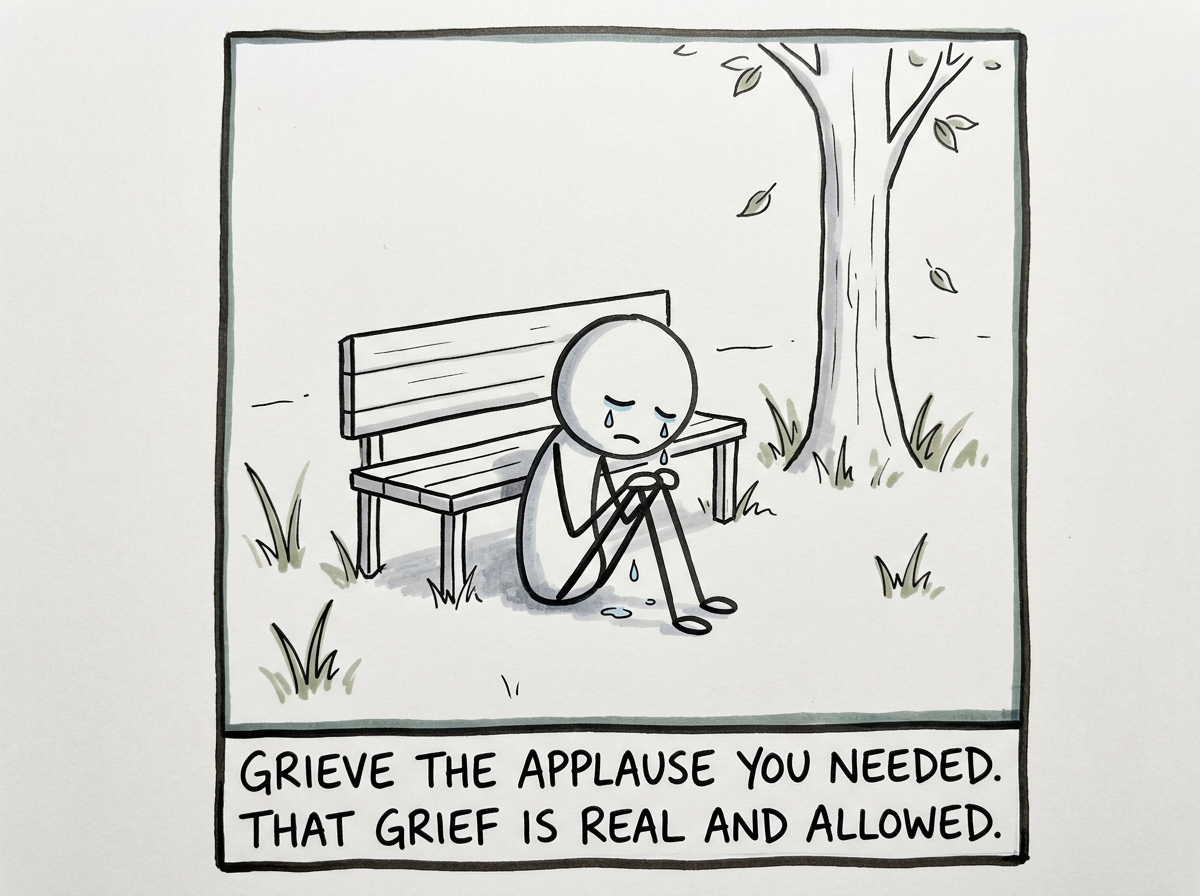
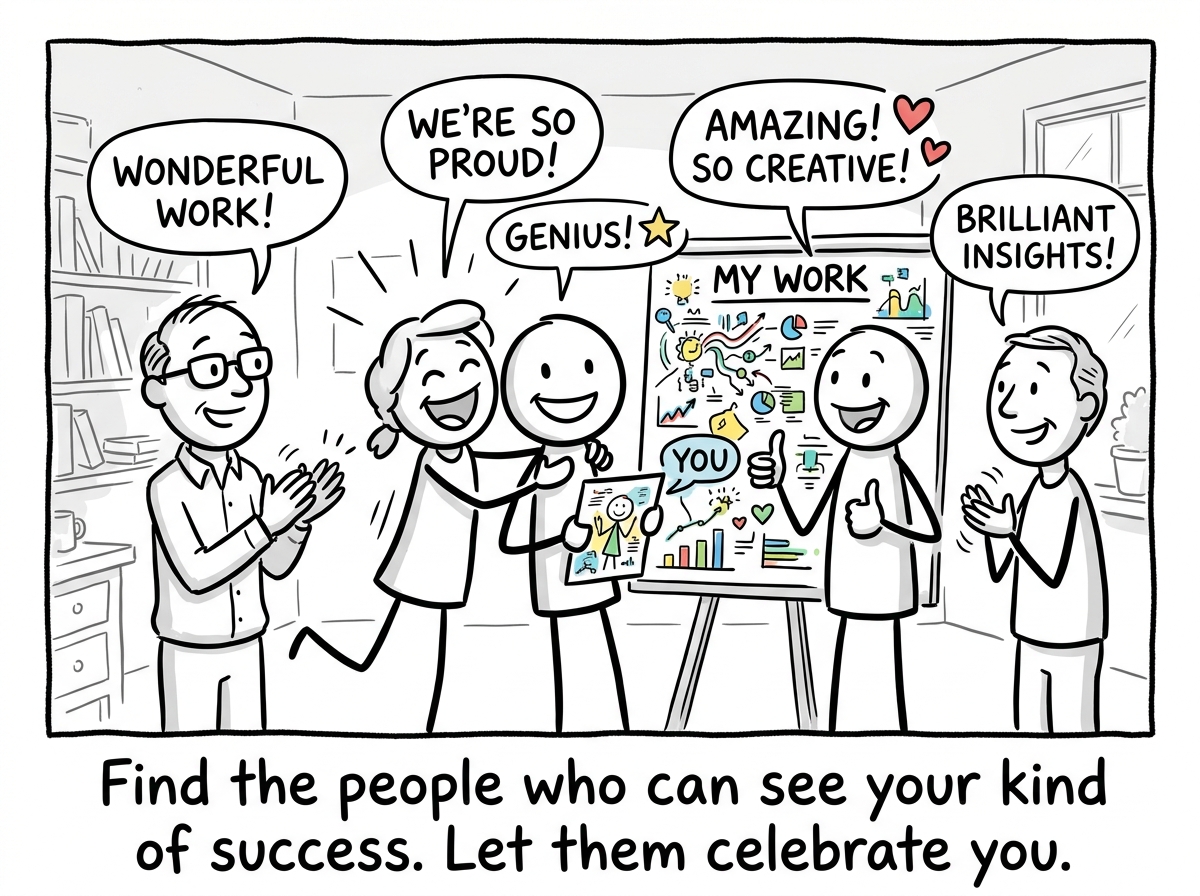
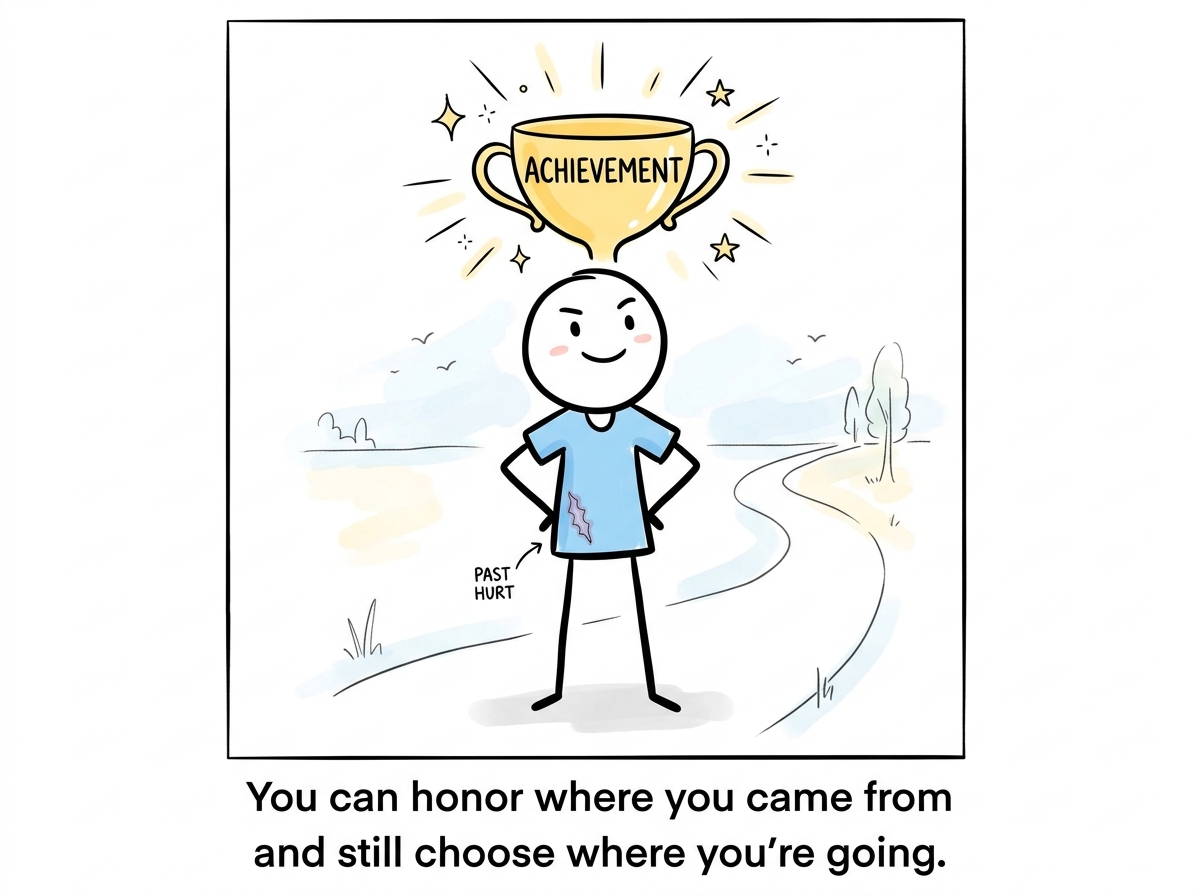
You got the job you actually wanted. You are a working artist. You pay your bills, you love what you do, and for one shining moment, you feel proud. Then you call home. The silence on the other end tells you everything. Your father asks when you are going back to school. Your mother says her friend's daughter just became a doctor. You hang up and the pride curdles into something heavier: the shame of succeeding in a way your culture does not count. Cultural definitions of success are powerful because they are rarely stated outright -- they are absorbed. You learn which careers get celebrated at family gatherings and which ones get explained away. You learn which milestones earn pride and which earn a polite change of subject. When your achievement falls outside those categories, you do not just miss the celebration -- you absorb the message that what matters to you does not matter to the people who matter most. Psychologists studying identity conflict in multicultural individuals have found that this disconnect is a significant source of depression and anxiety. Finding peace with the wrong kind of success means grieving the approval you may never receive while choosing to validate yourself anyway. It means recognizing that your family's definition of success was shaped by their own survival story -- scarcity, immigration, class struggle -- and their fear for you is not the same as disapproval. And it means building a circle of people who can celebrate what your family cannot, so you are not carrying your pride alone.
Key Takeaway
Succeeding in a way your culture does not recognize is still success -- it just comes without the applause you were raised to need.