The Default Parent
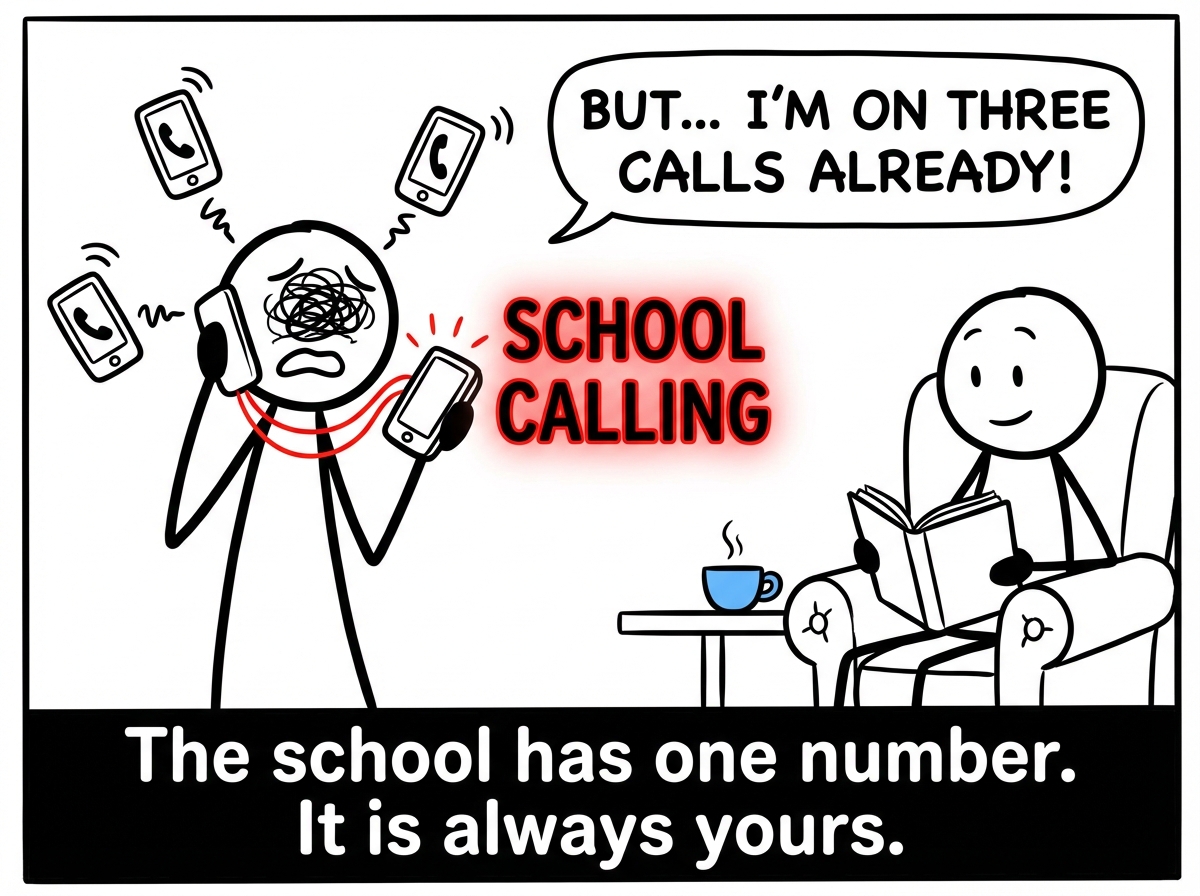
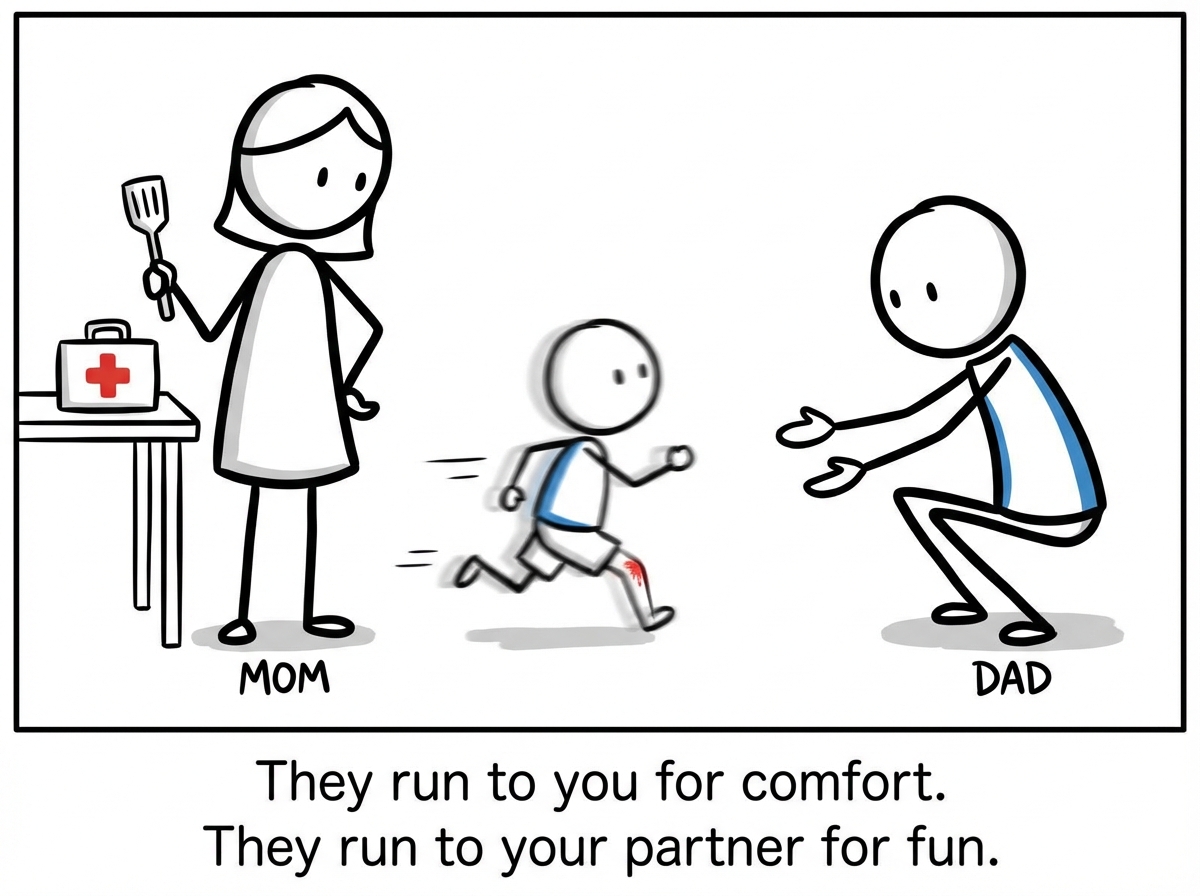
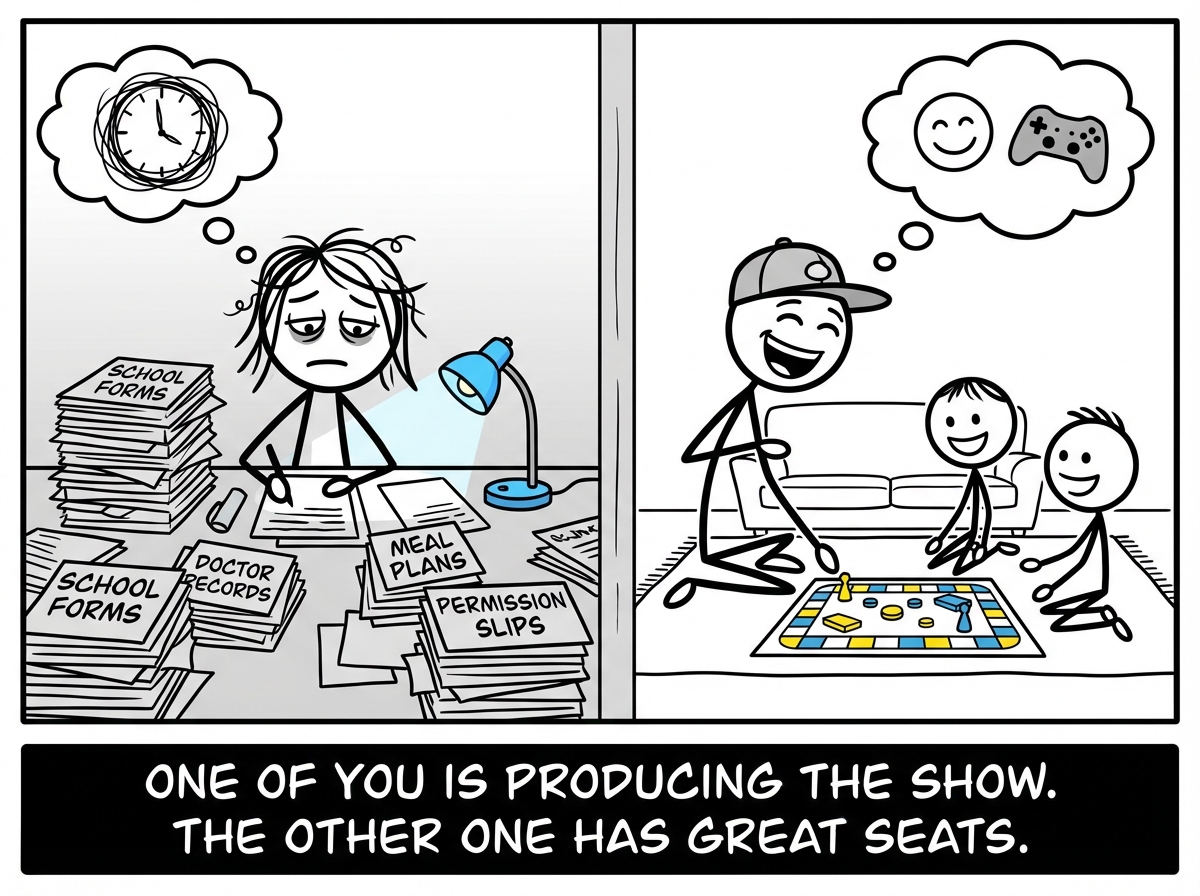
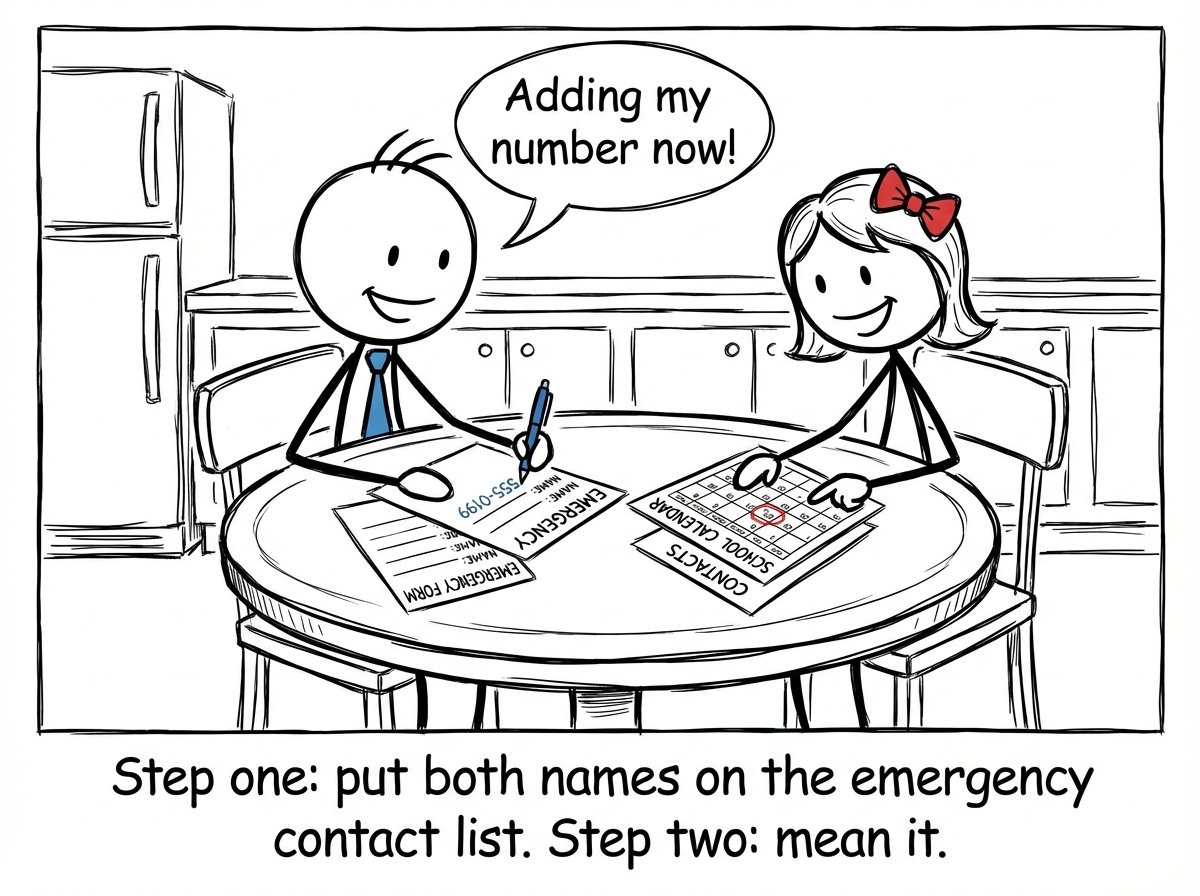
One parent is always the one the kids go to, the school calls, and the doctor's office has on file -- while the other parent gets to be the fun one.
Explanation
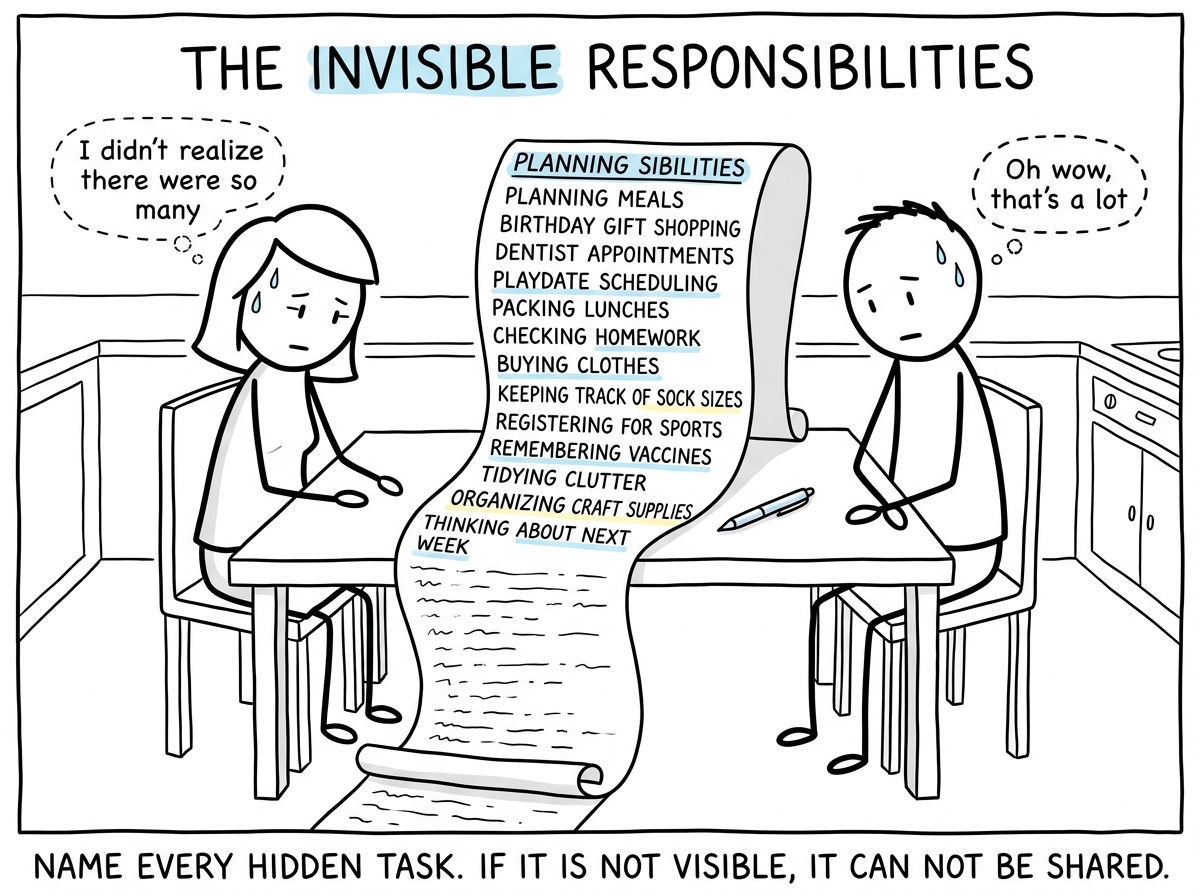
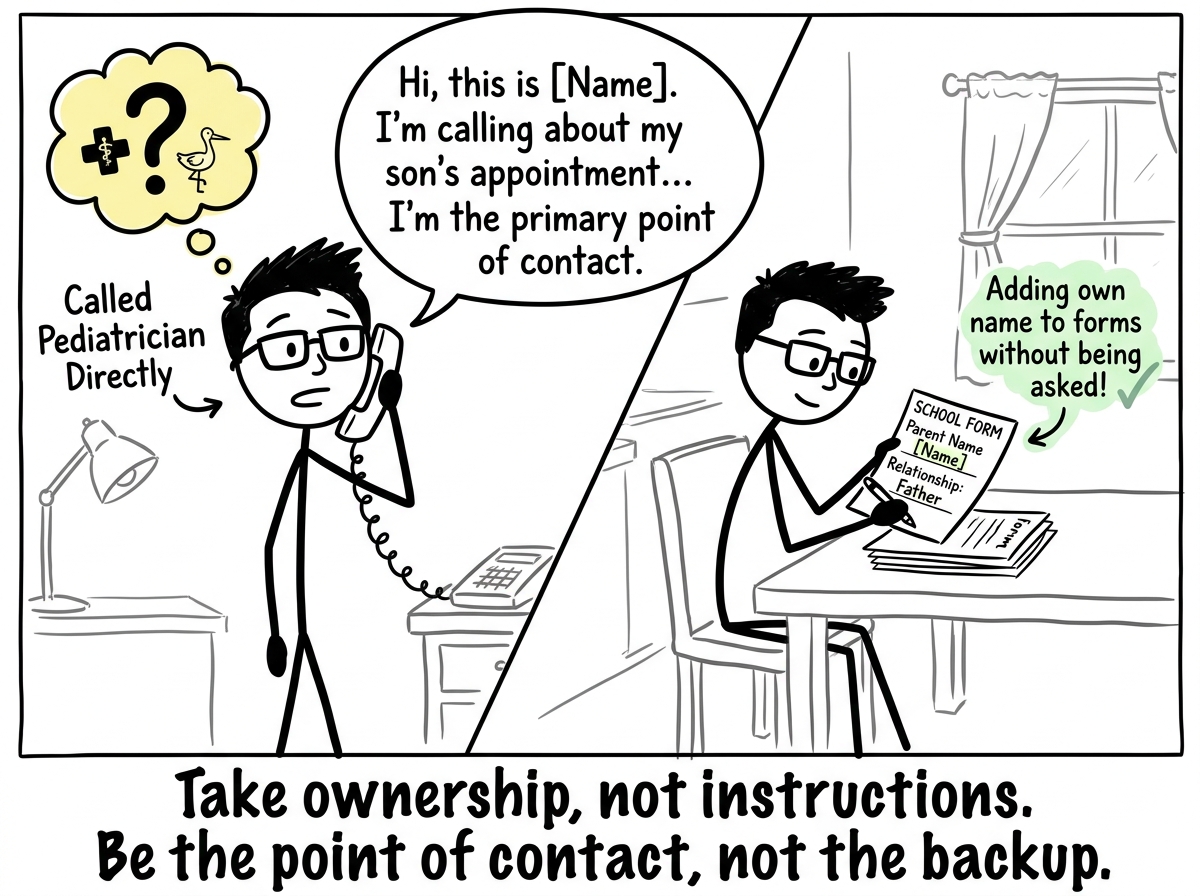
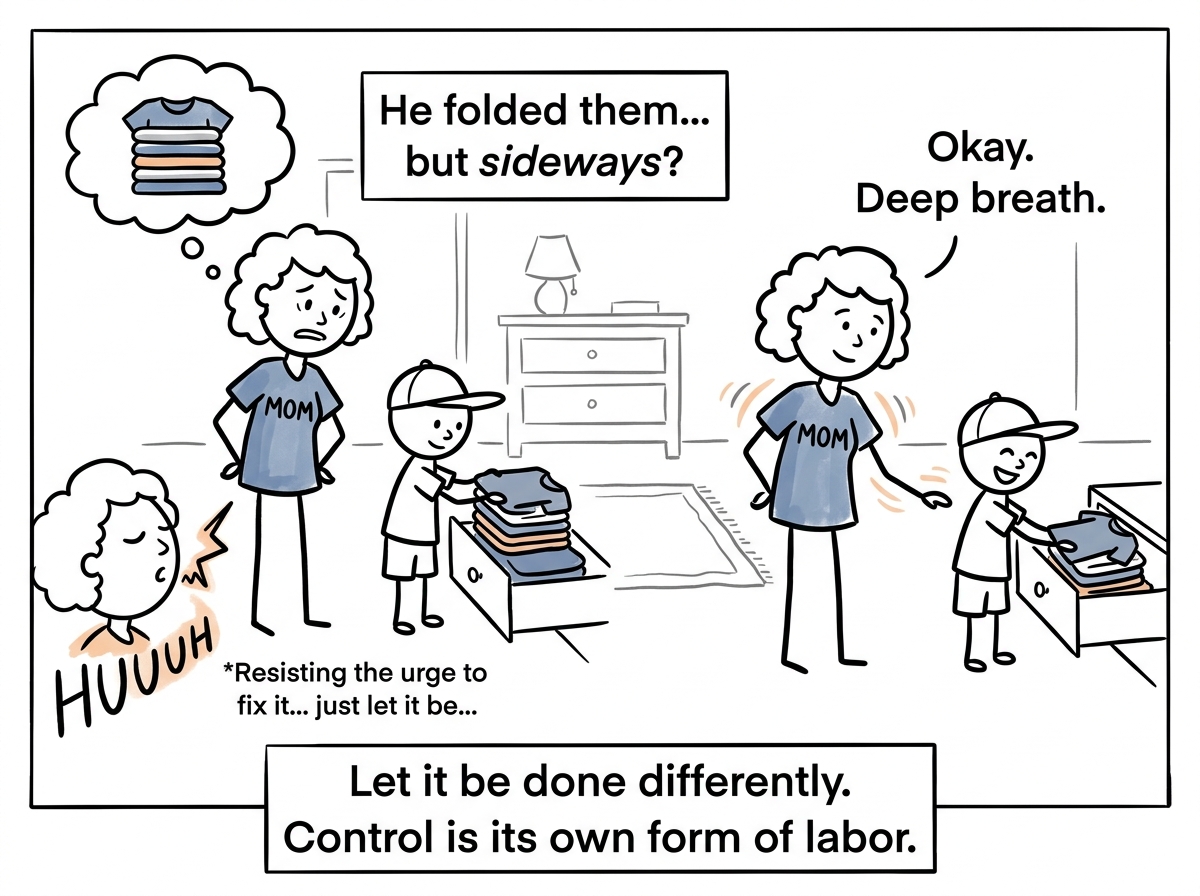
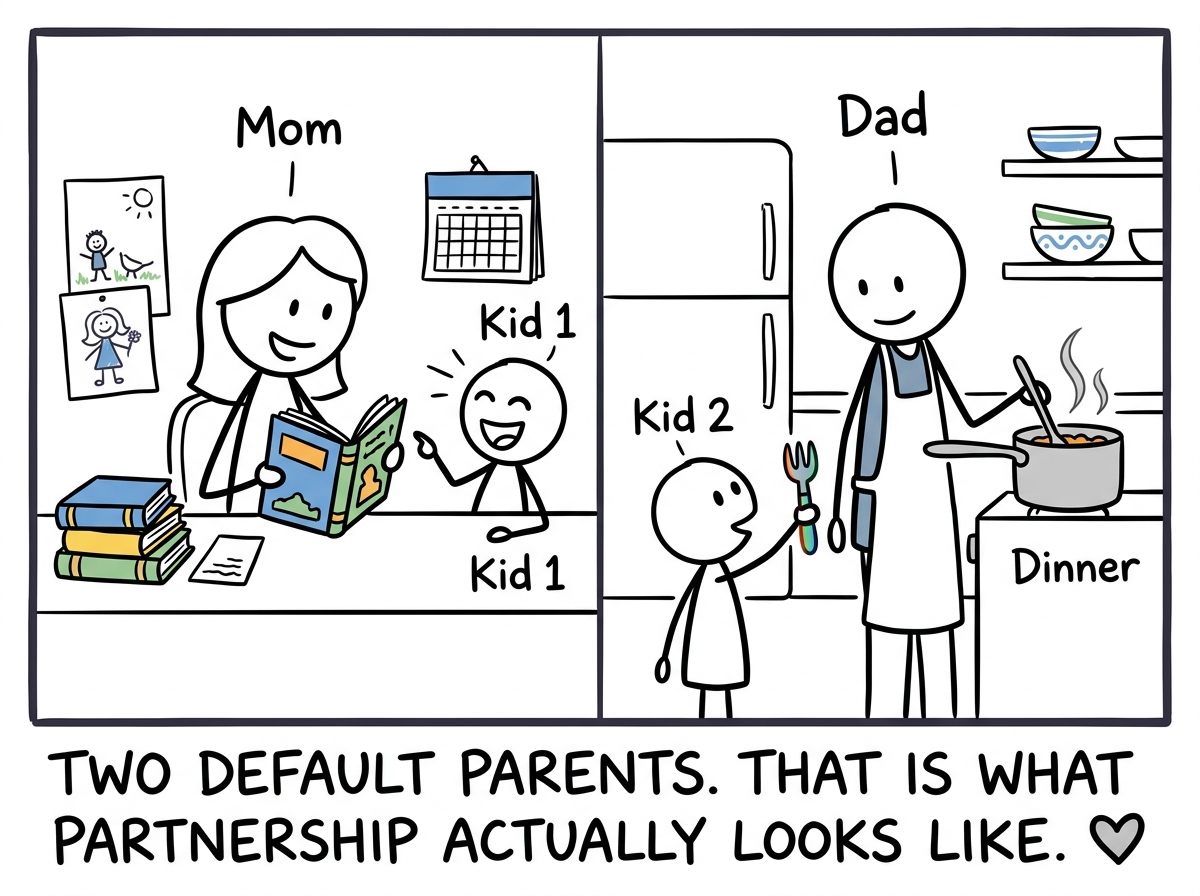
The school calls and asks for you -- never your partner. The kids come to you when they are sick, scared, or need permission for anything. You know every teacher's name, every allergy, every friend drama. Your partner knows the kids are great and that everything seems to run smoothly. They get to be the fun parent who shows up for the highlight reel while you produce the entire show. Being the default parent means you are the one the world assumes is in charge of the children. It is not a title you chose -- it was assigned through a thousand small moments where you stepped in first and eventually everyone, including your partner, stopped expecting anything different. The psychological toll is significant: chronic decision fatigue, identity erosion (you become 'mom' or 'dad' before anything else), and a simmering resentment that is hard to articulate because none of the individual tasks seem like a big deal. It is the accumulation that breaks you. Rebalancing requires more than splitting tasks. It requires the non-default parent to build direct relationships with every system -- the school, the pediatrician, the babysitter, the other parents. Not by being forwarded information, but by being the point of contact. It means the default parent has to tolerate things being done differently and resist the urge to micromanage. Letting go of control is its own form of emotional labor, but it is the only way out of the cycle.
Key Takeaway
Being the fun parent is easy when someone else is running the entire operation.