
Your Emotional Regulation Toolkit
Part of the The Emotional Survival Guide series (Part 3)
The stick figure looking around and pointing at objects, with labels: 5 things I see, 4 things I touch, 3 things I hear, 2 things I smell, 1 thing I taste
The stick figure running their hands under cold water and then taking a walk outside, with the emotional storm cloud above their head shrinking with each step
A practical, visual guide to grounding techniques and coping strategies you can use when emotions start to overwhelm you.
Explanation
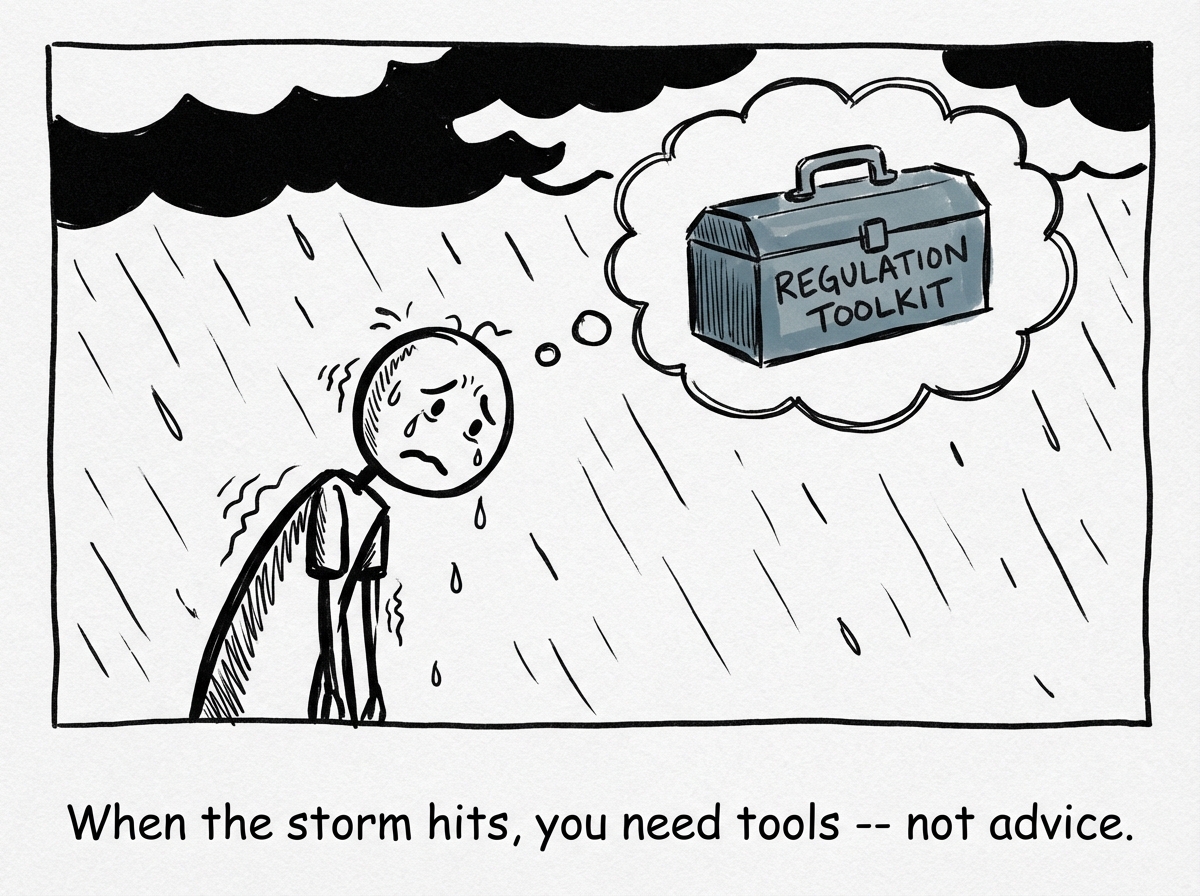
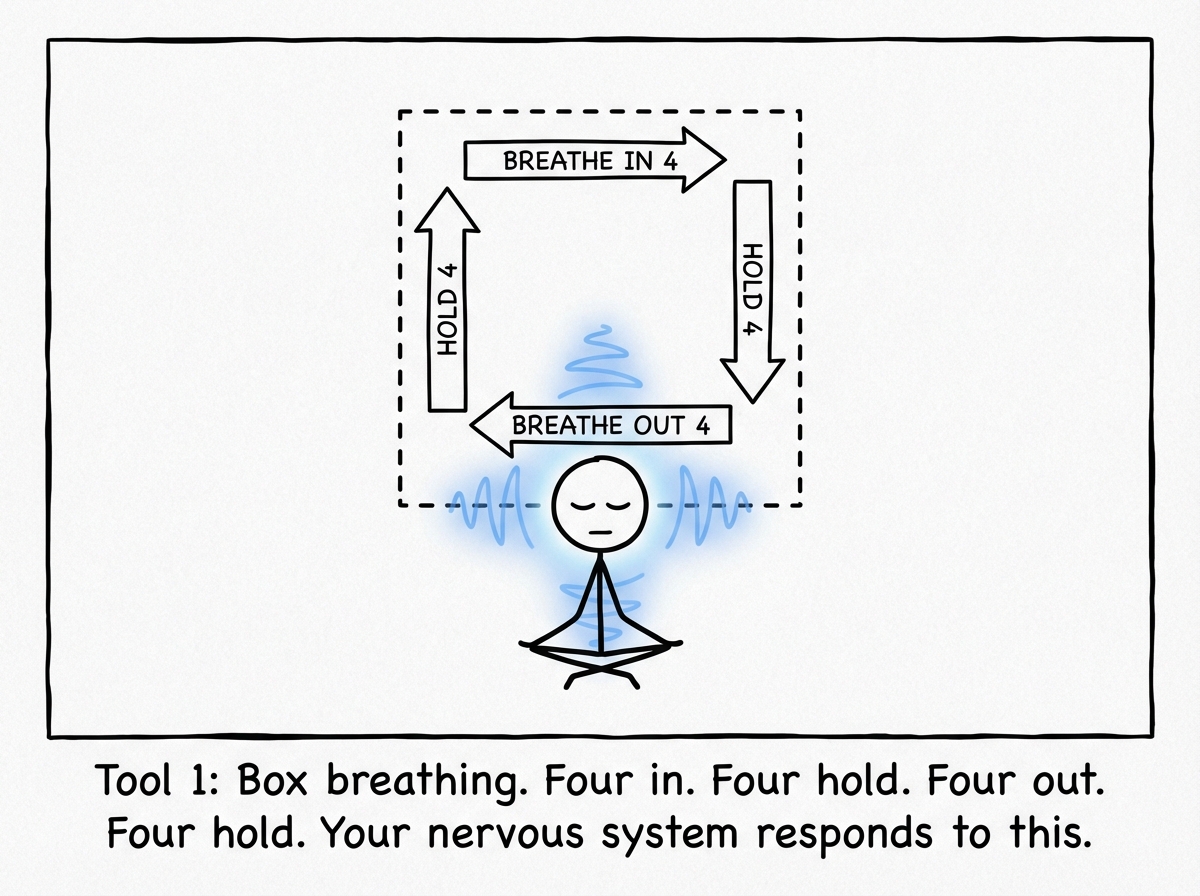
Knowing that you need to regulate your emotions and actually having tools to do it are two very different things. When you are in the middle of an emotional storm, 'just calm down' is useless advice. What you need are specific, concrete techniques that you have practiced enough to use when your brain is barely functioning. Think of this as your emotional first aid kit -- tools you pack before the emergency, not during it. The most effective regulation techniques work by engaging your senses and your body, pulling your attention out of spiraling thoughts and into physical reality. The 5-4-3-2-1 grounding technique asks you to name five things you can see, four you can touch, three you can hear, two you can smell, and one you can taste. Box breathing (breathe in for four counts, hold for four, out for four, hold for four) activates your parasympathetic nervous system and physically slows your heart rate. Putting your hands under cold water or holding ice creates a sensation strong enough to interrupt emotional overwhelm. Movement -- even a short walk -- helps metabolize the stress hormones flooding your system. The key insight is that these tools work best when they are practiced regularly, not just in crisis moments. If the first time you try box breathing is during a panic attack, it will feel awkward and unhelpful. But if you have been doing it for five minutes every morning for weeks, your body knows the drill. When the crisis hits, the technique is familiar and your nervous system responds faster. Build the toolkit now. Your future overwhelmed self will thank you.
Key Takeaway
The best time to learn coping techniques is before you need them -- practice when you are calm so they are ready when you are not.
A calm stick figure sitting on a cushion practicing box breathing on a peaceful morning, no emergency happening, just building the habit
The stick figure adding regulation tools to a visible list on their wall -- breathing, grounding, cold water, movement -- like stocking a first aid kit
The same stick figure weeks later, hit by an emotional wave, automatically reaching for the breathing technique without having to think about it
The stick figure riding out the emotional wave, not unaffected but not drowning, the toolkit visible nearby as a steady anchor