The Sick Day You Refuse to Take
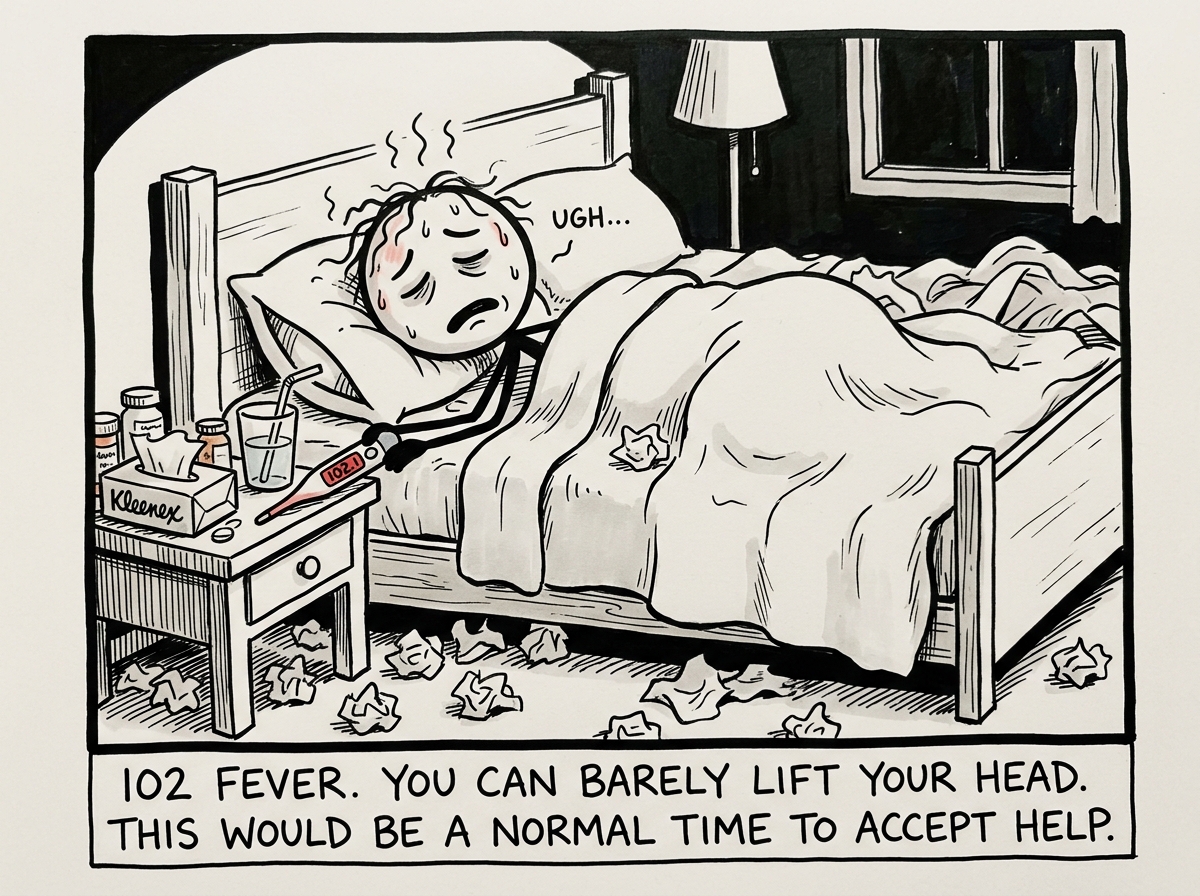
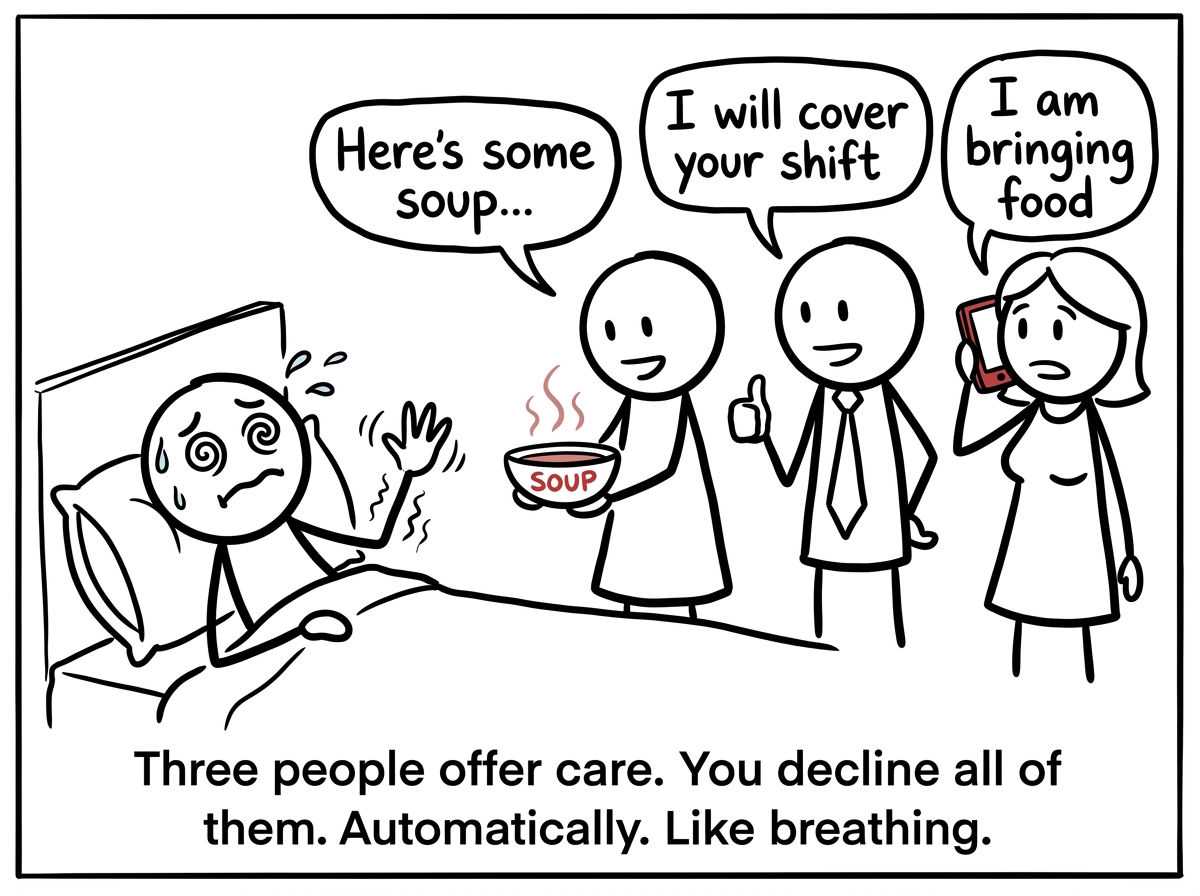
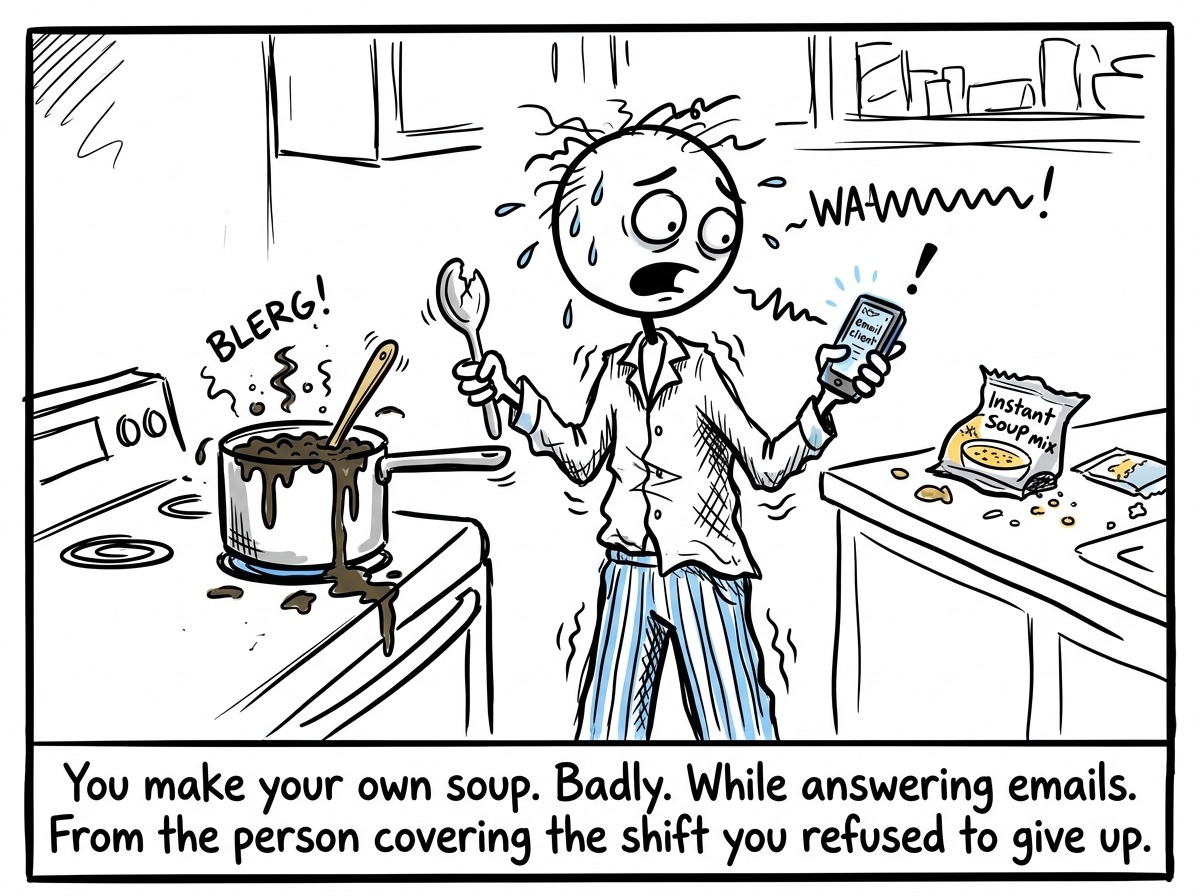
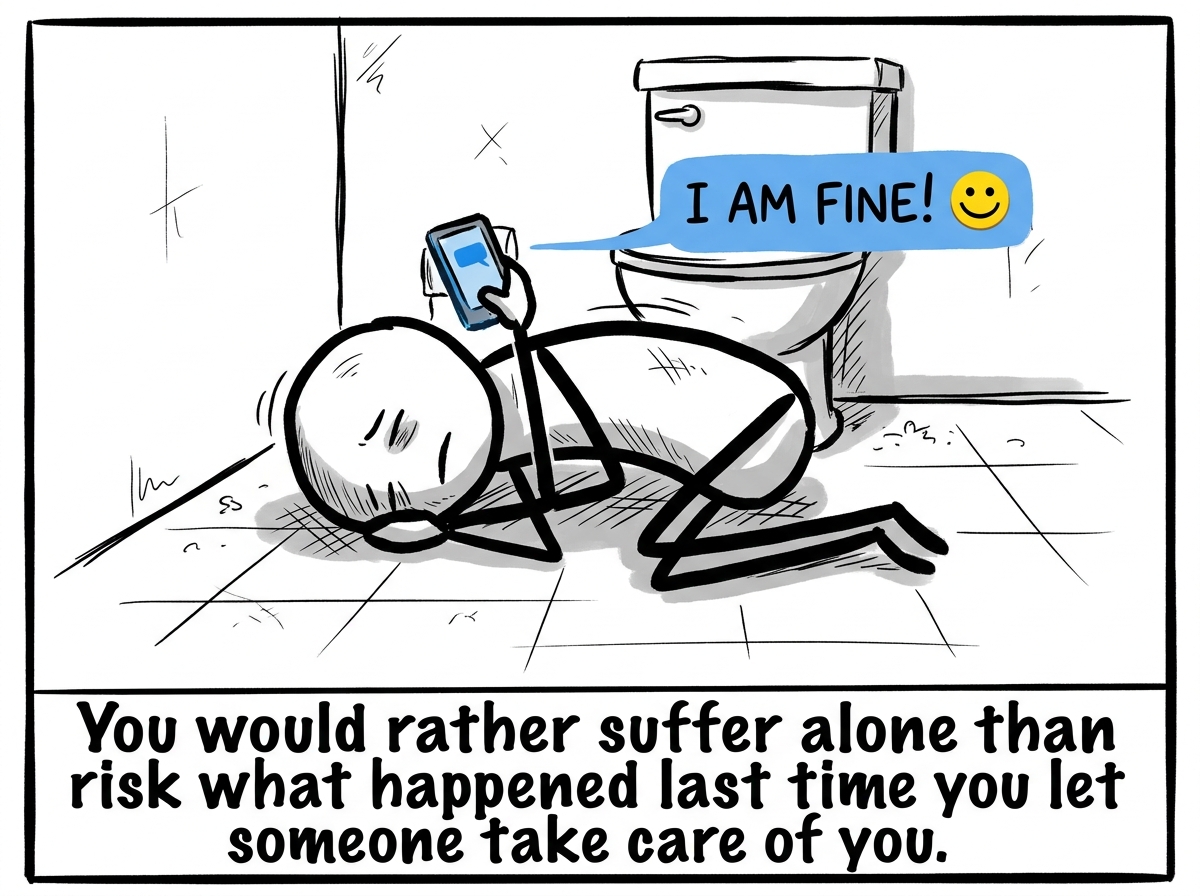
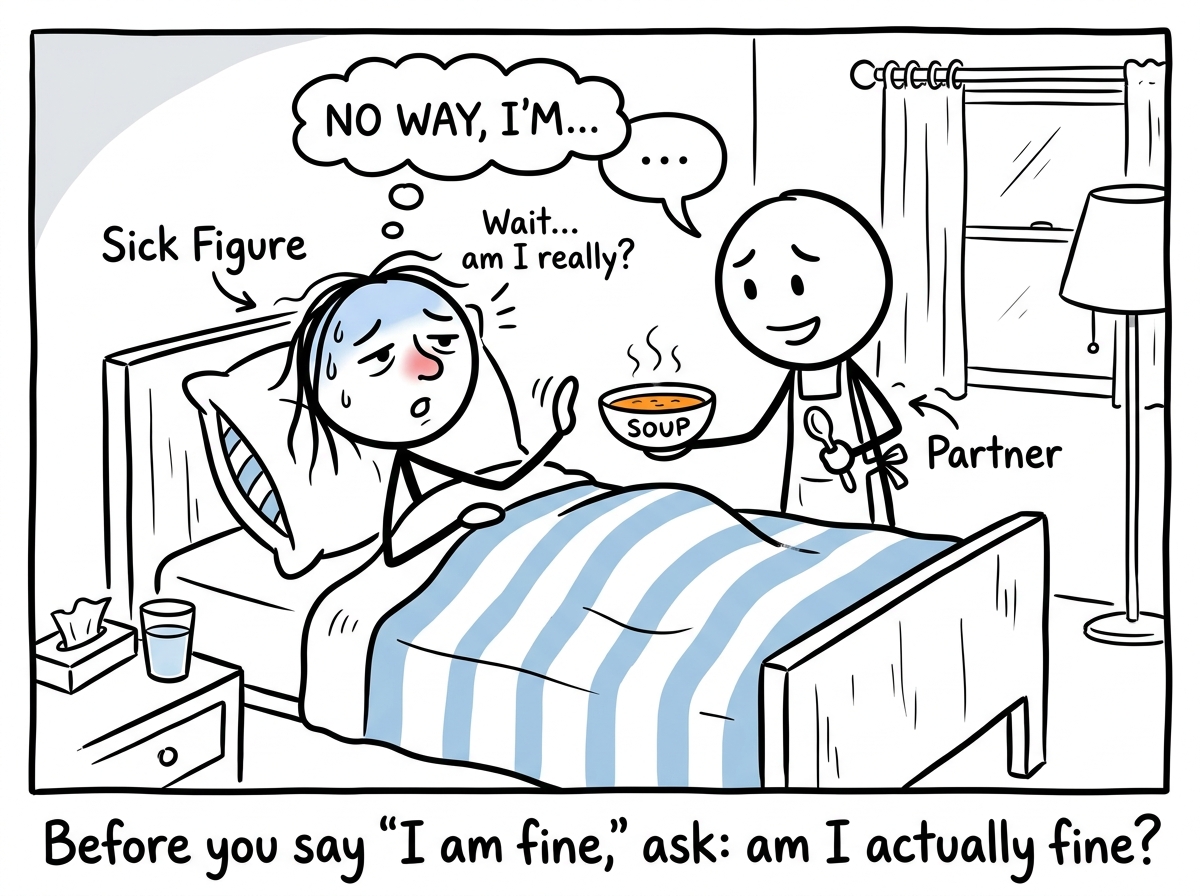
A person with a raging fever drags themselves to work, cooks their own meals, and declines every offer of care because accepting help feels more threatening than the illness itself.
Explanation
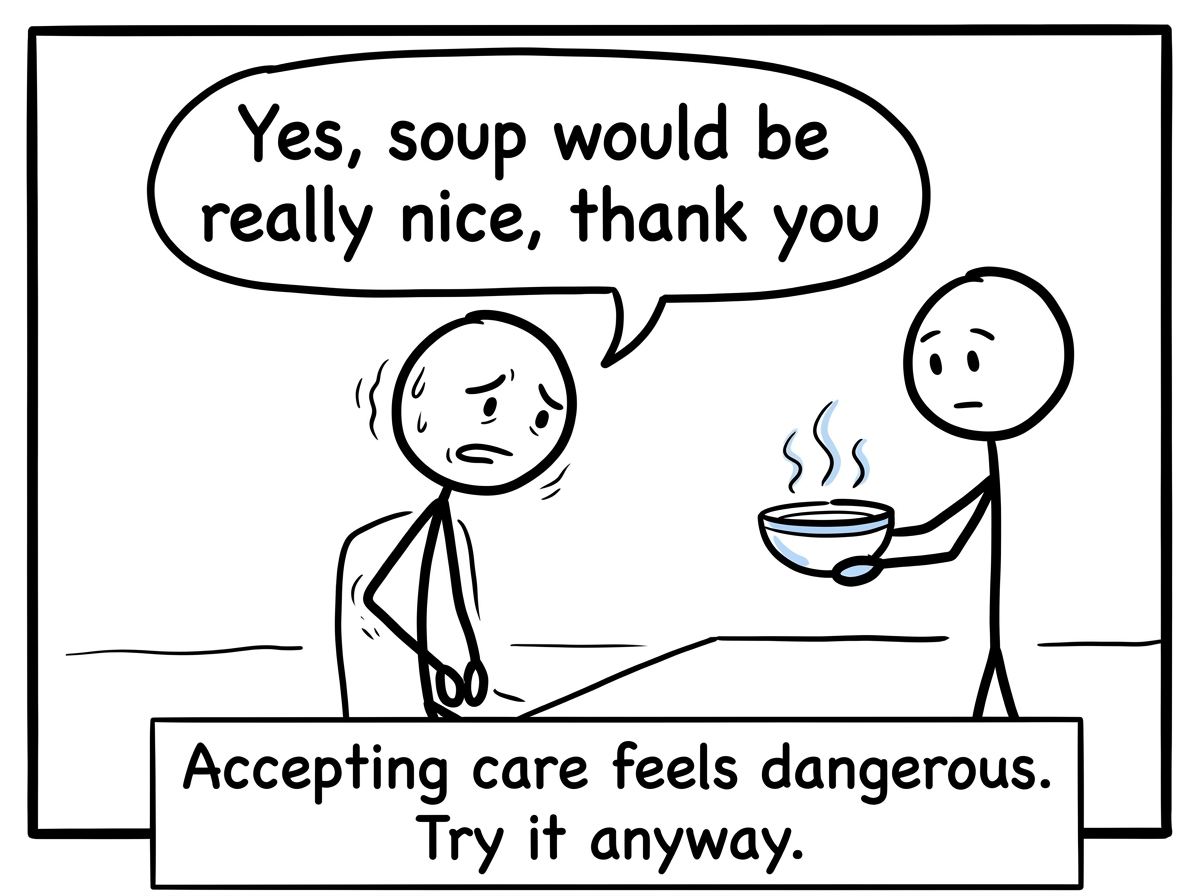
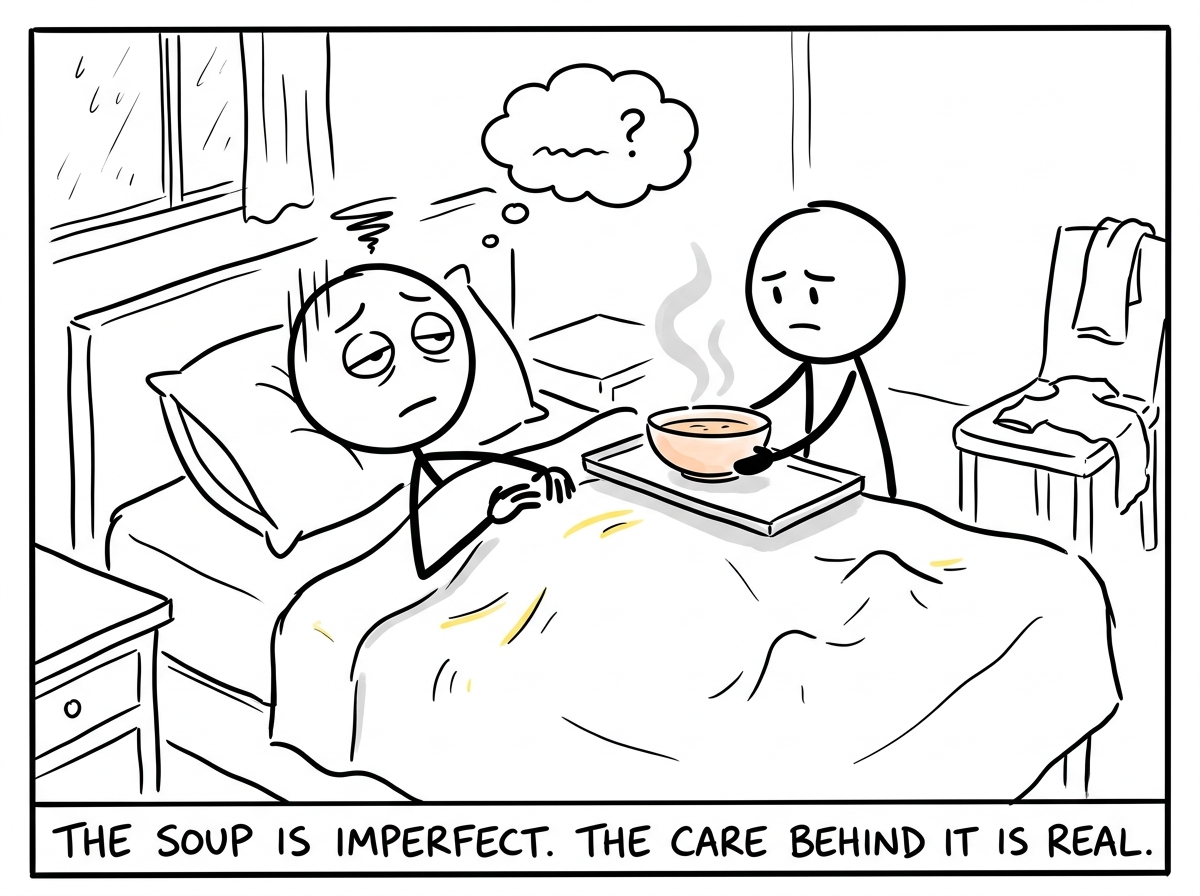
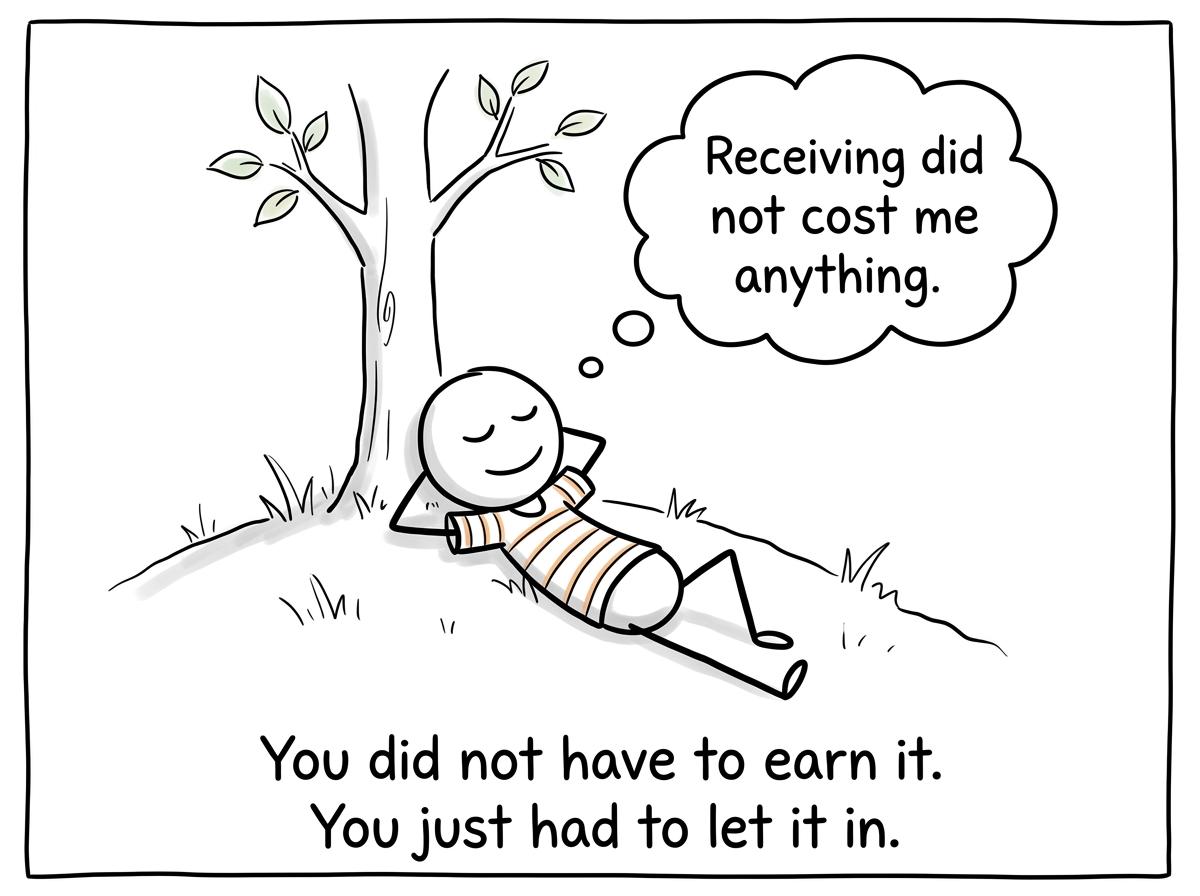
You have a 102-degree fever. Your body is begging you to stop. Your partner offers to make you soup. Your coworker says they can cover your shift. Your mom calls to say she will bring groceries. And you say no to all of them. You drag yourself to work. You make your own soup, badly, while shivering. You text your mom 'I am fine' from the bathroom floor. Being sick is not the hard part. Letting someone take care of you is. For hyperindependent people, illness is a crisis not because of the physical symptoms but because it exposes need. And need, for someone whose early experiences taught them that dependence leads to disappointment, feels existentially dangerous. Accepting care requires trust -- trust that the person offering will actually follow through, that their help will not come with strings attached, that showing weakness will not be used against you later. When those trust pathways were damaged early, the safest option feels like handling everything yourself, even when you literally cannot. Healing this pattern does not mean performing helplessness. It means noticing the moment someone offers help and sitting with the discomfort instead of reflexively declining. It means letting your partner make the soup, even if they make it wrong. It means texting back 'actually, groceries would be amazing' and tolerating the vulnerability of having received something you did not earn through labor. Each act of accepting care is a small rebellion against the old programming that says you have to earn your right to exist by never needing anything.
Key Takeaway
When being sick feels less scary than being taken care of, the fever is not the real illness.