The Family Uniform
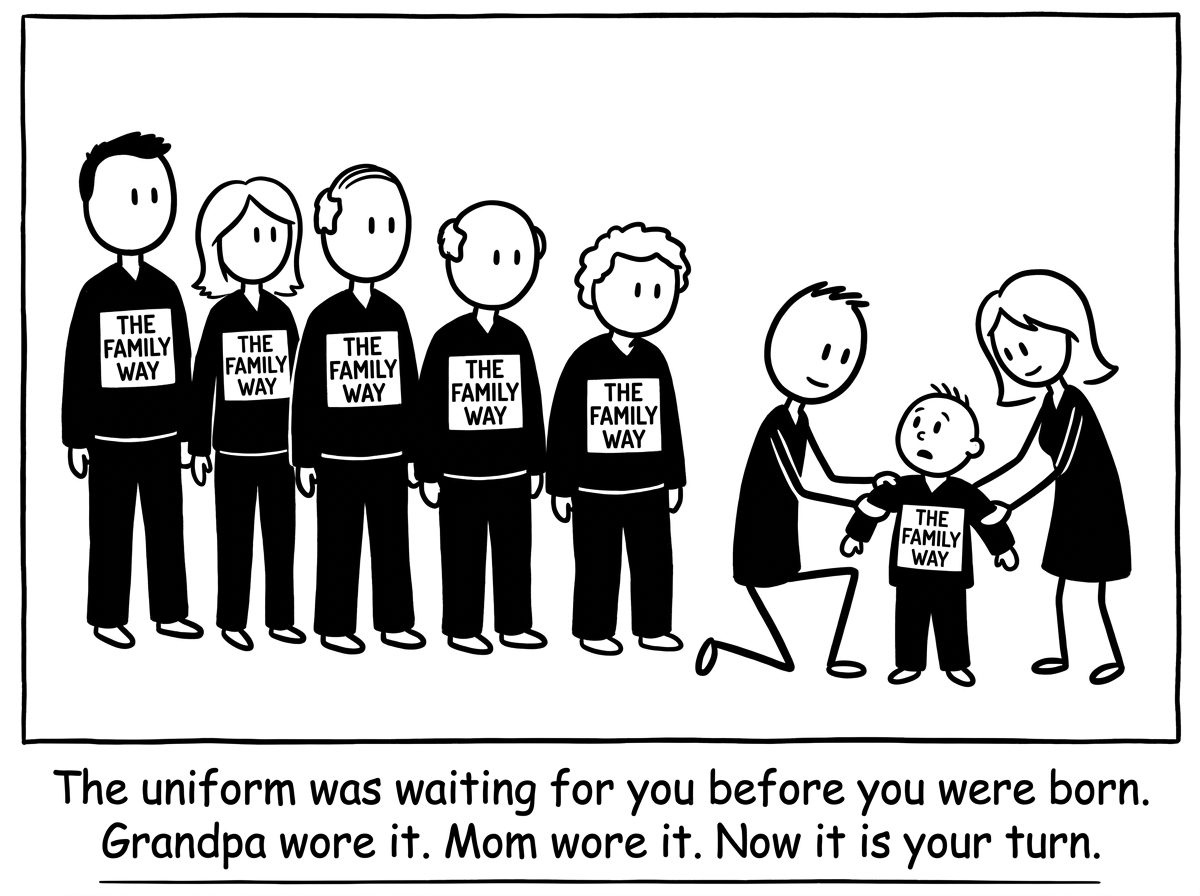
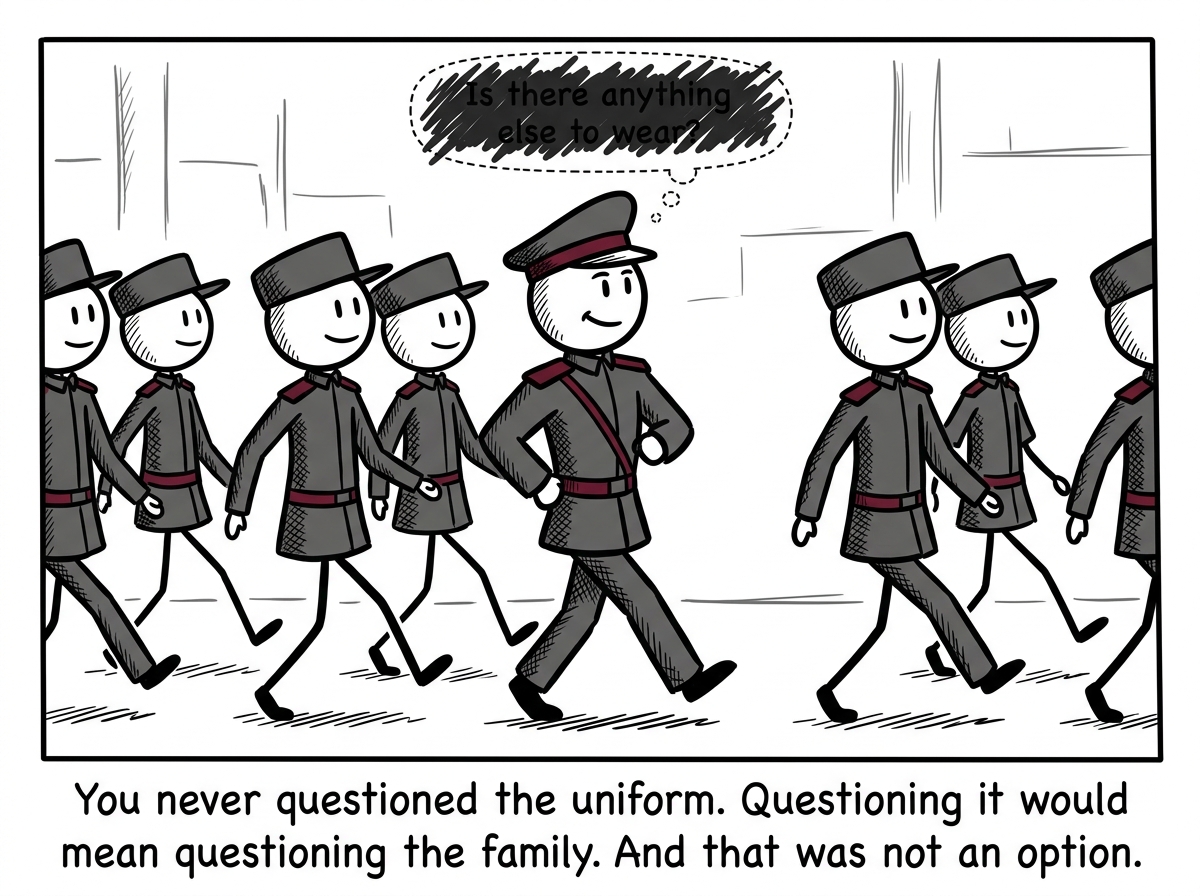
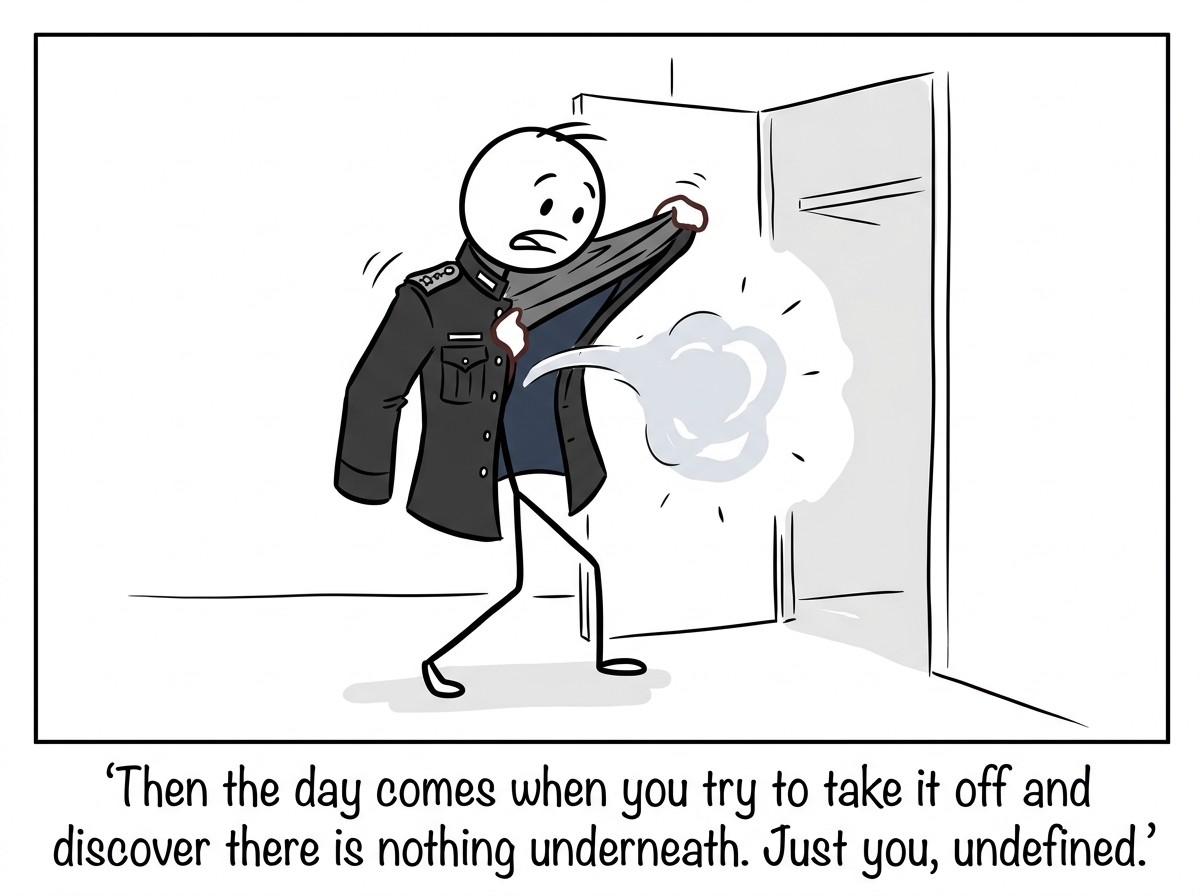
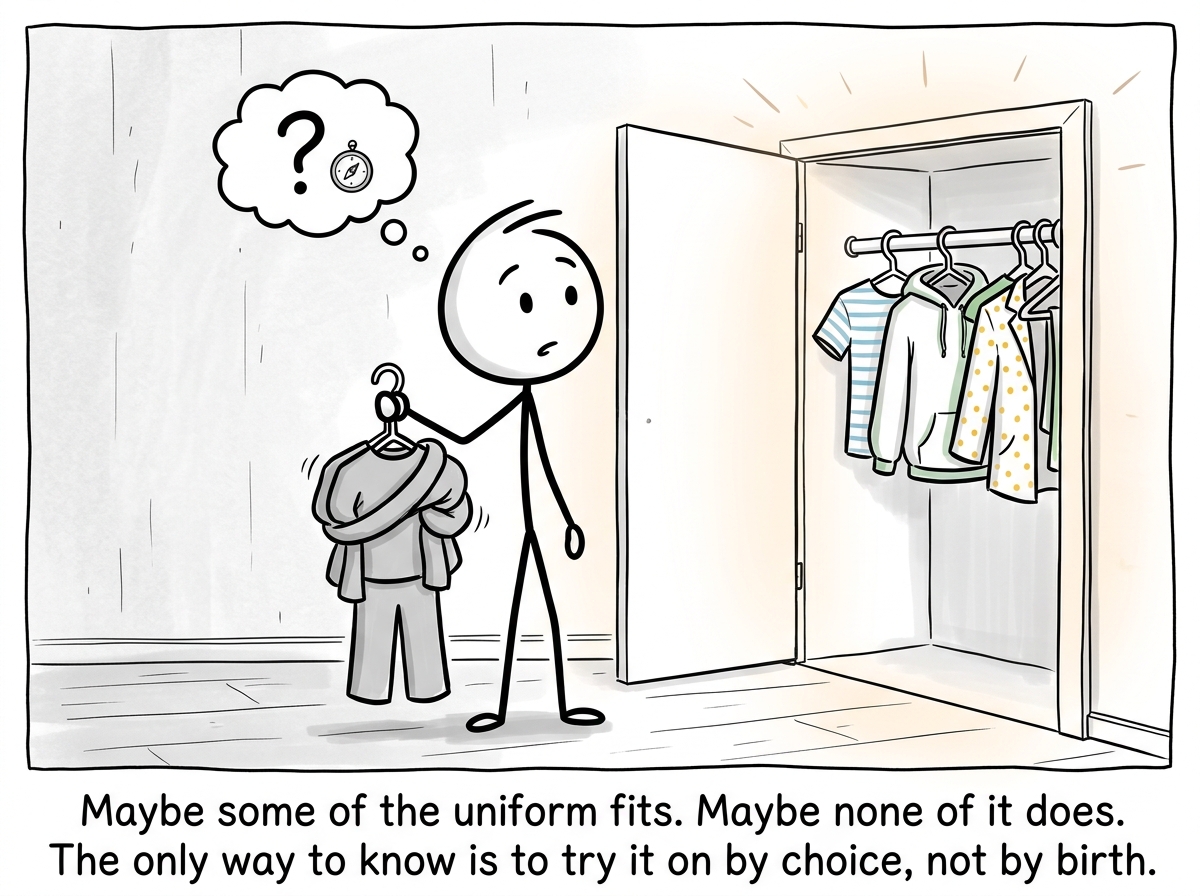
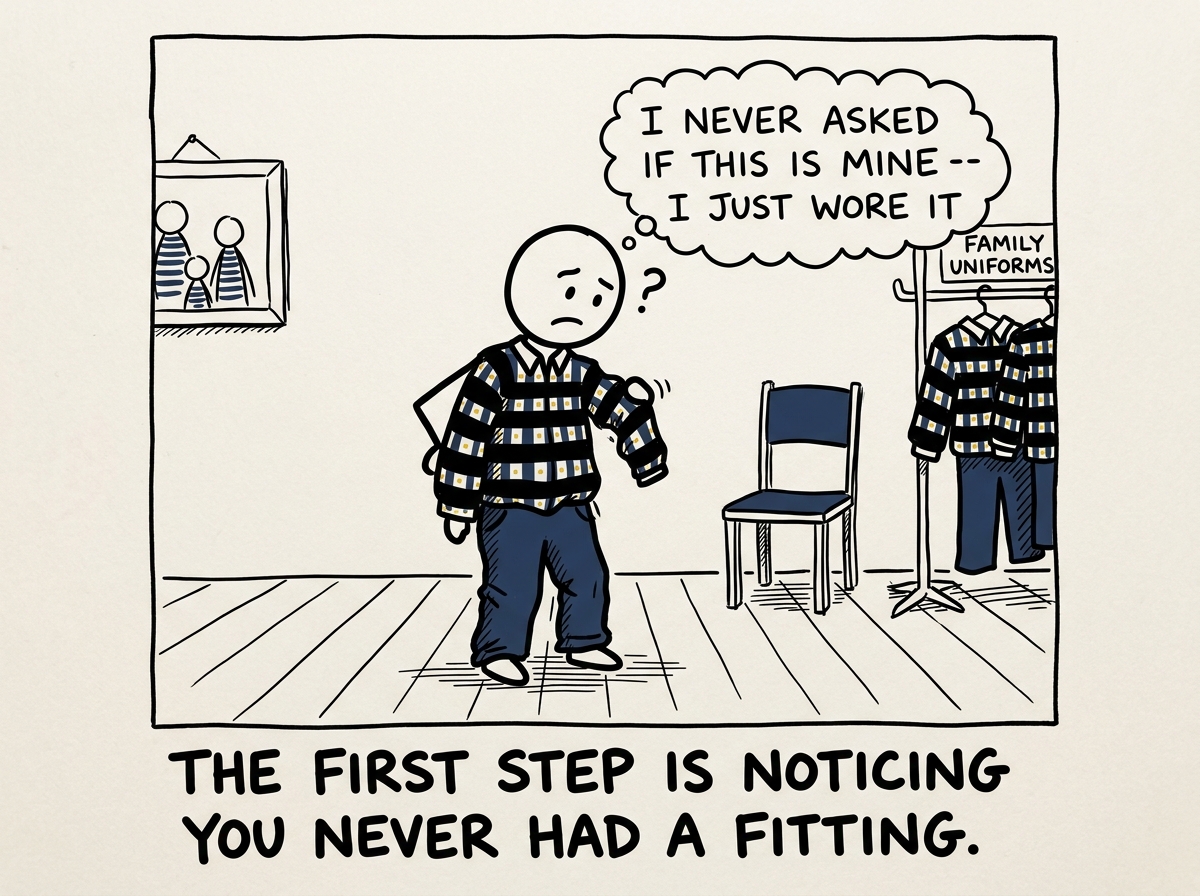
A person wears a uniform that has been passed down through generations in their family, and when they try to take it off, they discover they have no clothes of their own.
Explanation
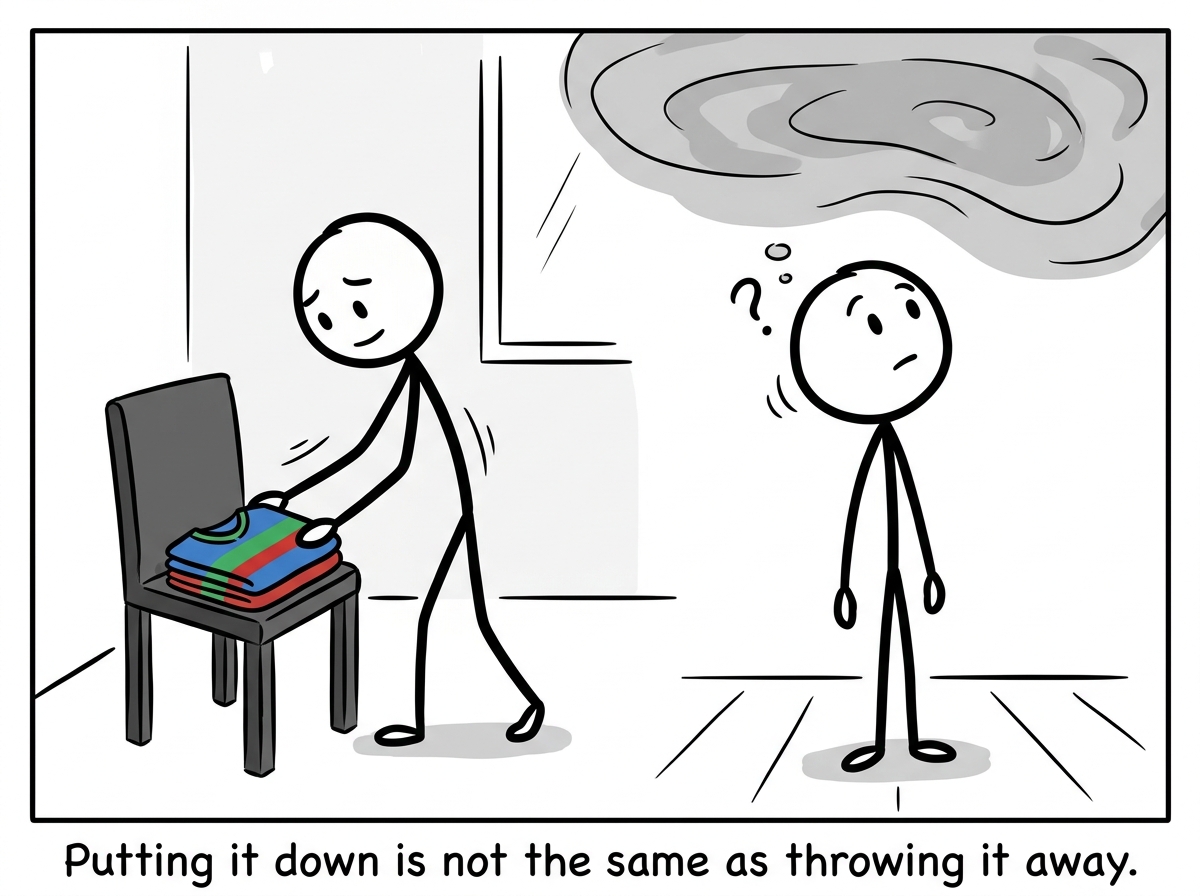
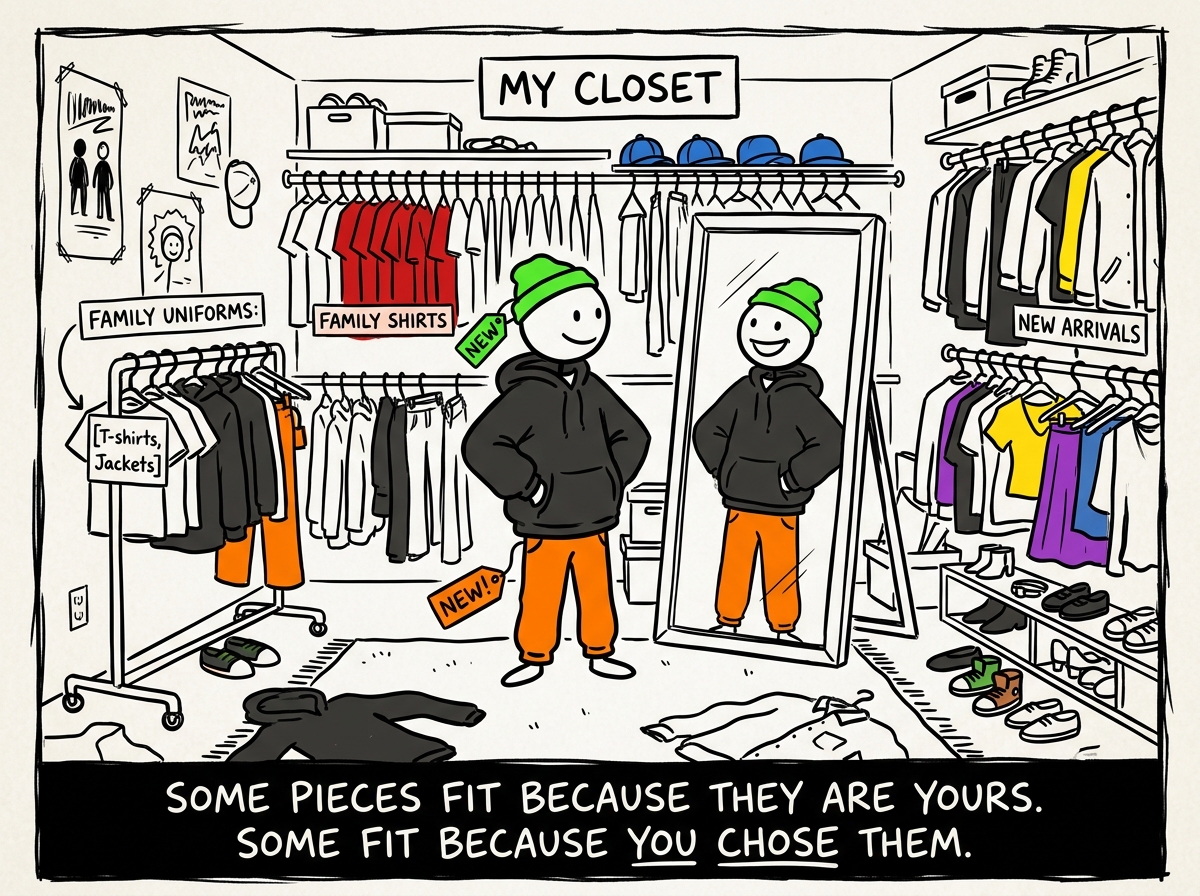
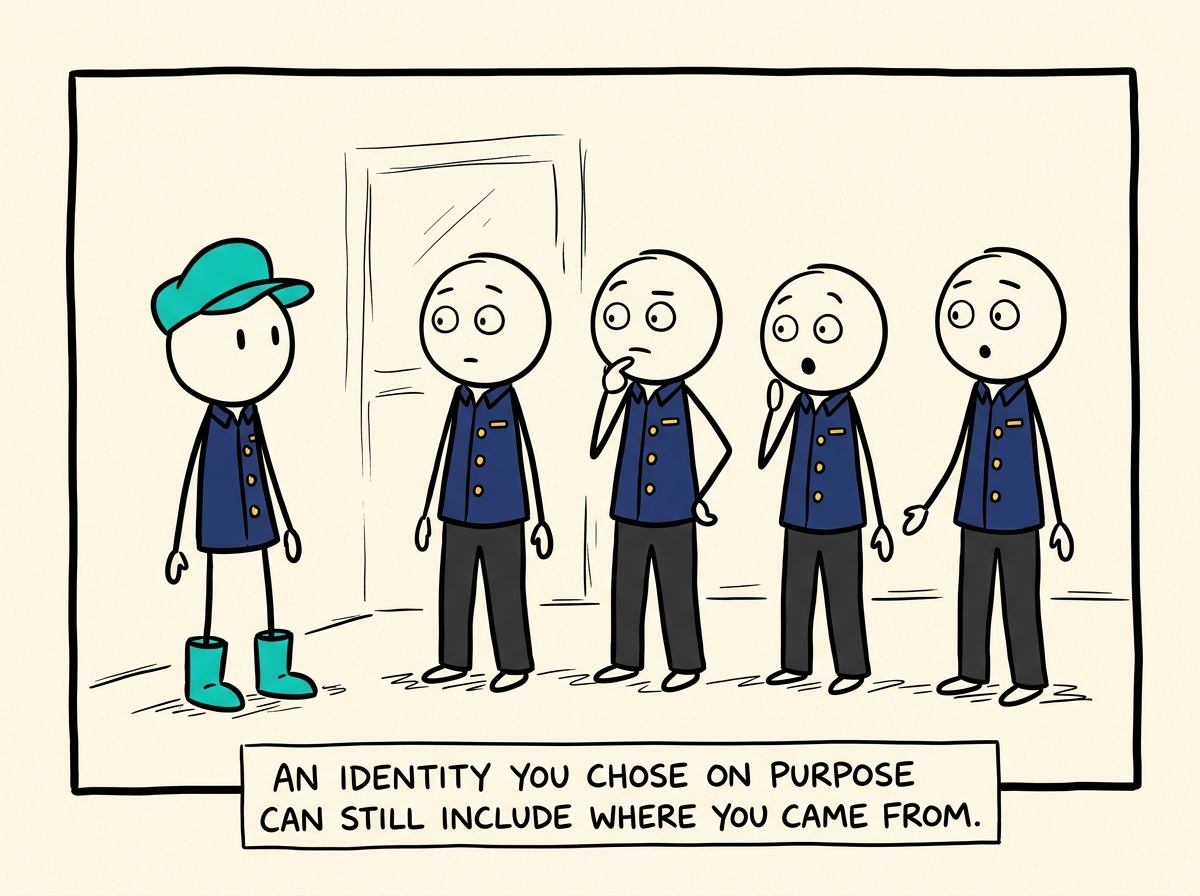
Every family has a uniform. Sometimes it is a literal career -- generations of lawyers, doctors, military officers, or preachers. Sometimes it is subtler -- a set of beliefs, a political identity, a way of being in the world that is presented not as a choice but as a fact. You were born into it. You wore it before you could walk. And by the time you were old enough to question it, the uniform had become so fused with your skin that you could not tell where it ended and you began. Identity foreclosure through family transmission is one of the most common and least recognized forms of identity loss. Because the identity feels like tradition rather than coercion, questioning it feels like betrayal. Sociologist Pierre Bourdieu's concept of habitus describes how families transmit not just explicit values but entire ways of perceiving, thinking, and acting that become so deeply embedded they feel like nature rather than nurture. You do not just believe what your family believes -- you literally cannot imagine believing otherwise, because the alternatives were never presented as real options. Taking off the family uniform does not mean you hate the family. It means you are willing to find out who you are without it -- which is frightening precisely because you might discover that some of the uniform actually fits. Or you might discover that none of it does. Either way, the act of trying it on intentionally, rather than wearing it by default, is the difference between an inherited identity and a chosen one. That choice is the thing identity foreclosure steals from you, and the thing you can always reclaim.
Key Takeaway
An identity you never questioned is not an identity you chose -- it is one you inherited.