The Shrinking World
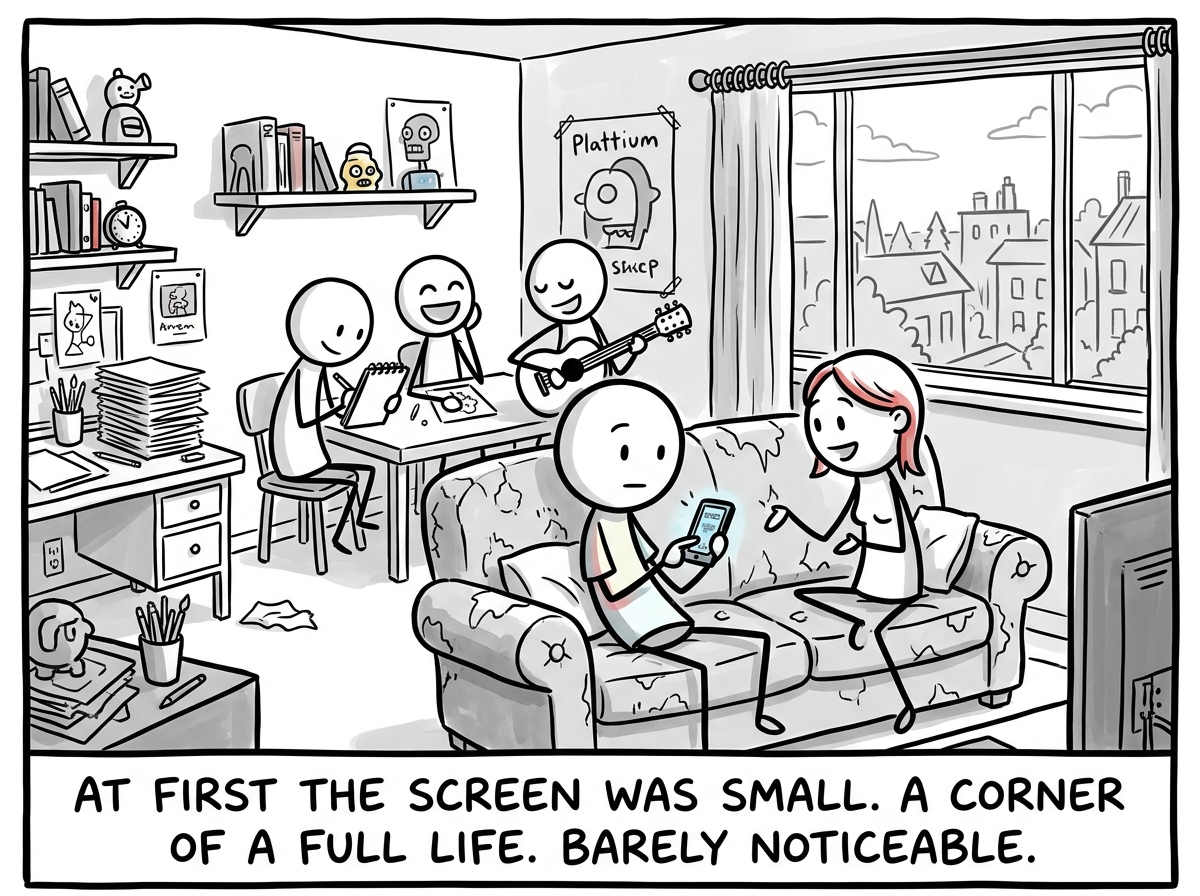
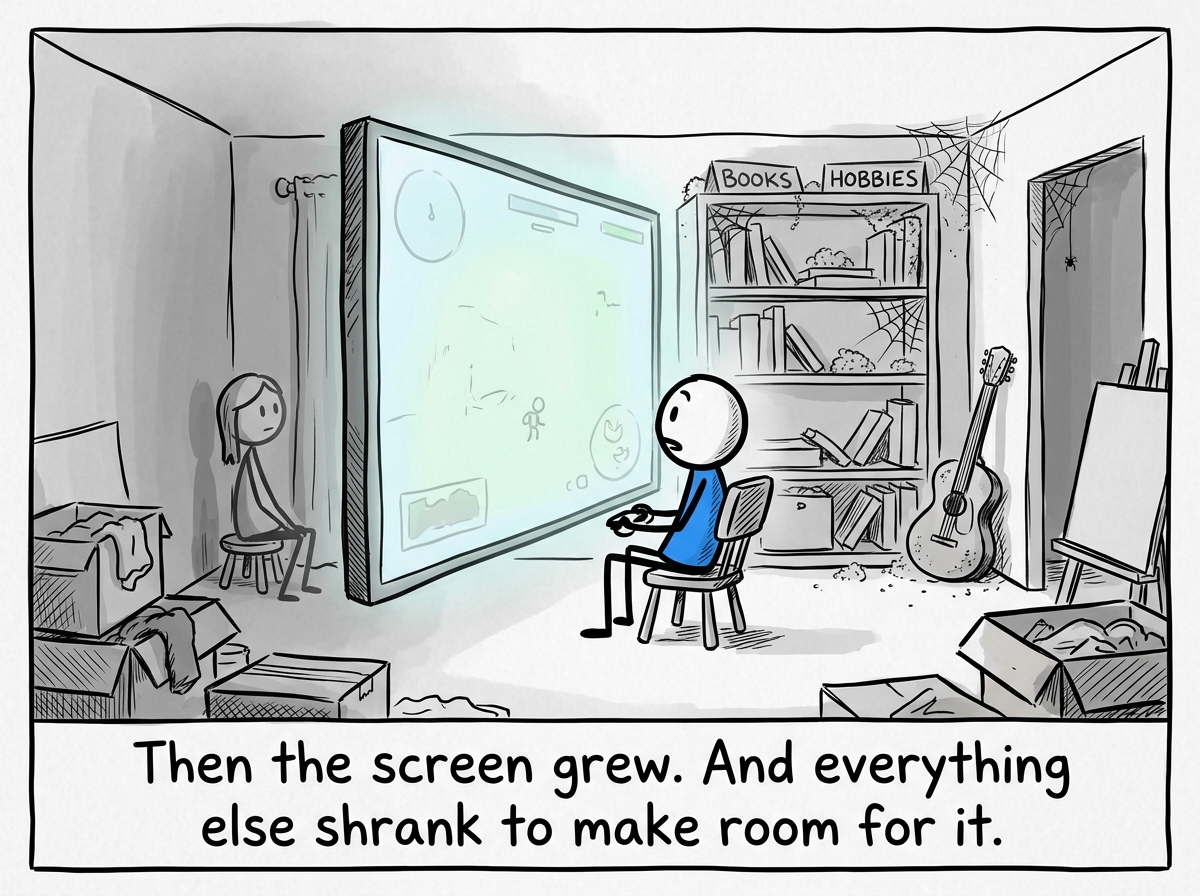
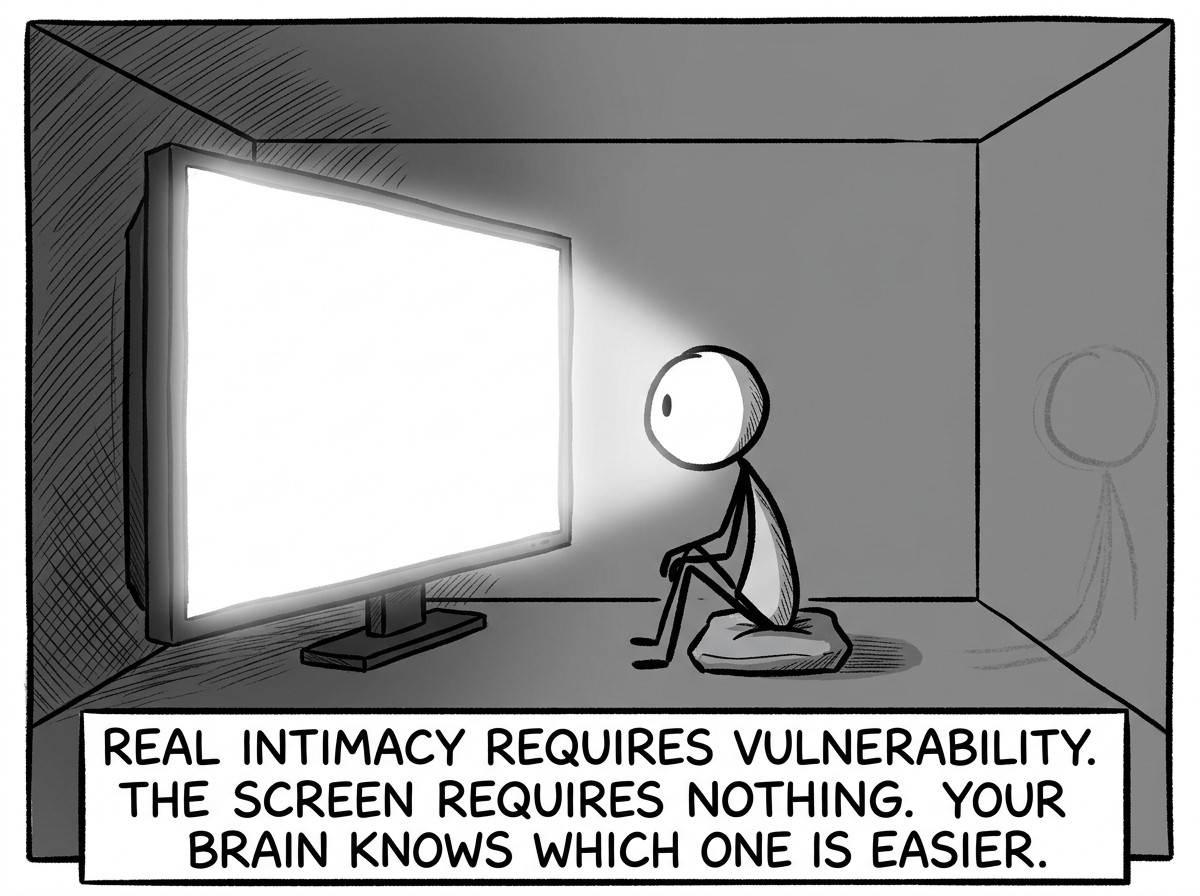
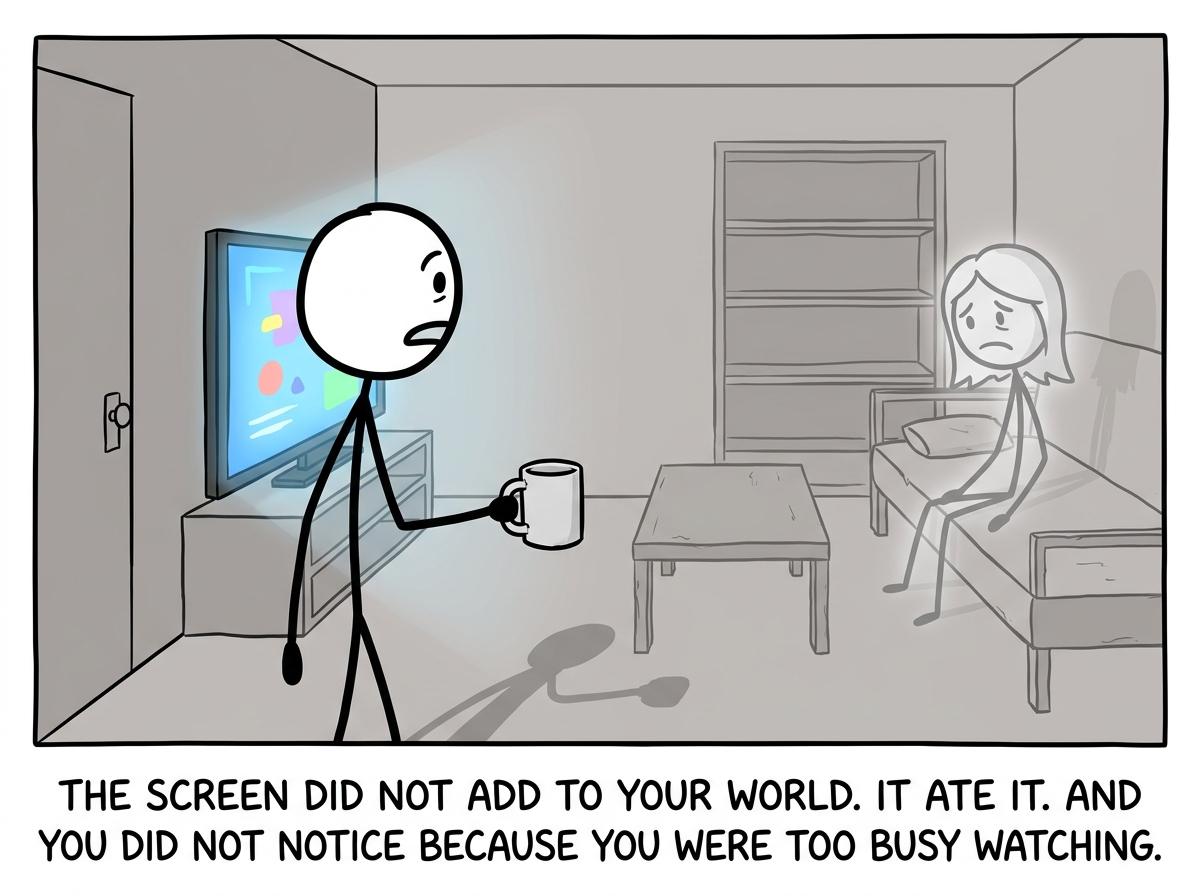
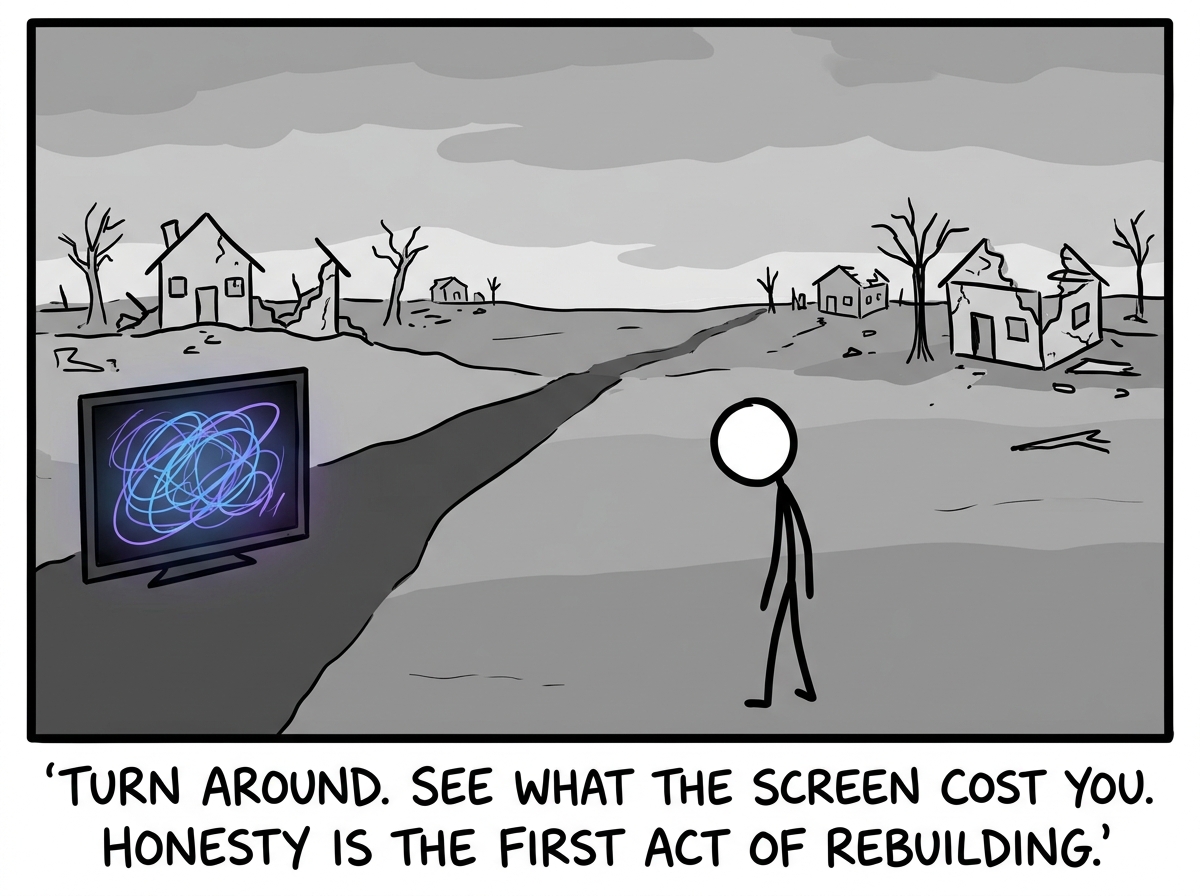
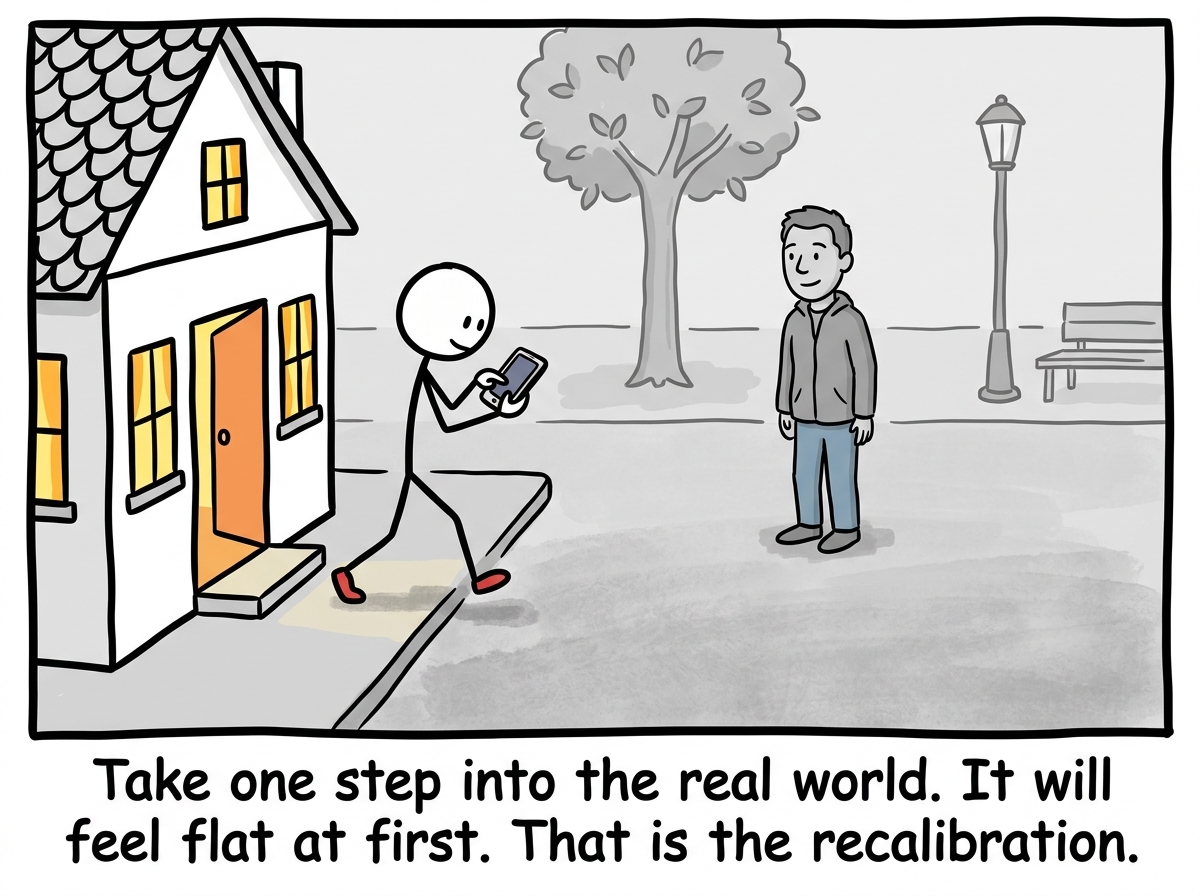
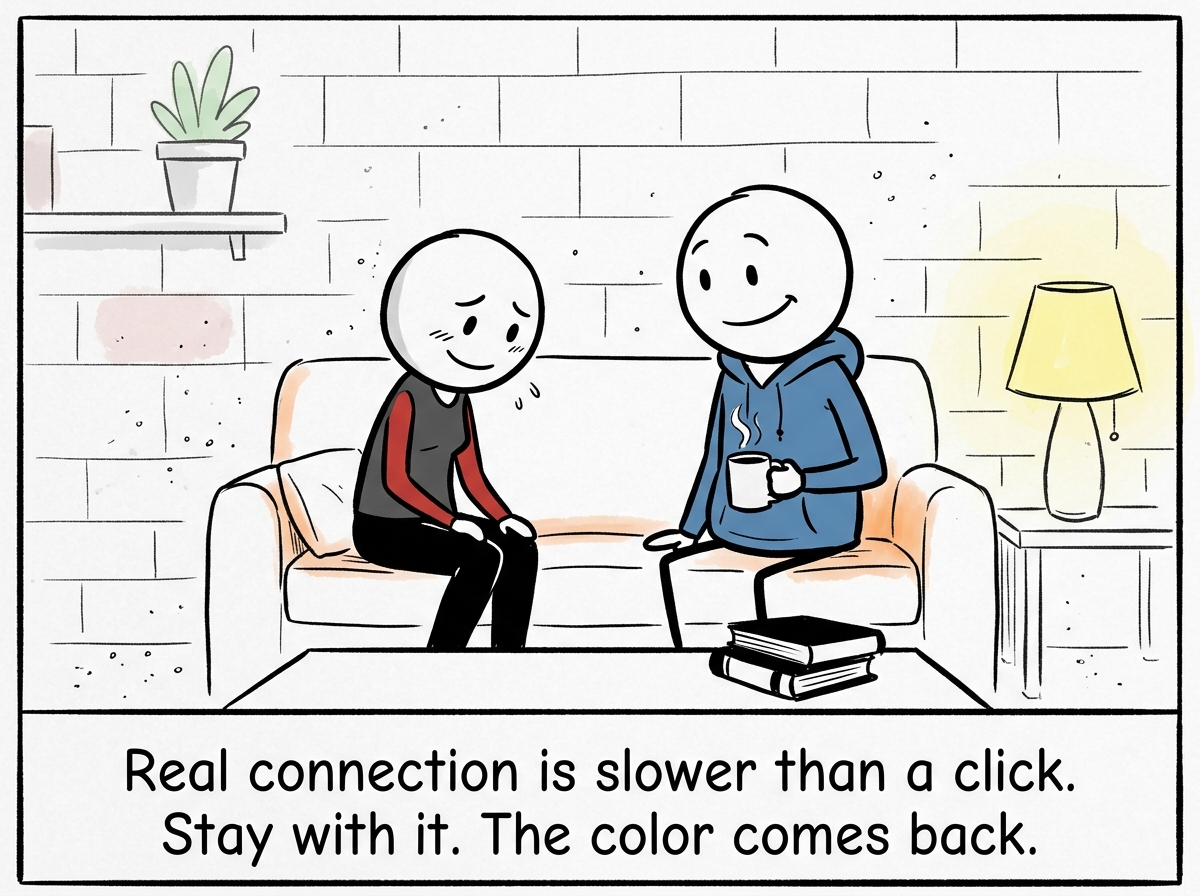
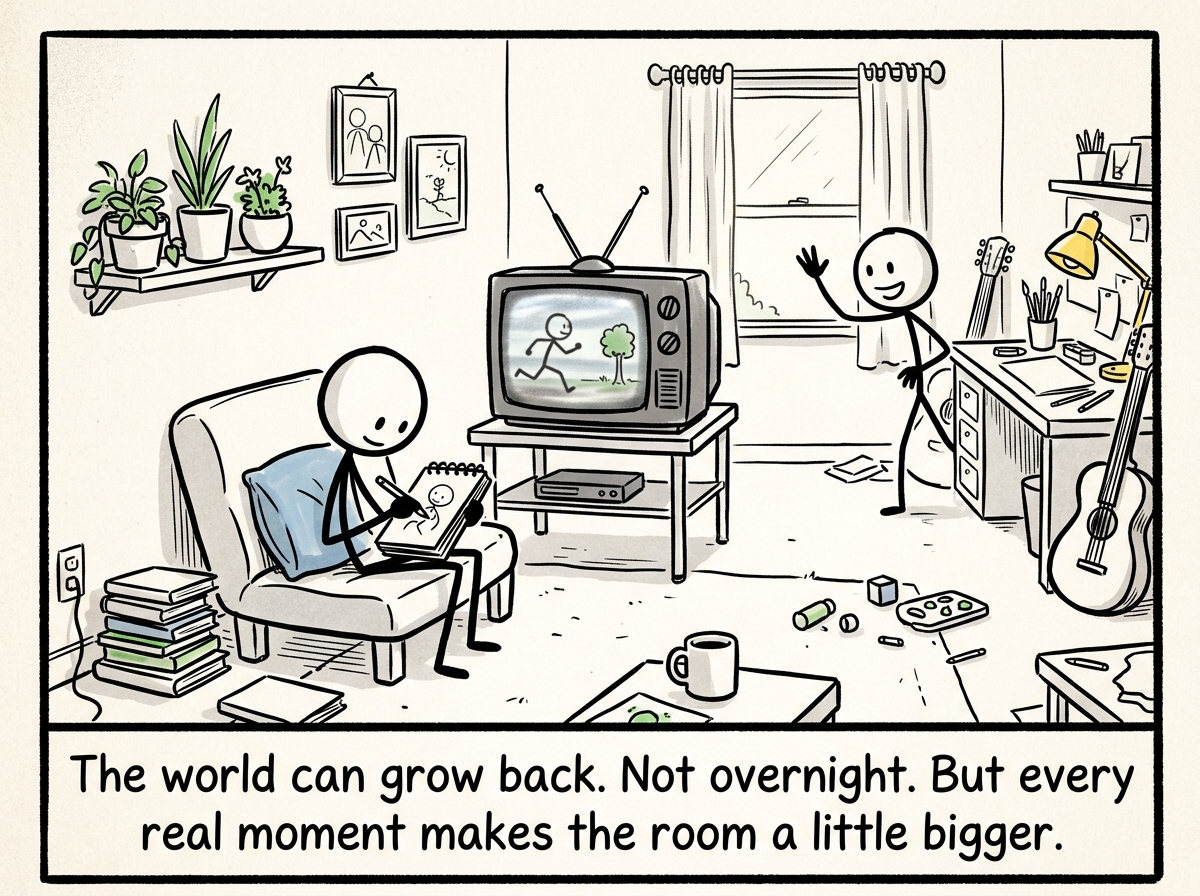
A person's world gradually shrinks as their screen consumption grows -- real relationships, intimacy, and connection fade to gray while the screen gets brighter and more demanding.
Explanation
It started as a curiosity. Then a habit. Then a ritual. Now the screen is the first thing you reach for in the morning and the last thing you close at night. Meanwhile, the rest of your world has been quietly shrinking. The partner lying next to you feels further away than the images on the screen. Conversations feel flat. Touch feels complicated. Real intimacy requires vulnerability, patience, and the terrifying risk of being seen -- and your brain, recalibrated by endless novelty, no longer has the tolerance for any of that. The screen gave you everything on demand. Reality asks you to wait, to try, to fail, to be imperfect. Reality lost. The neuroscience behind this pattern is well-documented. Valerie Voon's Cambridge research found that compulsive pornography users show heightened neural reactivity to pornographic cues but diminished response to normal sexual and social rewards -- a pattern called incentive salience that mirrors substance addiction. The Coolidge Effect compounds this: your brain is wired to respond more strongly to sexual novelty, and infinite online content exploits this wiring relentlessly. Over time, your baseline for arousal and engagement shifts upward, making real-world experiences feel insufficient by comparison. It is not that real life got worse. It is that the screen trained your brain to need more than real life can provide. The shrinking does not reverse overnight. Rebuilding a world that was compressed by compulsive consumption requires the same patience you lost access to. It starts with reclaiming boredom -- the empty space that the screen was designed to fill -- and learning that discomfort is not an emergency that requires a fix. The world can grow back. But only if you are willing to be in it long enough to notice.
Key Takeaway
The screen did not expand your world -- it replaced it, one click at a time.