The Life You Built from Rubble
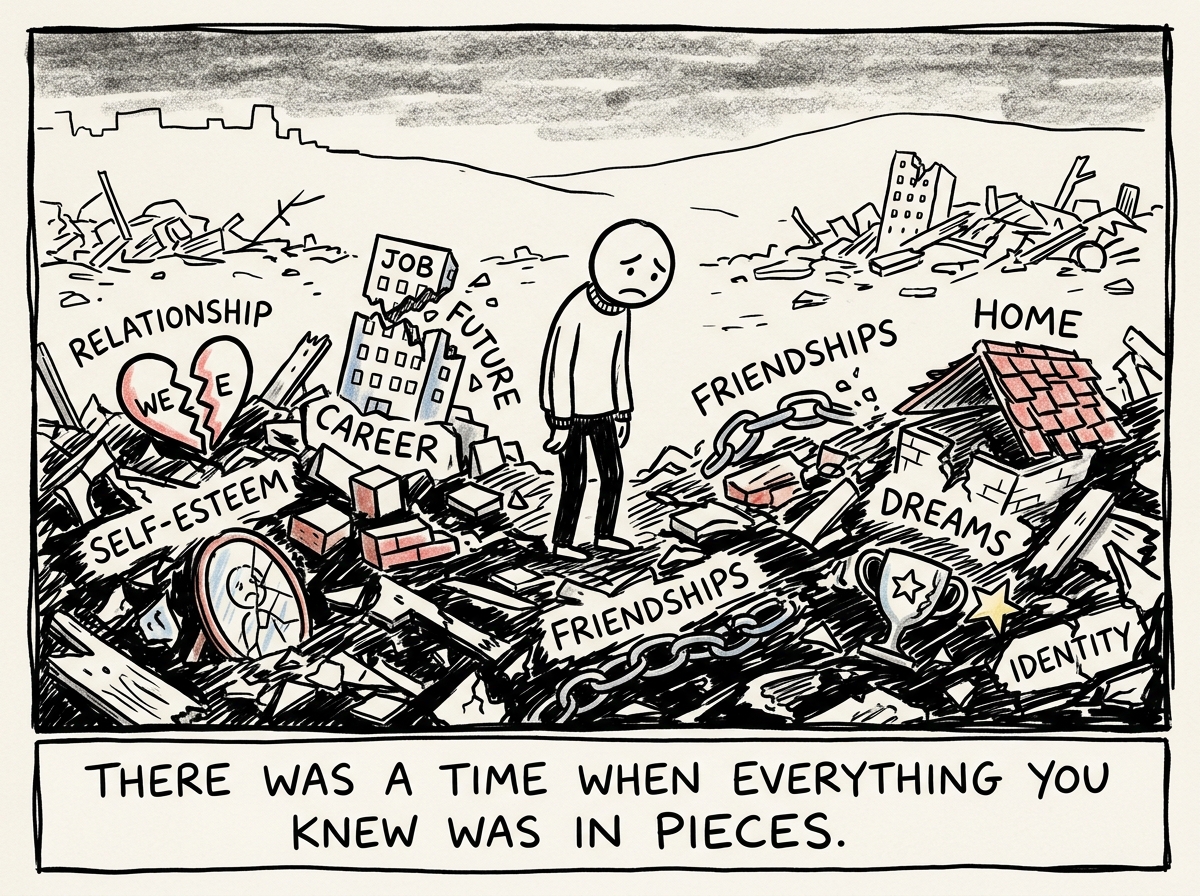
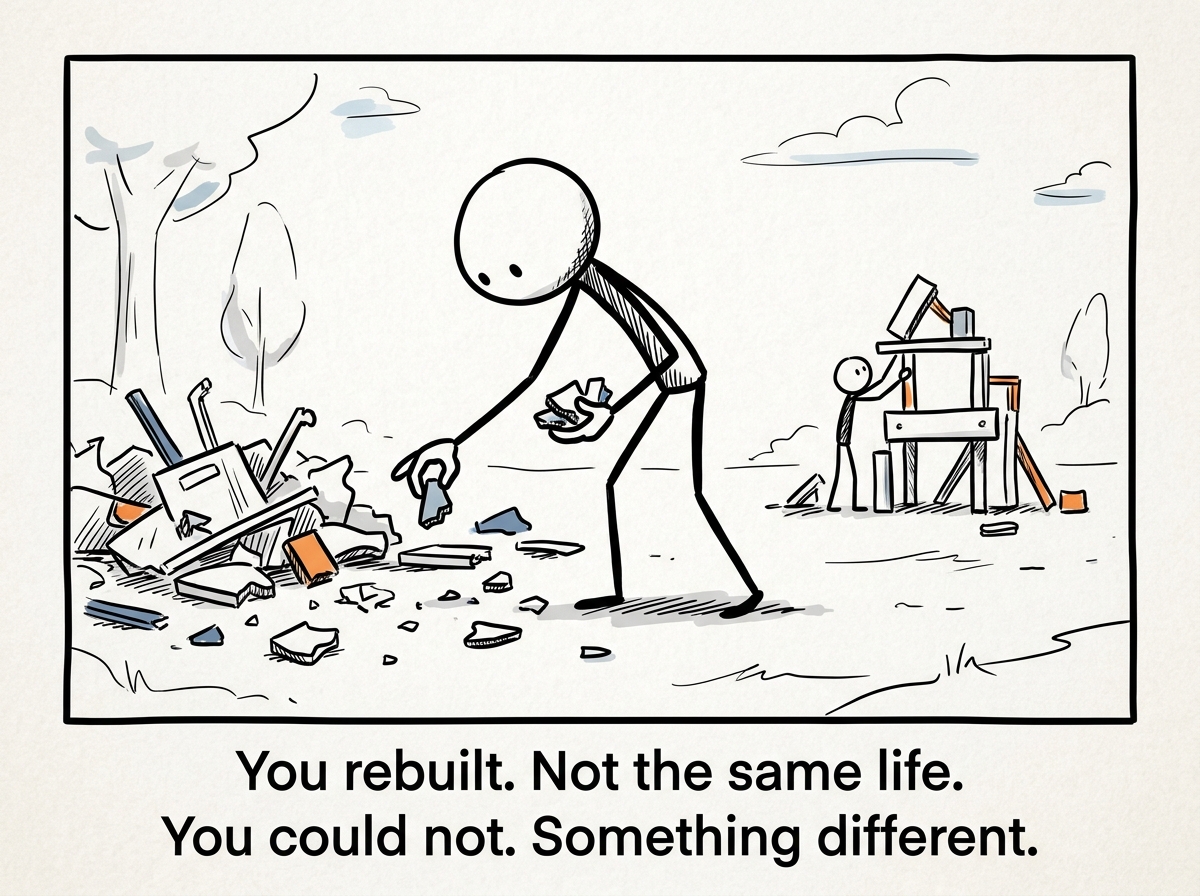
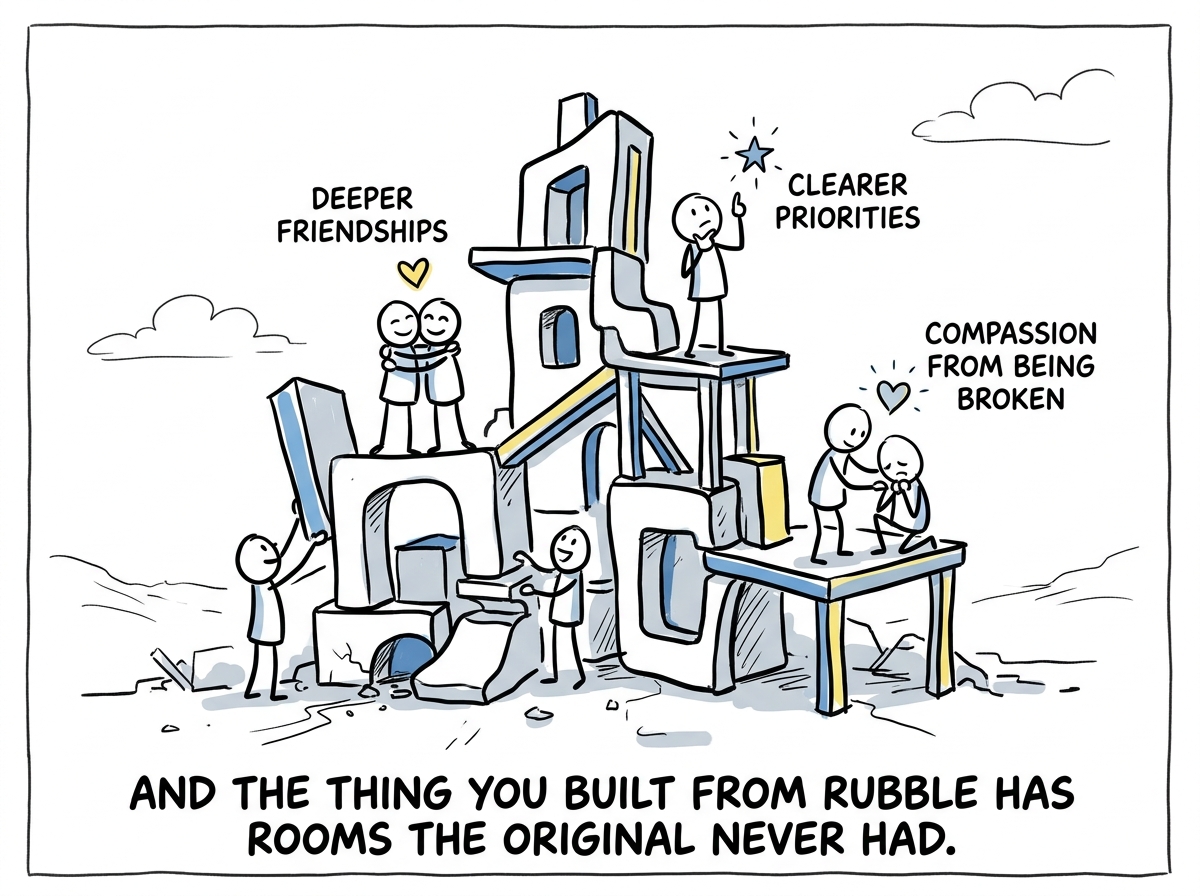
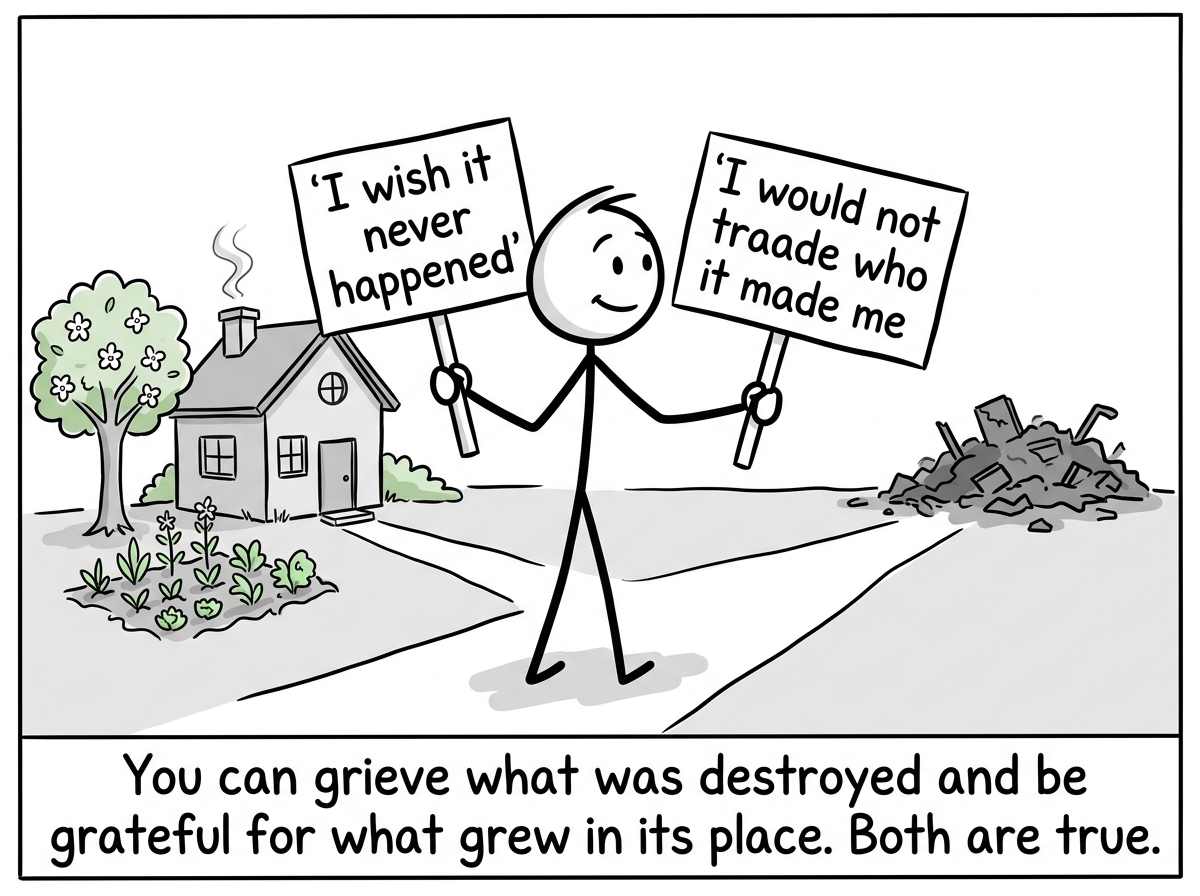
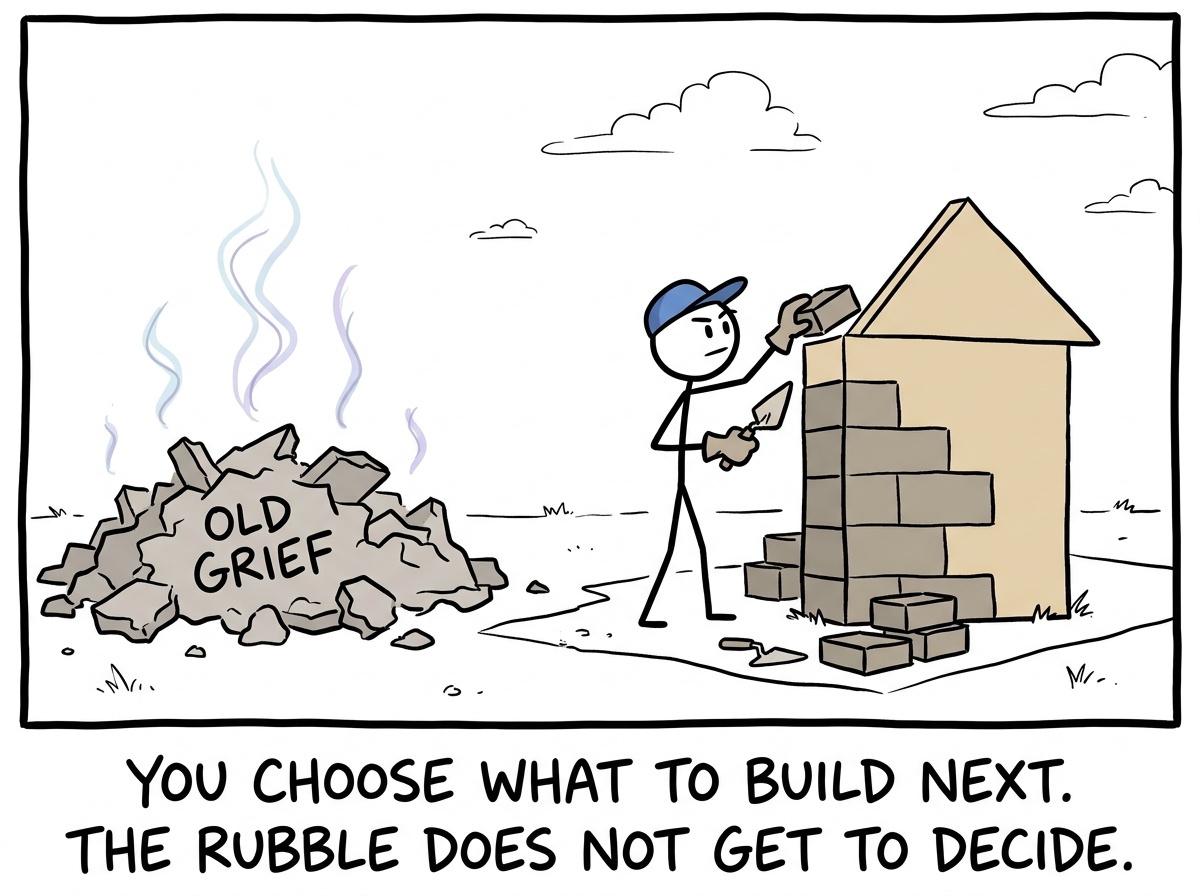
A person looks back at the devastation of their trauma and realizes that the life they have now -- the depth, the compassion, the clarity -- was built from the wreckage, not despite it.
Explanation
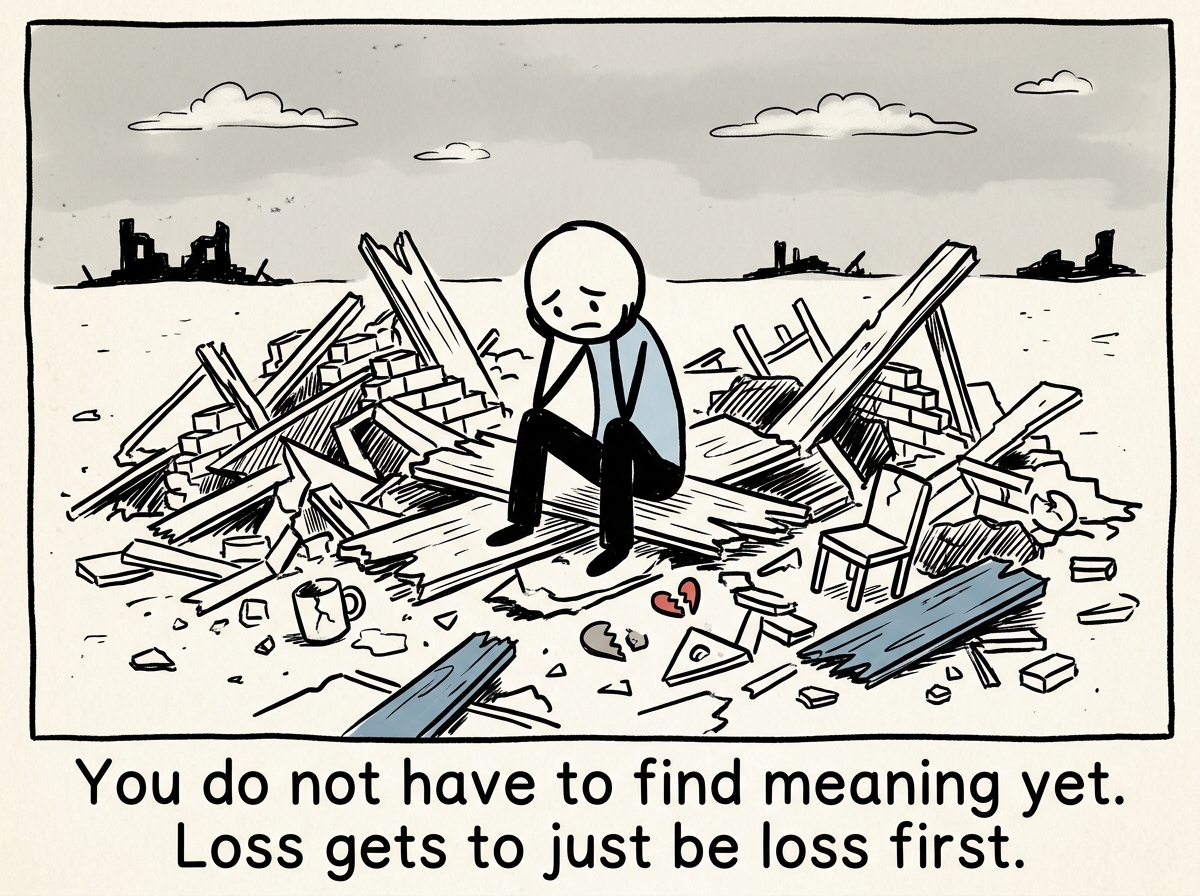
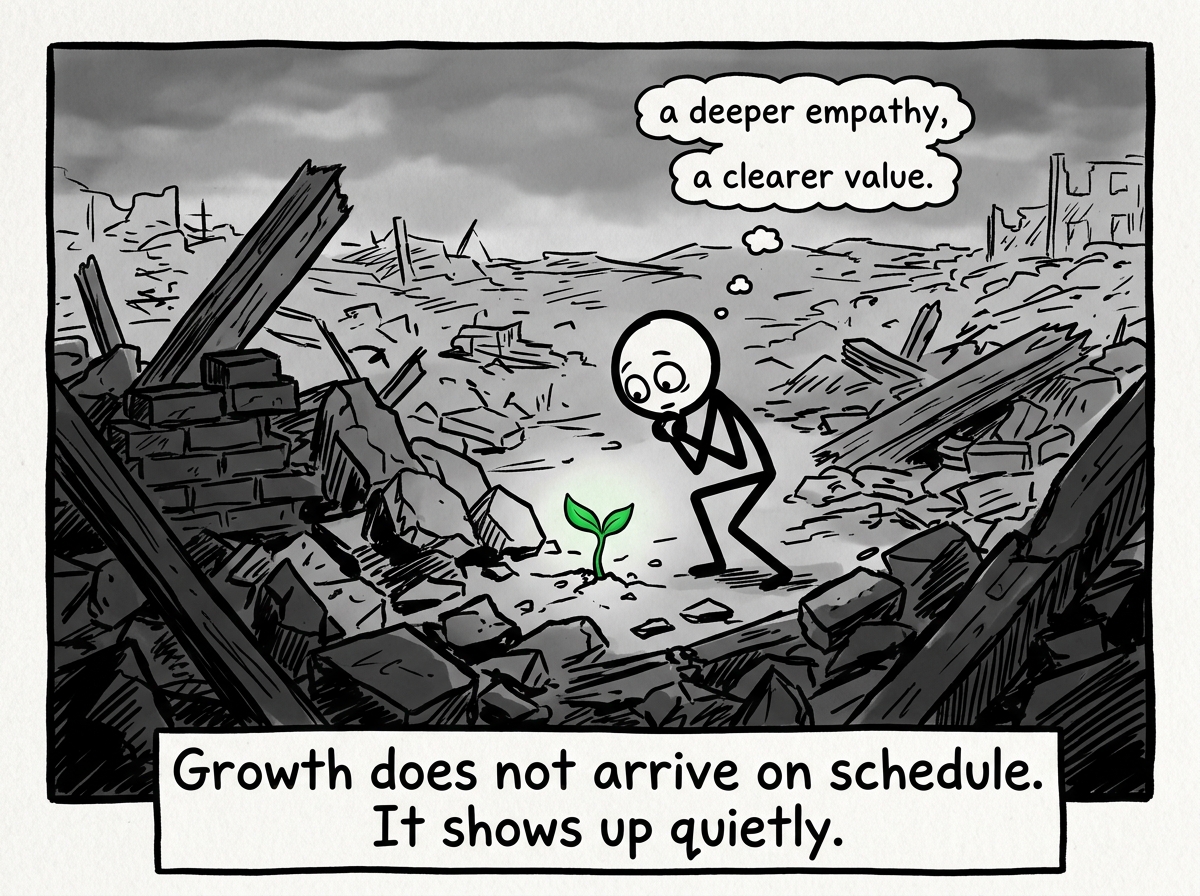
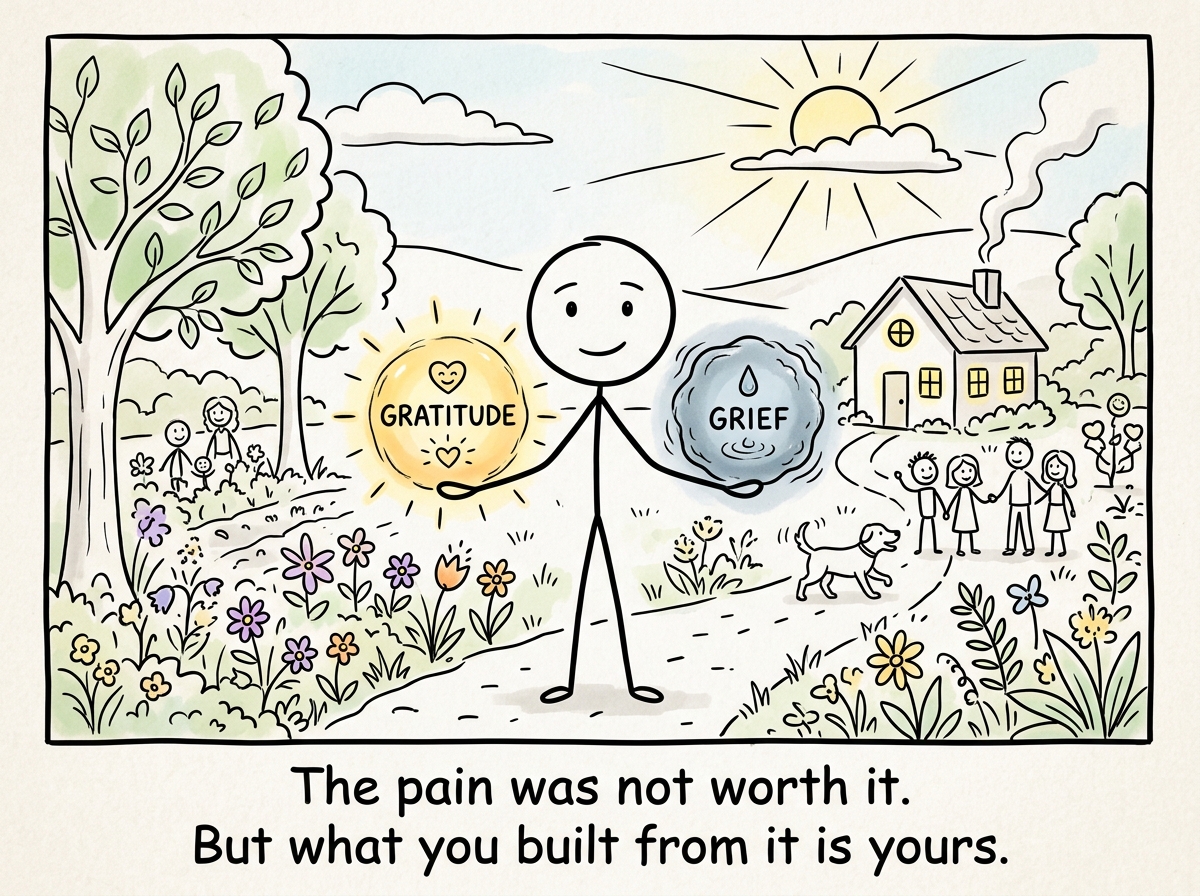
There was a time when everything fell apart. The relationship. The health. The sense of who you were. You lost things you thought you could not survive losing. And for a while, you did not do much besides survive. But something strange happened in the rebuilding. The new version of you -- the one assembled from broken pieces -- sees things differently. You notice beauty you used to walk past. You have friendships that are deeper than anything you had before. You know what matters to you with a clarity that only comes from having lost it. This is post-traumatic growth. Psychologists Richard Tedeschi and Lawrence Calhoun found that many trauma survivors do not just return to baseline -- they transform. Not because the trauma was good, but because the rebuilding process forced them to construct a new worldview, and the new one, built with hard-won wisdom, is often stronger and more intentional than the original. PTG commonly manifests as greater compassion for others who are suffering, a deeper sense of what is truly important, enhanced personal strength, and a richer spiritual or philosophical life. It is crucial to understand that post-traumatic growth does not cancel out the pain. You can simultaneously grieve what happened and appreciate who it made you. You can wish the devastation had never occurred and still be unwilling to trade the person it created. Holding both truths at once -- the loss and the growth -- is not a contradiction. It is the full, complicated reality of human resilience.
Key Takeaway
Post-traumatic growth does not mean the pain was worth it. It means the pain was not the end of the story.