Quiet Quitting: The Last Voluntary 'Extra'
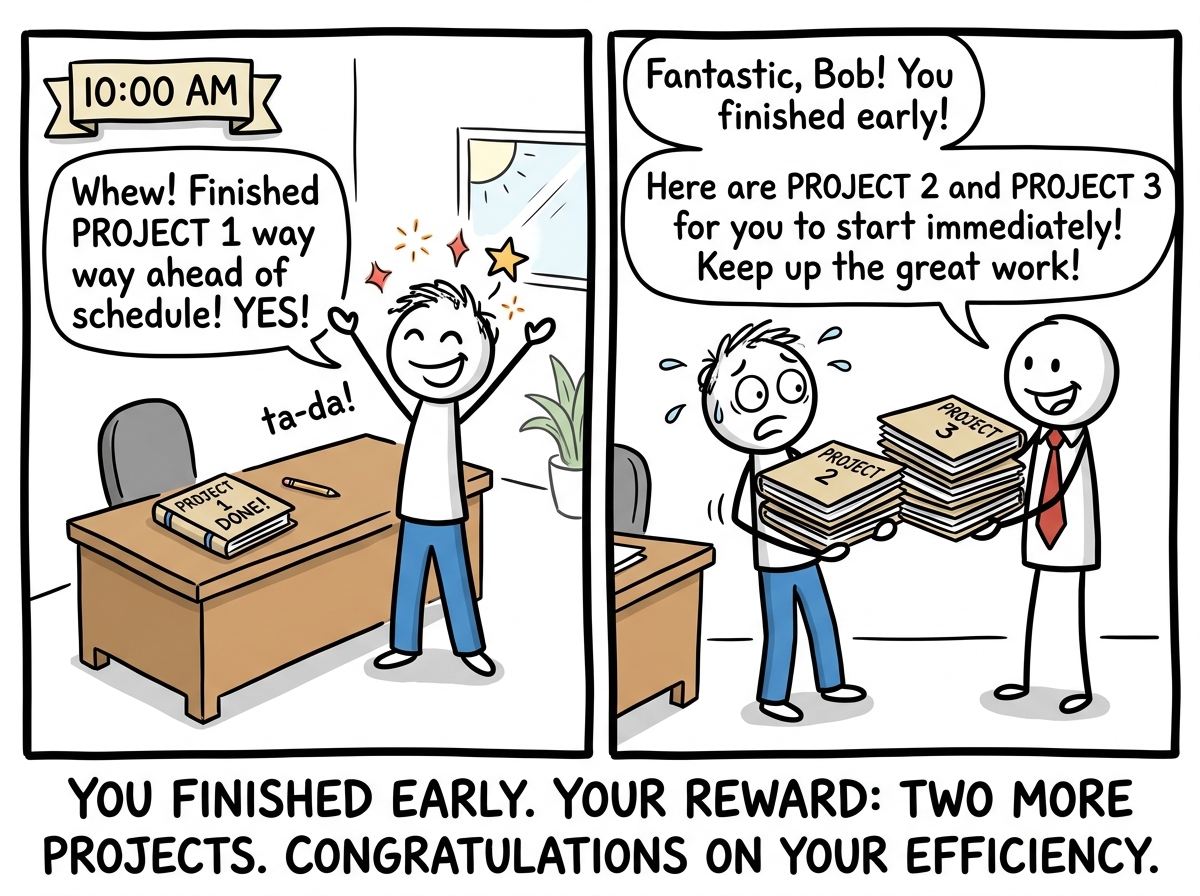
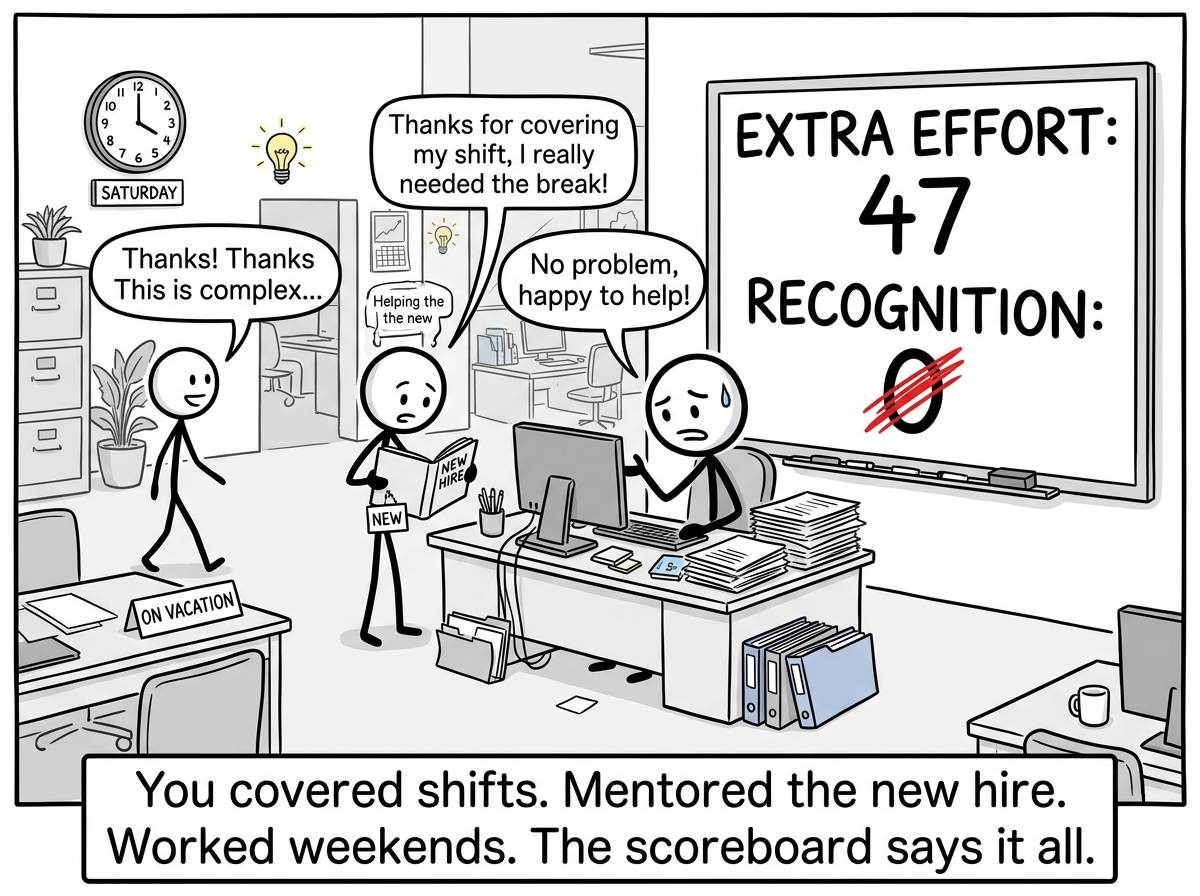
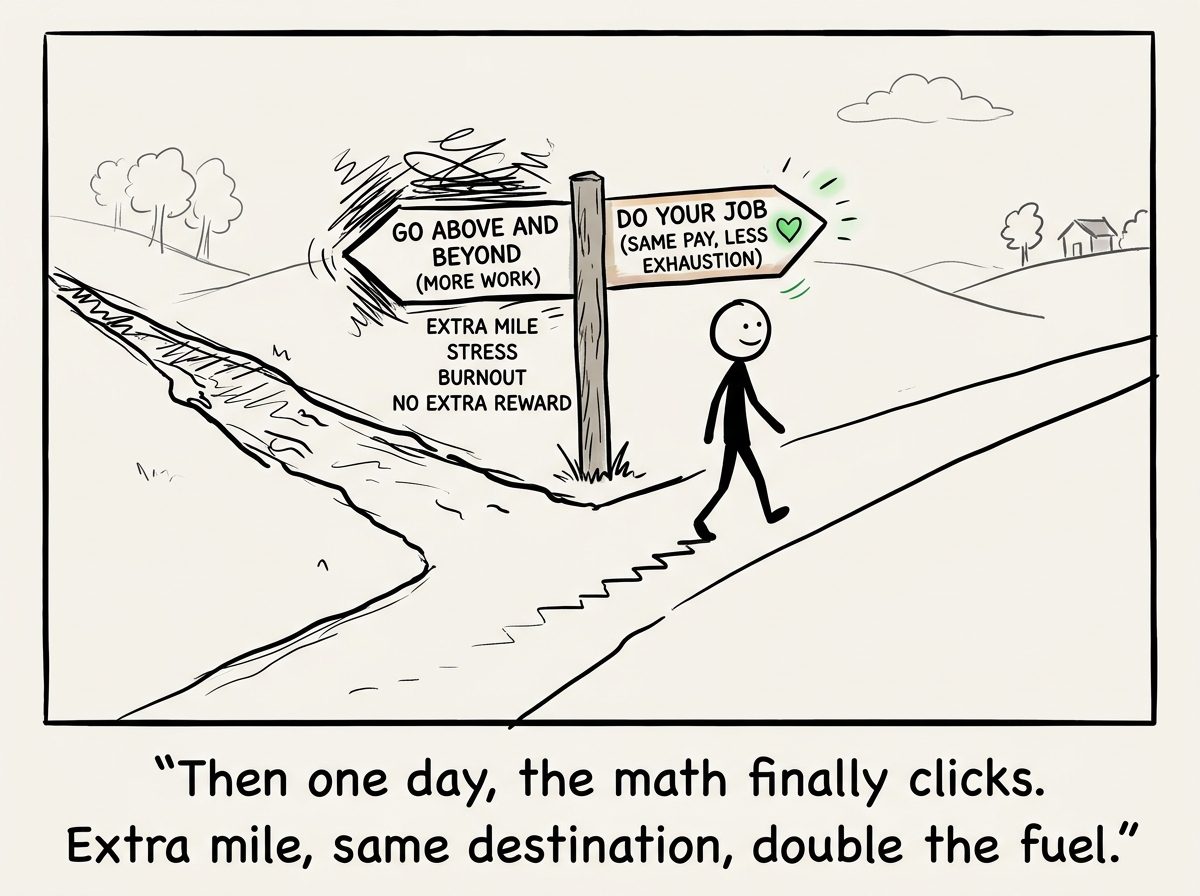
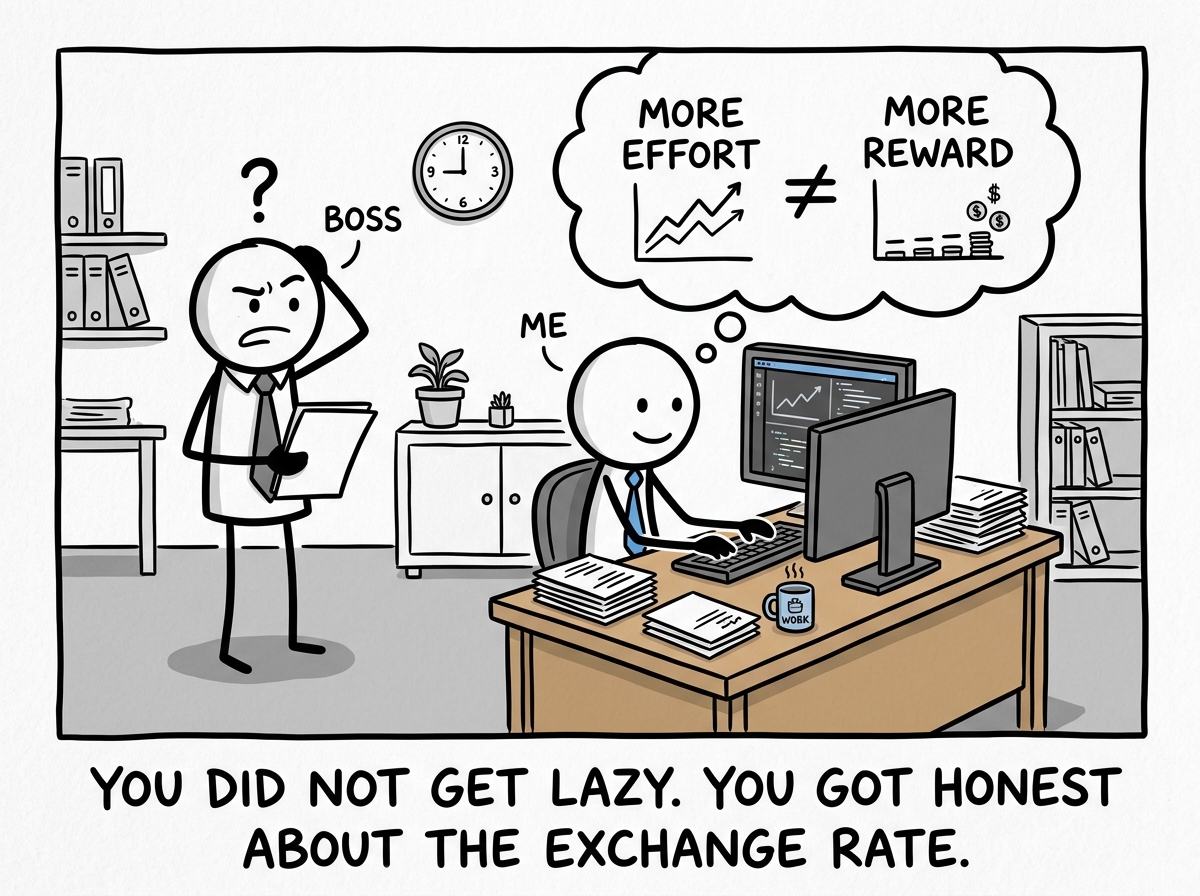
An employee who always went above and beyond finally stops after realizing that extra effort only results in more extra work, never recognition.
Explanation
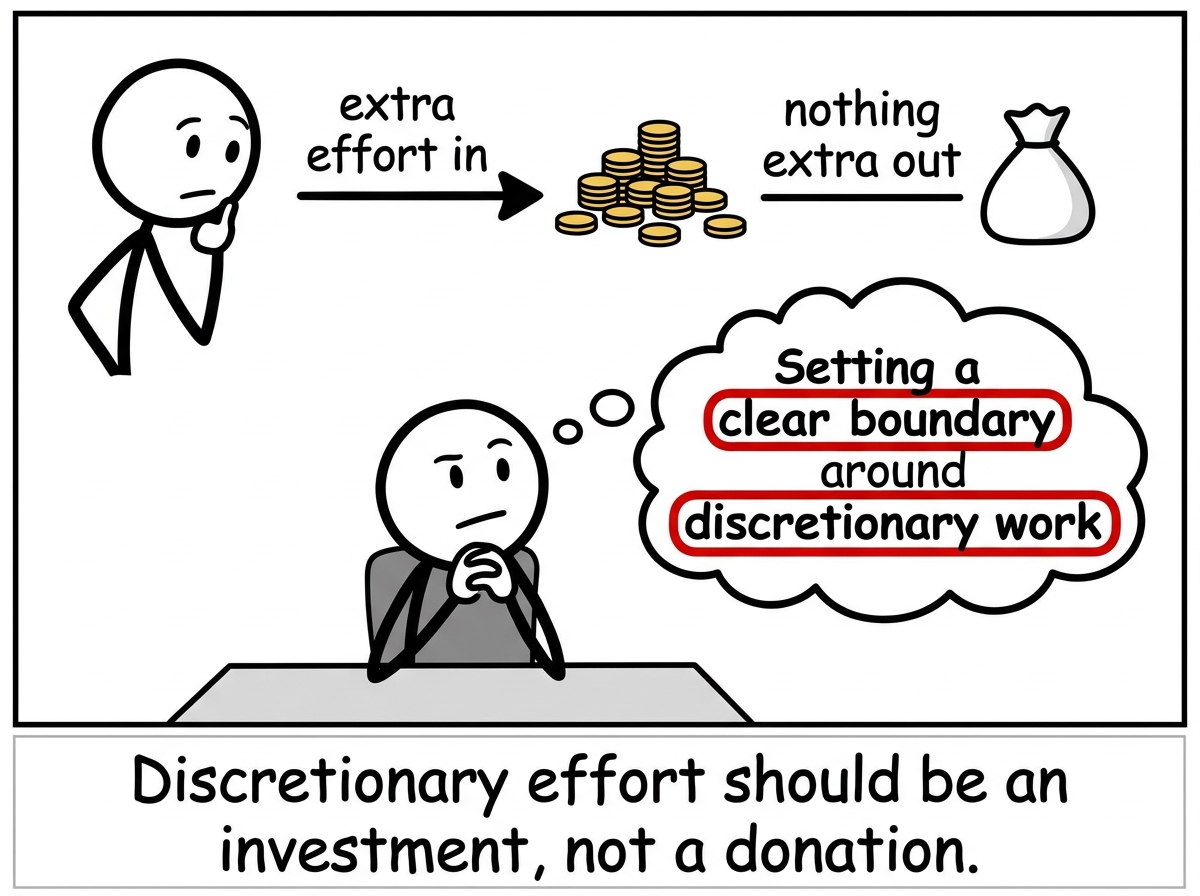
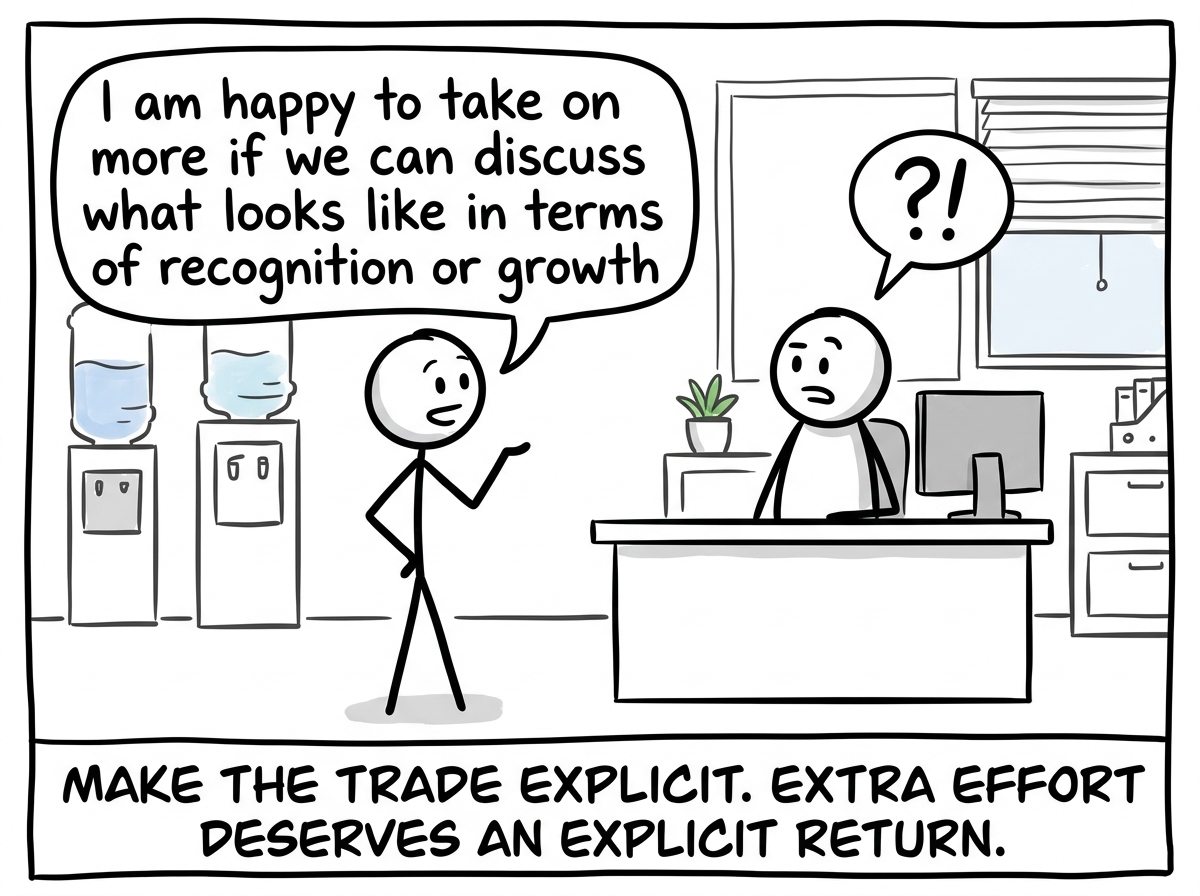
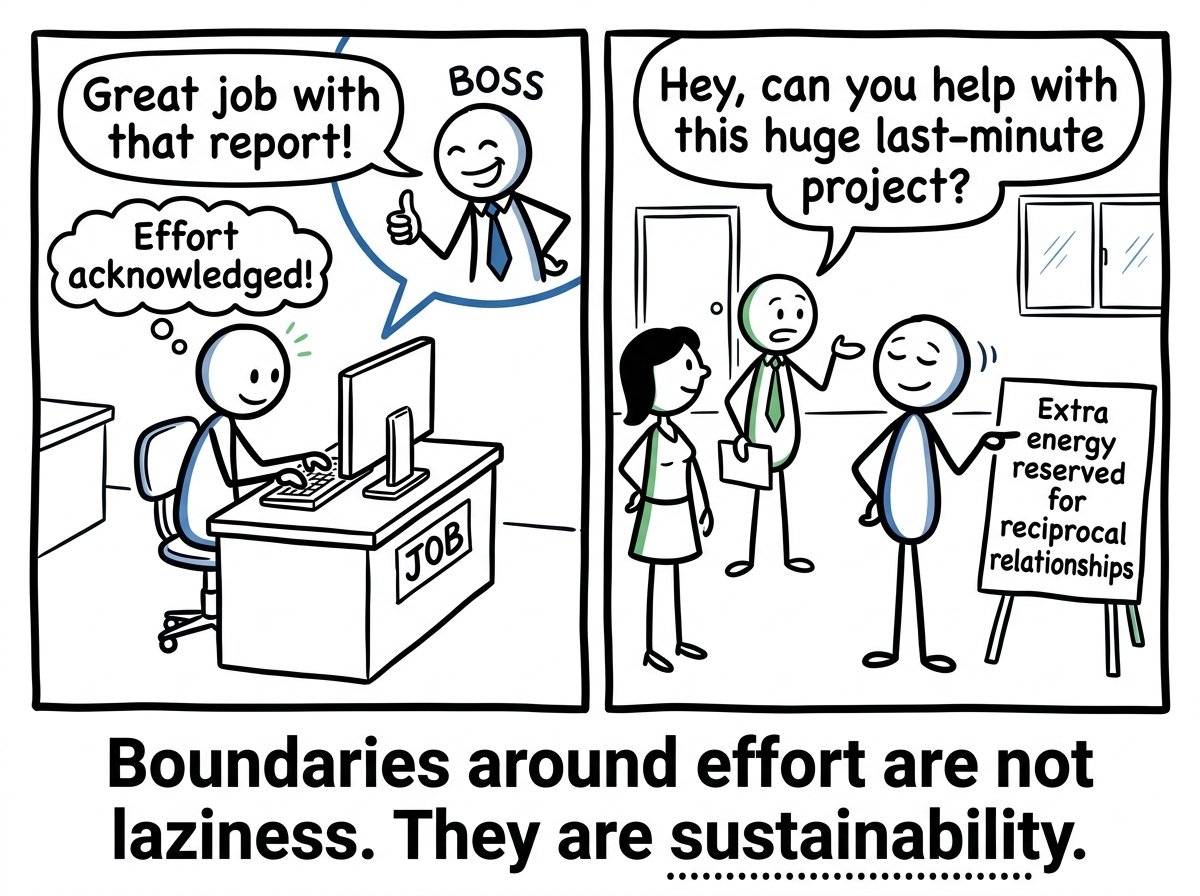
You finished the project early, so your boss gave you another one. You helped a struggling colleague, so now their workload is partially yours. You worked through the weekend, and your reward was a Monday morning email asking if you could also handle the quarterly review. At some point, the math became undeniable: extra effort does not earn recognition in this place. It earns more work. So you stopped. Not dramatically. Not angrily. You just quietly drew a line at your job description and refused to cross it. This is the economics of quiet quitting. When going above and beyond consistently produces the same outcome -- more demands with no additional recognition, compensation, or advancement -- the rational actor eventually stops investing. Organizational behavior research calls this the effort-reward imbalance model, developed by Johannes Siegrist. When the effort you put in chronically exceeds the rewards you receive, it creates a state of distress that predicts burnout, disengagement, and eventually, withdrawal. Your brain is not being lazy. It is being efficient. It learned that the extra mile leads to the same place as the required mile, except you arrive more exhausted. The healthier response is to set boundaries around discretionary effort -- the work you choose to do beyond your role. Discretionary effort should be an investment, not a donation. If you consistently give more and receive nothing in return, it is not a work ethic problem. It is an environment that has confused generosity with a renewable resource.
Key Takeaway
When extra effort only earns extra work, stopping is not laziness -- it is the moment you finally do the math.