
The Procrastination-Shame Cycle
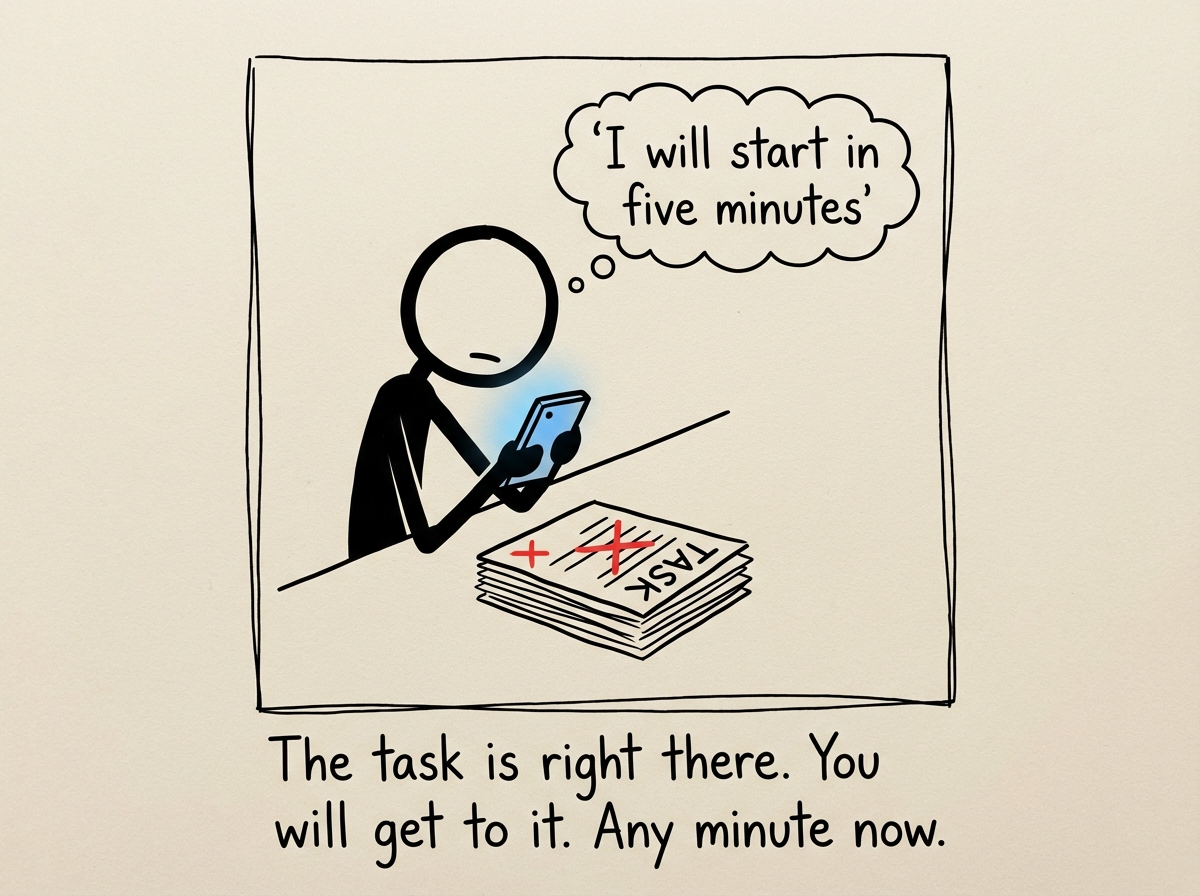
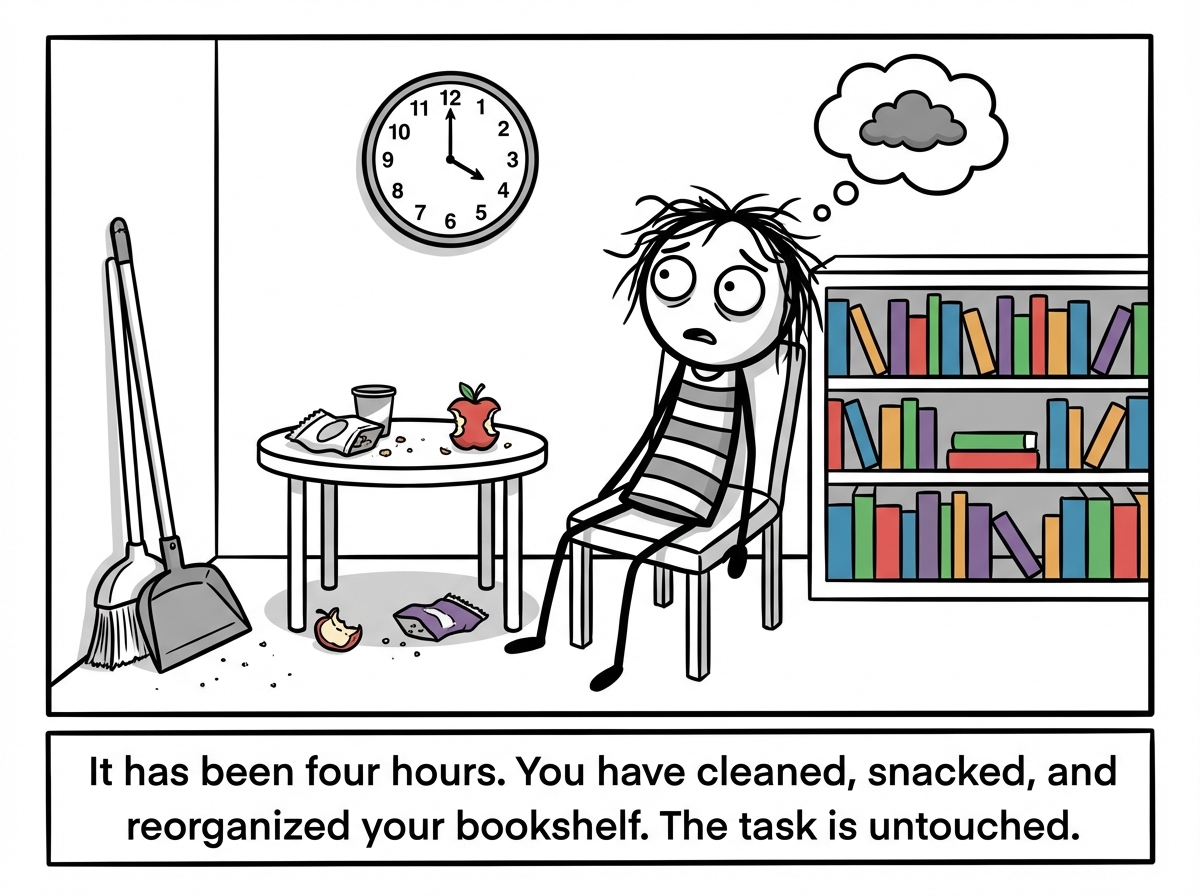
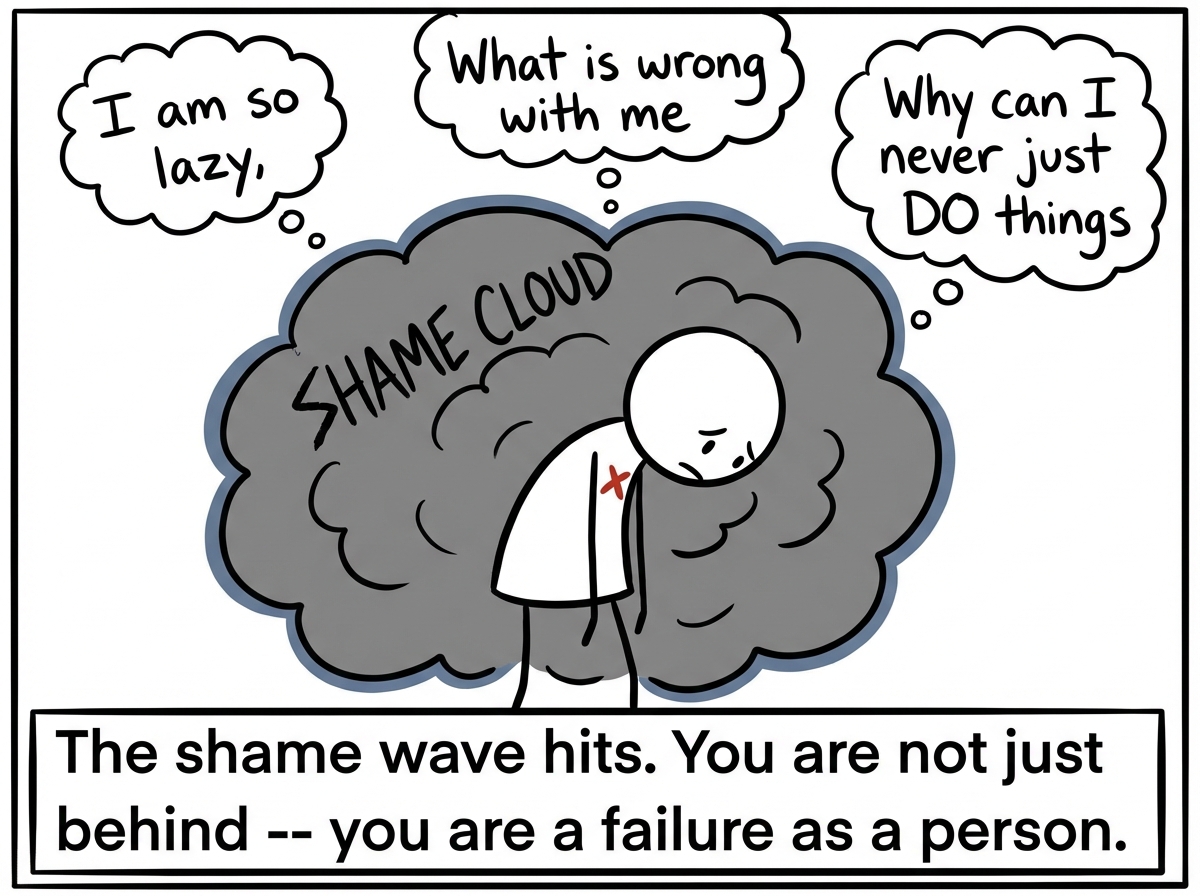
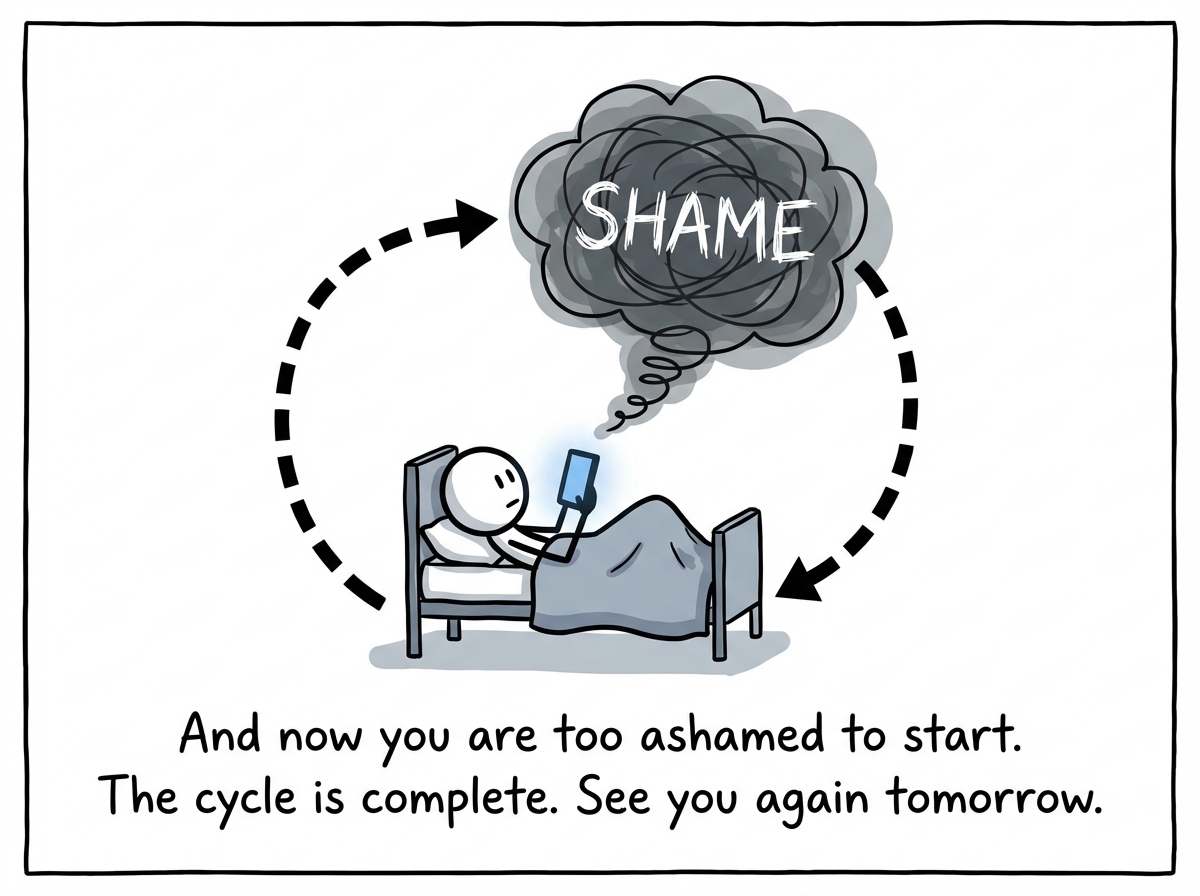
A person procrastinates on an important task, feels shame about procrastinating, and then uses that shame as a reason to procrastinate even more -- creating a vicious cycle.
Explanation
The procrastination-shame cycle is one of the most common forms of self-sabotage, and almost everyone has experienced it. You have a task to complete. You know it is important. You intend to do it. But instead, you scroll your phone, reorganize your desk, or start a different project entirely. As the deadline approaches, shame sets in: 'Why did I not start earlier? What is wrong with me? I am so lazy.' And here is where the cycle becomes truly vicious: that shame does not motivate you to work. It paralyzes you further. You now need to avoid not just the task itself, but the terrible feelings associated with having avoided it. Most people believe procrastination is about laziness or poor time management. Research tells a different story. Dr. Tim Pychyl and Dr. Fuschia Sirois have shown that procrastination is primarily an emotional regulation problem. You are not avoiding the task -- you are avoiding the negative emotions associated with the task: boredom, frustration, self-doubt, fear of failure, or fear of judgment. The short-term emotional relief of avoidance feels better than the discomfort of starting. Your brain chooses present comfort over future well-being because, neurologically, present emotions are weighted more heavily than future consequences. Breaking the cycle requires targeting the emotion, not the behavior. Instead of 'I just need more discipline,' try 'What feeling am I avoiding right now?' Name the emotion. Acknowledge it. Then commit to working for just five minutes -- not to finish, just to start. The five-minute commitment works because starting is almost always the hardest part. Once you are in motion, the emotional resistance usually decreases. And critically, replace shame with self-compassion. Shame says 'I am a failure.' Self-compassion says 'I struggled, and I am going to try again.' Only one of those leads to action.
Key Takeaway
Procrastination is not a laziness problem -- it is an emotion problem wearing a productivity disguise.
A stick figure staring at the task and asking 'What feeling am I avoiding right now?' instead of 'Why am I so lazy?'
The stick figure naming the feeling -- 'I am afraid it will not be good enough' -- and committing to just five minutes of work
The stick figure five minutes in, still working, the resistance fading, the task no longer feeling impossible
The stick figure finishing with self-compassion, thought bubble reading 'I struggled and I tried again. That is enough.'