The Body Keeps the Score (Literally)
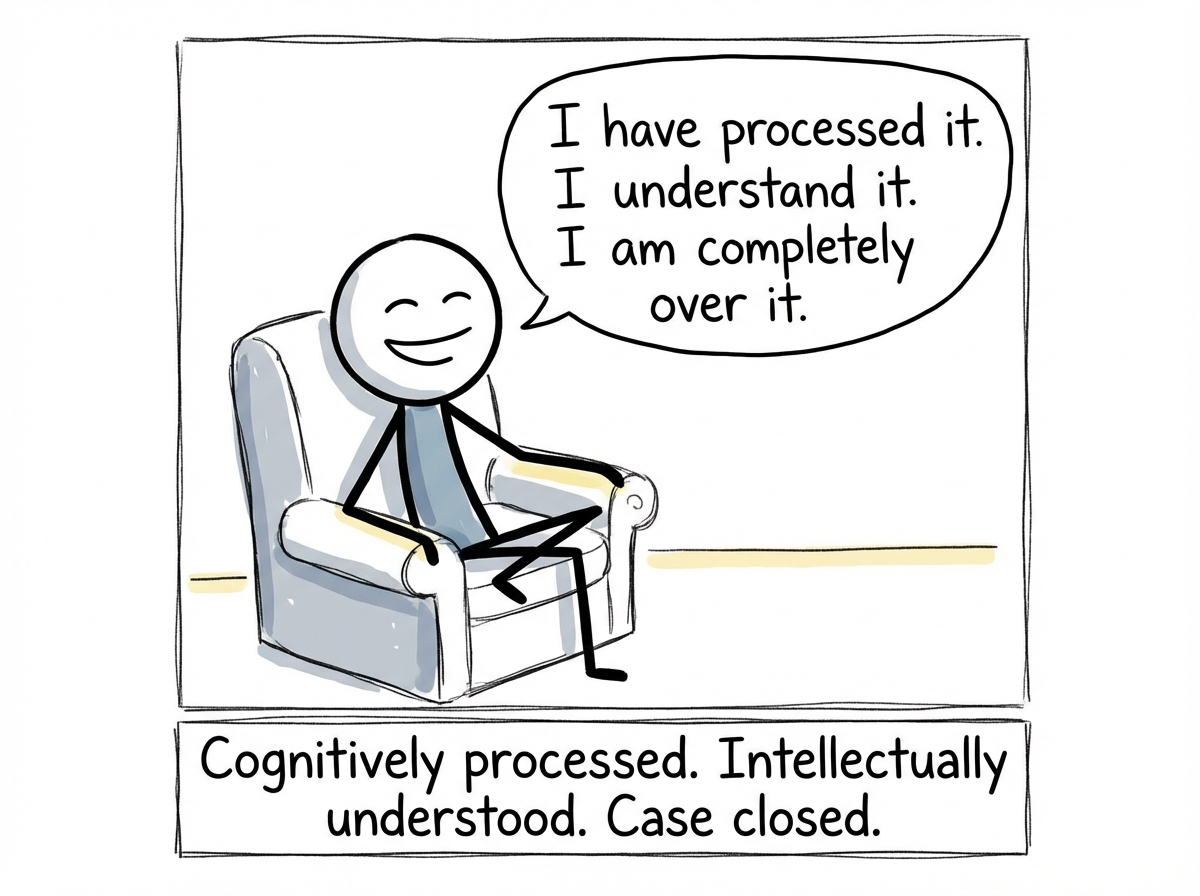
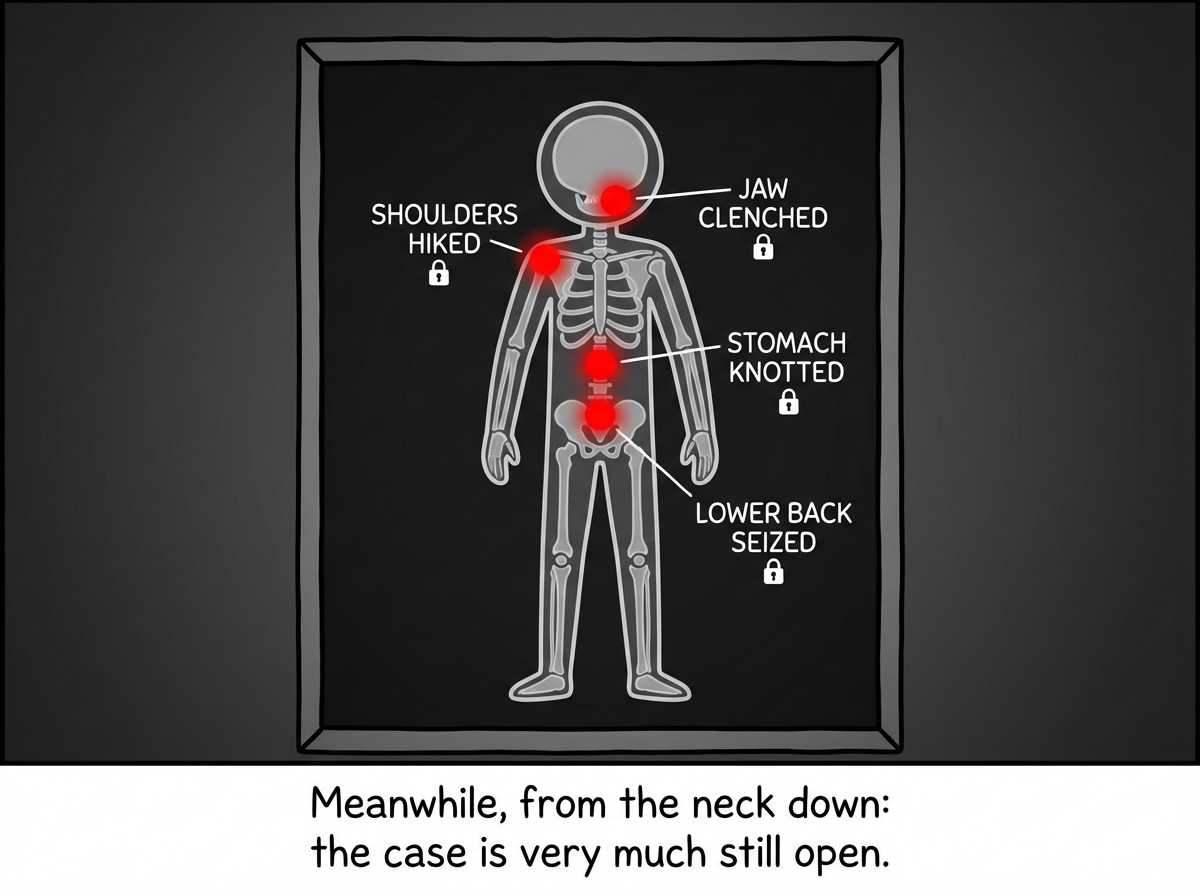
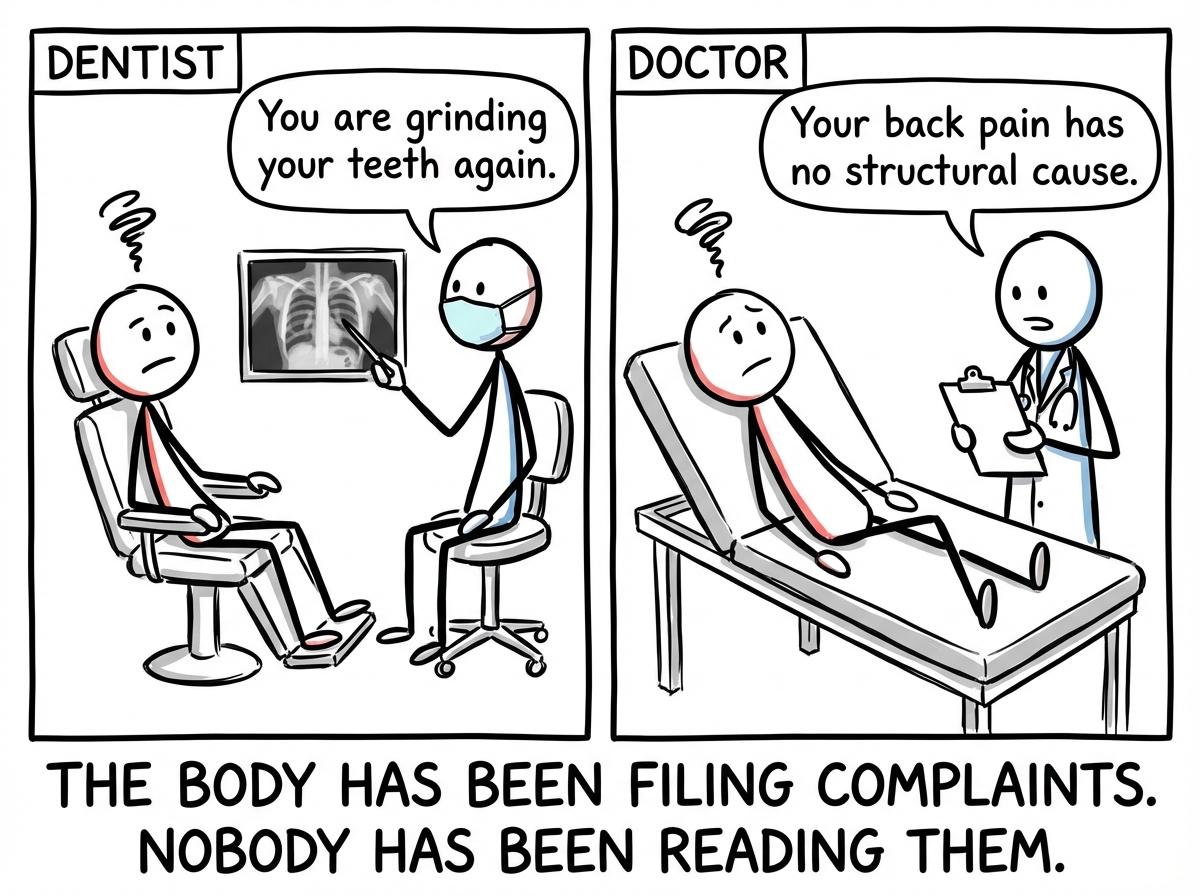
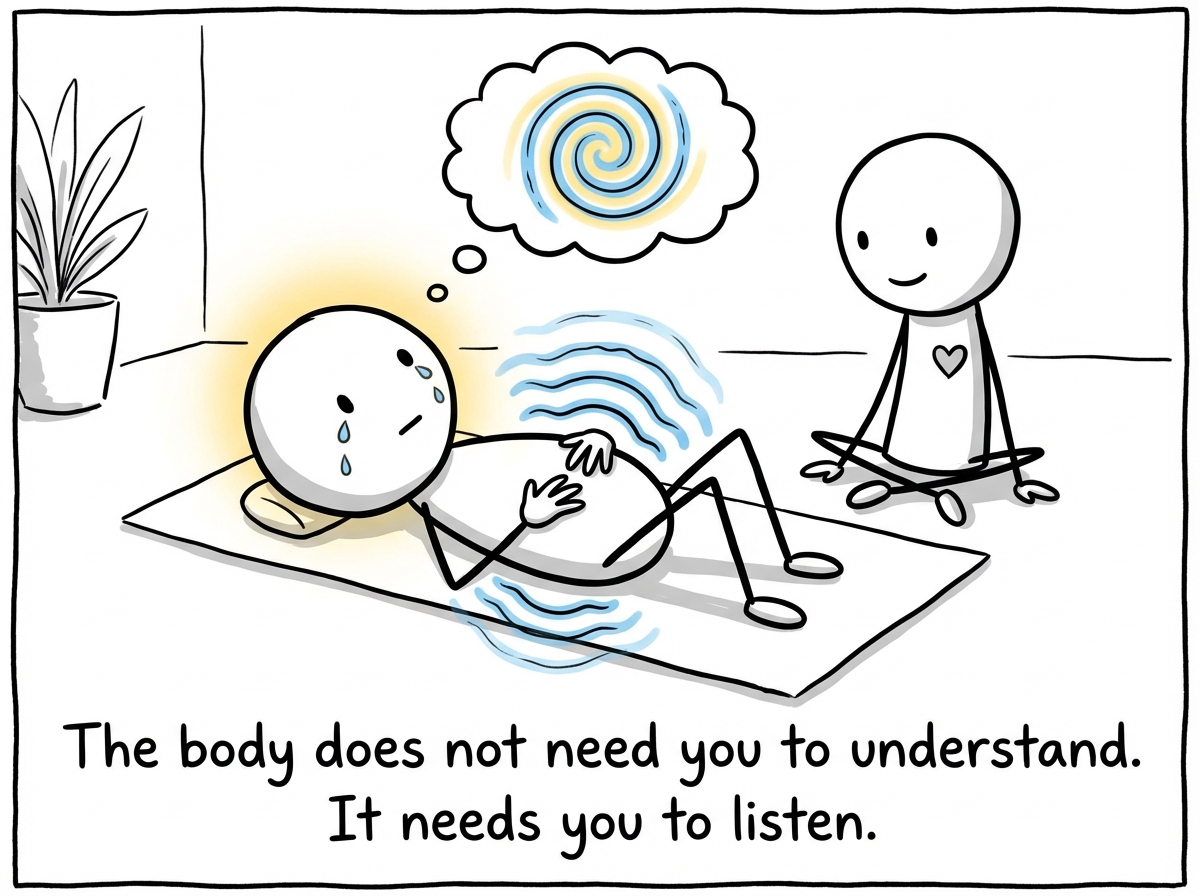
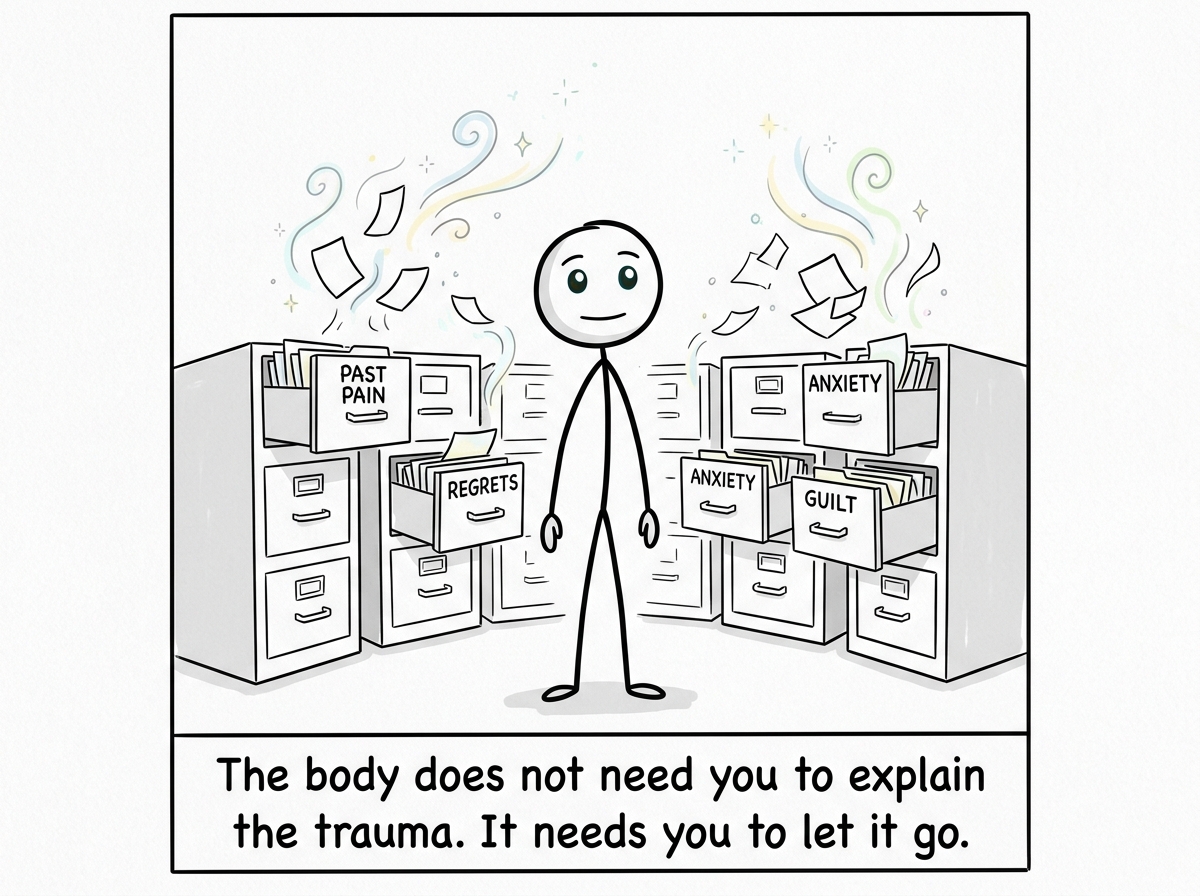
A person insists they are 'over it' while their body stores the trauma in their shoulders, jaw, stomach, and lower back like a series of locked filing cabinets.
Explanation
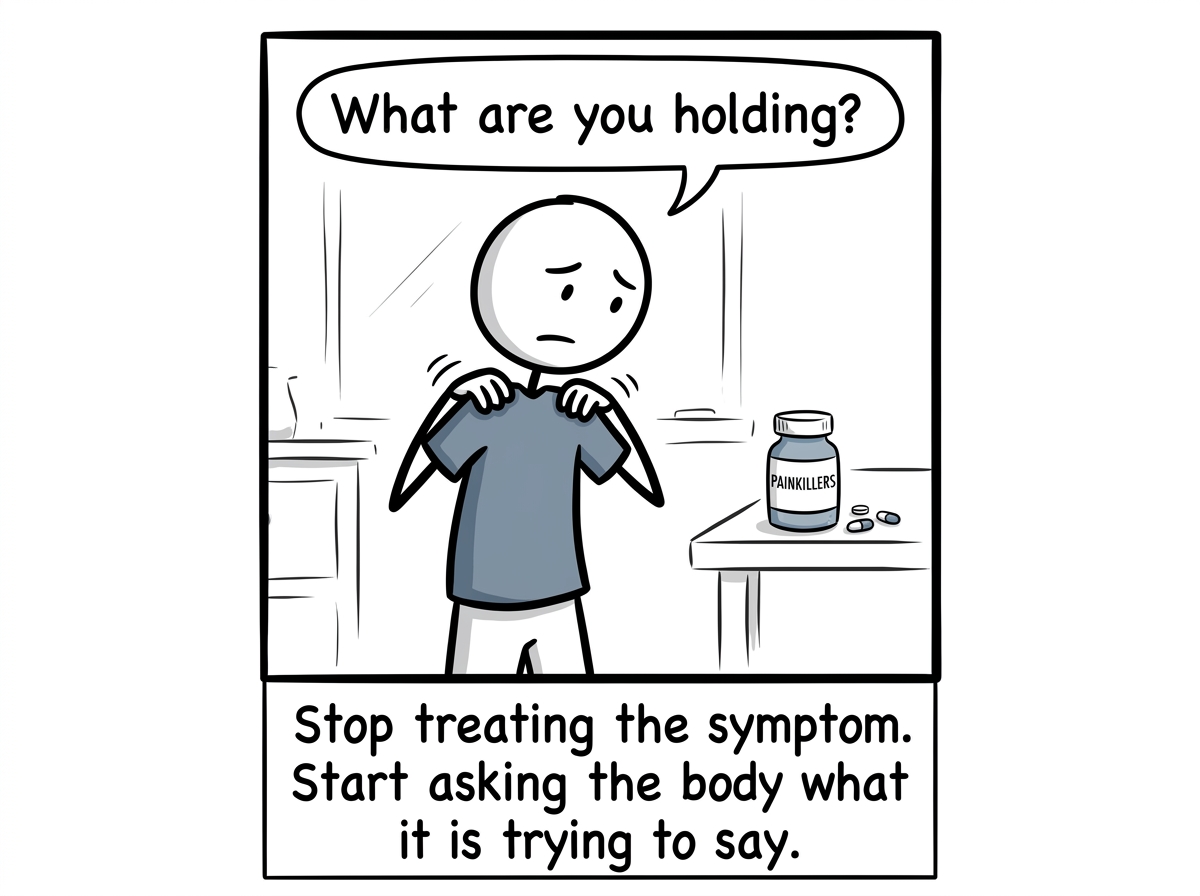
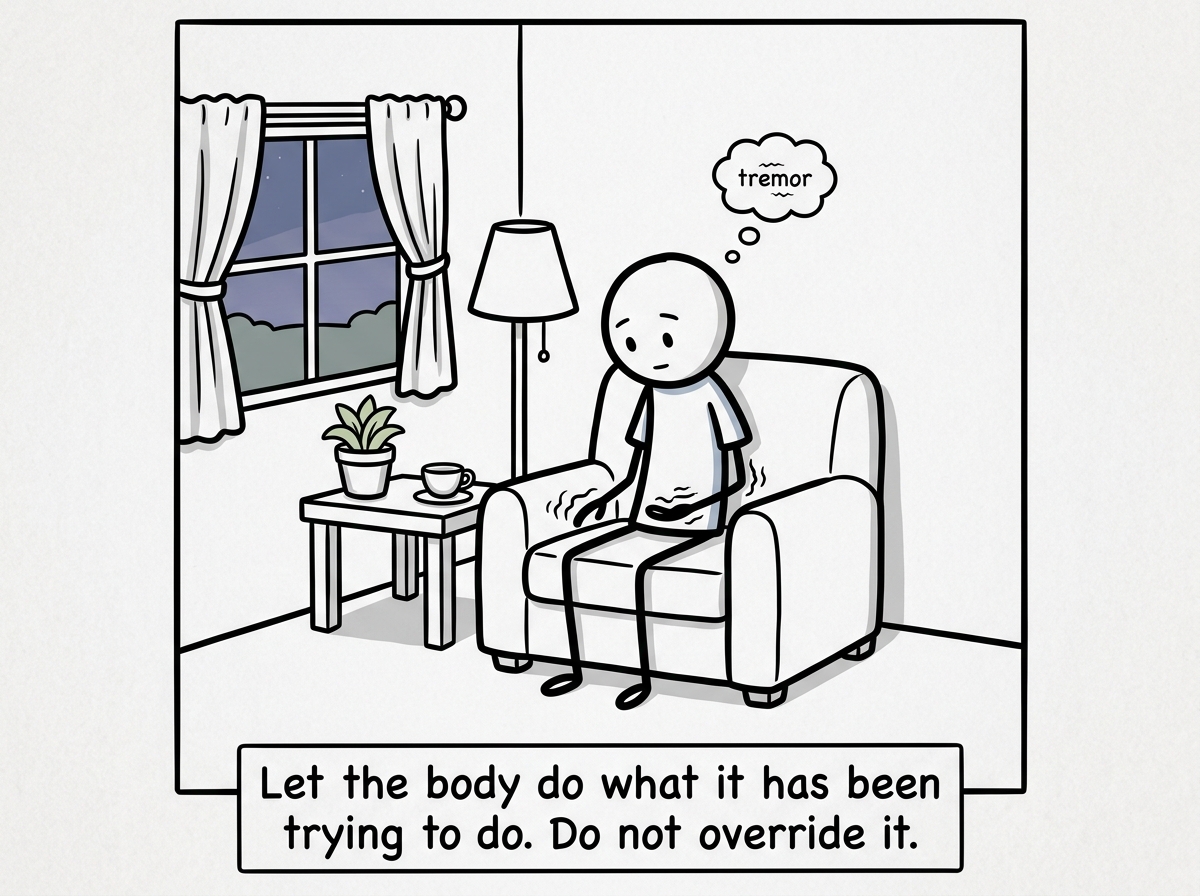
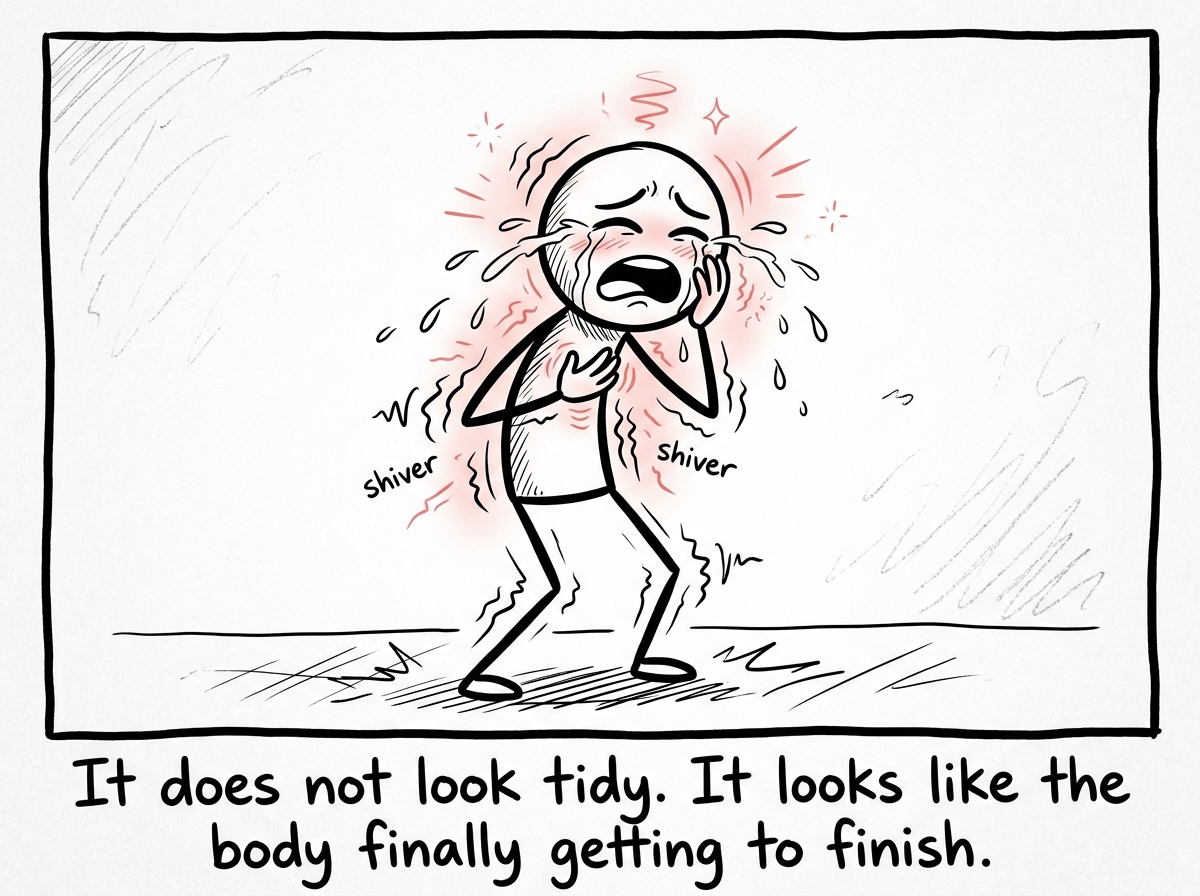
You have done the work. You have talked about it in therapy. You understand what happened, why it happened, and how it affected you. Cognitively, you have processed it. You are over it. Except your shoulders are up around your ears. Your jaw is clenched so tight your dentist has concerns. Your stomach is a permanent knot. And your lower back went out again last week for no apparent reason. You are 'over it' from the neck up. From the neck down, the trauma is still very much in session. Peter Levine's Somatic Experiencing framework explains why this happens. When you experience a threat, your body mobilizes a massive amount of survival energy -- adrenaline, cortisol, muscle tension, the urge to fight or flee. If that energy gets discharged (through movement, shaking, crying, or completing the escape), the nervous system returns to baseline. But if the response gets interrupted -- because you froze, because you had to stay calm, because you were a child with nowhere to go -- that survival energy gets trapped in the body. It does not expire. It just waits. And it expresses itself as chronic tension, pain, and a body that startles at triggers your conscious mind has long moved past. Somatic Experiencing works by gently reconnecting you with these stored sensations and allowing the incomplete survival responses to finish. This might look like noticing a tremor in your legs and letting it happen instead of suppressing it, or feeling the urge to push away and following that impulse in a safe environment. The goal is not to re-traumatize you. It is to let your body finally receive the memo that the danger has passed.
Key Takeaway
You can understand your trauma intellectually and still carry it in your body -- healing requires letting the body finish what it started.