The Apology They Never Got
When you apologize to your child after losing your temper and realize no adult ever did that for you.
Explanation
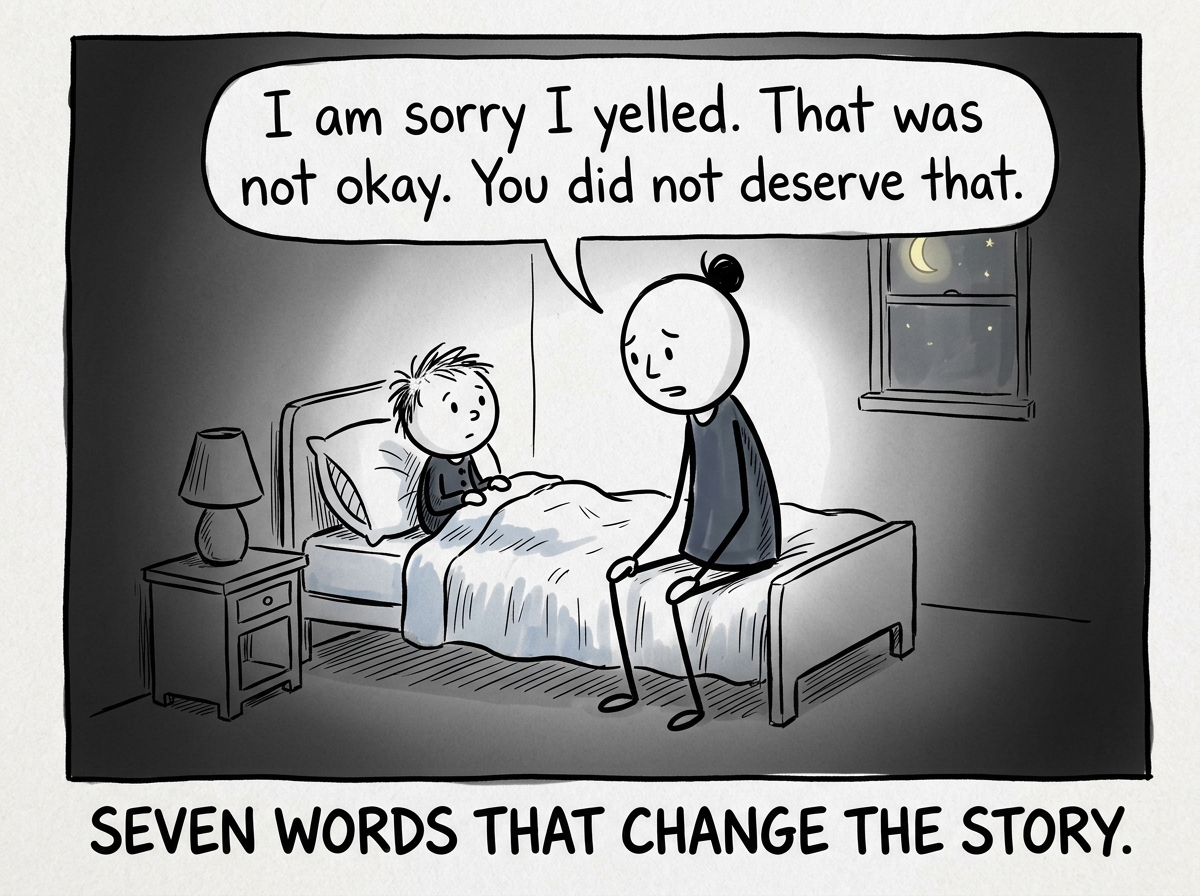
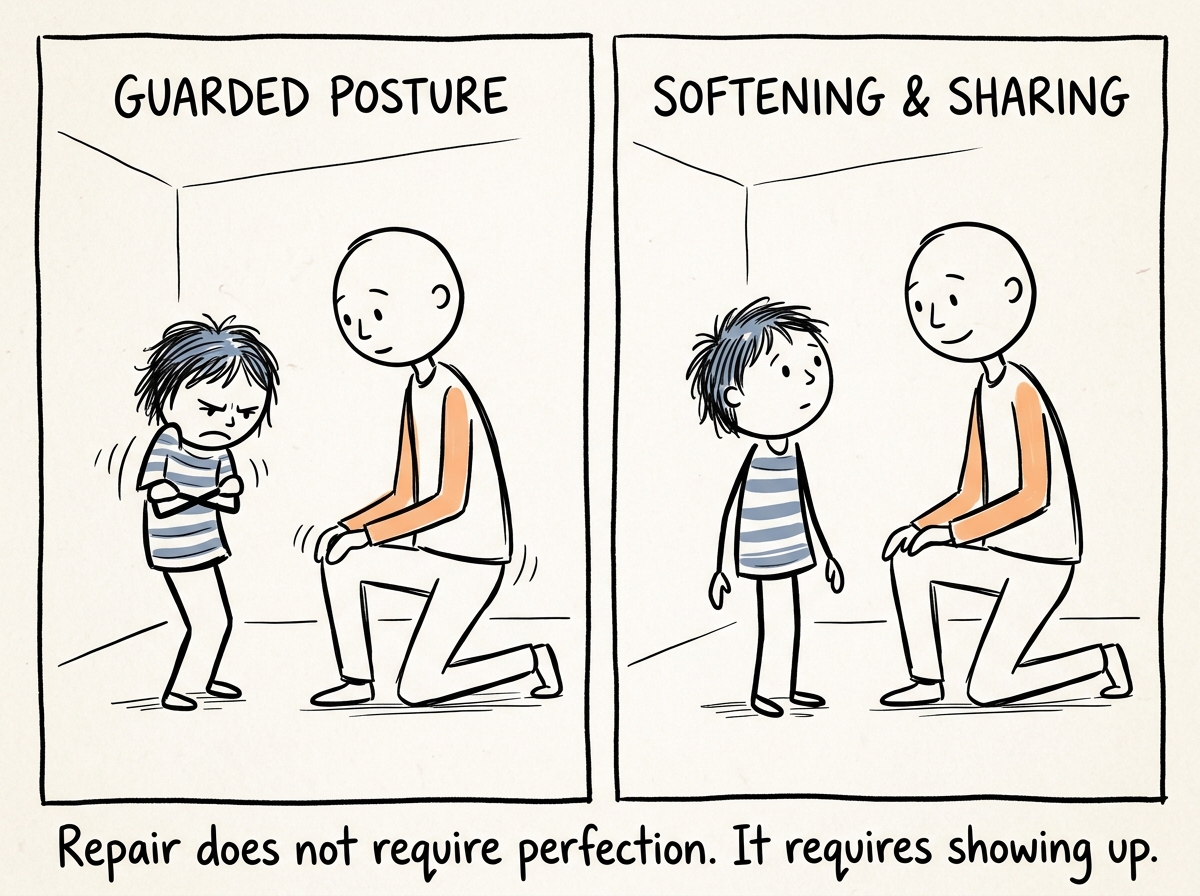
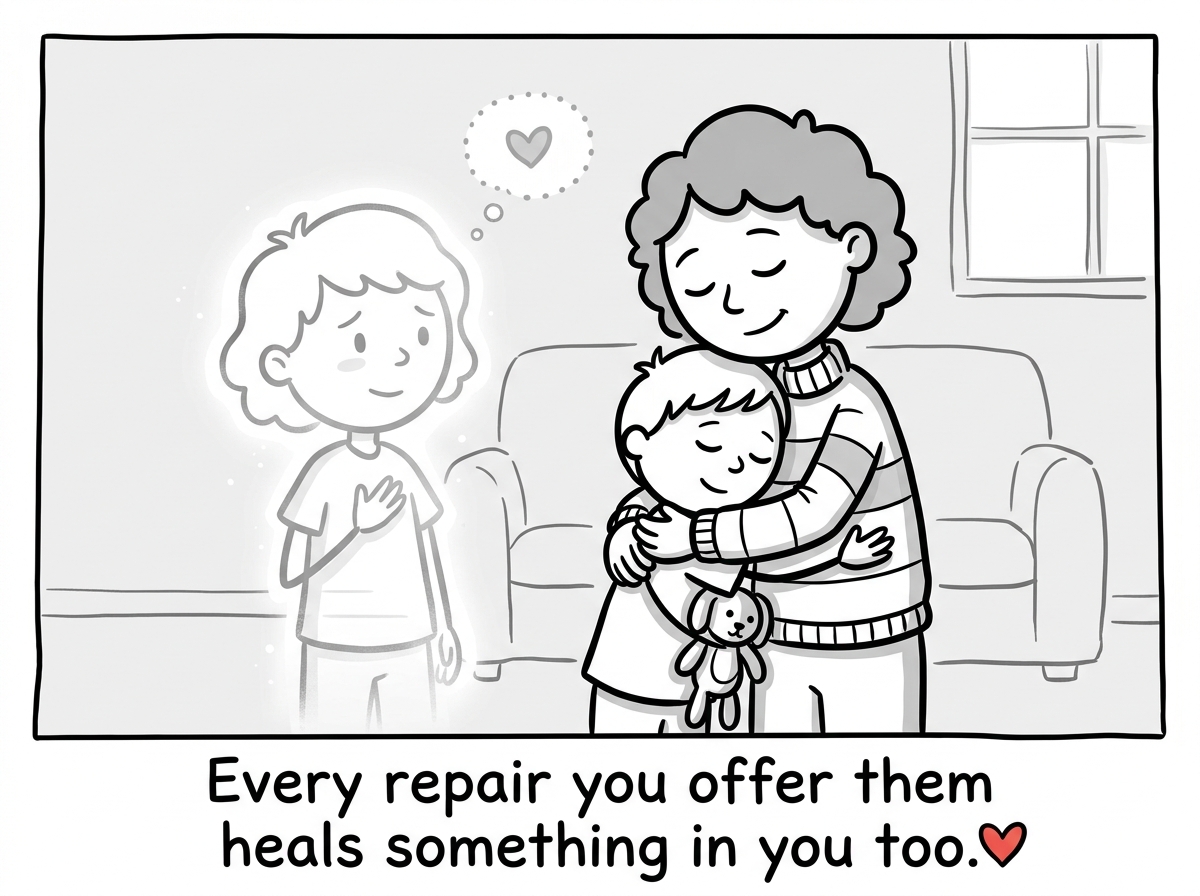
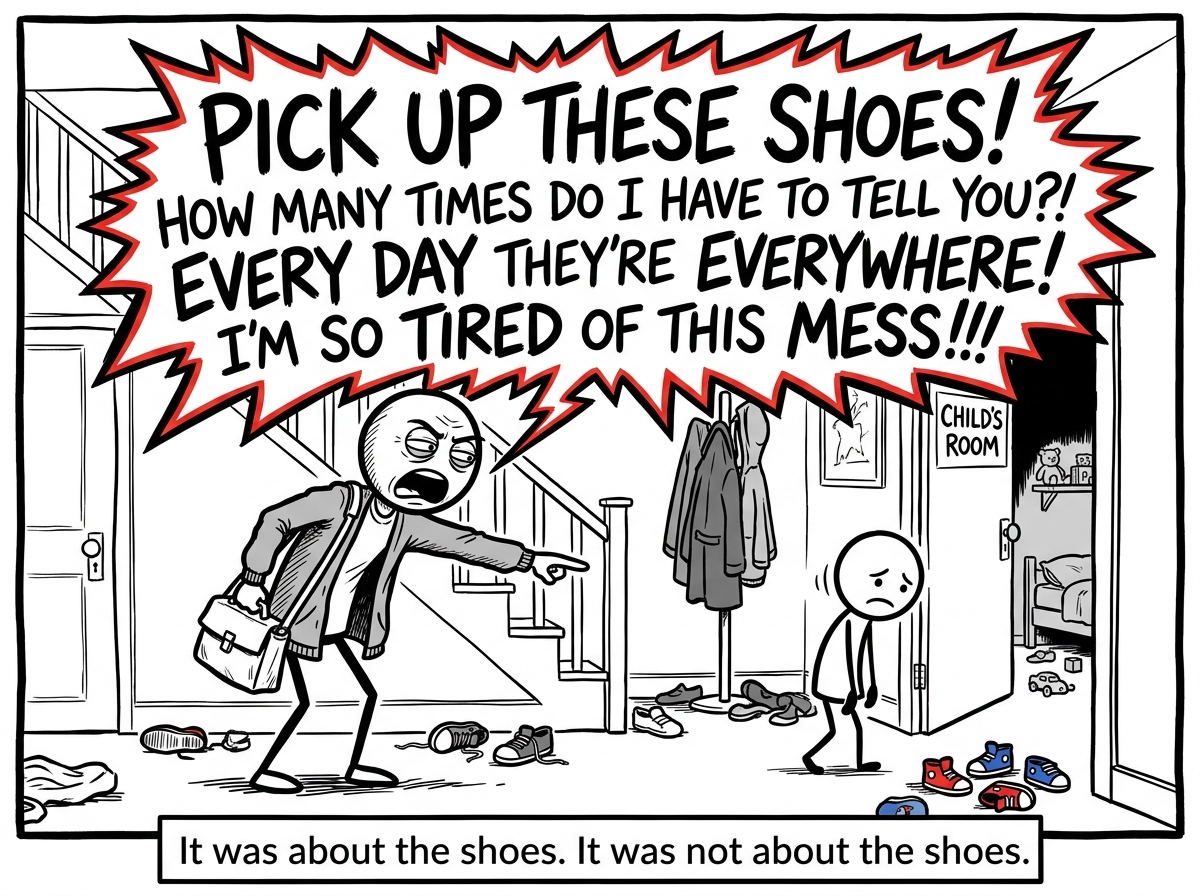
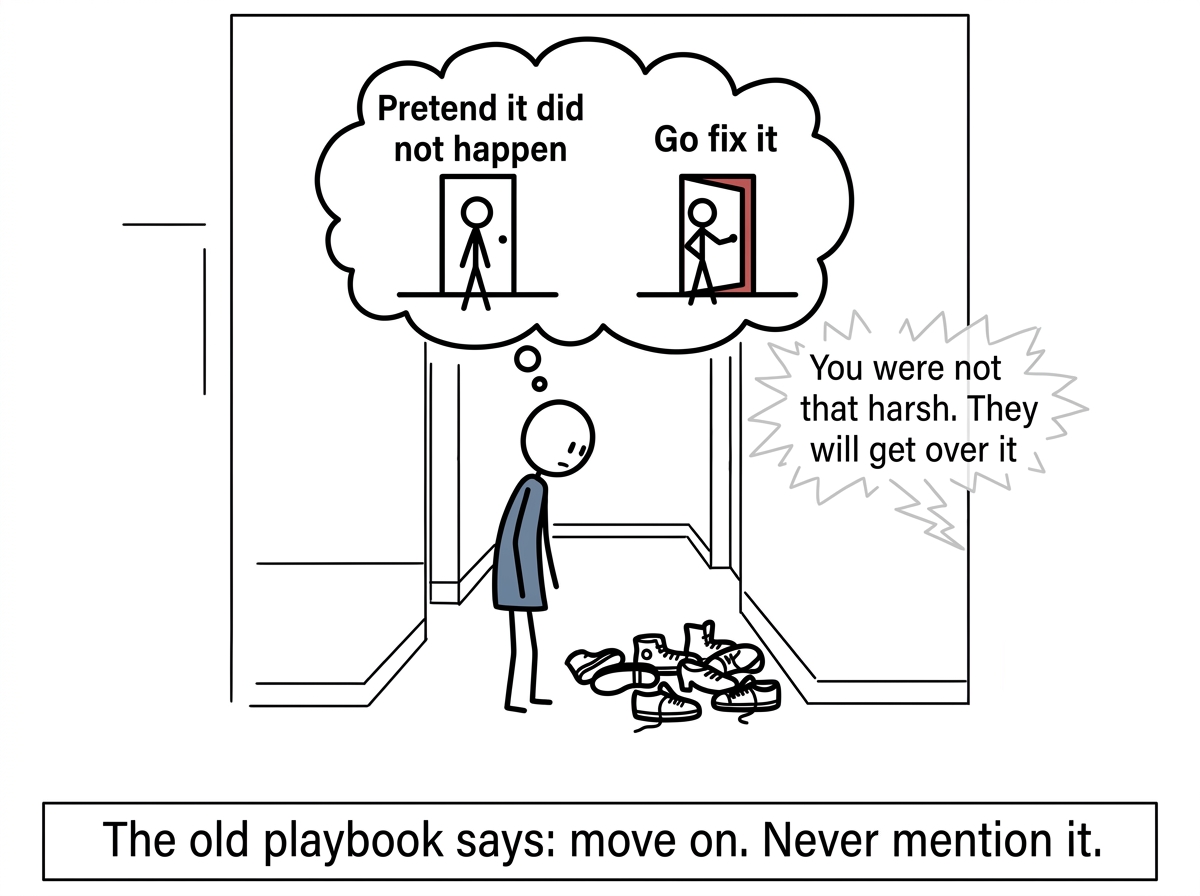
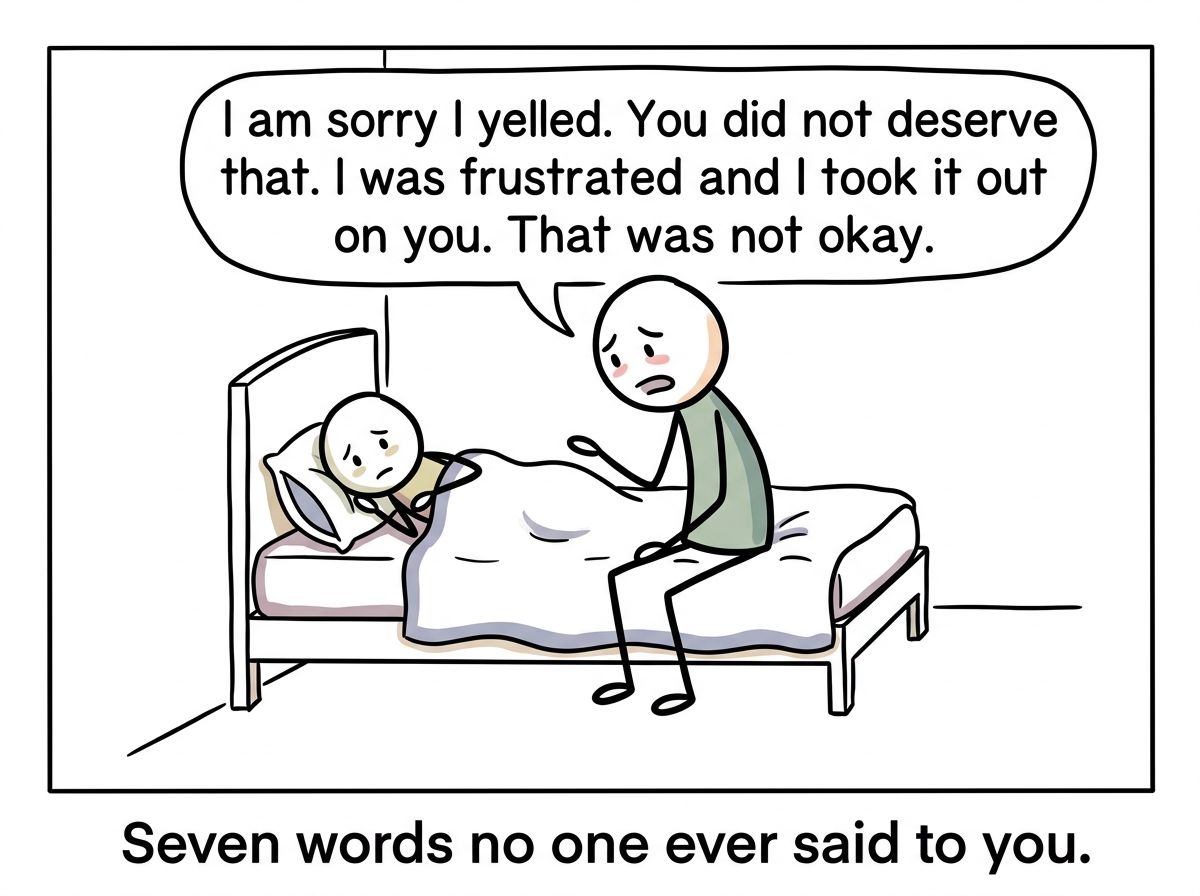
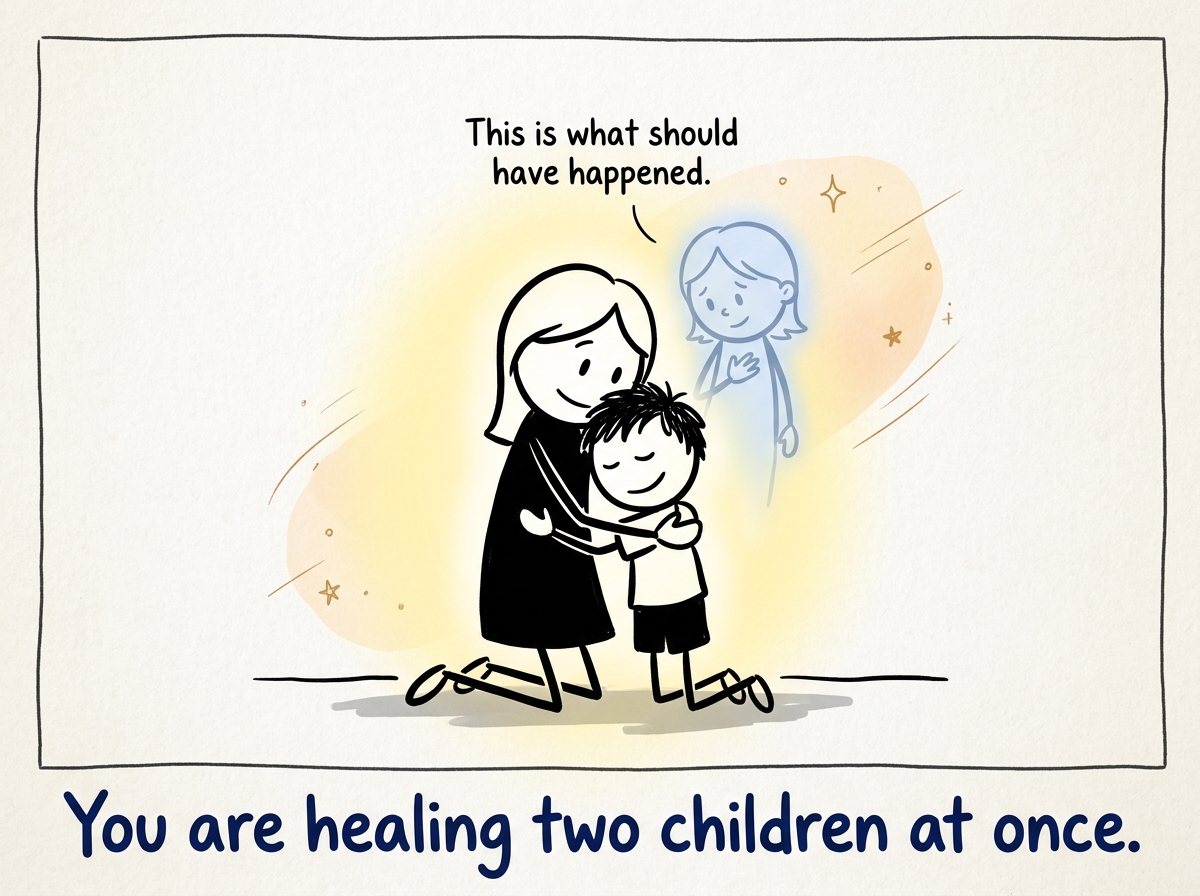
You yelled at your kid. It was not your finest moment. They left their shoes in the hallway for the thousandth time and something snapped and you yelled louder than the situation called for and now they are in their room, quiet. You go to their door. You sit on the edge of their bed. You say, 'Hey. I am sorry I yelled. That was too much. You did not deserve that. I was frustrated, but that is not your fault.' And your child looks at you with this expression — a mix of surprise and relief — and something cracks open in your chest. Because no one ever sat on the edge of your bed and said that. The psychology of repair is one of the most powerful tools in parenting — and one of the least discussed in traditional models. Attachment researchers like Ed Tronick have shown that the strength of a parent-child bond is not determined by the absence of ruptures but by the presence of repairs. Every relationship has conflict. What matters is what happens after. A parent who apologizes teaches their child that adults can be wrong, that anger does not mean abandonment, and that relationships can survive mistakes. For the cycle-breaking parent, the act of apologizing is doubly significant. You are giving your child something you never received — and in doing so, you are reparenting yourself. Every apology you offer them is also a message to the child you once were: this is what should have happened. You deserved this. The cycle does not just break for them. It breaks for you too.
Key Takeaway
The apology you give your child is also the one the child inside you has been waiting for.