
The Blank Menu
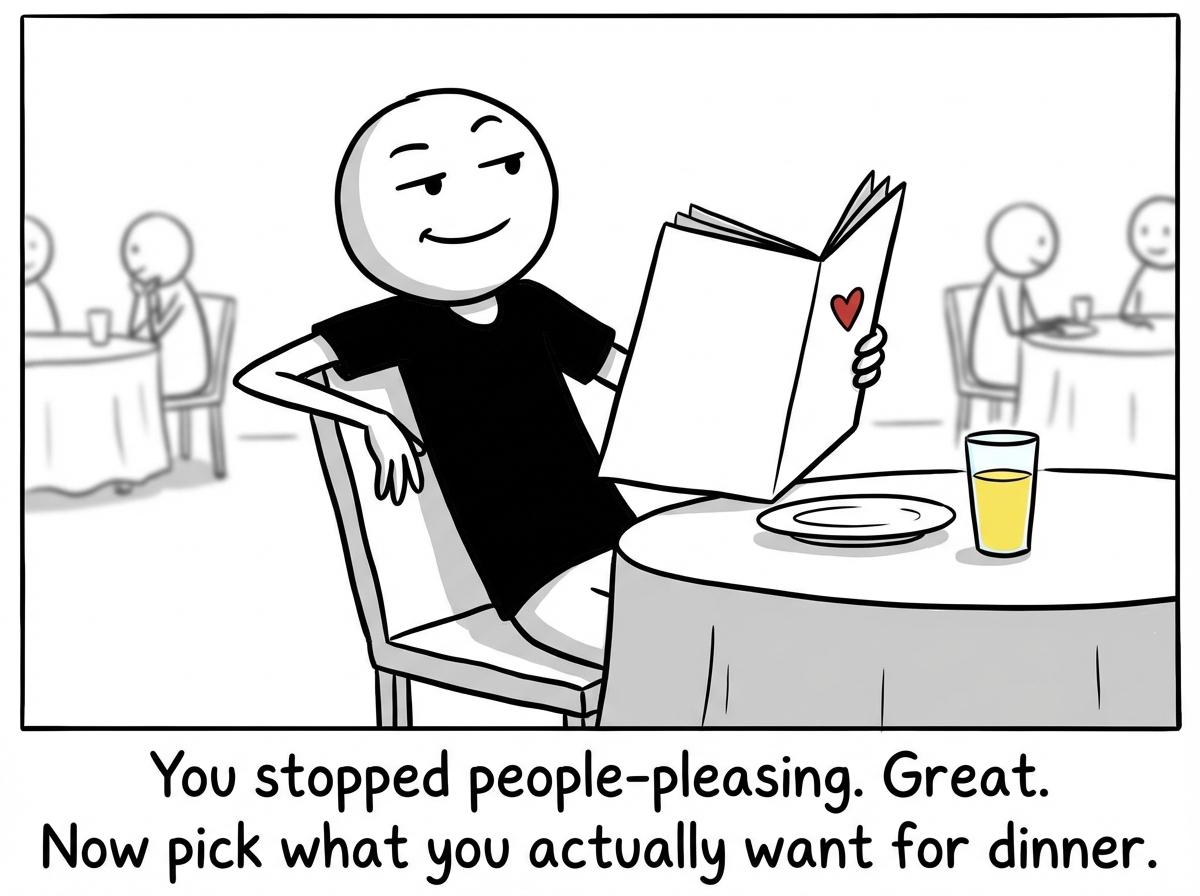
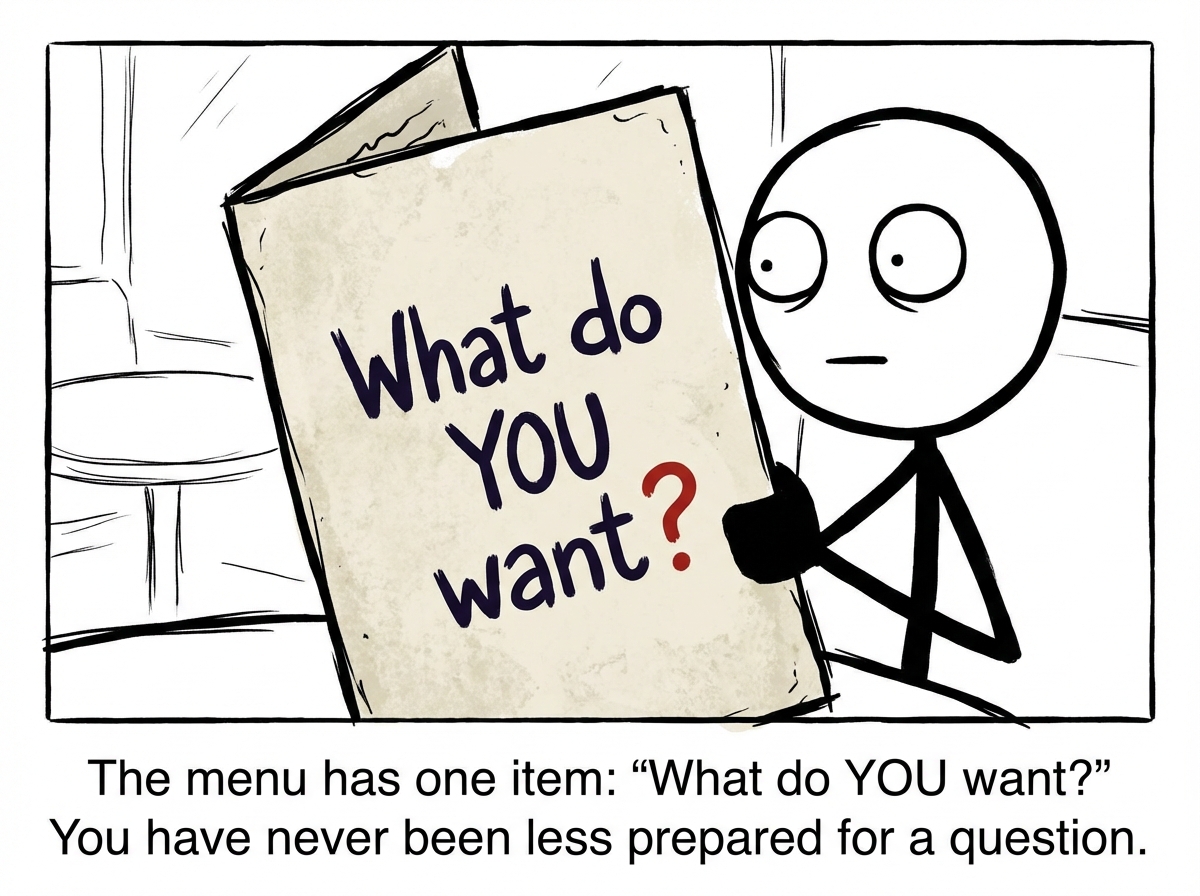
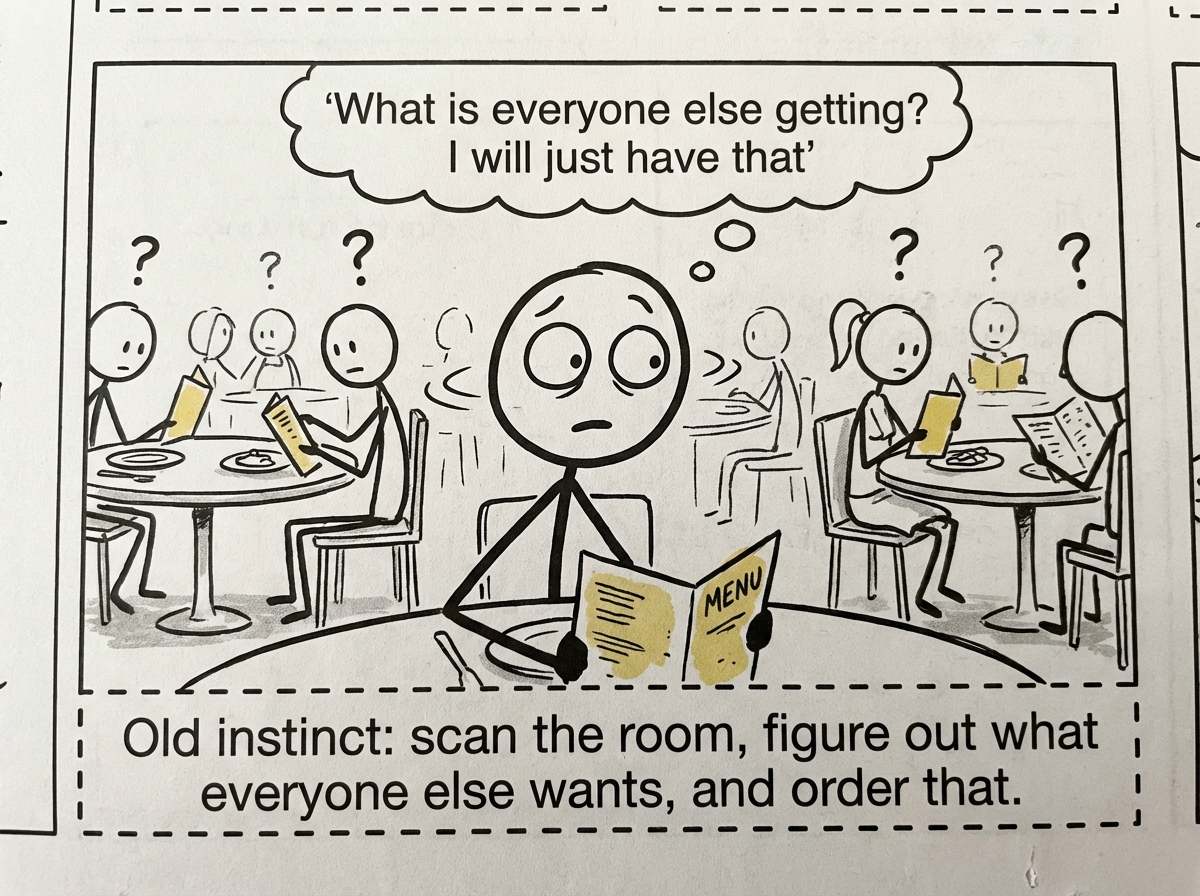
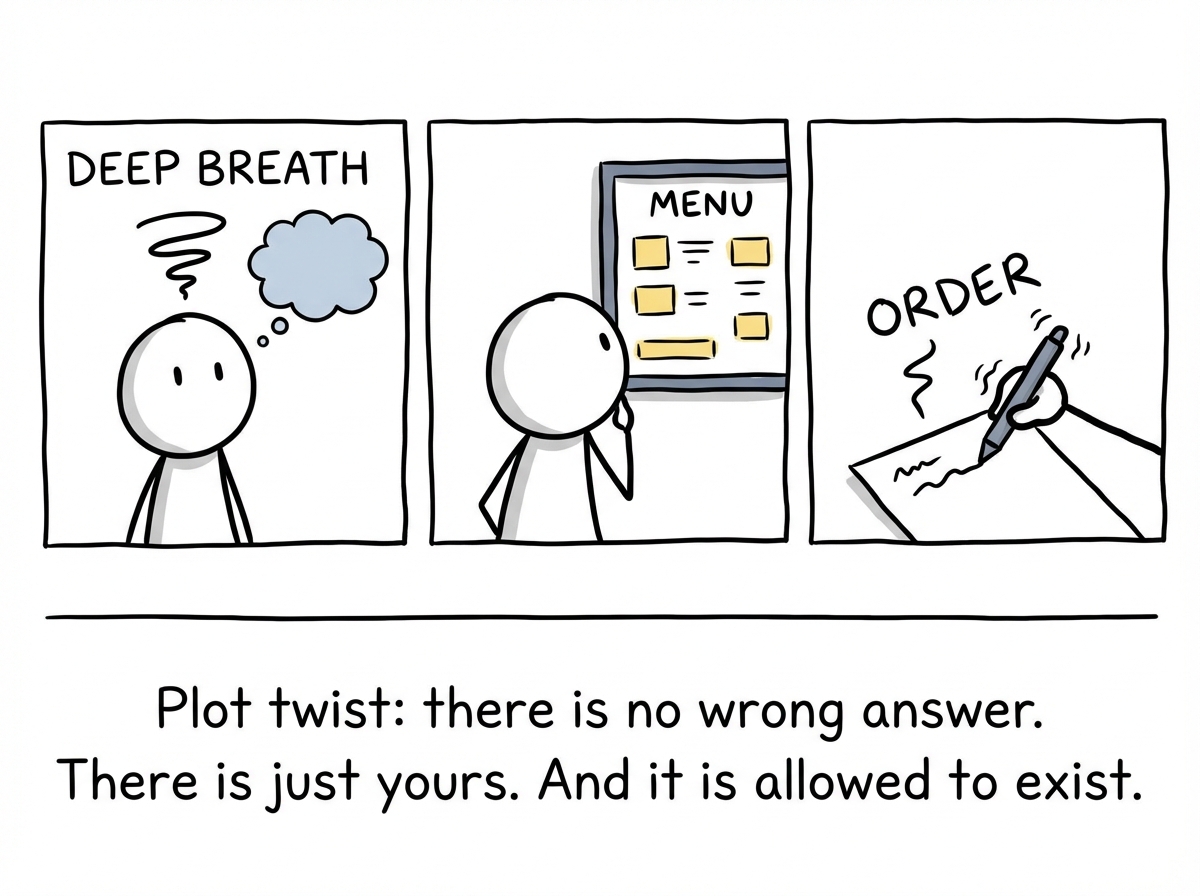
A former people-pleaser sits at a restaurant staring at a menu that just says 'What do YOU want?' and has absolutely no idea how to answer.
Explanation
For years, you were the easiest person to eat with. You would scan the table, figure out what everyone else wanted, and then pick something that would not inconvenience anyone -- not too expensive, not too complicated, nothing that would require a special order. If someone asked 'What do you want?' your brain would immediately translate it to 'What does everyone else want me to want?' Then you stopped people-pleasing. And the first time someone handed you a menu and said 'Get whatever you want,' you froze. Not because the menu was confusing -- because you genuinely did not know the answer. Harriet Braiker described people-pleasing not as generosity but as a compulsive need to manage other people's perceptions and emotions, often at the expense of your own needs and preferences. When pleasing becomes your identity, your internal preference system atrophies. You become so skilled at reading the room that you forget how to read yourself. The menu moment -- whether it happens at a restaurant, a career crossroads, or a Saturday morning with no plans -- is the moment where the absence of your own desires becomes impossible to ignore. It is the direct consequence of spending years treating your own wants as secondary to everyone else's comfort. The blank menu is not a sign that you are broken. It is a sign that you are finally in a position to choose for yourself -- and the choosing muscles are weak from disuse. Start with low-stakes decisions. What do you actually want for dinner? Not what is easiest. Not what makes everyone comfortable. What do you want? The answer might take a while. That is okay. The menu is not going anywhere, and for the first time, nobody is ordering for you.
Key Takeaway
The hardest question for a recovering people-pleaser is not 'What does everyone need?' -- it is 'What do you want?'
A stick figure at a restaurant catching themselves scanning the room for cues, then stopping and closing their eyes with a thought bubble: 'What do I actually want?'
The stick figure trying a small experiment -- ordering something nobody else is having, with a nervous but curious expression. A thought bubble reads 'I think I want the spicy one'
The stick figure eating their own choice and genuinely enjoying it, with a surprised look that says 'Oh -- I actually like this.' Other diners have different meals and nobody cares
The stick figure at a bigger life menu -- hobbies, career paths, weekend plans -- circling options with growing confidence. The menu is no longer blank