The Broken Banana Meltdown
When your toddler's world ends because their banana broke in half and you have to decide whether to dismiss the grief or teach them what feelings are.
Explanation
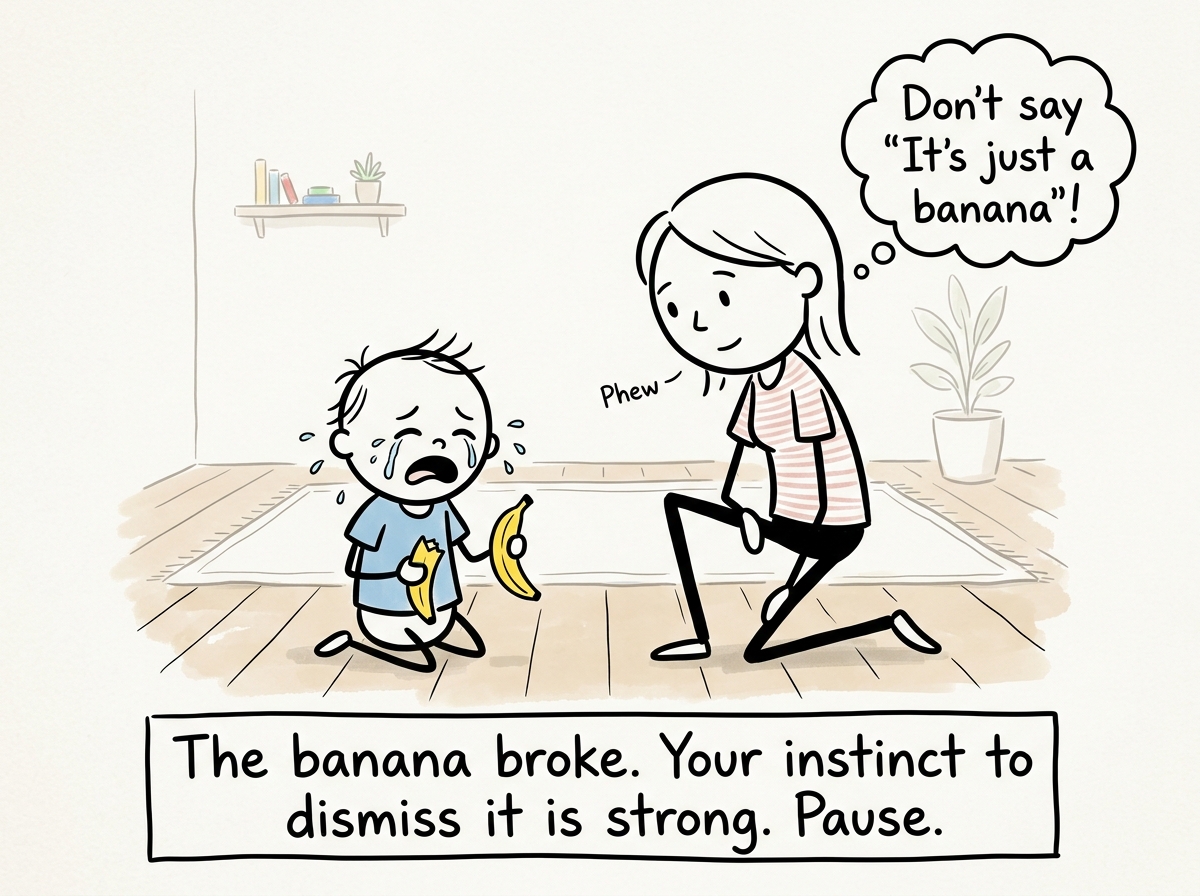
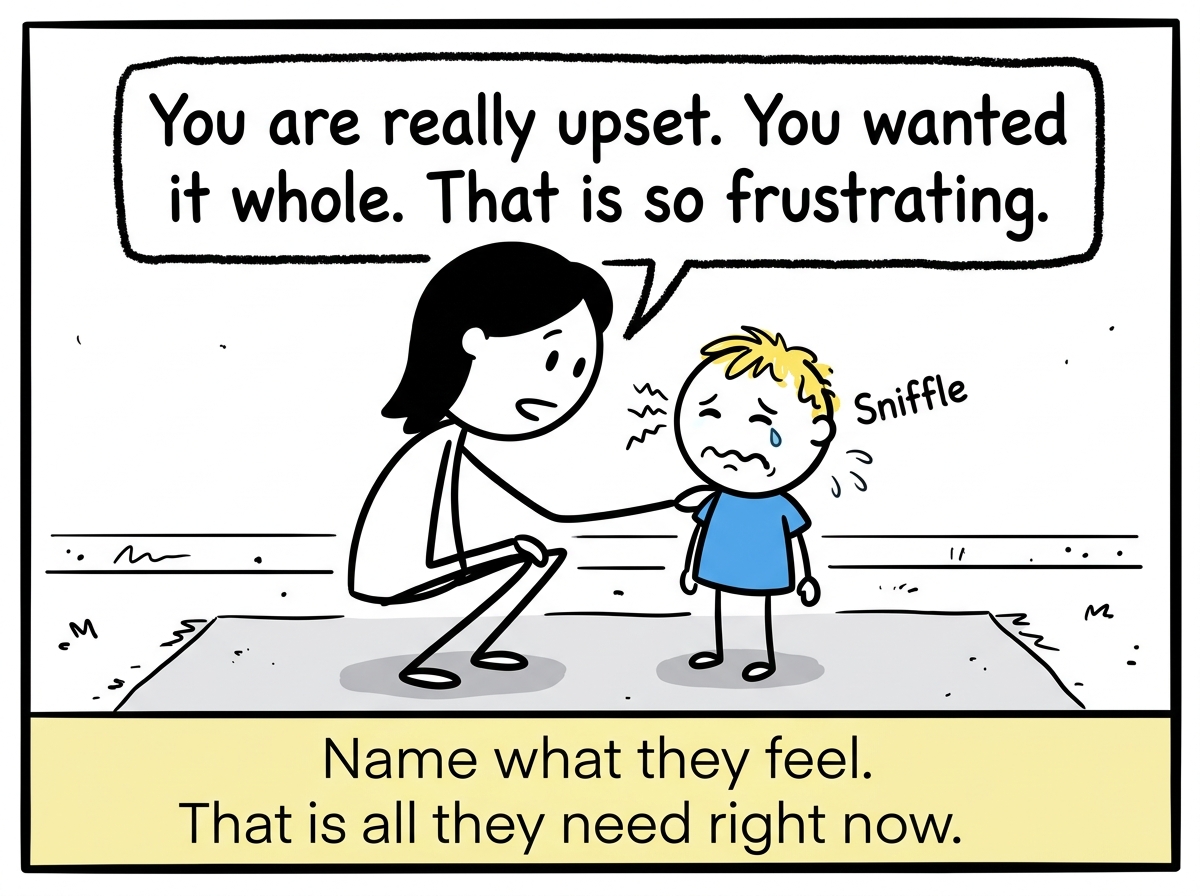
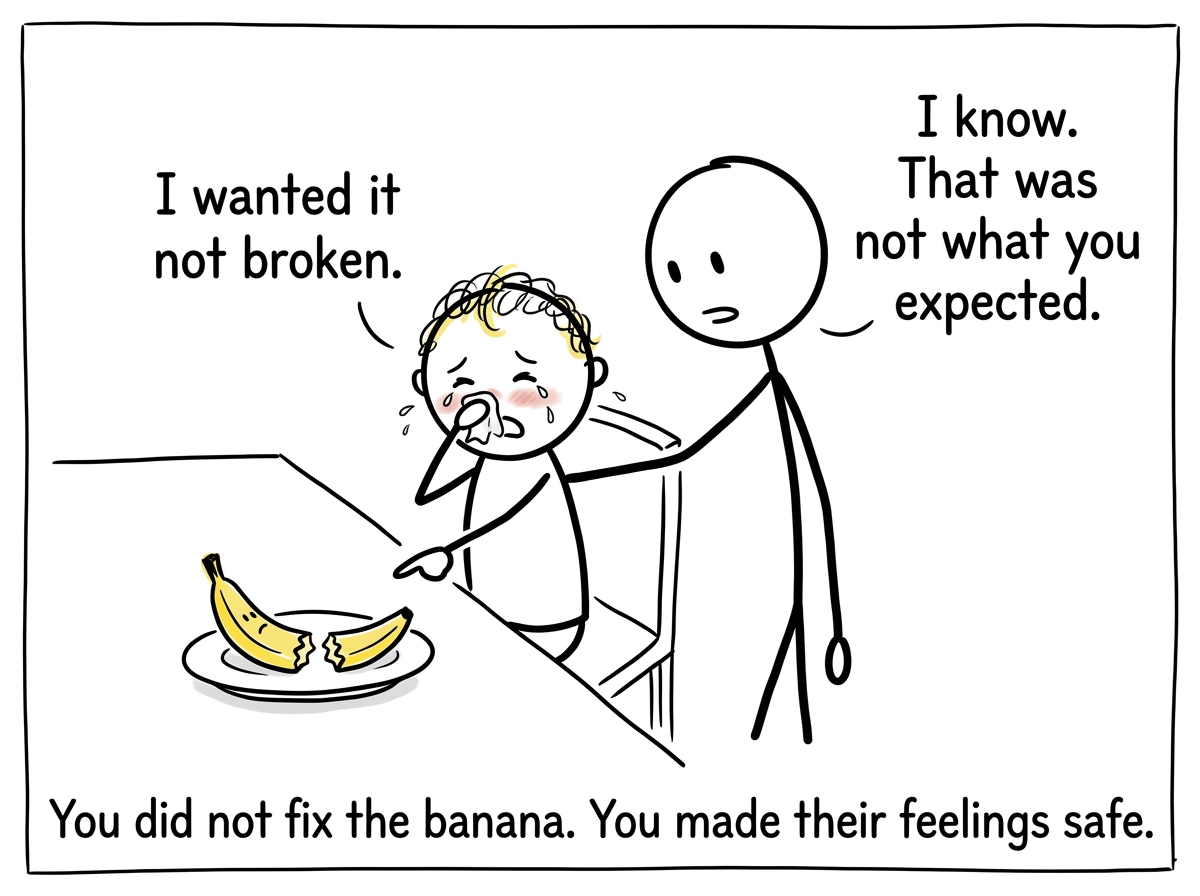
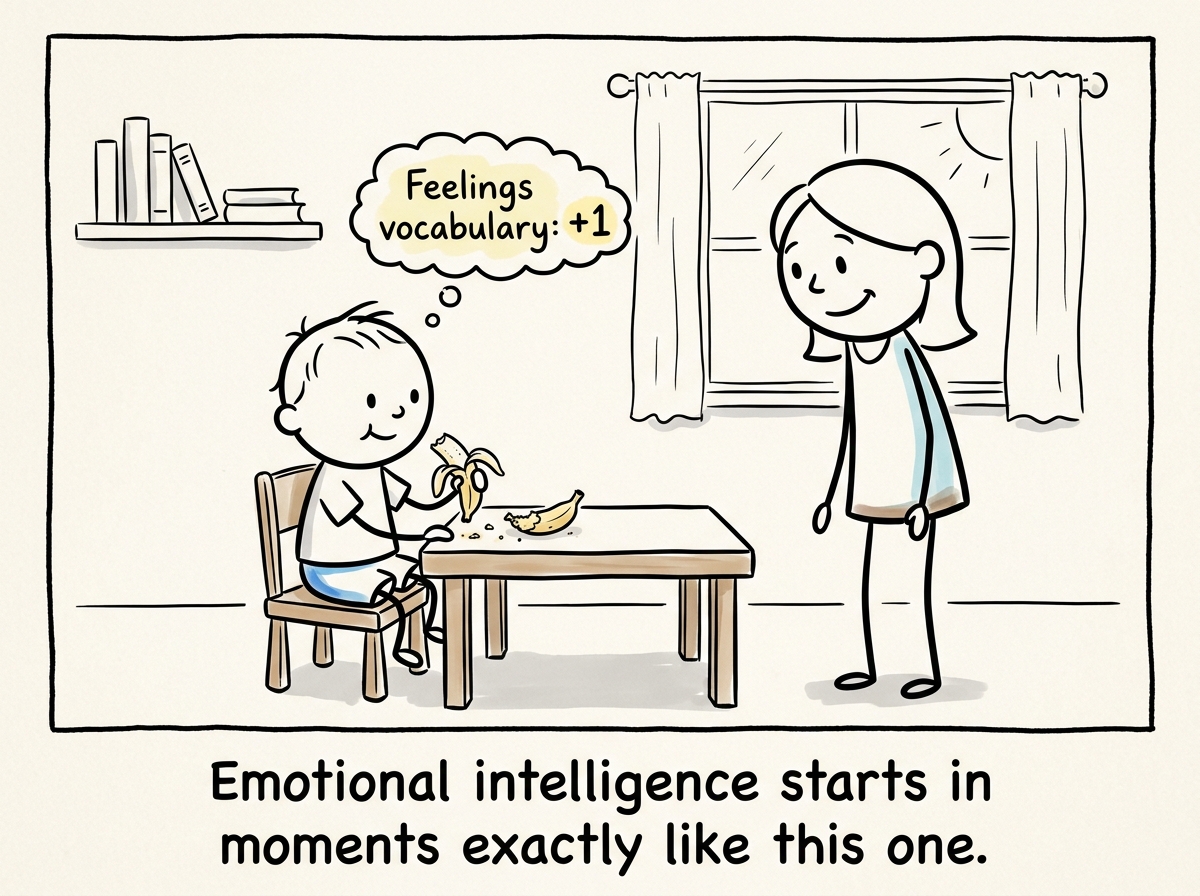
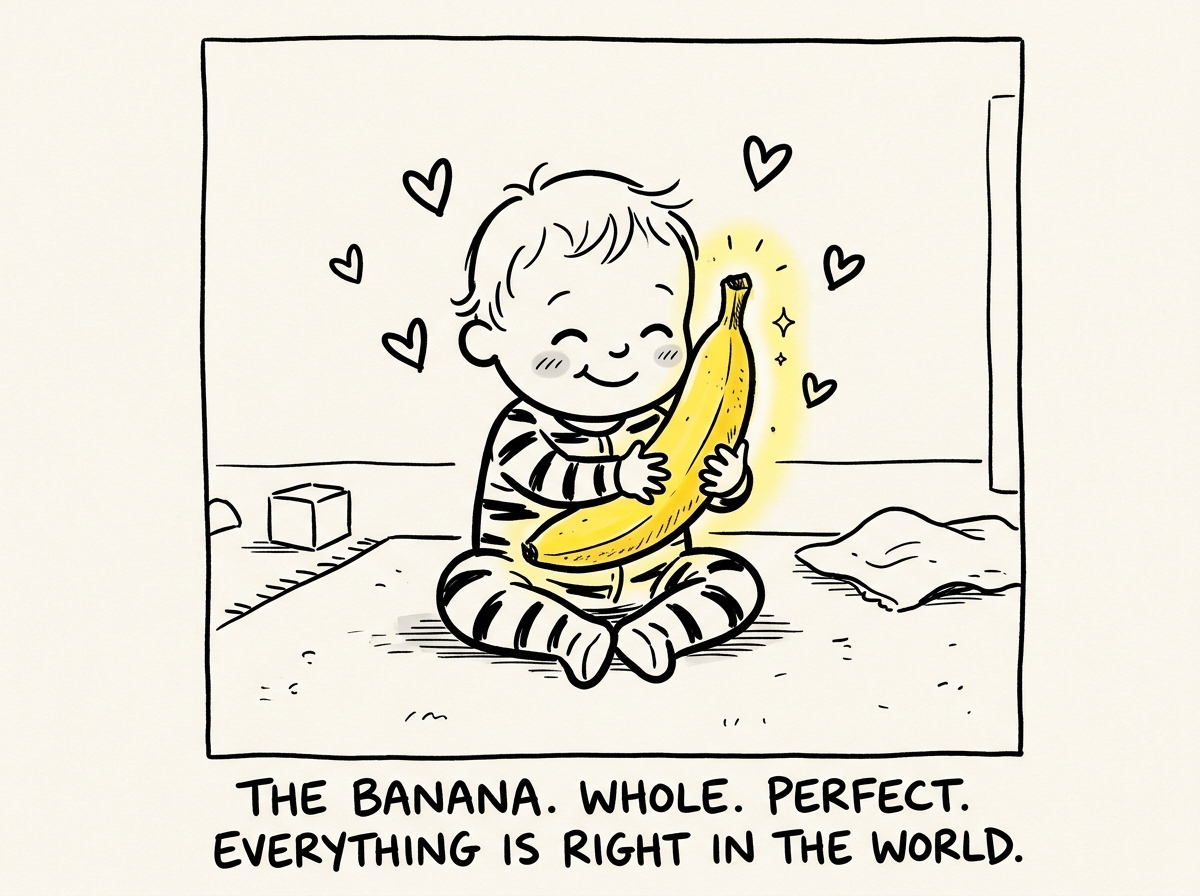
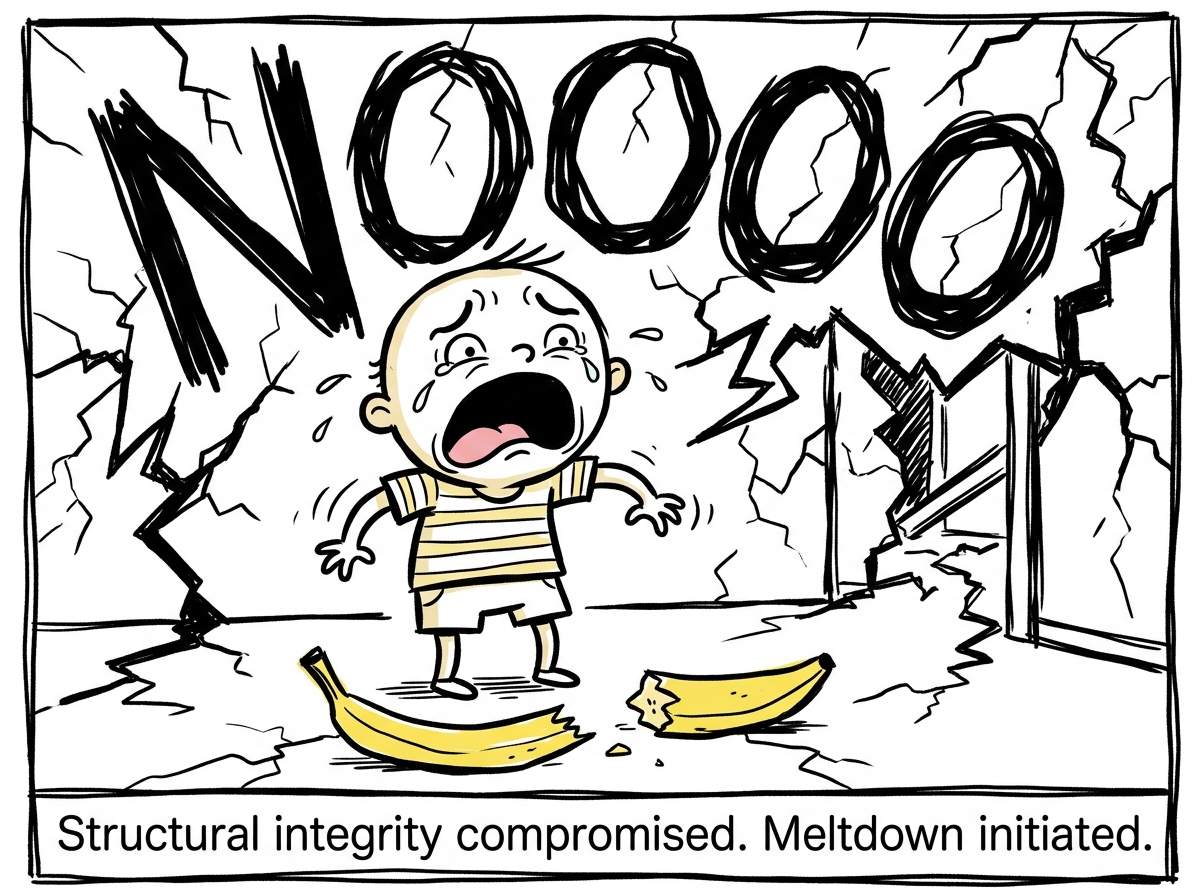
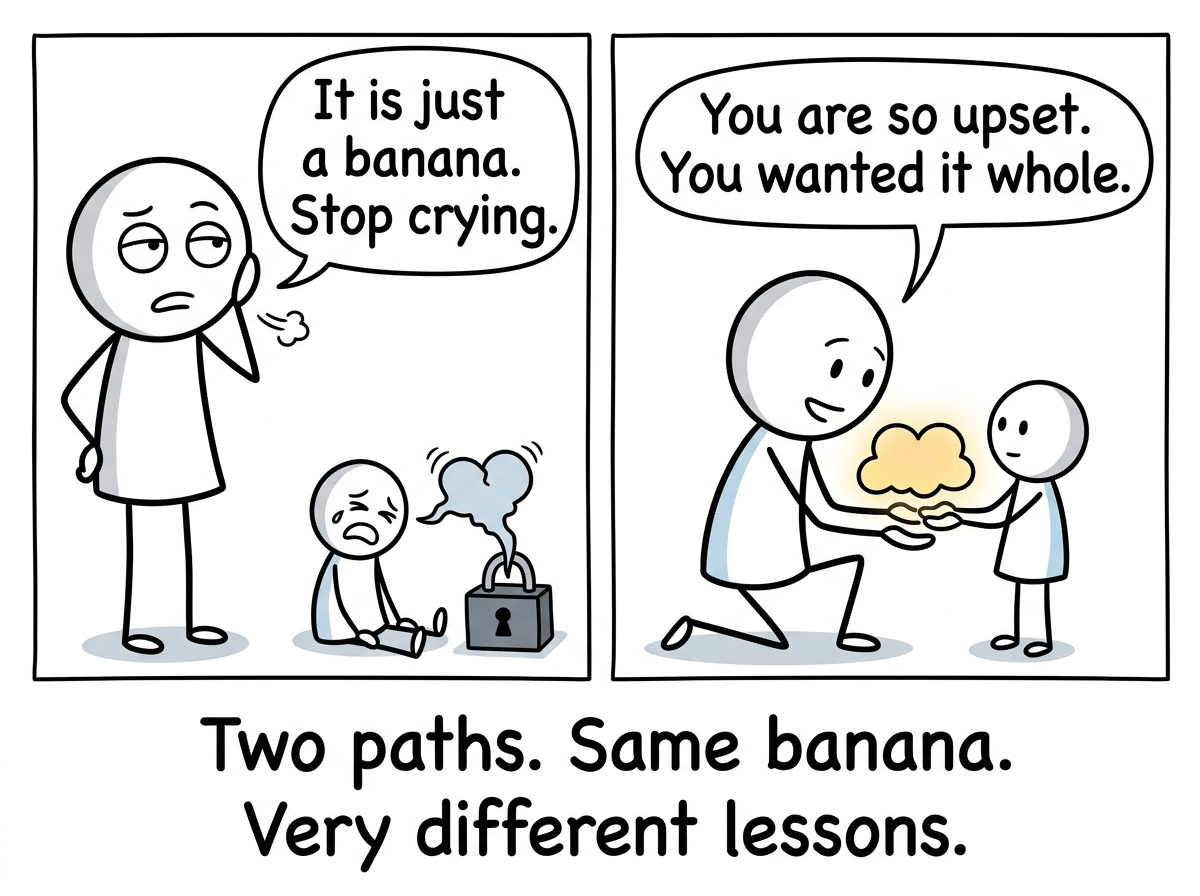
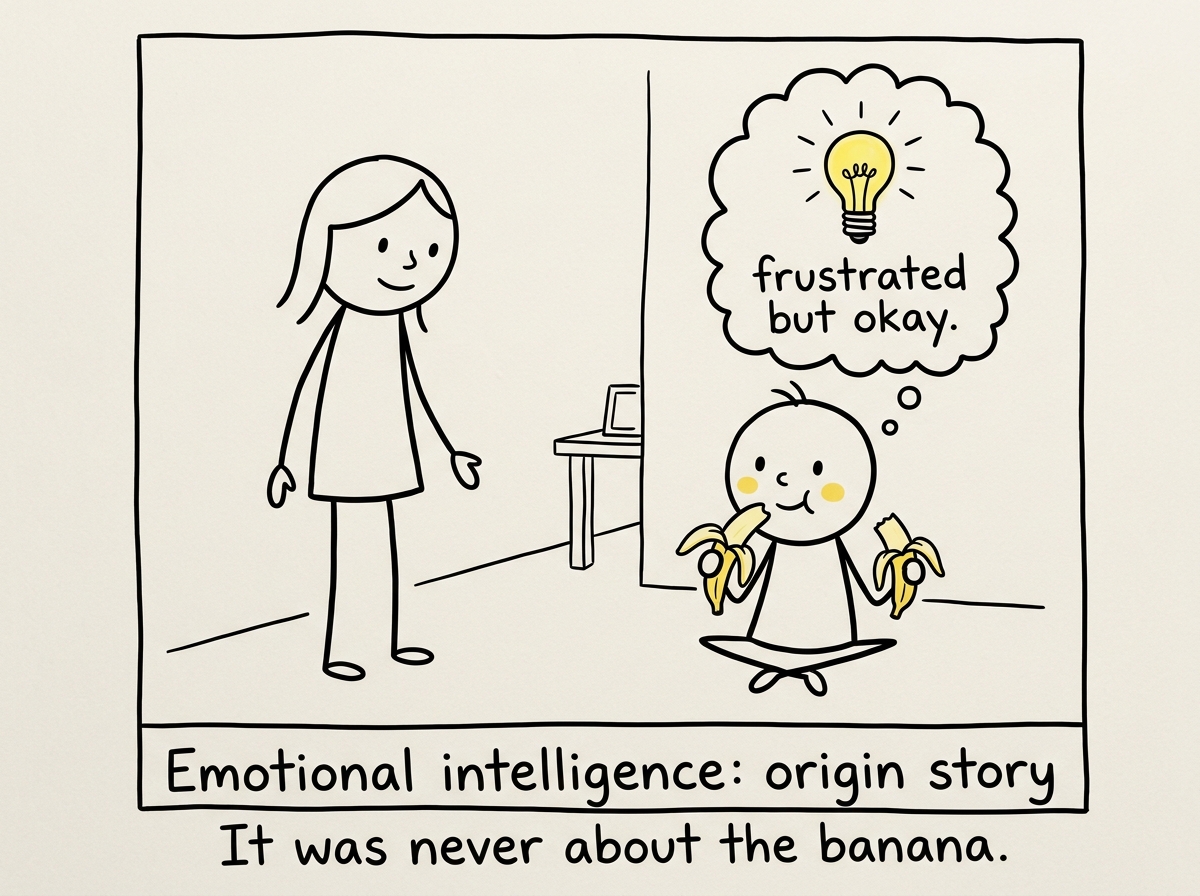
The banana broke. It was not supposed to break. Your two-year-old wanted it whole and now it is in two pieces and their reaction suggests this is roughly equivalent to the fall of civilization. Every instinct tells you to say 'It is just a banana.' But here is what is actually happening: your child is experiencing genuine distress and they do not yet have the neural architecture to regulate it. This moment — the broken banana moment — is where emotional intelligence begins. John Gottman's research on emotion coaching identified a critical fork in the road that parents face dozens of times a day. Path one: dismiss the emotion. 'Stop crying. It is just a banana. You are being silly.' The child learns that their feelings are wrong, excessive, or embarrassing. Path two: coach the emotion. 'You are really upset. You wanted the banana to be whole. That is so frustrating when things do not go the way you expected.' The child learns that feelings have names, that they are normal, and that someone cares enough to notice them. The banana itself is irrelevant. What matters is the template you are building. Every time you help your child name an emotion instead of suppressing it, you are building neural pathways that will serve them for the rest of their life — in friendships, romantic relationships, workplaces, and their own eventual parenting. The broken banana is not a crisis. It is a curriculum.
Key Takeaway
The broken banana is never about the banana — it is about whether your child learns that their feelings are welcome in this house.