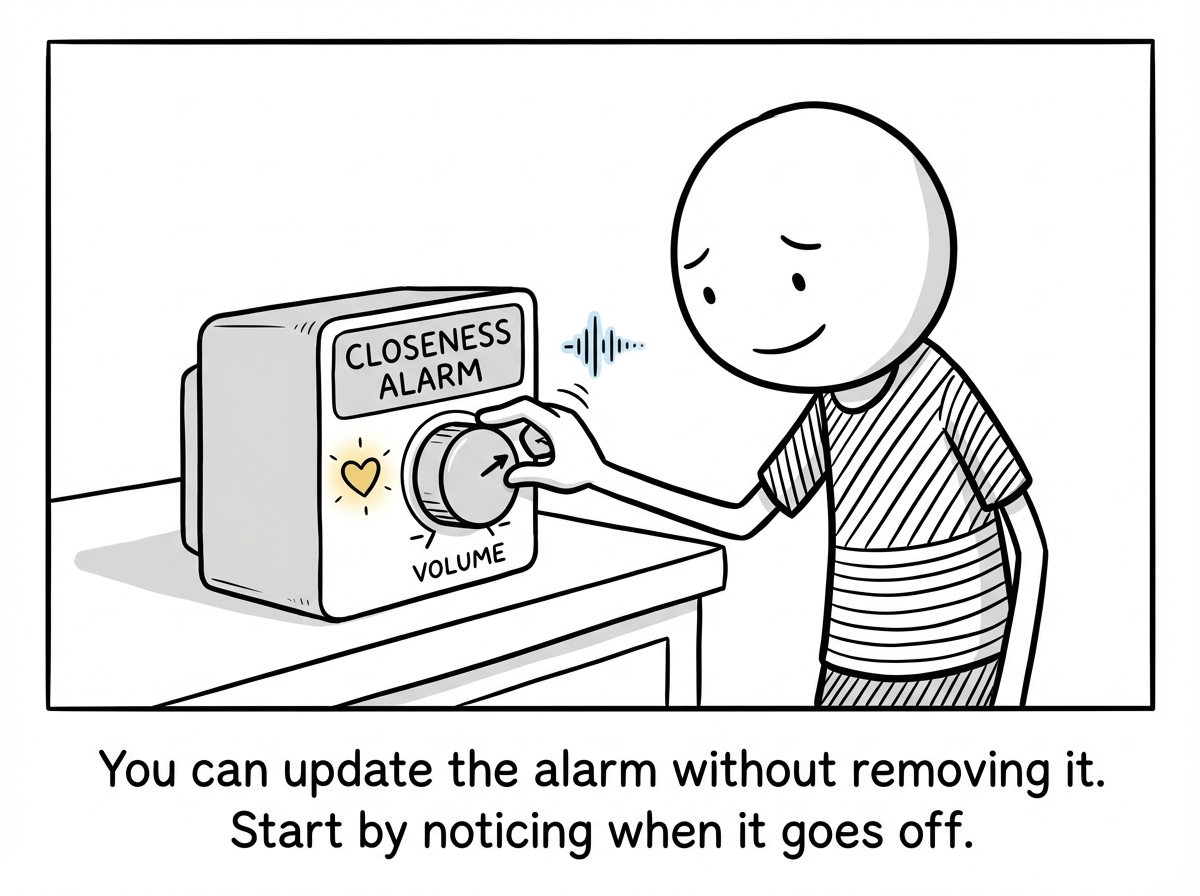
The Closeness Alarm
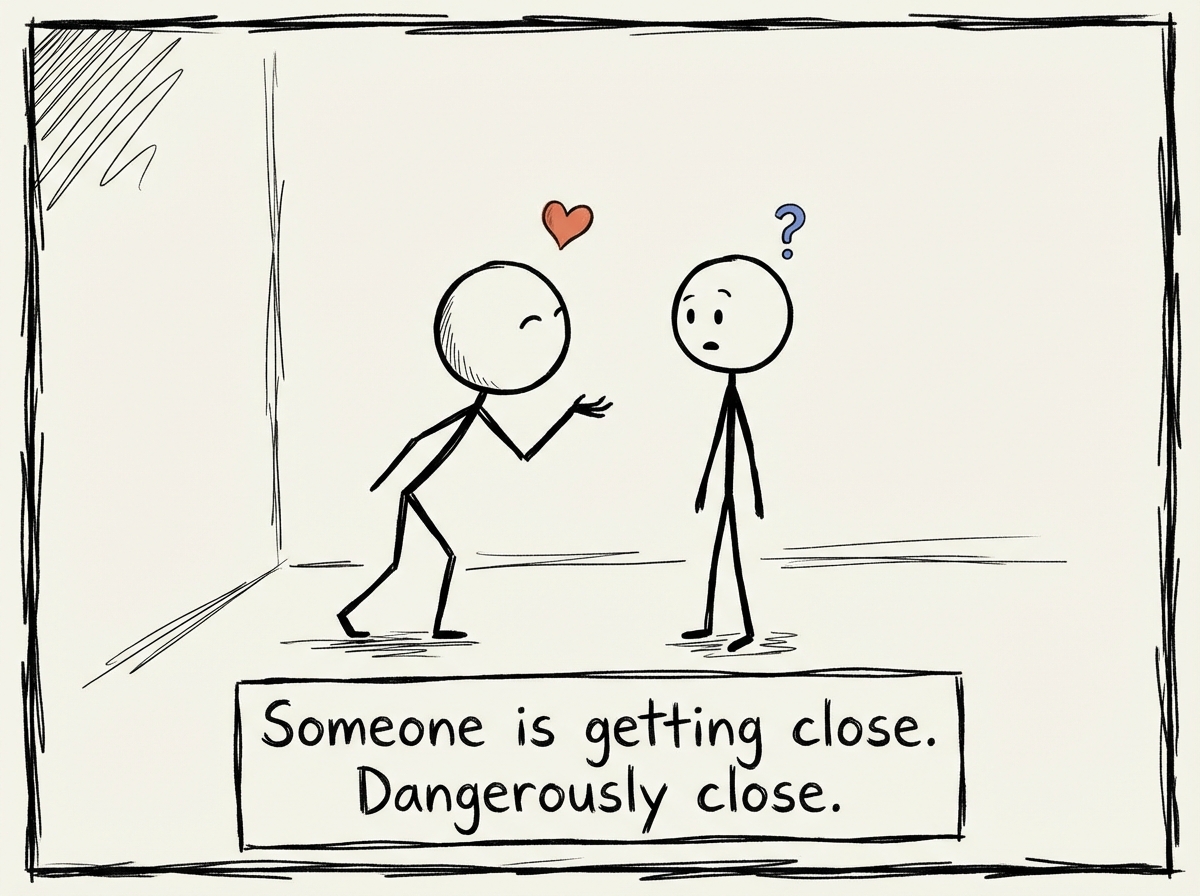
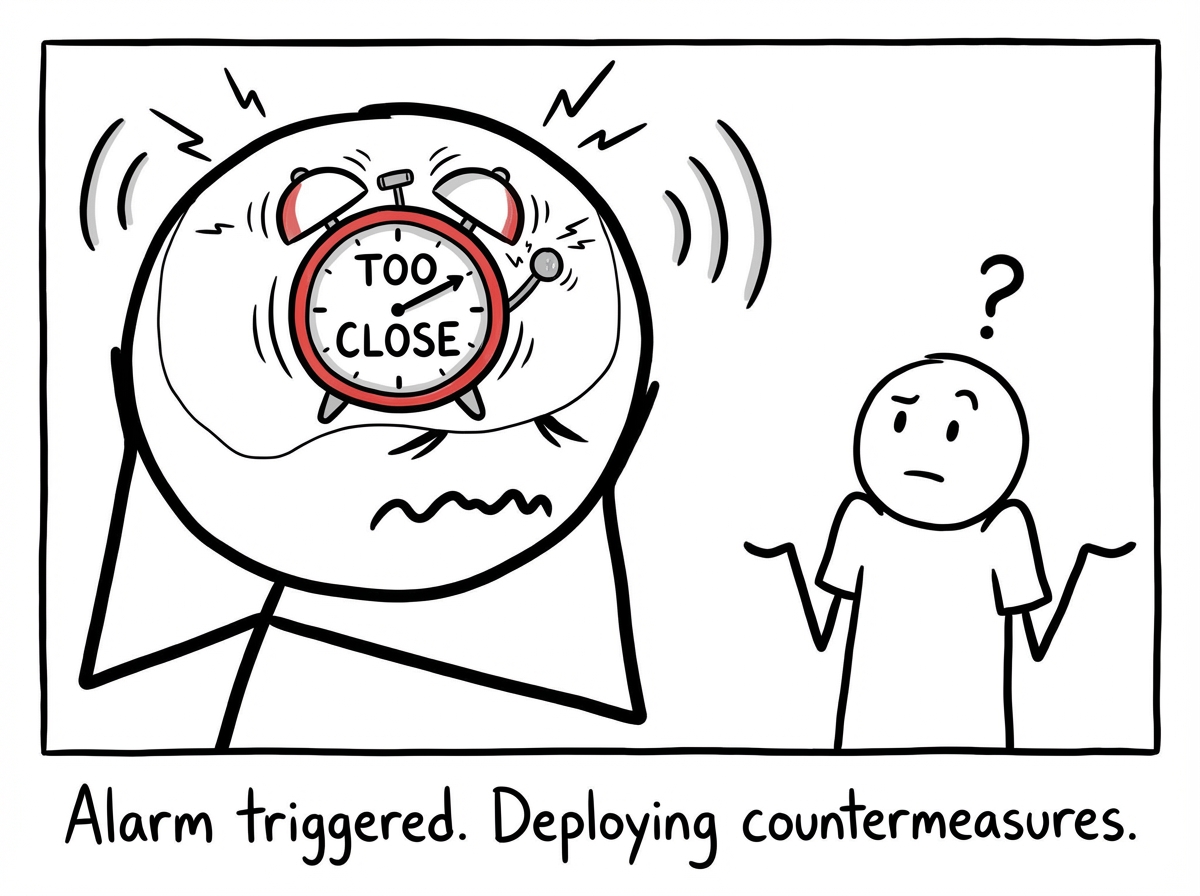

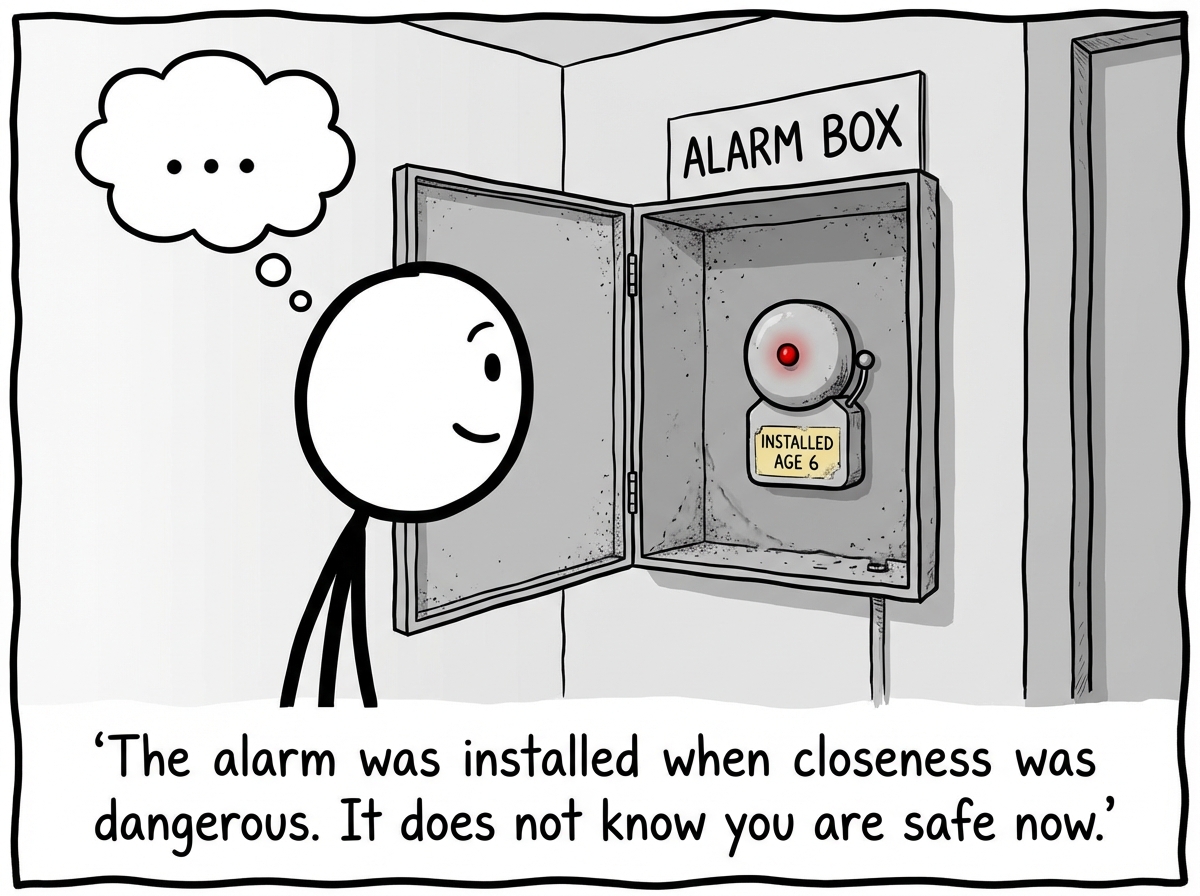
A person has a proximity alarm hardwired into their chest that blares every time someone gets emotionally close, until they realize it was installed in childhood and the threat it warns about no longer exists.
Explanation
Intimacy avoidance often operates like an automatic alarm system -- it does not wait for you to assess the situation before it fires. The alarm was installed during a time when closeness genuinely was dangerous: a caregiver who punished vulnerability, a home where being seen meant being hurt, or an early relationship where openness led to abandonment. The problem is that the alarm never got updated. It still treats every act of emotional closeness as a five-alarm emergency, even when the person approaching you is safe, kind, and genuinely interested in knowing you. The walls that go up after the alarm are not character flaws. They are survival architecture from a time when you needed them. Sudden emotional withdrawal, manufactured conflict, finding fatal flaws in someone who was perfect yesterday -- these are all responses to the alarm, not to the actual person in front of you. Healing does not mean ripping the alarm out. It means learning to hear it go off and then pausing long enough to ask: is this a real threat, or is this an old recording? That pause -- the space between the alarm and the wall -- is where intimacy becomes possible.
Key Takeaway
The alarm that kept you safe as a child is now keeping you alone as an adult -- and you are the only one who can update the wiring.