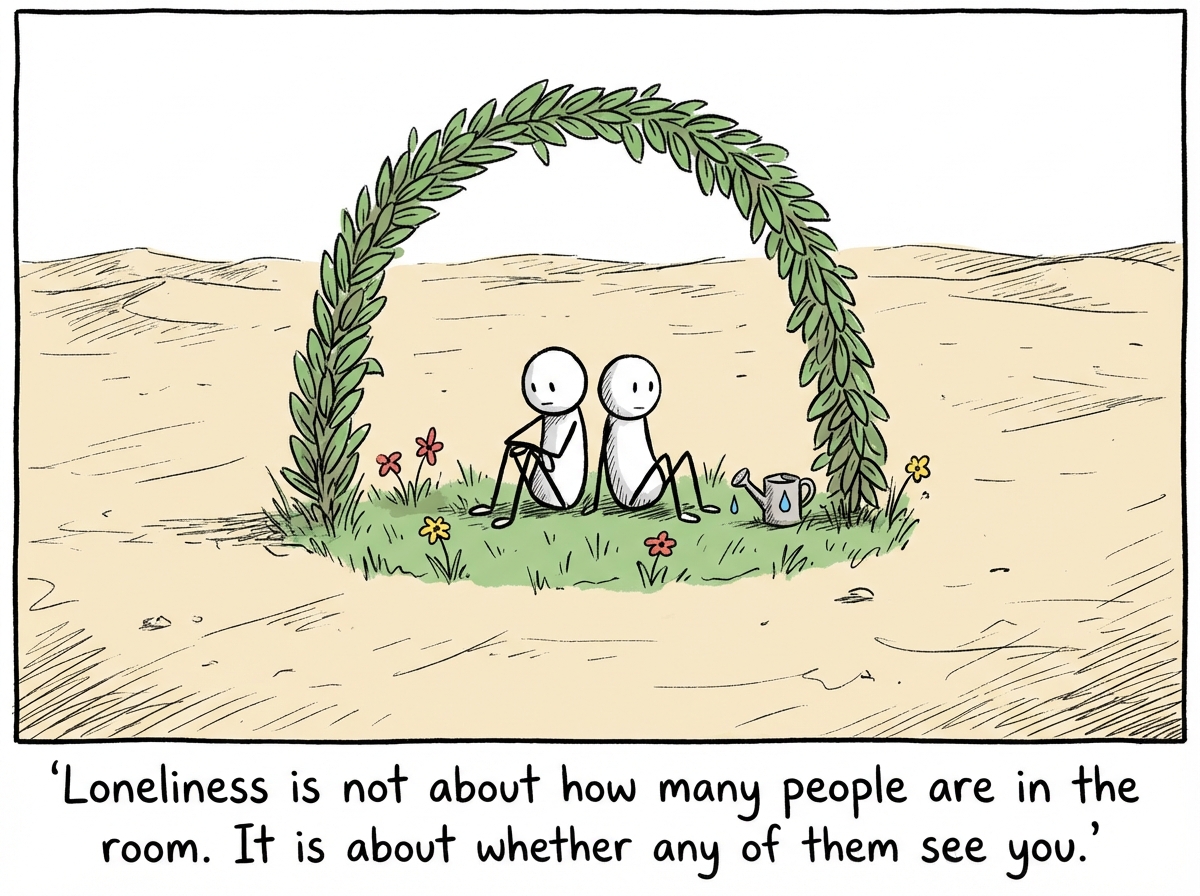
The Crowded Desert
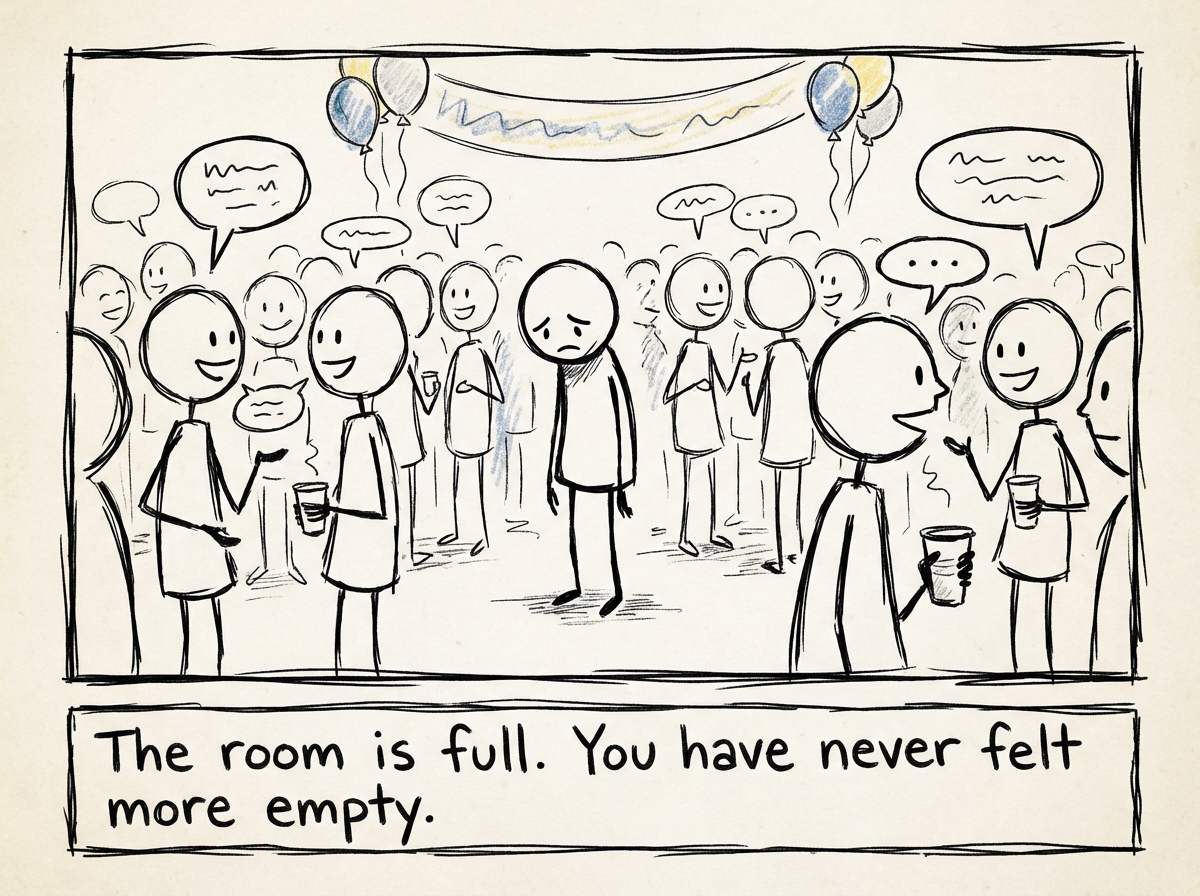
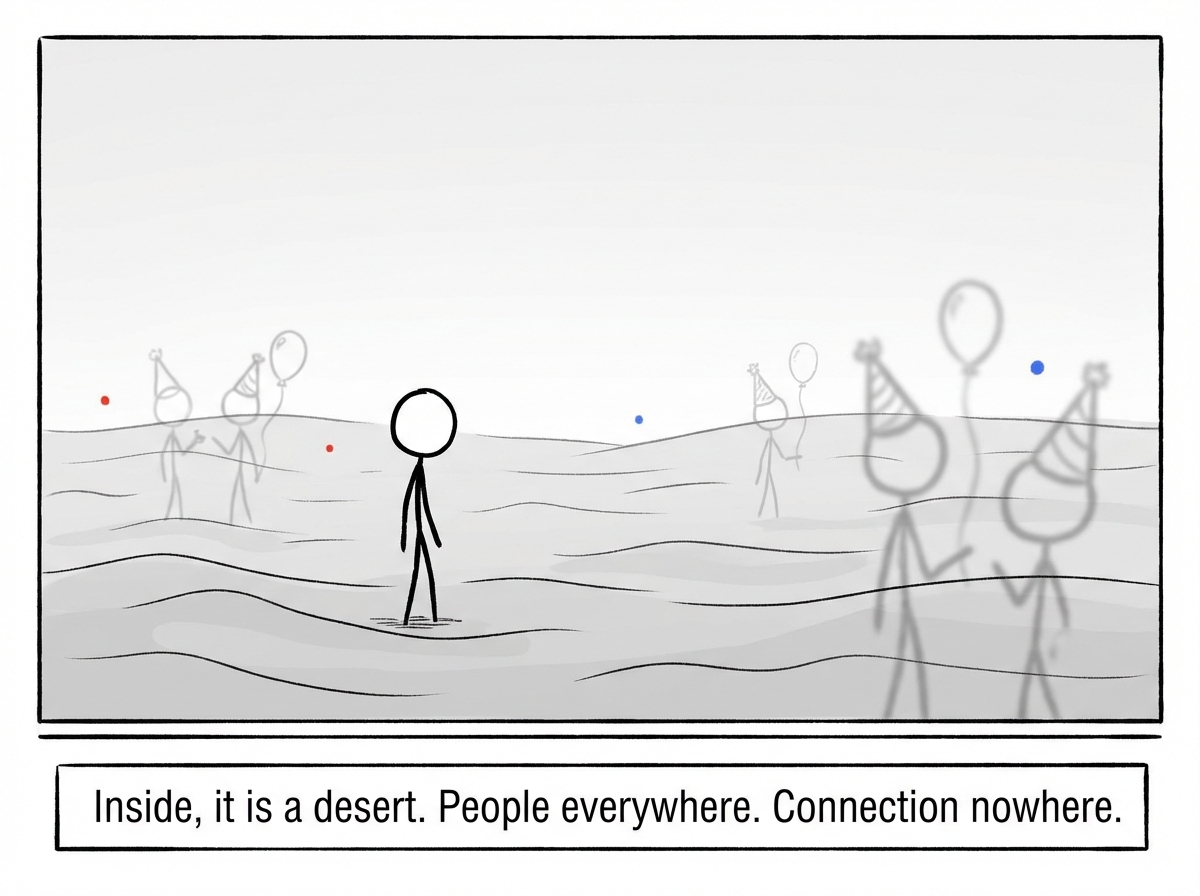
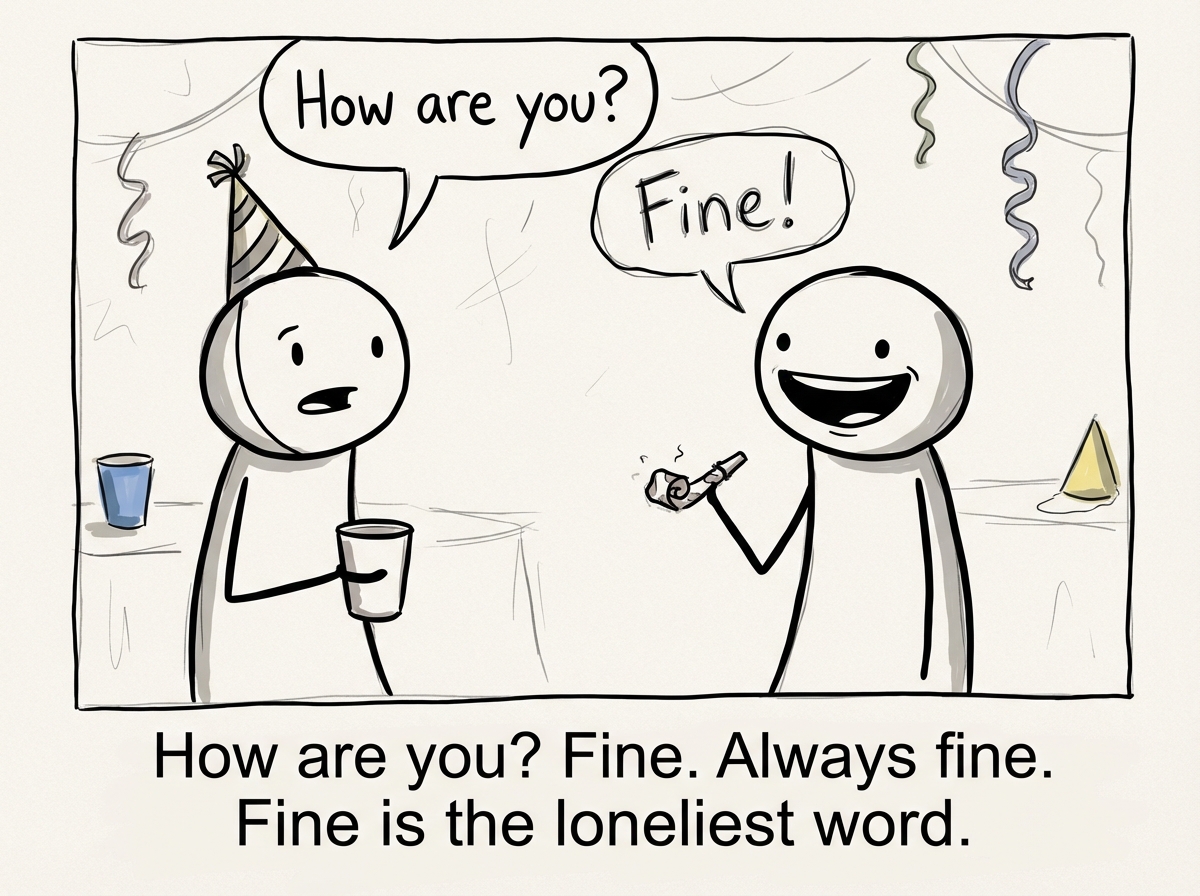
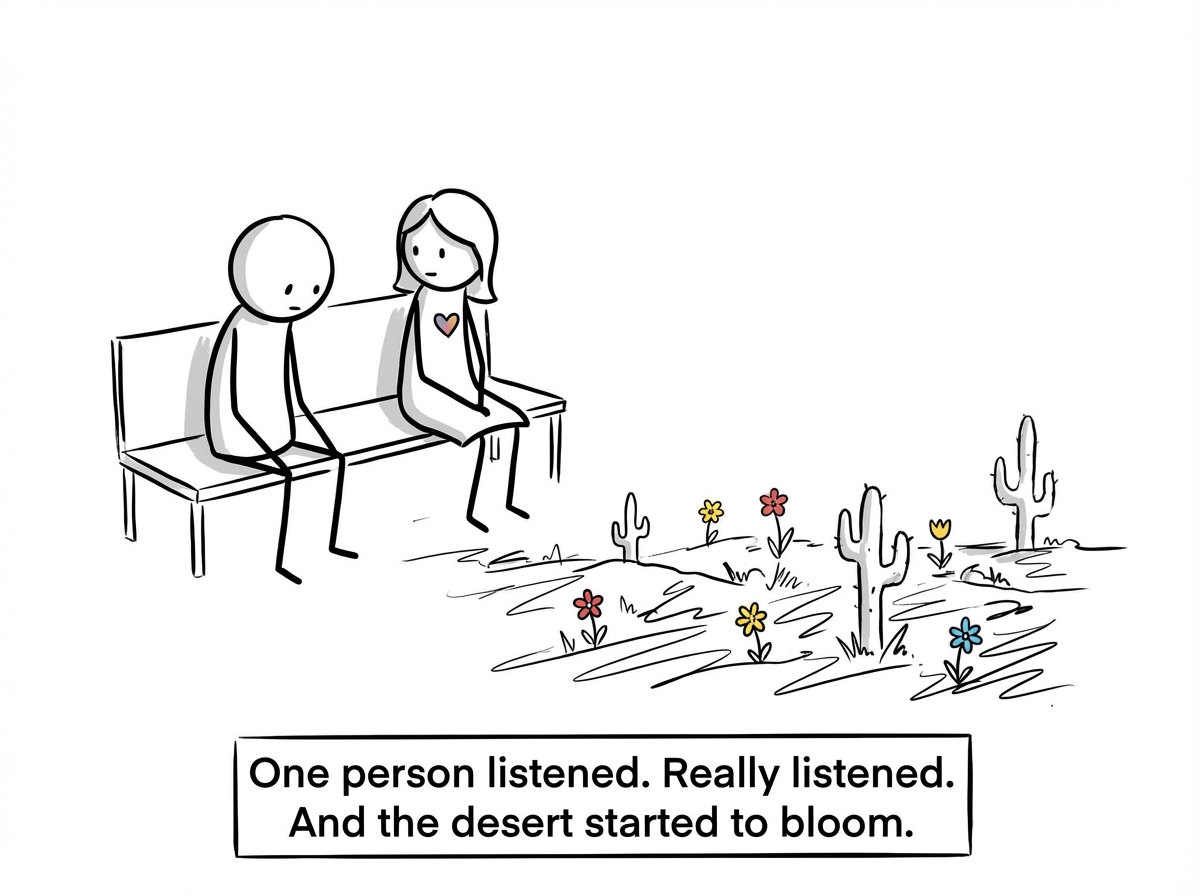
A person standing in a crowded room experiences it as a desert -- surrounded by people but with no real connection -- until one person truly listens.
Explanation
The loneliest place on earth is not a cabin in the woods. It is a room full of people where no one actually sees you. You can be surrounded by coworkers, acquaintances, even friends, and still feel like you are standing in a vast empty landscape. That is because loneliness is not about proximity. It is about perception. Neuroscientist John Cacioppo's research demonstrated that loneliness is the subjective experience of social disconnection -- the gap between the relationships you have and the depth of connection you actually feel. Chronic loneliness rewires the brain toward social hypervigilance. You start scanning every interaction for signs of rejection, which makes you more guarded, which makes genuine connection harder, which makes you lonelier. The cycle feeds itself. And the standard advice -- just go out more, join a club, put yourself out there -- misses the point. You can be 'out there' at every party and networking event and still feel like you are behind glass, performing connection without experiencing it. What breaks the cycle is not more people. It is one moment of felt connection -- one person who stops performing and actually listens. Research on belonging shows that a single experience of genuine attunement can interrupt the loneliness spiral. The desert does not need a hundred people walking through it. It needs one person who sits down and stays.
Key Takeaway
Loneliness is not cured by more people -- it is cured by one person who actually sees you.