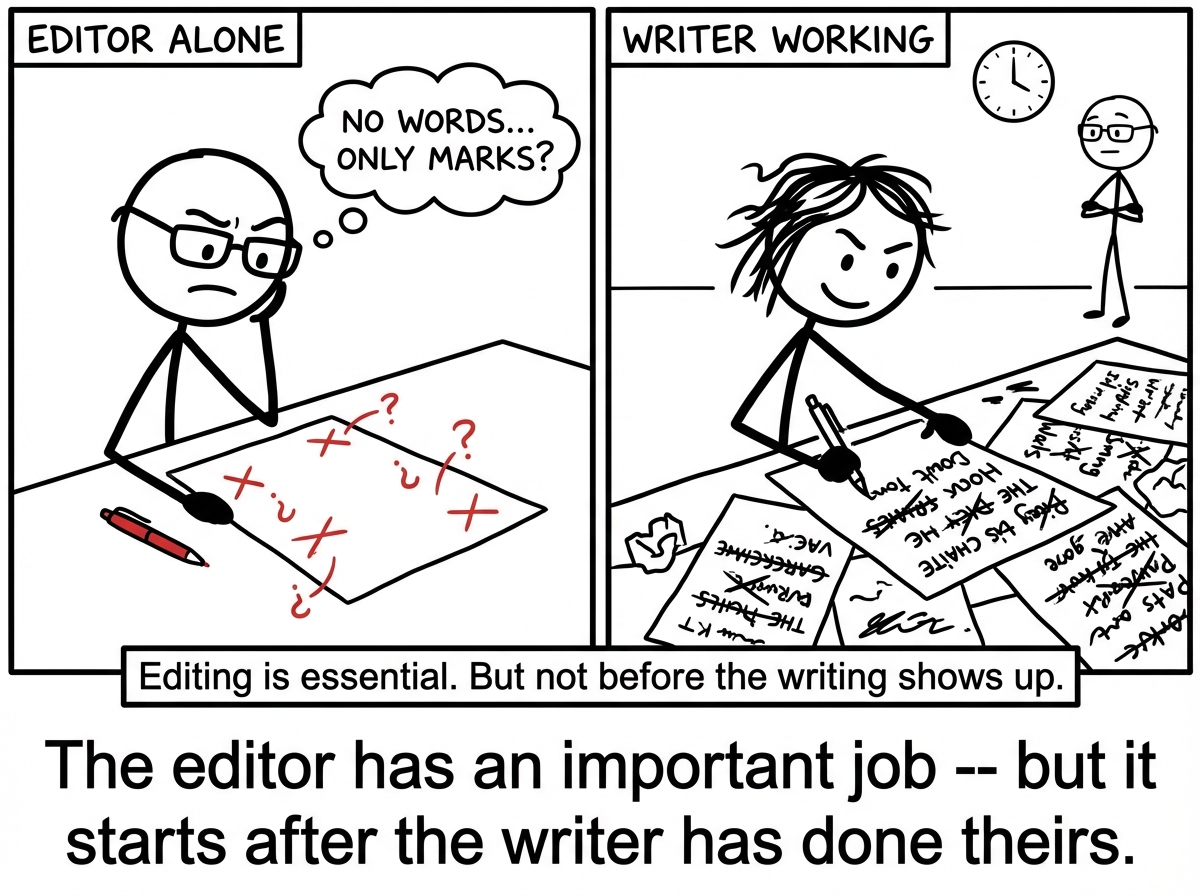
The Editor Who Arrived Before the Writer
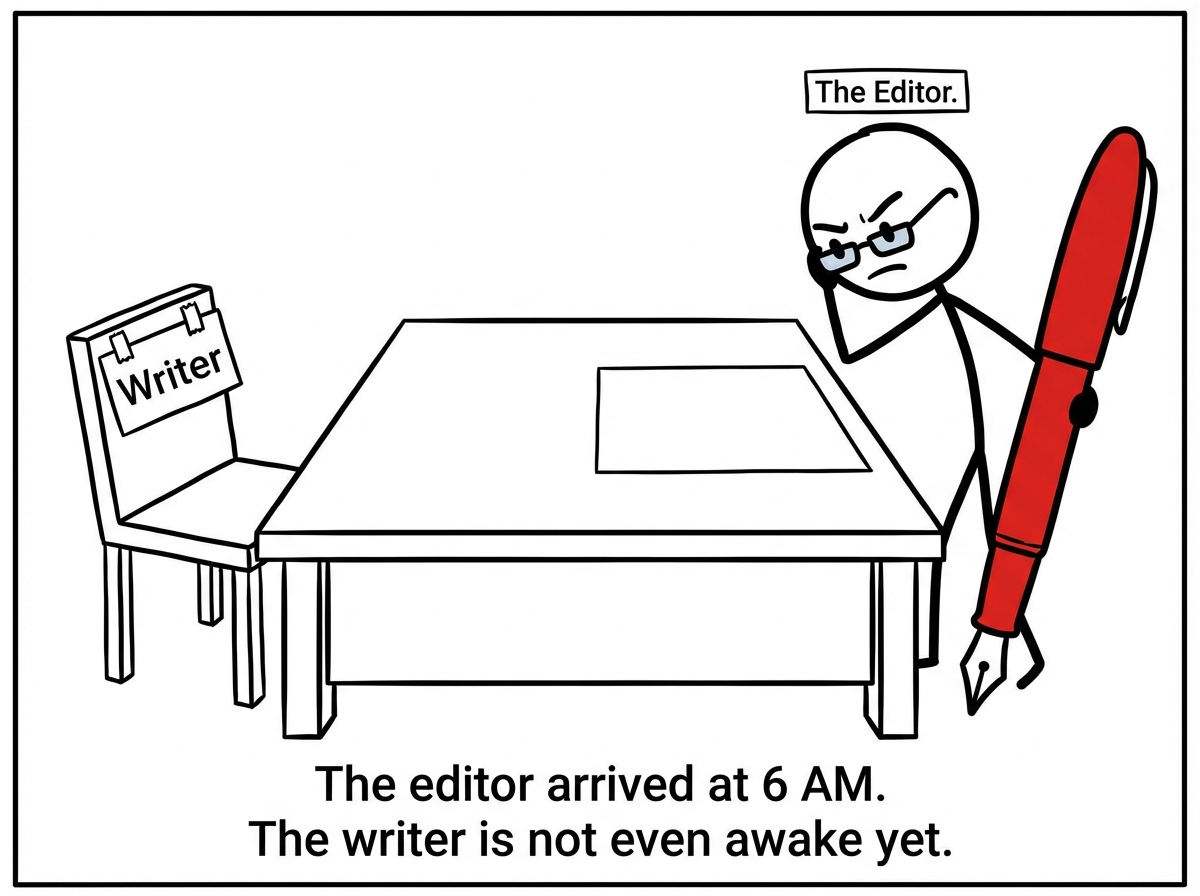
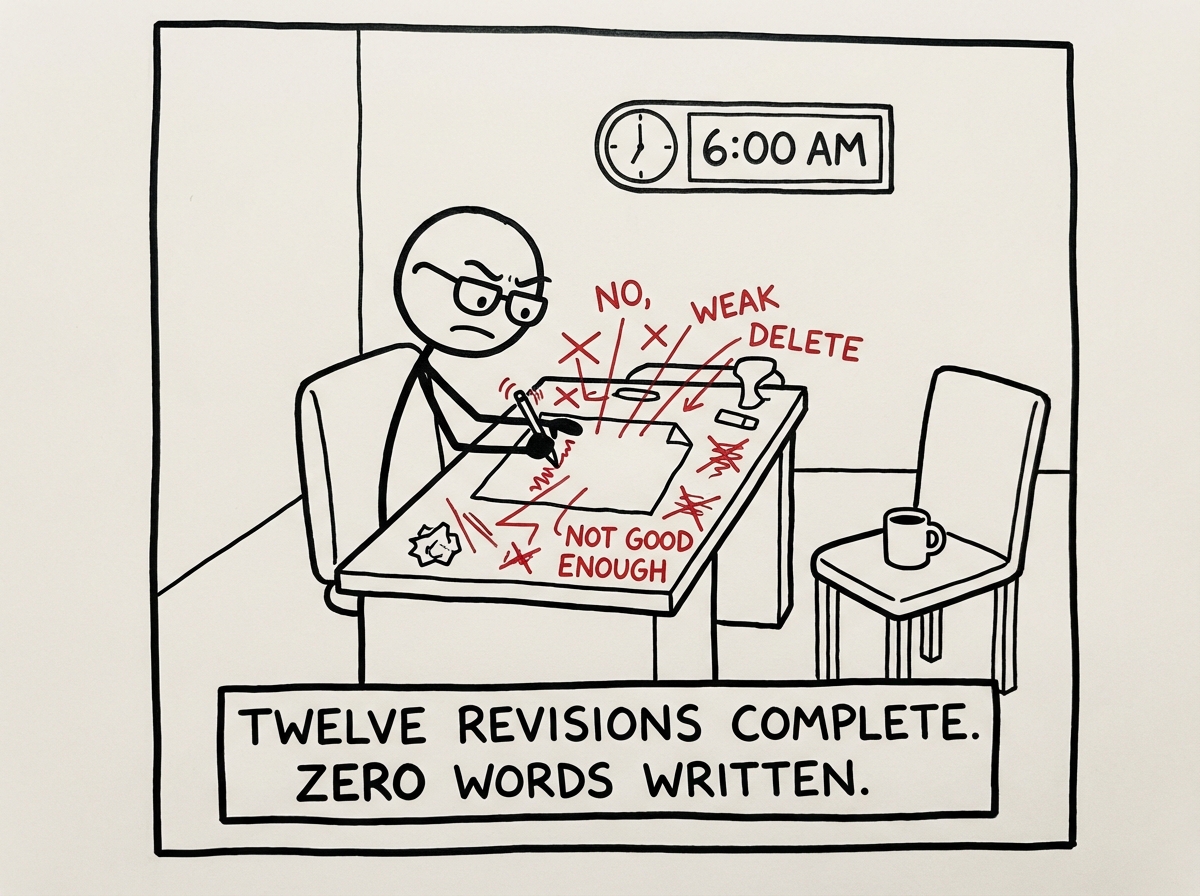
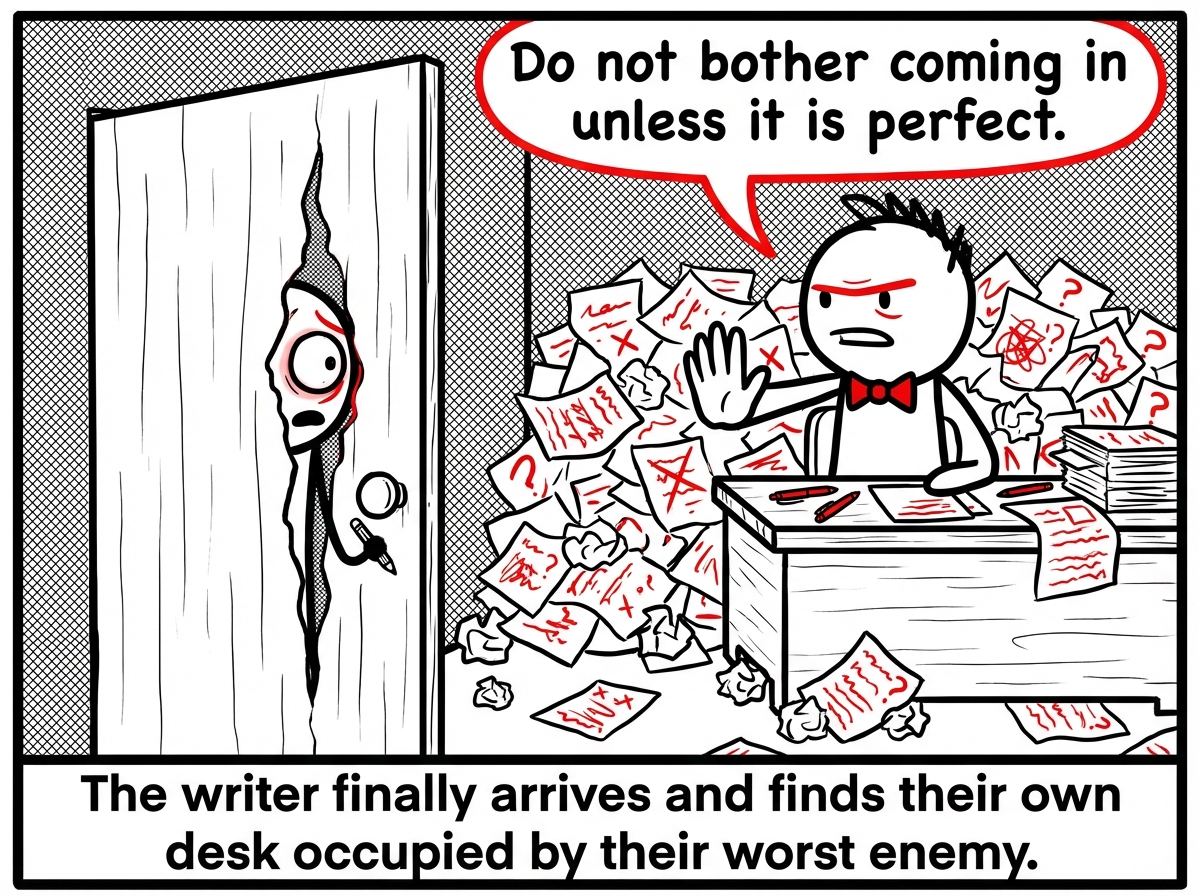
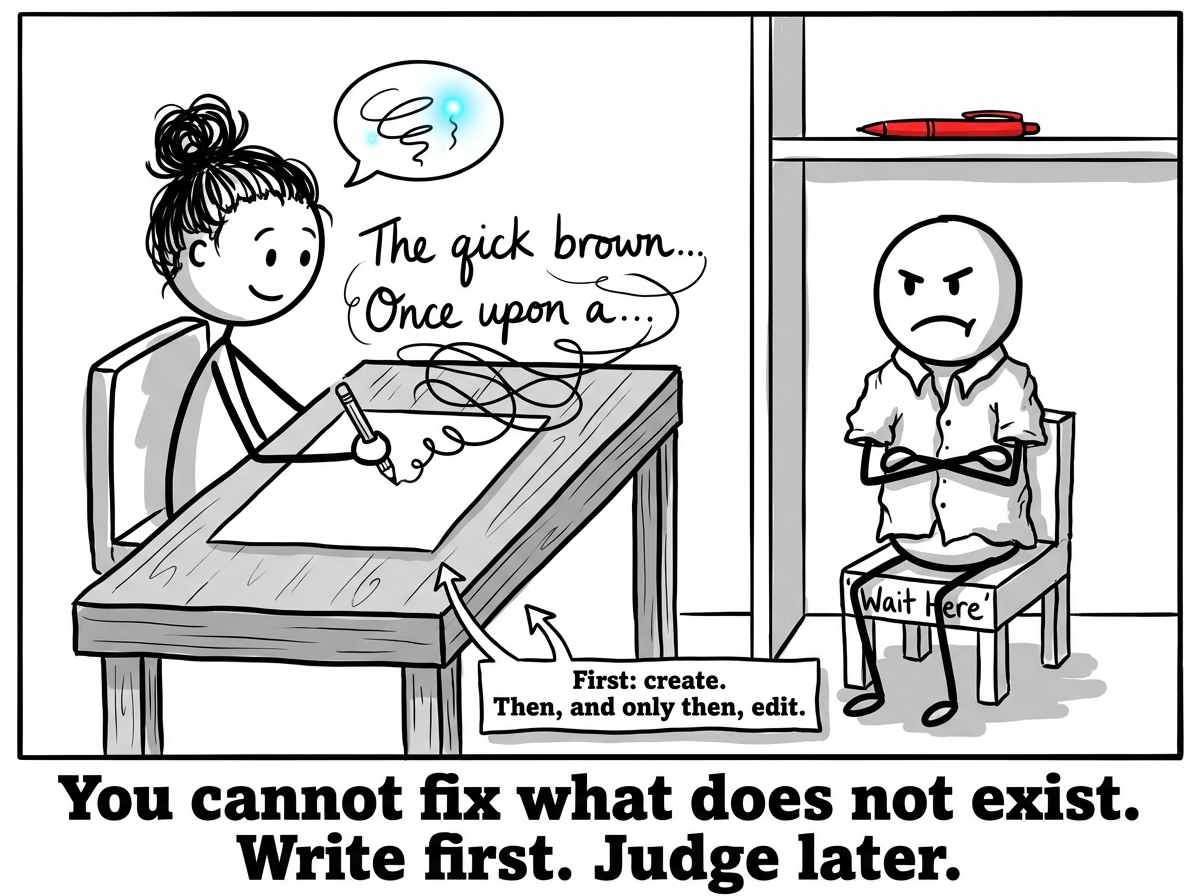
An editor with a giant red pen sits at a desk, aggressively crossing things out, while the writer has not even arrived yet -- the criticism began before a single word was written.
Explanation
One of the most destructive patterns in creative work is premature editing -- activating the judgmental, evaluative mind before the generative mind has had a chance to produce anything. Cognitive scientists distinguish between divergent thinking (generating possibilities) and convergent thinking (evaluating and refining them), and research consistently shows these two modes interfere with each other when activated simultaneously. The inner critic does not wait for a draft. It shows up at the blank page and starts crossing out sentences that do not exist yet, rejecting ideas that have not been spoken, and enforcing standards on work that has not been attempted. Psychoanalyst Donald Winnicott called this the collapse of creative play -- when the evaluating self dominates so completely that the spontaneous, playful self never gets a turn. The result is not high-quality work refined by rigorous standards. The result is no work at all. The editor who arrives before the writer does not improve the writing. They prevent it from ever happening.
Key Takeaway
You cannot edit a blank page -- but your inner critic will certainly try.