
The Eight-Year-Old Therapist
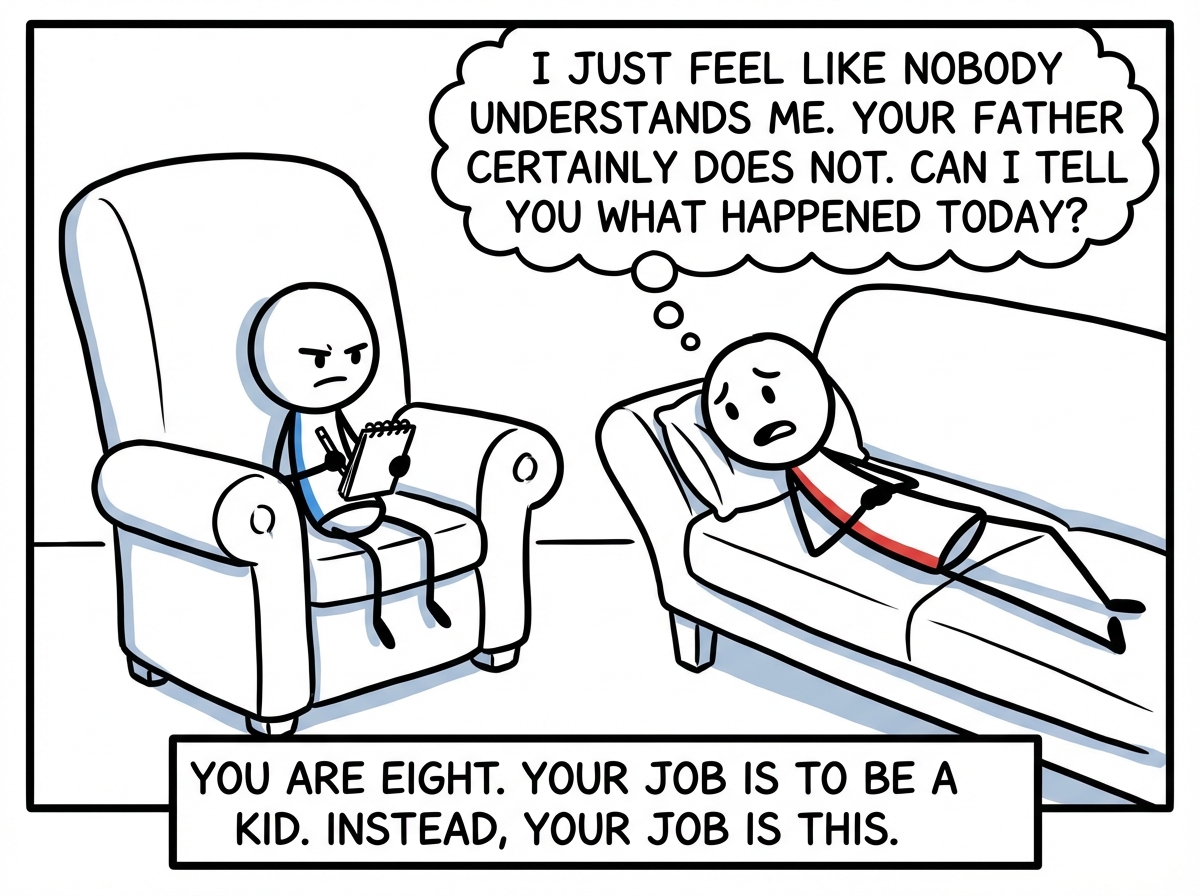
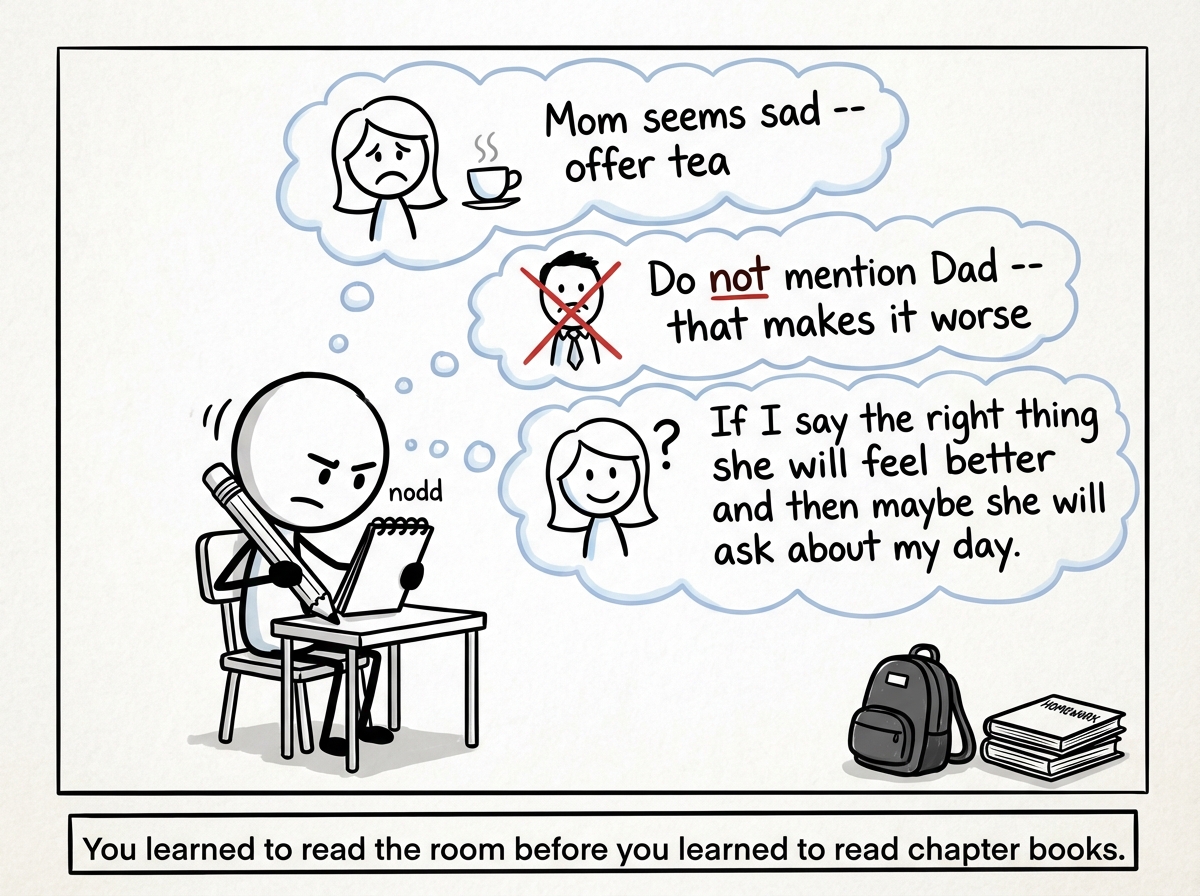
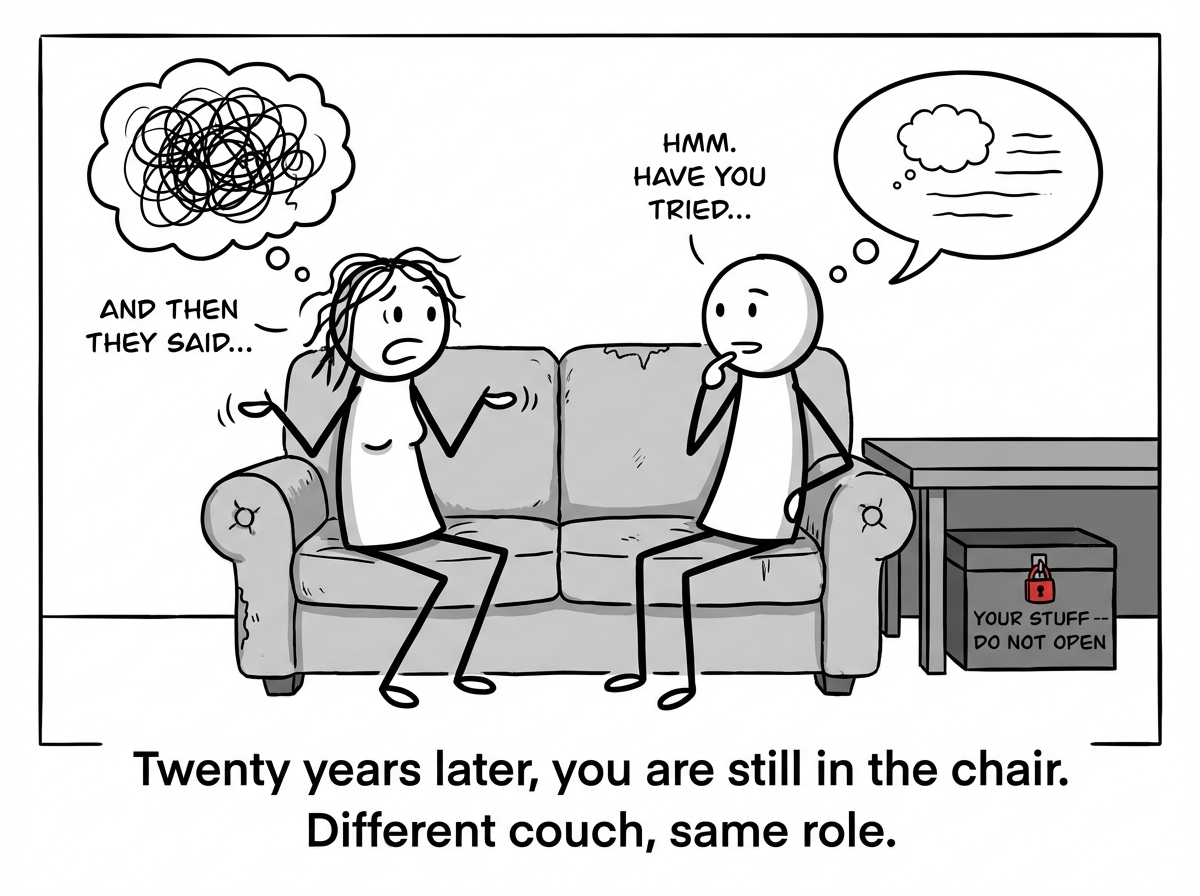
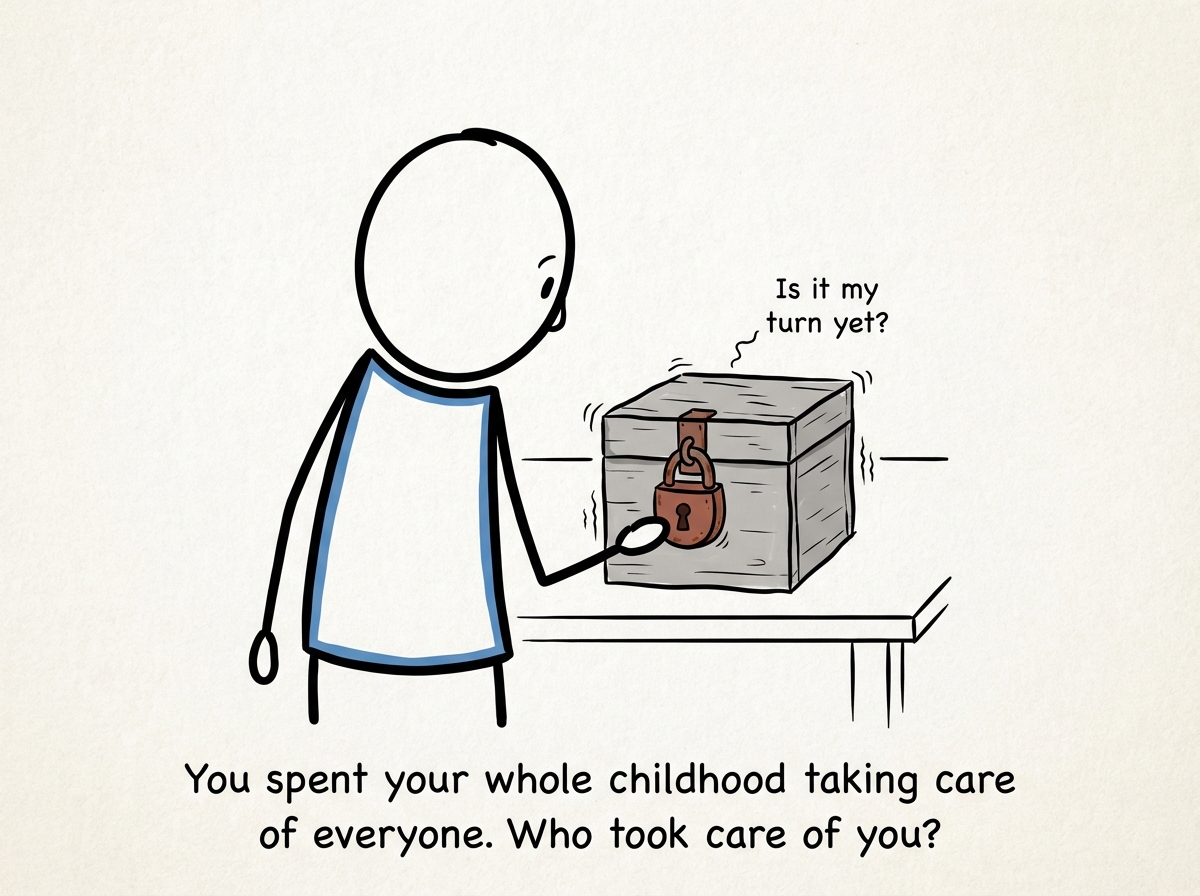
A child sits in a therapist's chair while their parent lies on the couch, venting about their problems -- a cartoon depiction of what it looks like when a child is forced into the role of emotional caretaker.
Explanation
Some children never get to be children. Instead of being cared for, they become the caretakers. They learn to read the room before they learn to read books. They manage a parent's emotions before they understand their own. They become the family therapist, mediator, peacekeeper, or emotional support system -- all before their age hits double digits. This is parentification, and it is one of the most normalized forms of childhood emotional harm. It often gets praised: 'She is so mature for her age.' 'He is such an old soul.' 'She is my little helper.' These compliments disguise the reality that a child is carrying burdens that belong to adults. Emotional parentification is especially insidious because it is invisible. There are no bruises, no dramatic incidents. Just a child who learned that their job in the family is to make sure everyone else is okay -- and that their own needs come last, if at all. The long-term cost is enormous. Parentified children grow into adults who are compulsive caretakers, who feel guilty when they are not helping someone, who cannot identify their own needs because they spent their formative years focused entirely on someone else's. They often end up in relationships with people who need rescuing, because that dynamic feels like home. They burn out and then feel ashamed of burning out, because they believe their only value is in what they provide. Healing from parentification is not about becoming selfish. It is about learning, for the first time, that your needs are not less important than everyone else's -- they were just never given a turn.
Key Takeaway
Being called 'mature for your age' as a child often means no one let you be a child -- and you are still paying the price.
A stick figure about to absorb a friend's crisis, then stopping and recognizing the familiar pattern: 'I am doing it again -- being the therapist'
The stick figure saying to the friend 'I care about you, but I am not the right person to carry this' with a kind but firm expression
The stick figure sitting alone, opening their own locked box of feelings for the first time, looking nervous but willing
The stick figure resting in a chair, doing nothing for anyone, with a small smile and a thought bubble reading 'This is allowed'