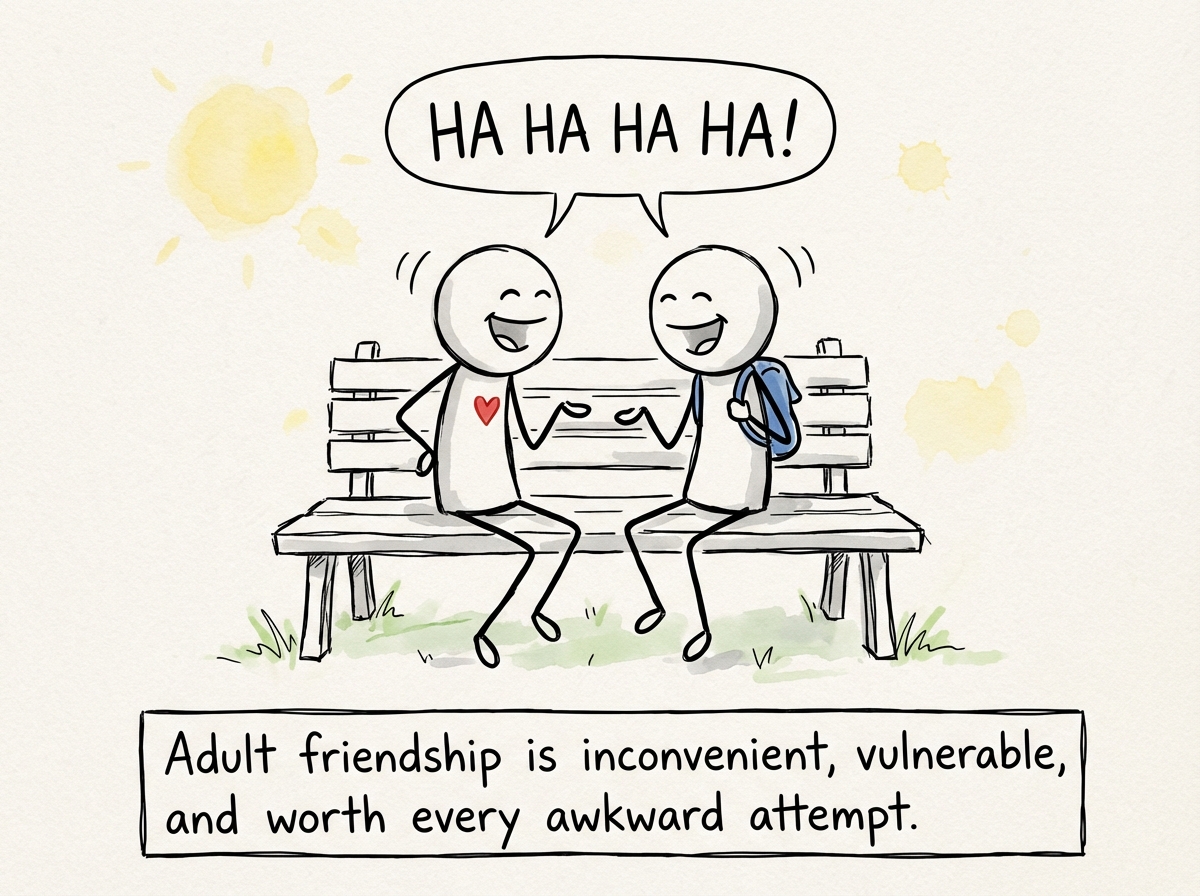
The Friendship Application
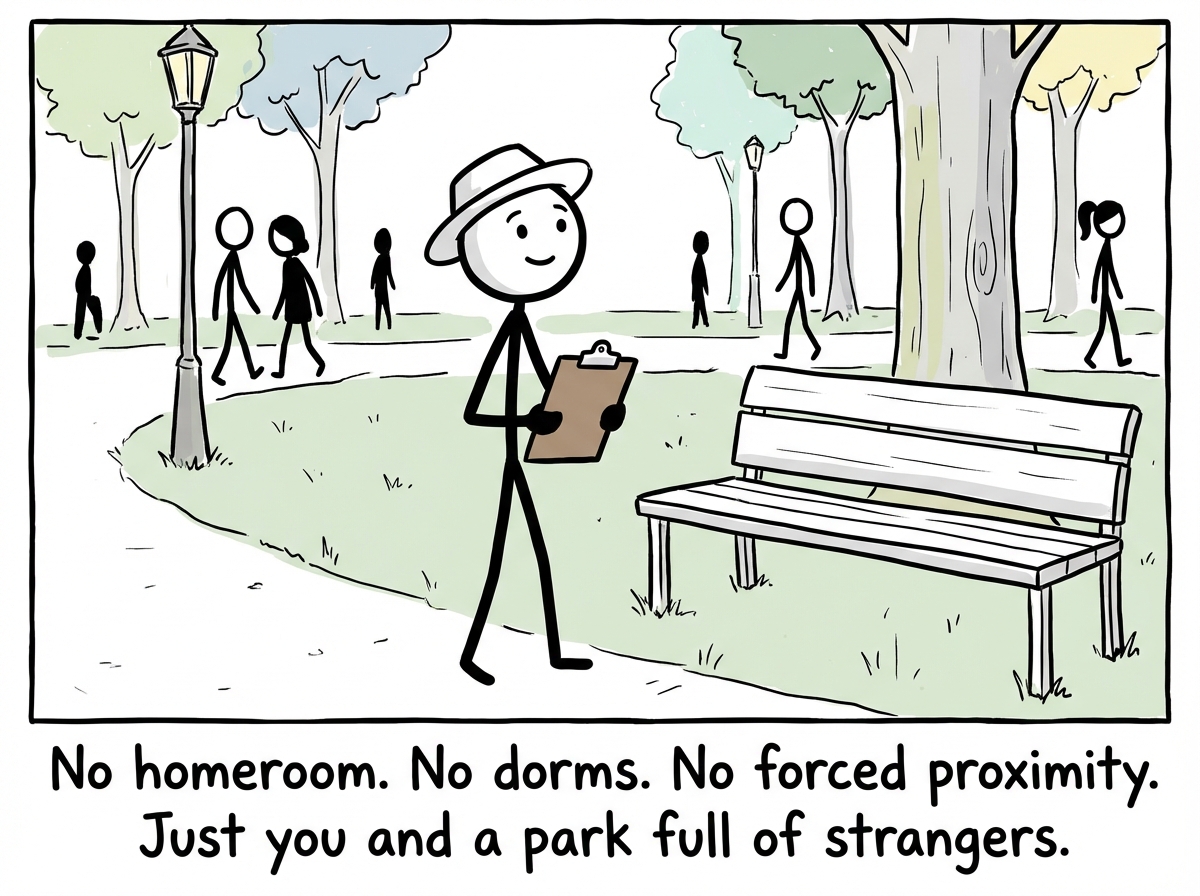
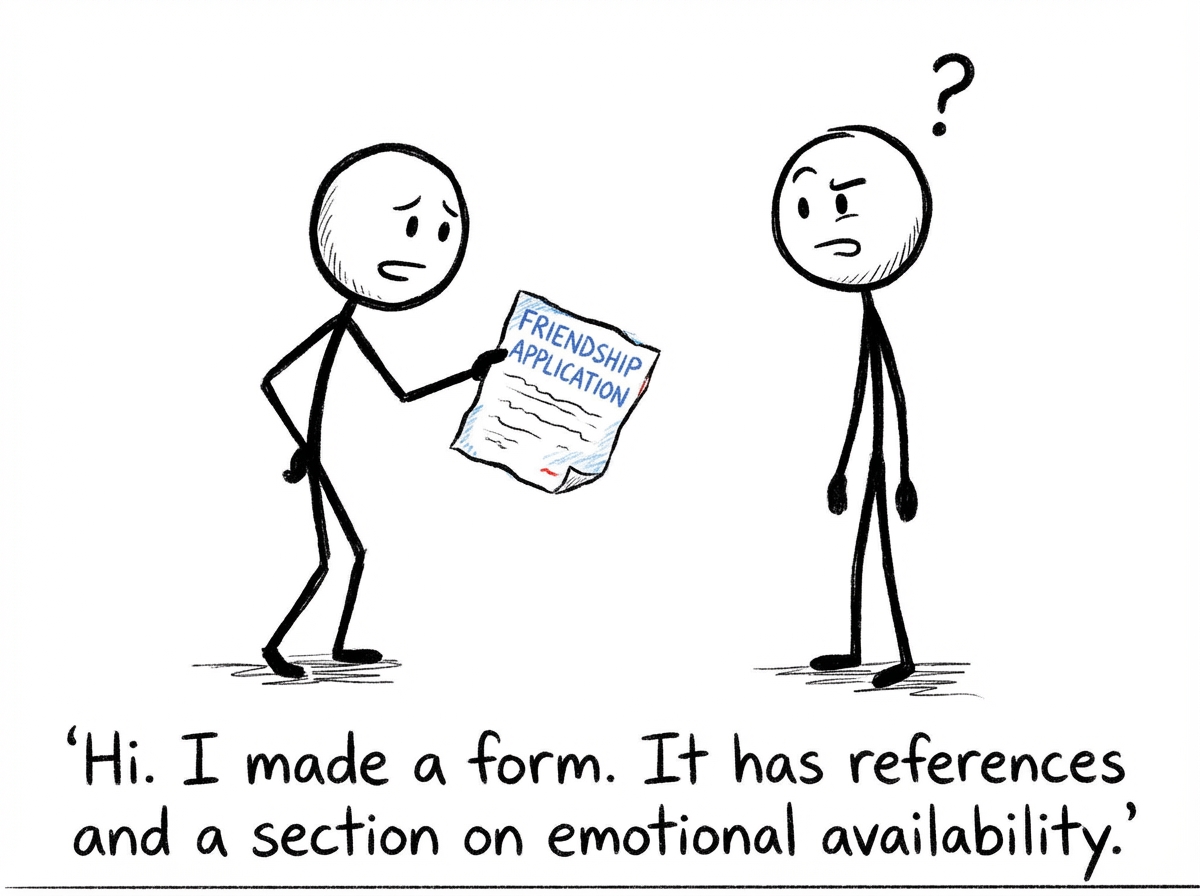
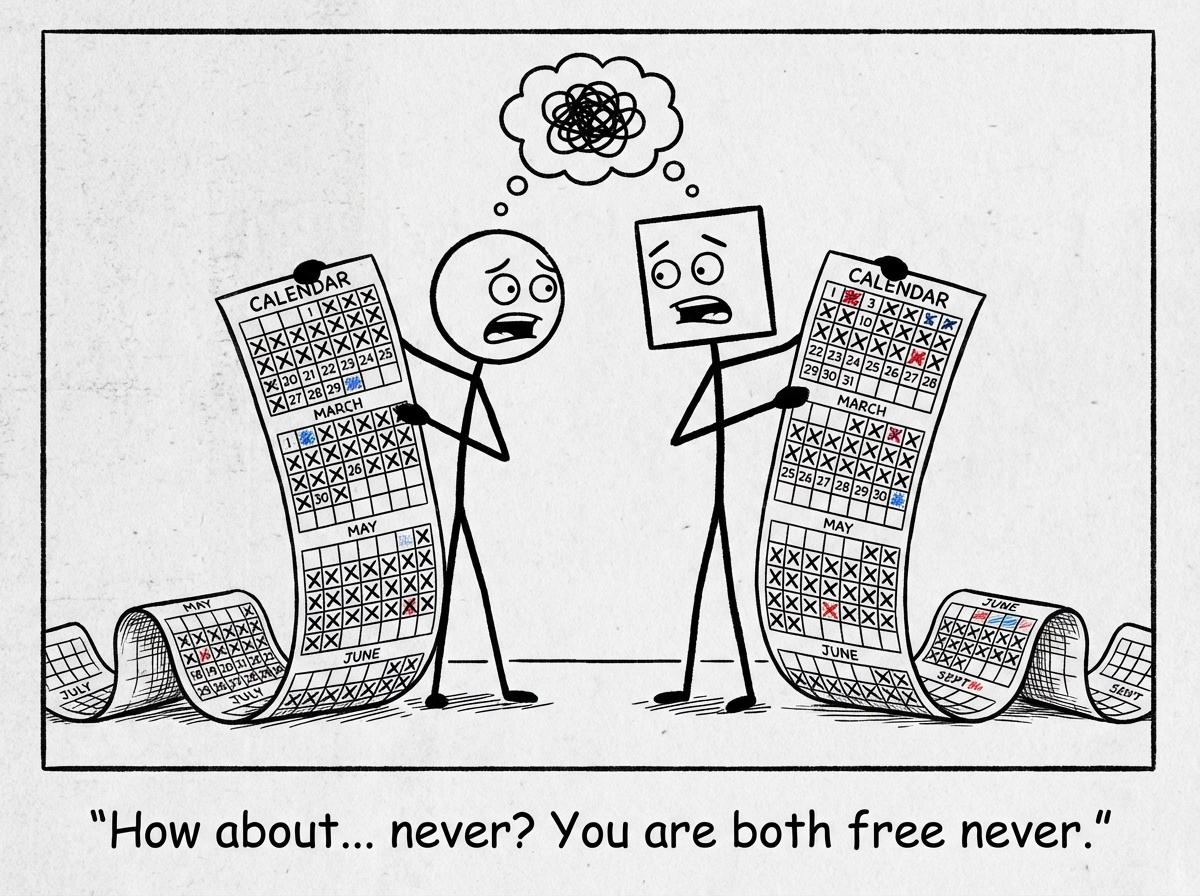
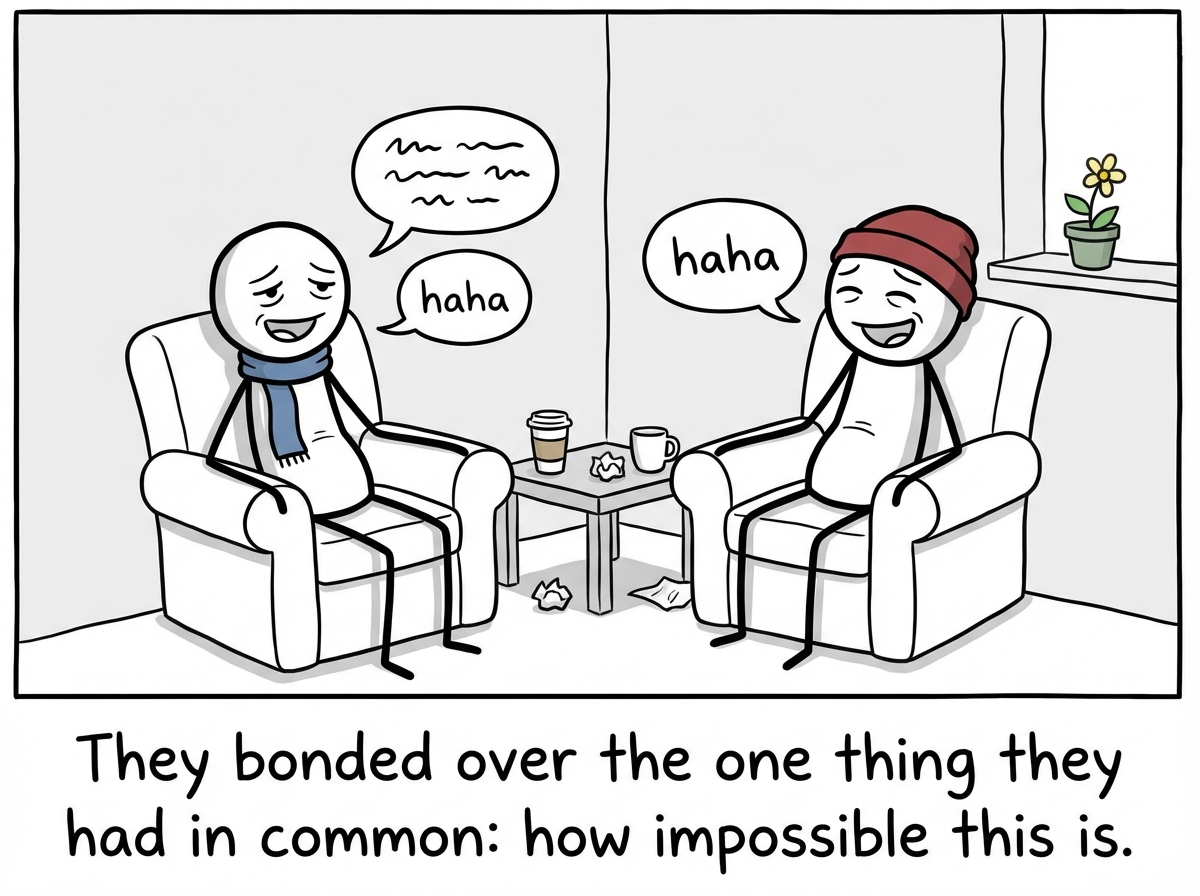
An adult realizes there is no system for making friends after school ends -- no homeroom, no dorms, no forced proximity -- and bonds with someone over the shared absurdity of trying.
Explanation
In school, friendship was infrastructure. You did not have to try. You were placed next to someone in homeroom, passed notes during class, ate lunch at the same table for four years, and suddenly you had a best friend. The system did the heavy lifting. Then you graduated, and the system disappeared. Nobody warned you that the conveyor belt of friendship would stop, and that from now on, every connection would require deliberate, vulnerable, logistically exhausting effort. Sociologist Rebecca Adams identified three conditions for organic friendship formation: proximity, repeated unplanned interaction, and a setting that encourages vulnerability. School provides all three automatically. Adult life provides almost none. Your days are structured around productivity, not lingering. You see the same people in contexts that reward professionalism over authenticity. And the logistical barrier is brutal -- scheduling a single coffee with another busy adult can require weeks of calendar negotiation that feels more like diplomatic treaty talks than casual bonding. The deepest barrier, though, is emotional. Making a friend as an adult requires initiating, following up, and tolerating the ambiguity of not knowing if the other person likes you -- the same vulnerability as a first date, but without any cultural framework that makes it normal. Most adults would rather endure quiet loneliness than risk that awkwardness. The irony is that almost everyone is feeling the same way, waiting for someone else to go first.
Key Takeaway
Adult friendship is hard not because you are bad at it -- it is hard because the system that used to create it for you no longer exists, and everyone is too afraid to go first.