
The Funeral Before the Funeral
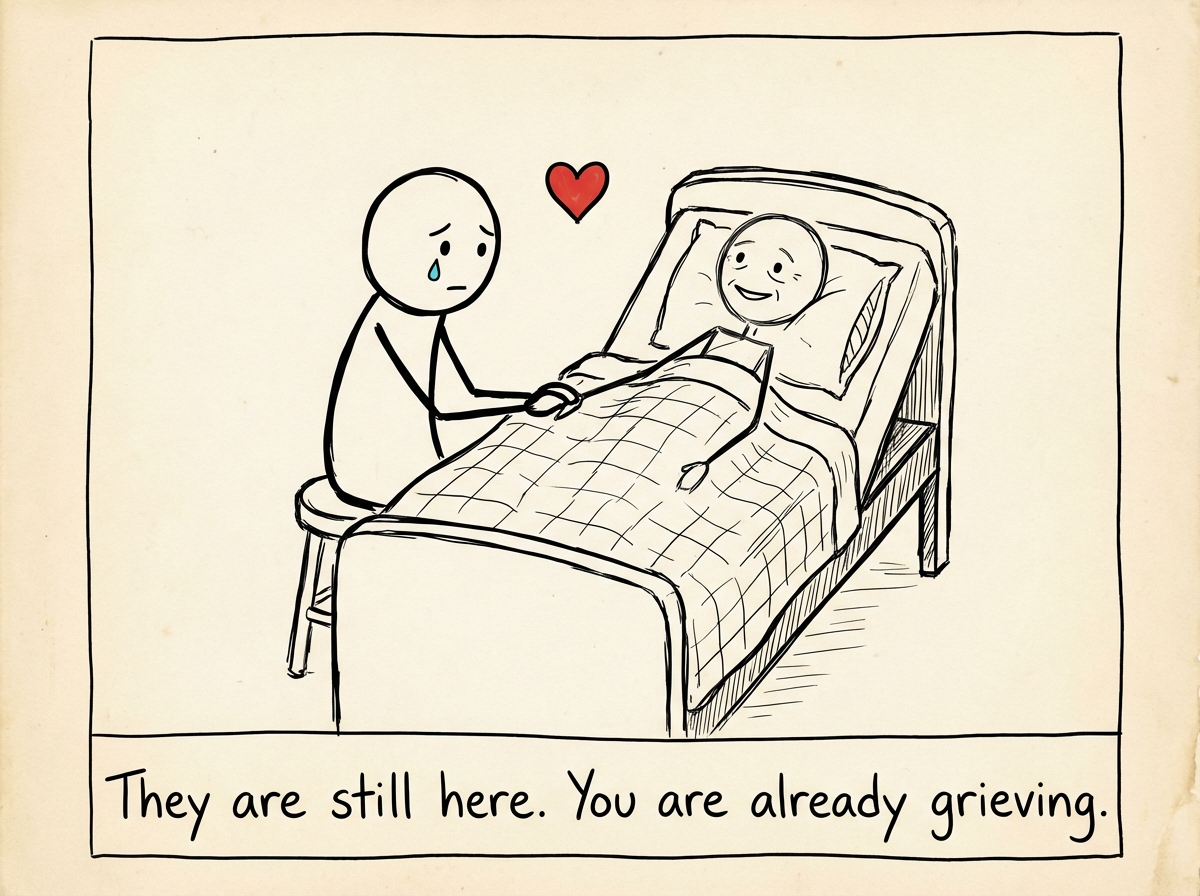
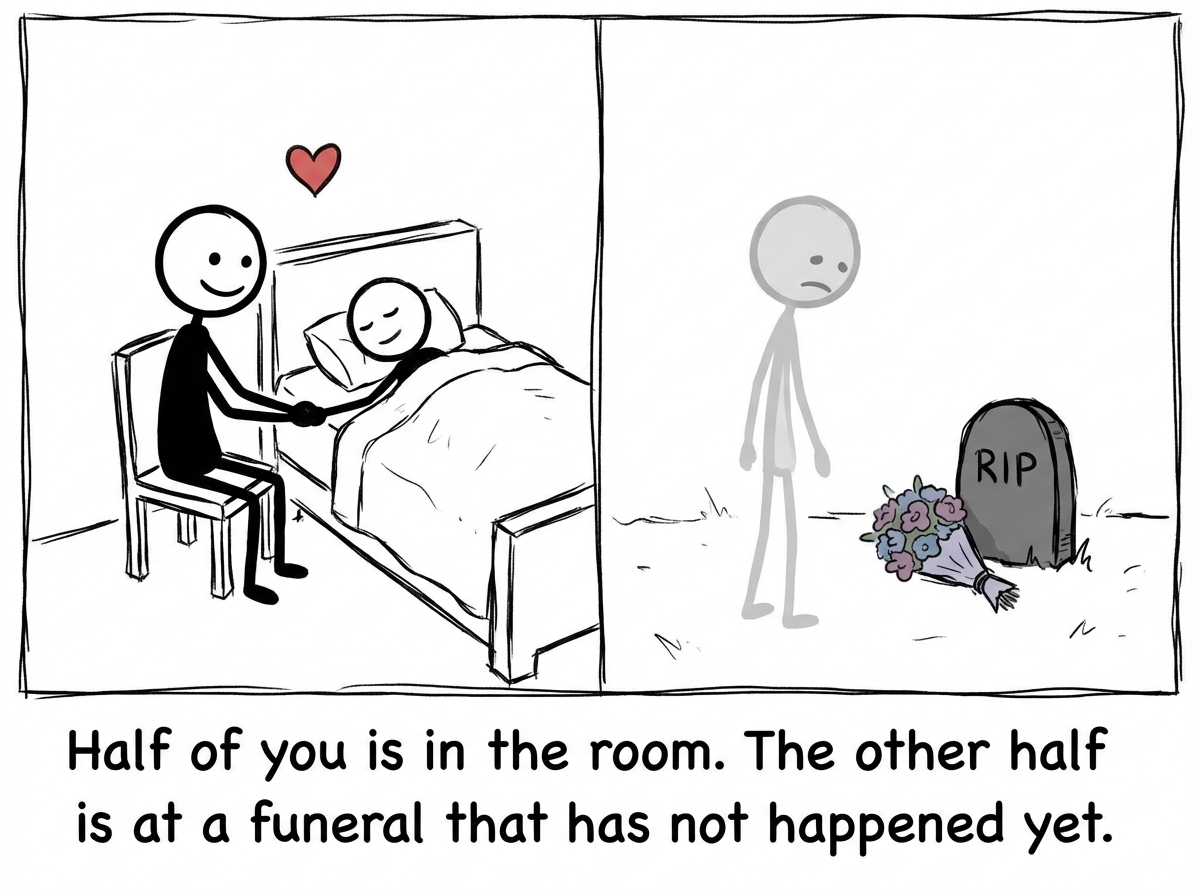
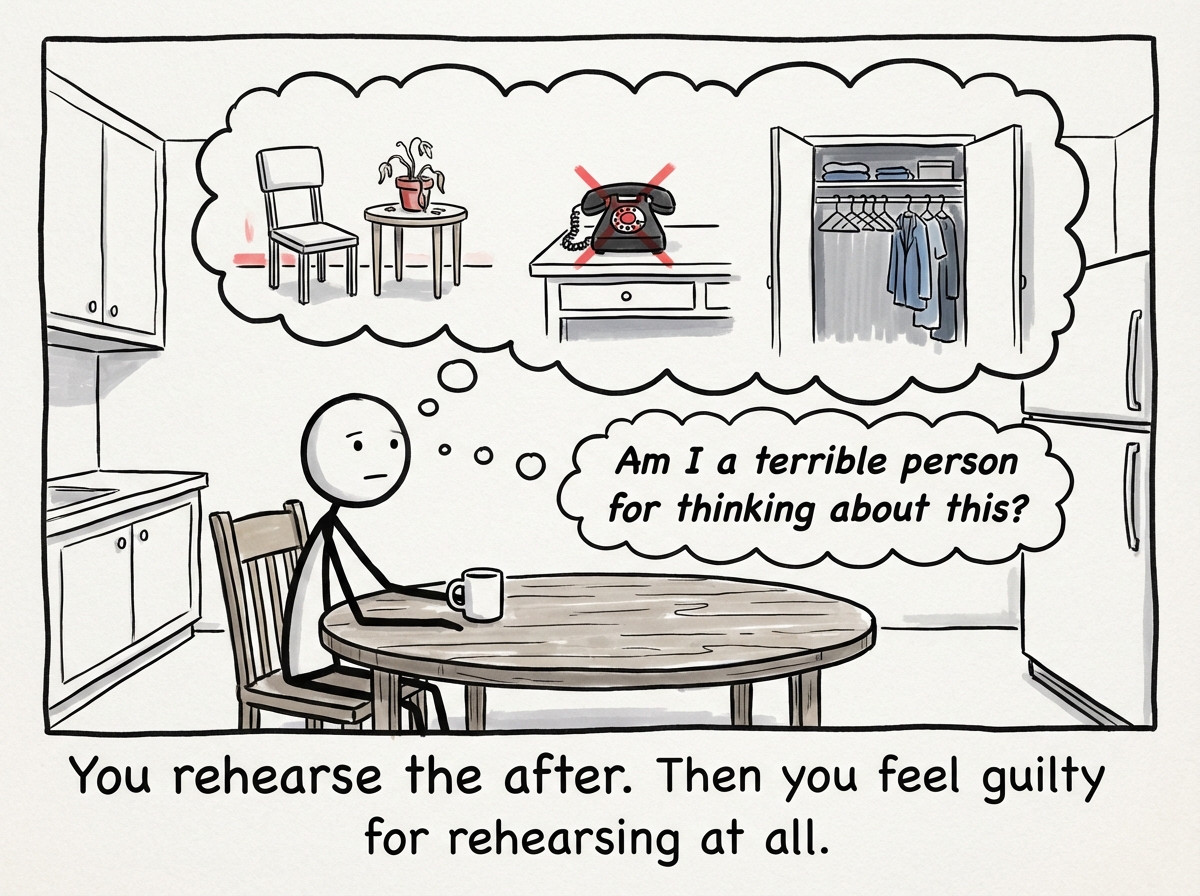
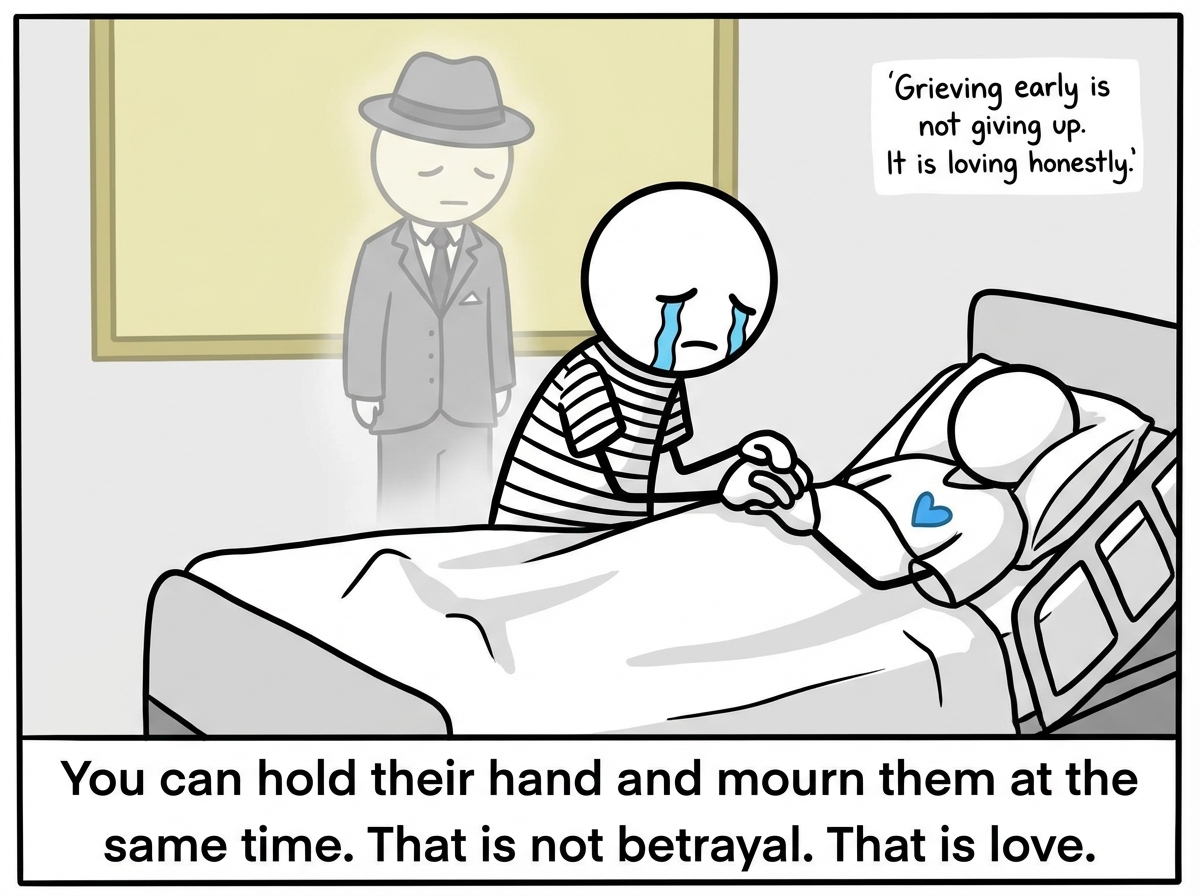
A person grieves someone who is still alive, attending a funeral in their mind that has not happened yet -- mourning in advance while the world tells them it is too soon.
Explanation
You are watching someone you love decline and your brain has started grieving before the story is over. You sit beside them in the hospital and part of you is already at the funeral. You laugh at their jokes and simultaneously imagine what the silence will sound like when they are gone. You catch yourself rehearsing the eulogy, planning what you will wear, picturing the empty chair -- and then you feel guilty for grieving someone who is still breathing. It feels like a betrayal. It feels premature. But your heart does not care about timelines. Anticipatory grief was first identified by psychiatrist Erich Lindemann in the 1940s while studying the families of soldiers during wartime. He found that people began mourning before the death actually occurred -- and that this was not pathological but adaptive. Later research by Therese Rando expanded the concept, showing that anticipatory mourning involves grieving not just the person but the past you shared, the present that is changing, and the future that will not include them. It is not one loss -- it is a cascade of losses happening in slow motion while you are still expected to show up, stay strong, and hold it together for everyone else. What you need to know is this: grieving early does not mean giving up. It does not mean you have stopped hoping. It means you are human, and your psyche is doing the brave, painful work of facing what is coming instead of pretending it is not there. You can grieve and love and hope all at the same time. That is not weakness -- it is the full, messy truth of caring deeply about someone whose story is nearing its end.
Key Takeaway
Grieving before someone is gone is not giving up on them -- it is proof of how much they matter.
A stick figure sitting beside the hospital bed, letting tears come freely, not forcing a brave face, the loved one gently resting.
A stick figure writing a letter at a quiet desk, the page reading 'What I want you to know before...' with a candle burning nearby.
A stick figure in a support group for caregivers, others sharing their own anticipatory grief, everyone nodding in recognition.
A stick figure back at the bedside, holding their loved one's hand, fully present, the translucent funeral scene gone, just the two of them in this moment.