
The Ghost at the Dinner Table
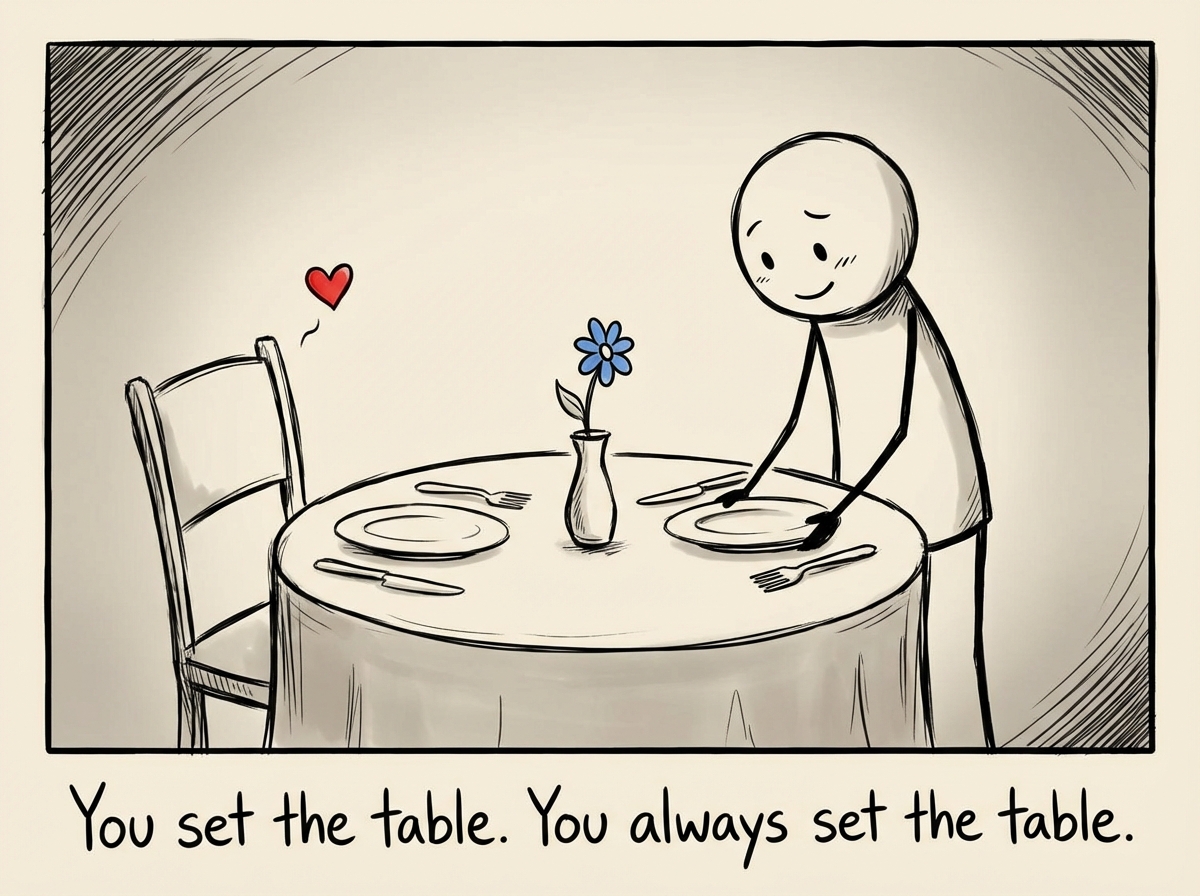
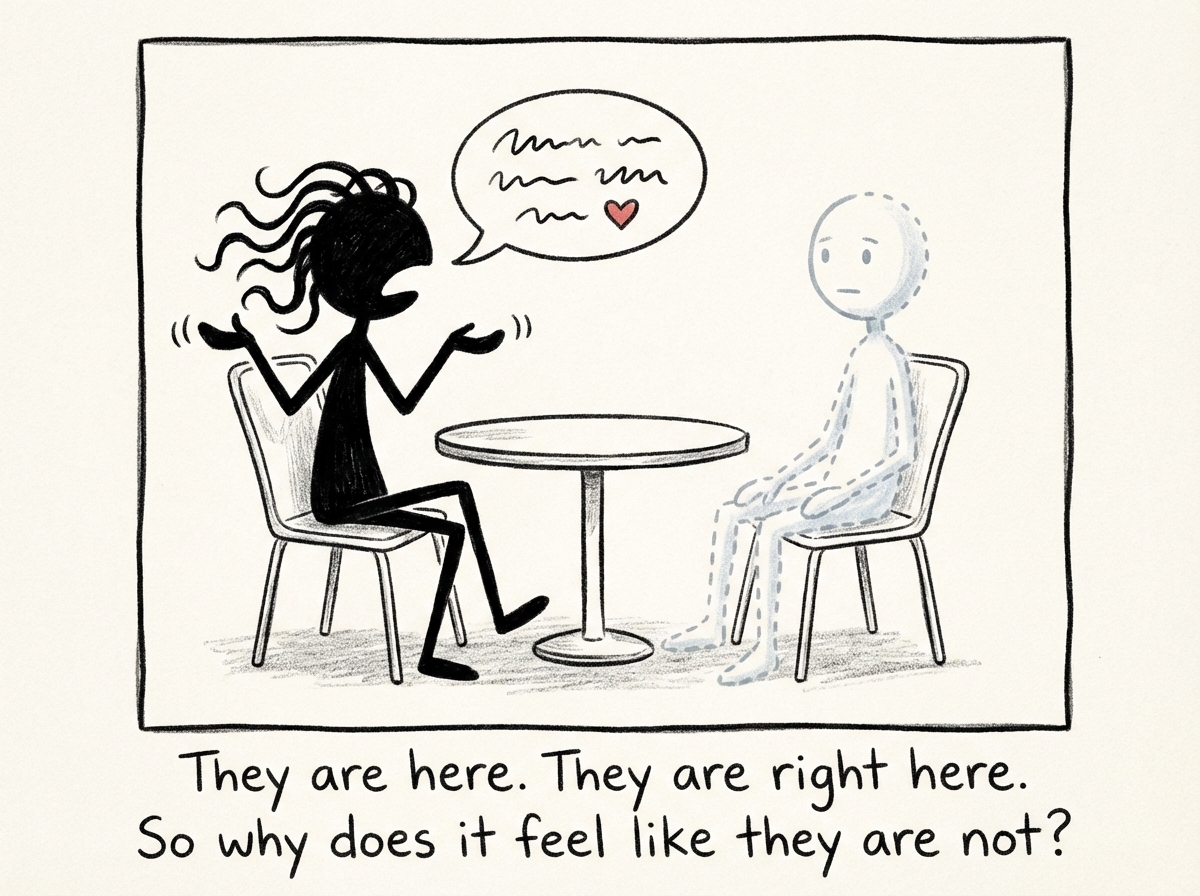
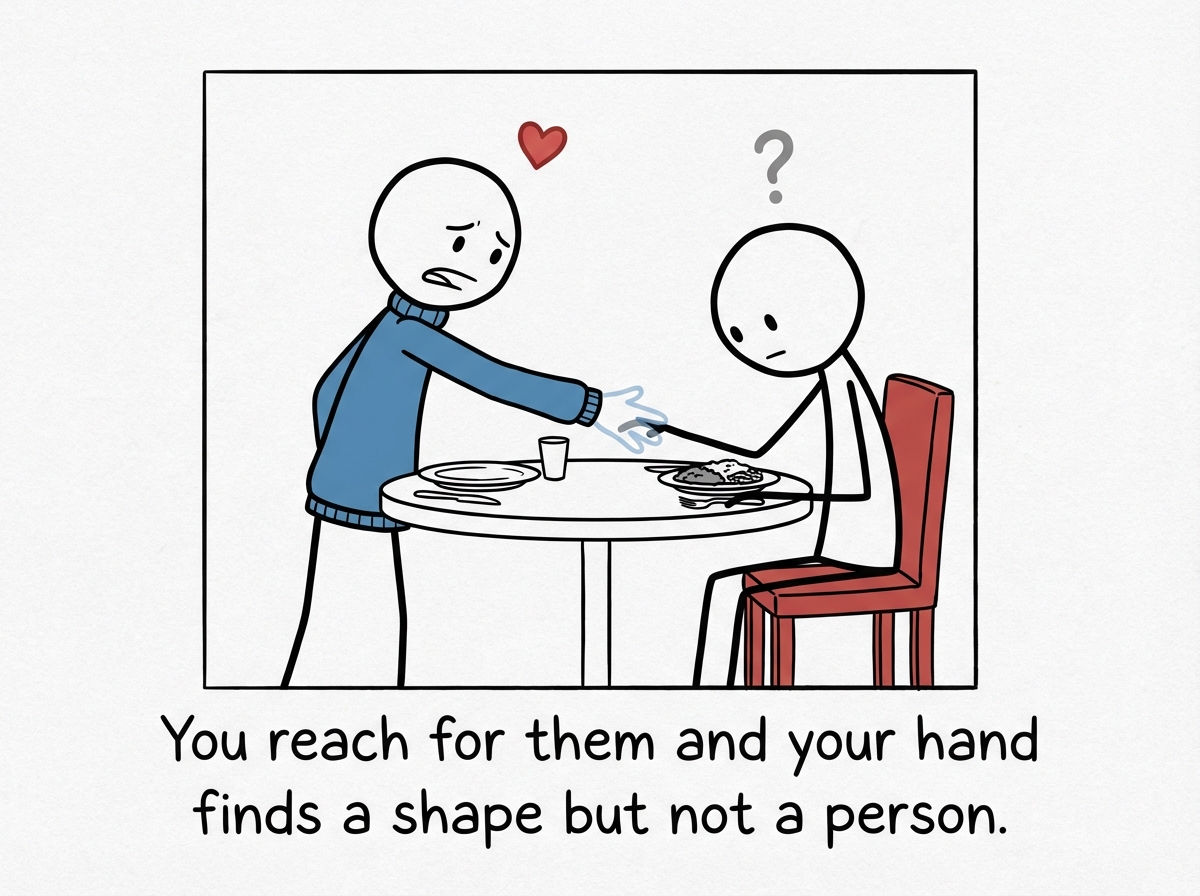
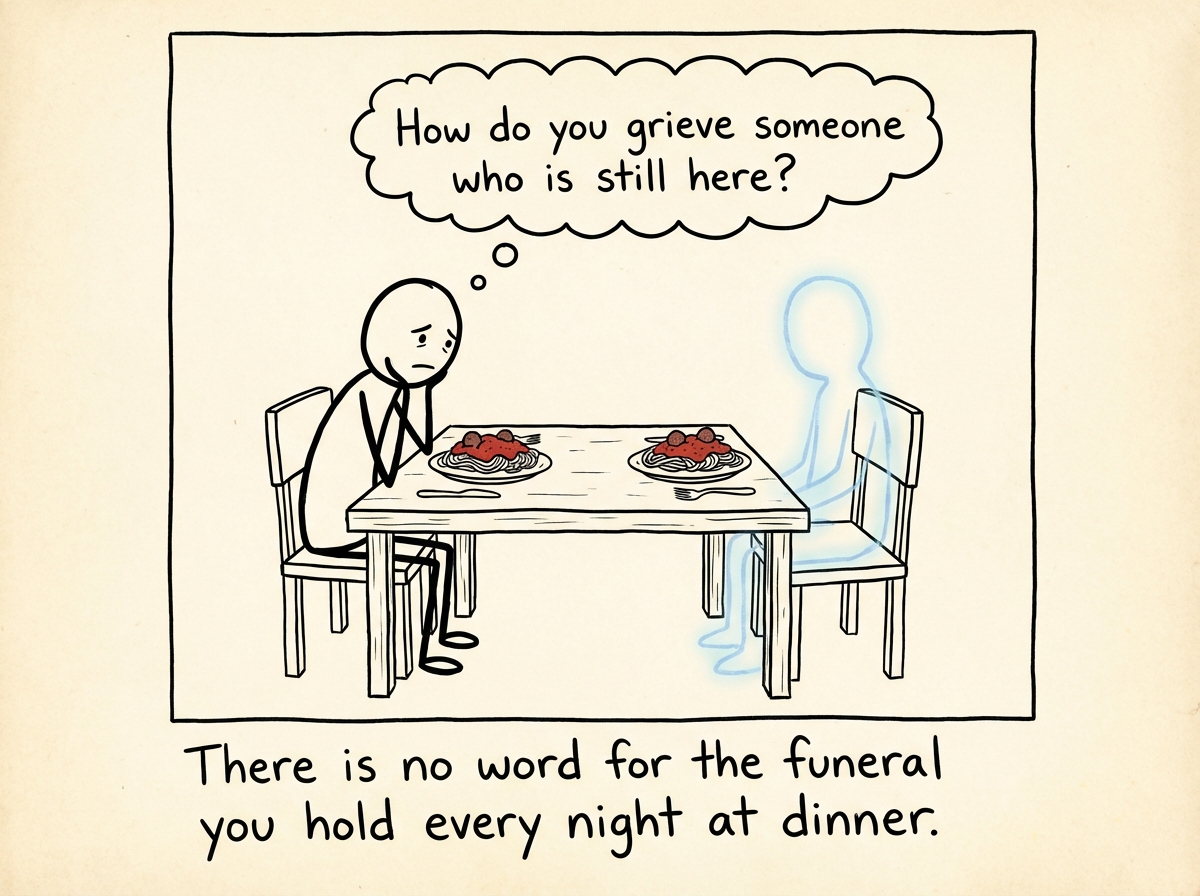
A person sits across from someone who is physically present but emotionally gone -- eating dinner with a ghost who still has a body.
Explanation
You are sitting across from someone you love. They are right there -- same chair, same table, same face. But something is missing. Maybe it is a parent whose mind has slipped away. Maybe it is a partner who checked out months ago but never left. Maybe it is a sibling lost to addiction, someone whose body shows up but whose presence does not. You keep setting a place for them. You keep trying to make eye contact. And you keep feeling the strange, hollow ache of missing someone who is sitting three feet away from you. Psychologist Pauline Boss calls this ambiguous loss -- grief without closure, mourning without a death. It is one of the most stressful forms of loss precisely because it resists resolution. Your brain cannot file it away neatly. There is no funeral, no transition point, no moment when the world says, 'Yes, this person is gone now and you are allowed to grieve.' Instead, you exist in a painful limbo, caught between holding on and letting go, between hope that they might come back and the slow recognition that the person you knew may already be gone. Boss found that this ambiguity itself -- not just the loss -- is what makes it so psychologically damaging. The path forward is not about choosing hope or acceptance. It is about learning to hold both. You can love someone and grieve them at the same time. You can sit at the table with who they are now while still mourning who they were. That is not contradiction -- it is the complicated, honest shape of love when loss refuses to be clean.
Key Takeaway
You can miss someone who is sitting right next to you -- and that grief is just as real as any other.
A stick figure sitting at the dinner table, placing a hand on their own heart, a thought bubble reading 'I miss who you were. And that is allowed.'
A stick figure letting tears fall at the table without wiping them away, an empty journal open beside their plate.
A stick figure talking to a counselor, showing them a photo of who the person used to be, the counselor listening with care.
A stick figure back at the dinner table with the faded person, gently touching their hand, accepting both who they are now and who they were.