
The Grief That Won't Leave
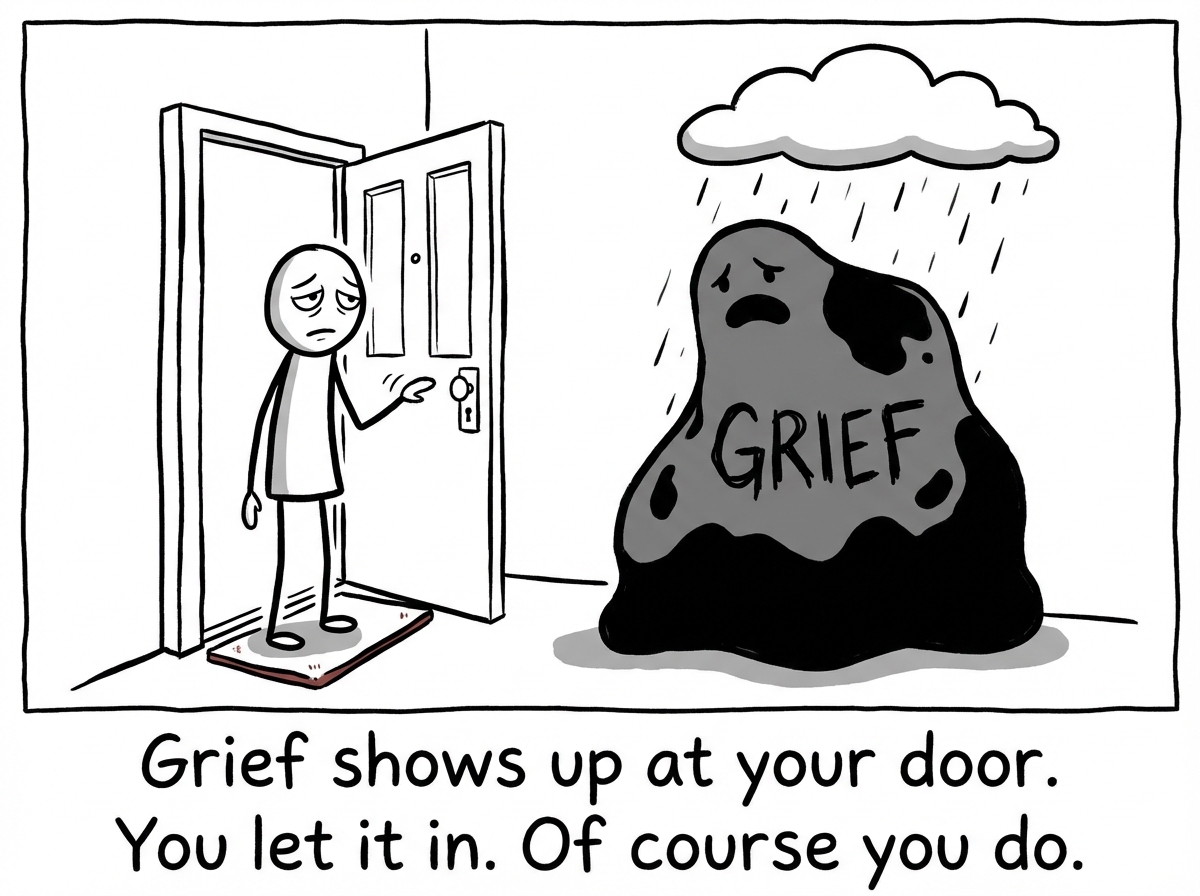
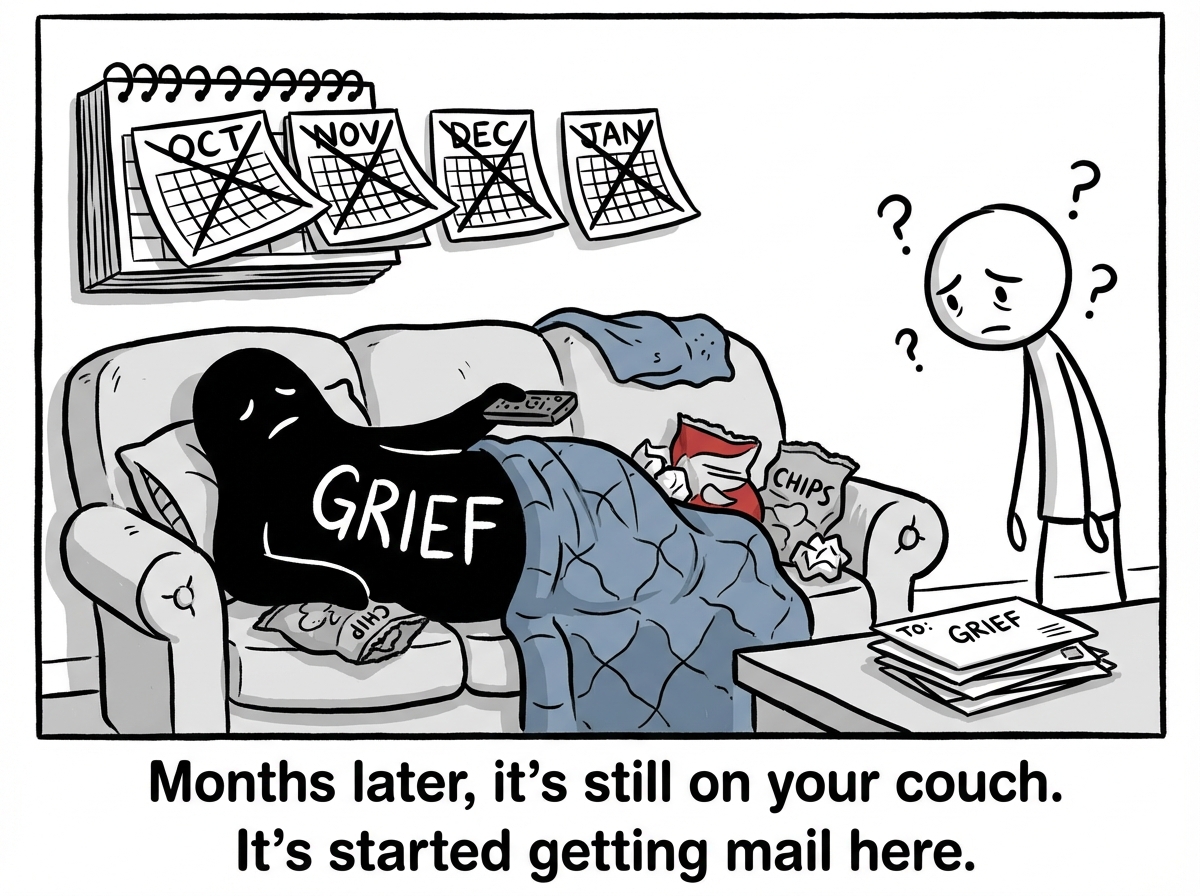
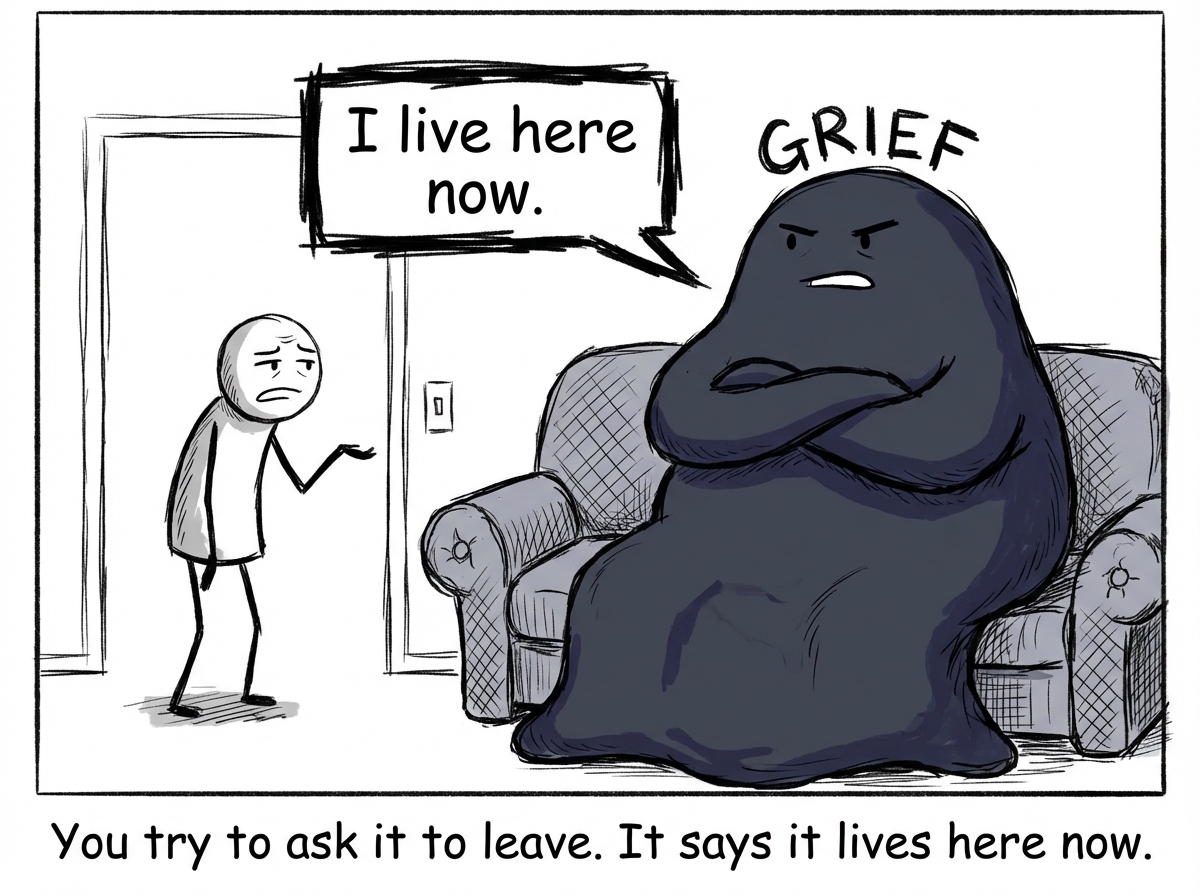
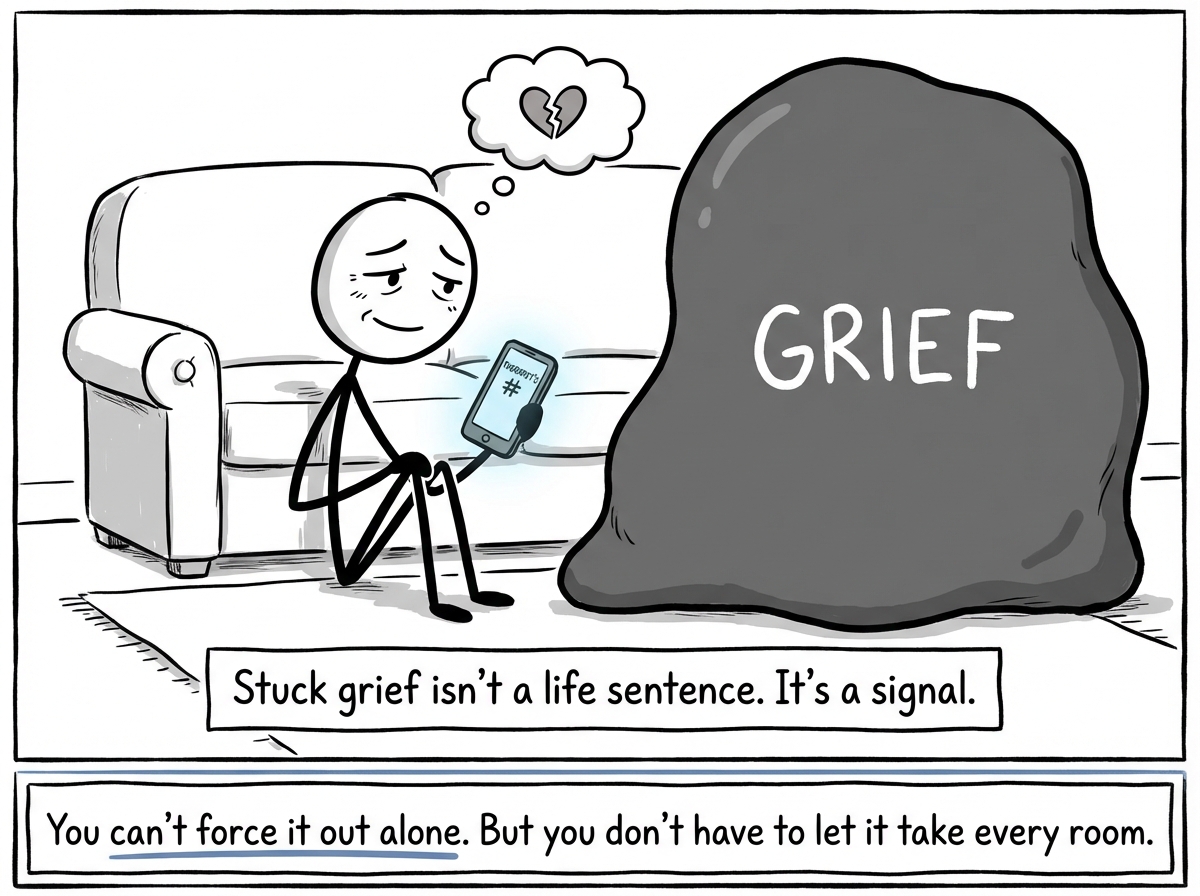
Grief personified as a houseguest who moved in and refuses to leave -- still sitting on the couch months later, taking up all the space.
Explanation
At first, the grief made sense. It showed up at the door and you let it in because that is what you do -- you let grief in. You expected it would stay for a while, take up the couch, make things heavy, and eventually pack its bags. Everyone said it would. 'Give it time,' they said. 'It gets better.' But months passed. Then a year. And grief is still on your couch. It has started getting mail at your address. It eats your food. It sleeps in your bed. And at some point you stopped waiting for it to leave and started wondering if something is fundamentally wrong with you for not being able to show it the door. Complicated grief -- now formally recognized as prolonged grief disorder in the DSM-5-TR -- is what happens when the brain's natural adaptation to loss gets stuck. Researcher M. Katherine Shear describes it as a derailment of the grieving process: the acute phase, which is supposed to gradually give way to integrated grief, instead loops indefinitely. The bereaved person remains in a state of intense yearning, disbelief, or emotional numbness that does not soften with time. Risk factors include sudden or violent loss, a deeply intertwined relationship with the deceased, prior trauma, and insufficient social support. It is not about loving too much or being too weak -- it is about a system that has gotten jammed. The most important thing to understand is that stuck grief is not a permanent state. Specialized treatments like Complicated Grief Treatment, developed by Shear, have shown strong results in helping people restart the adaptation process. Grief does not have to leave completely -- but it can learn to stop taking up every room in the house.
Key Takeaway
If your grief moved in and will not leave, that is not a character flaw -- it is a signal that you need a different kind of help.
A stick figure looking at Grief on the couch and saying 'You have been here a long time. I think I need help with this.'
A stick figure opening the front door to let a therapist in, the therapist carrying a toolbox labeled 'Complicated Grief Treatment.'
A stick figure and the therapist gently rearranging the living room, Grief still there but moved to a smaller chair, windows opening.
A stick figure cooking dinner in their own kitchen, Grief sitting quietly in a corner chair, smaller now, the rest of the house full of light and life.