The Guilt Nap
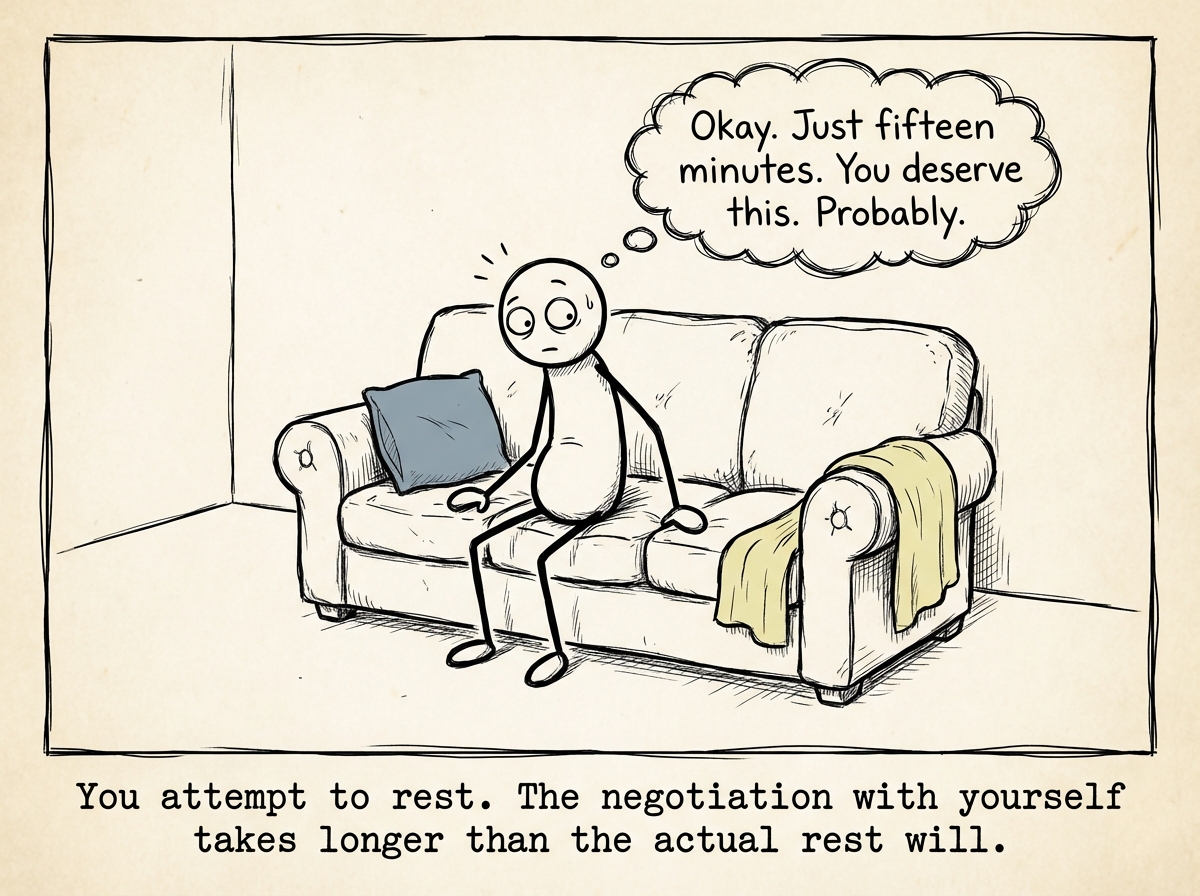
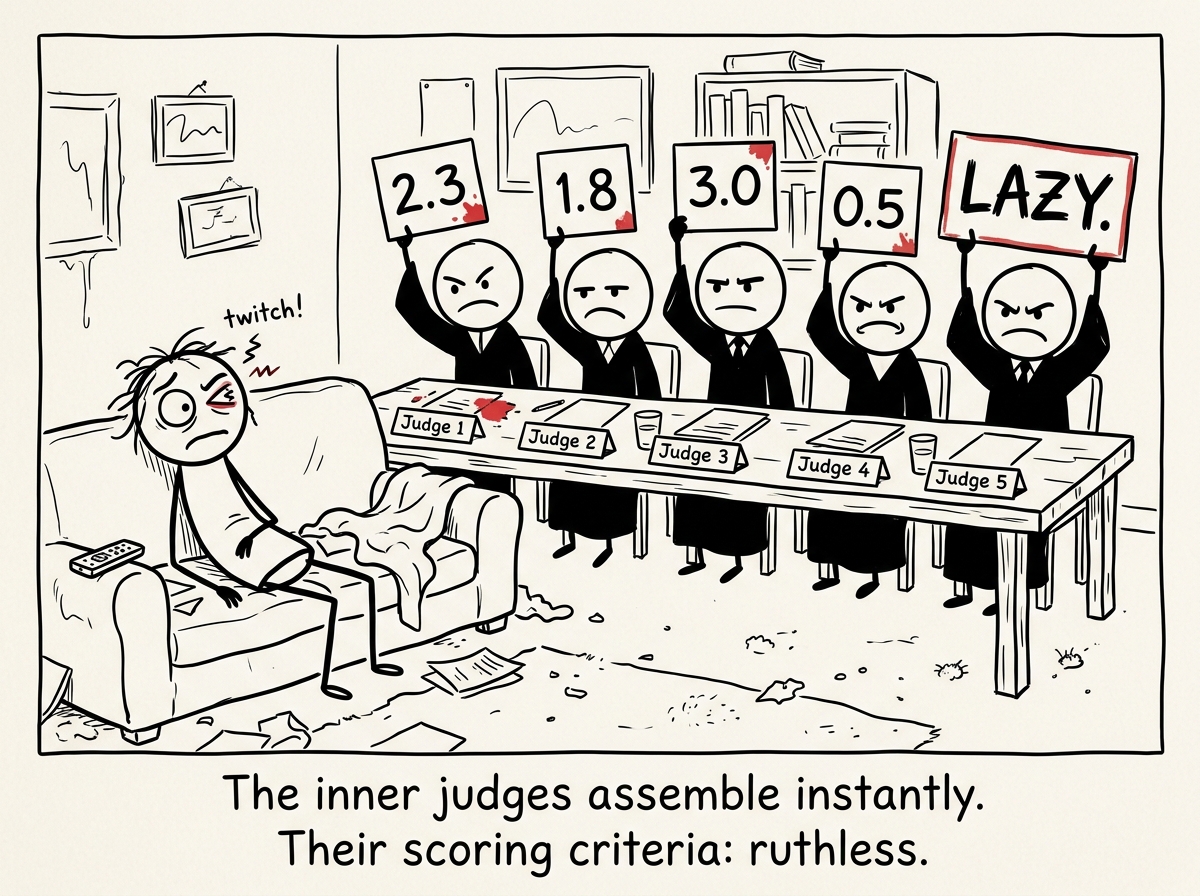
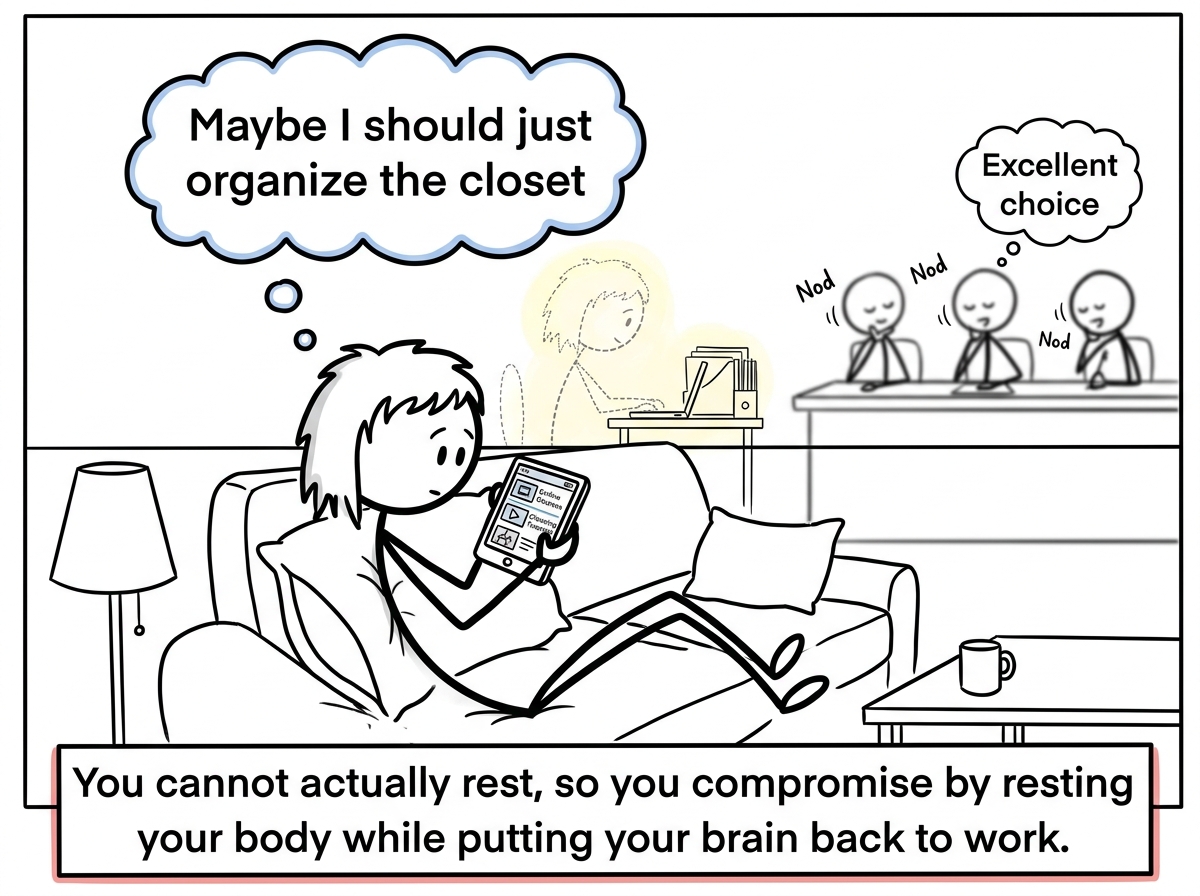
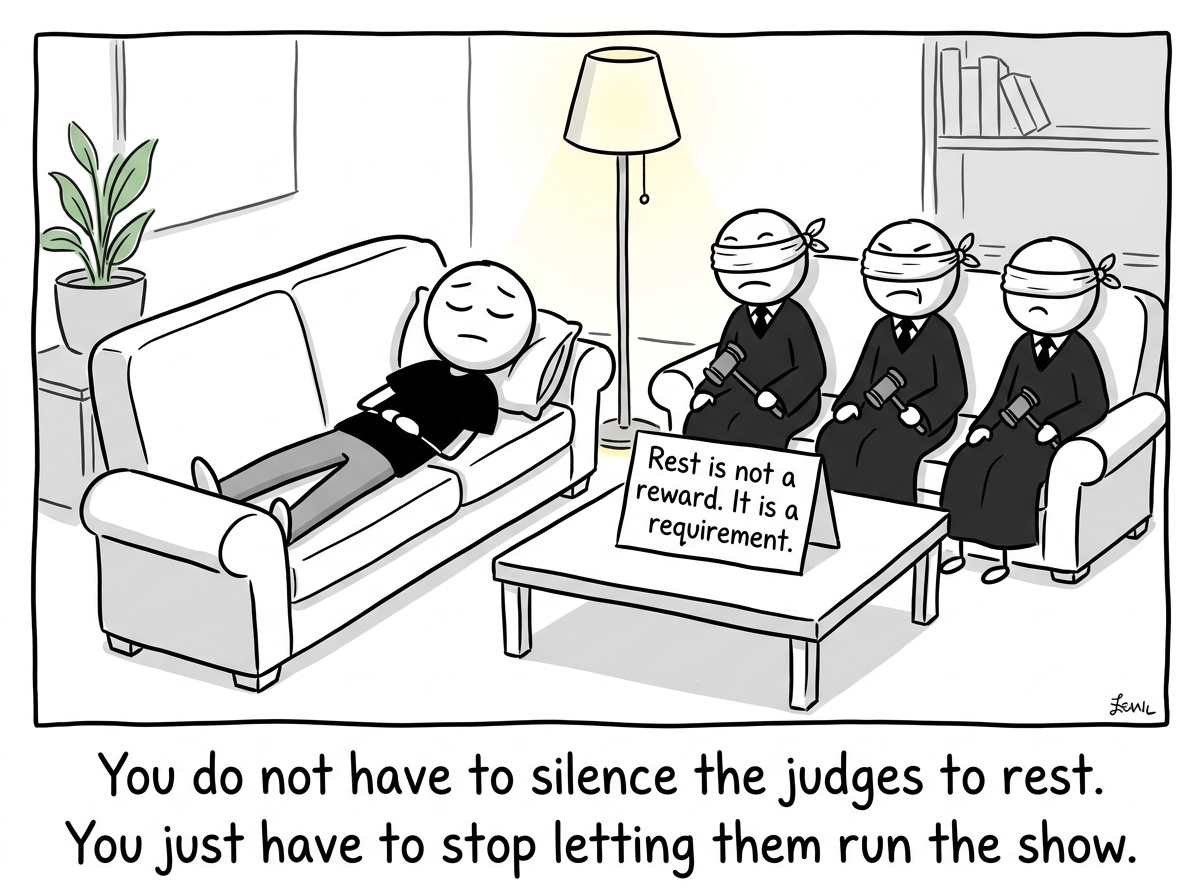
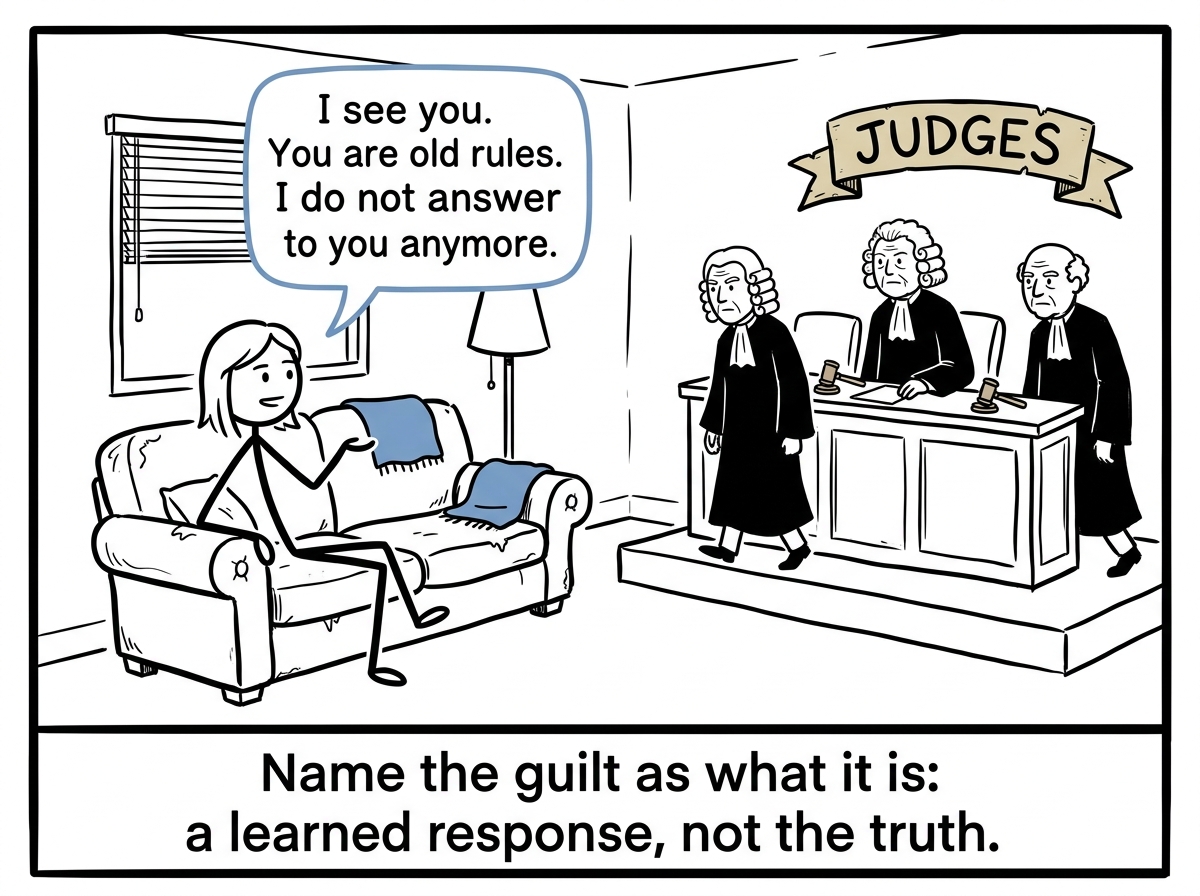
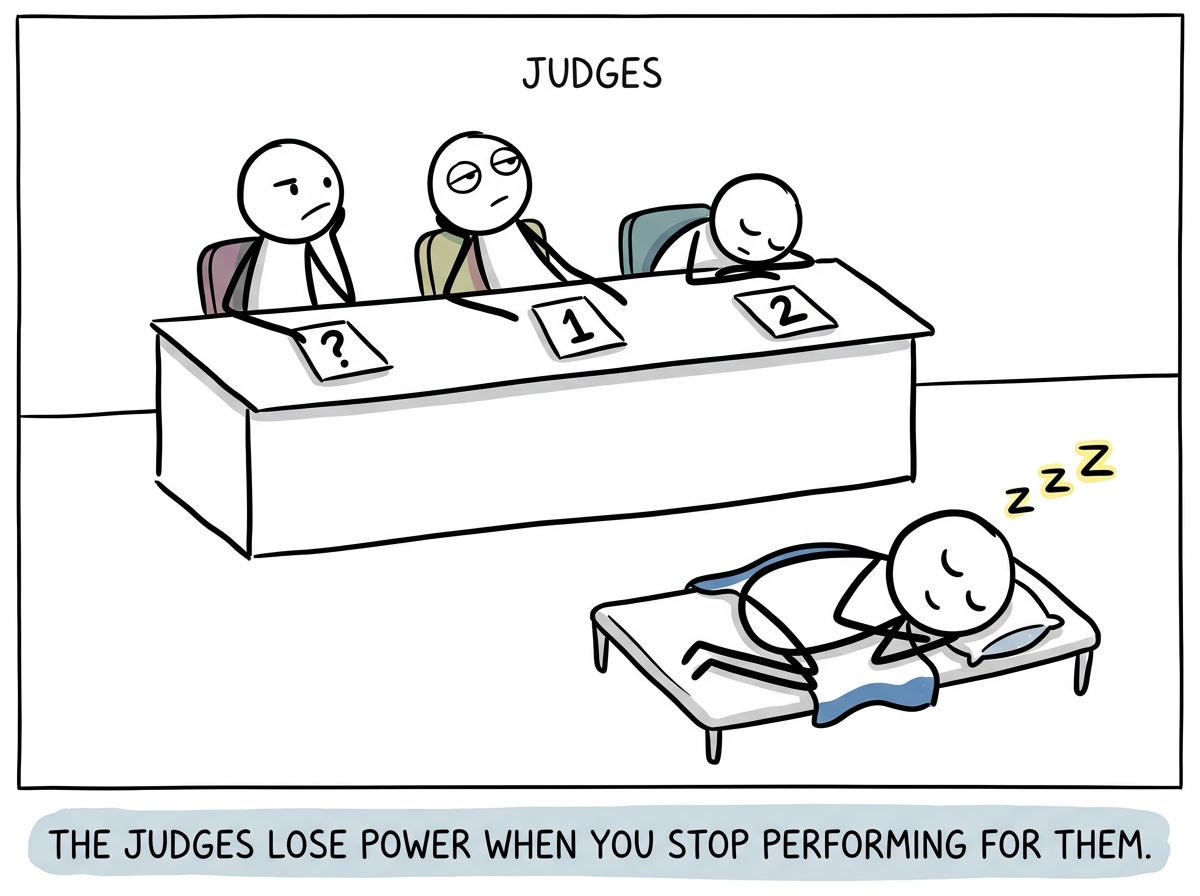
A person trying to rest on the couch while a panel of inner judges scores their laziness like Olympic judges.
Explanation
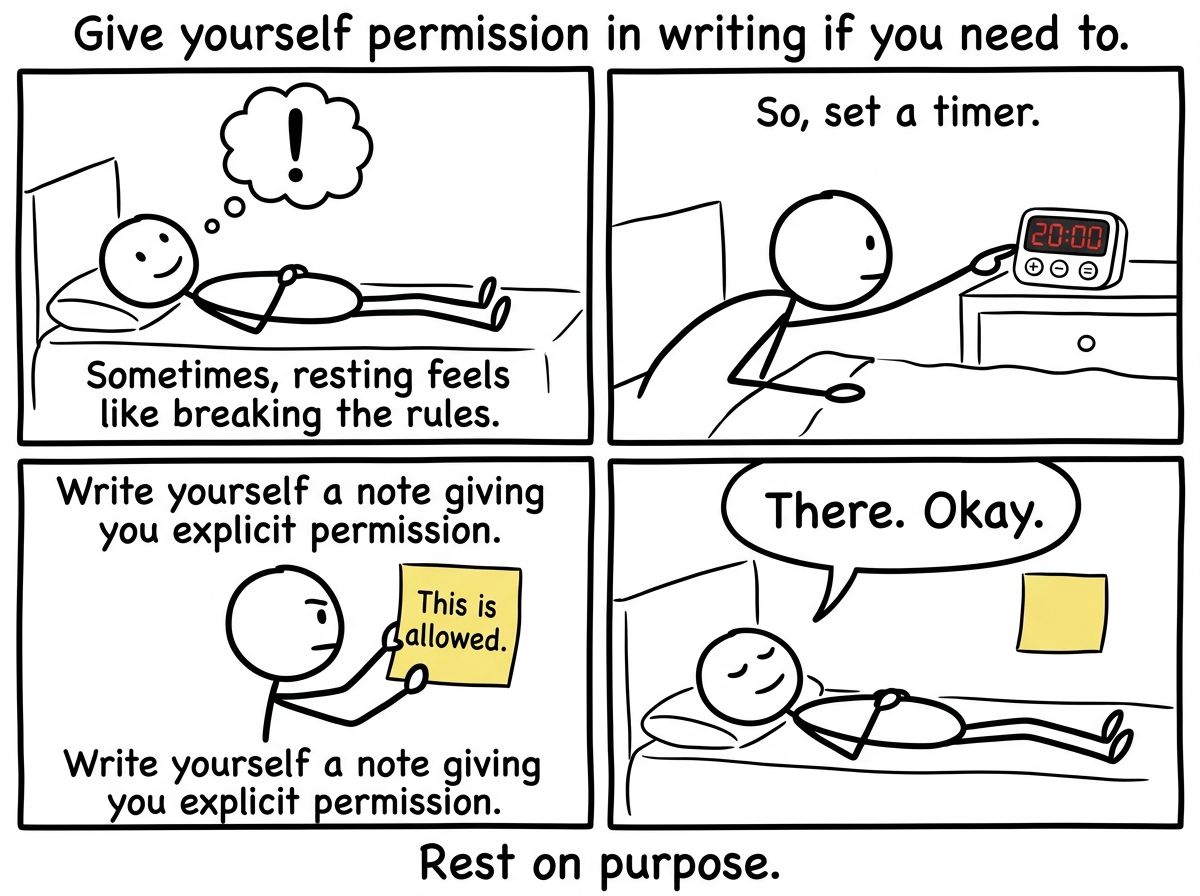
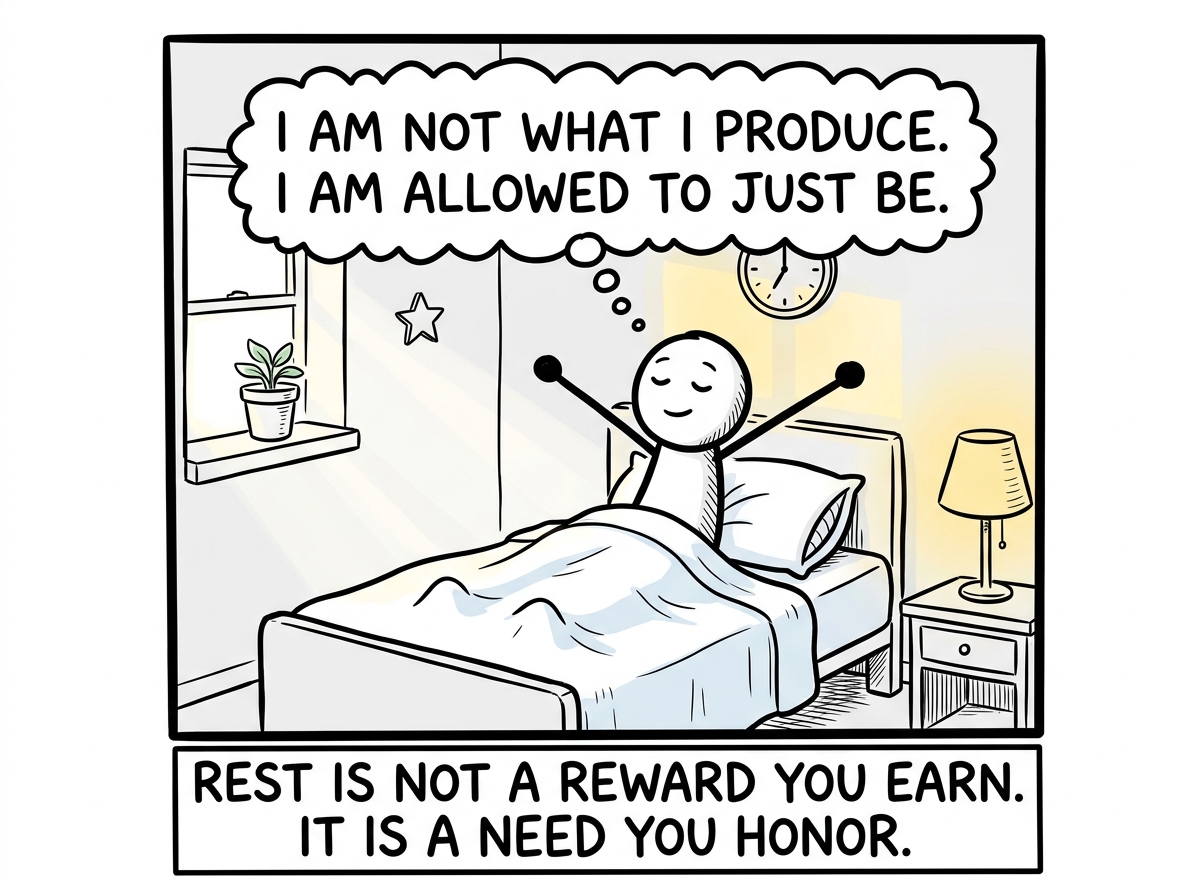
You finally sit down. You have earned it -- objectively, measurably earned it. But within seconds, the internal judging panel assembles. One voice gives you a 2.3 for productivity. Another holds up a scorecard for 'contribution to society: insufficient.' A third judge just shakes their head slowly. You are lying on the couch, but your nervous system is running a full anxiety marathon. This is not rest. This is rest with a guilt soundtrack, and it is one of the most common experiences for anyone who has tied their identity to doing, achieving, and being useful. Rest guilt emerges from a deeply internalized belief that your worth is conditional on output. Psychologist Devon Price traces this to cultural systems that equate busyness with moral virtue -- and to family systems where love was earned through performance. When rest was never modeled, never permitted, or always followed by punishment or criticism, your nervous system learns to associate stillness with danger. The default mode network -- the brain's rest-state network that processes emotions and generates insight -- actually requires downtime to function. But your internal judges do not care about neuroscience. They care about the rules you absorbed before you were old enough to question them. The antidote is not forcing yourself to enjoy rest while the judges still sit there. It is recognizing that the judges are echoes -- old voices replaying rules that were never yours to begin with. Rest is not something you earn. It is something you need. And the fact that it feels uncomfortable says everything about what you were taught and nothing about what you deserve.
Key Takeaway
If you feel guilty every time you rest, the problem is not that you are lazy -- it is that someone taught you that stillness is failure.