
The Loyalty Cage
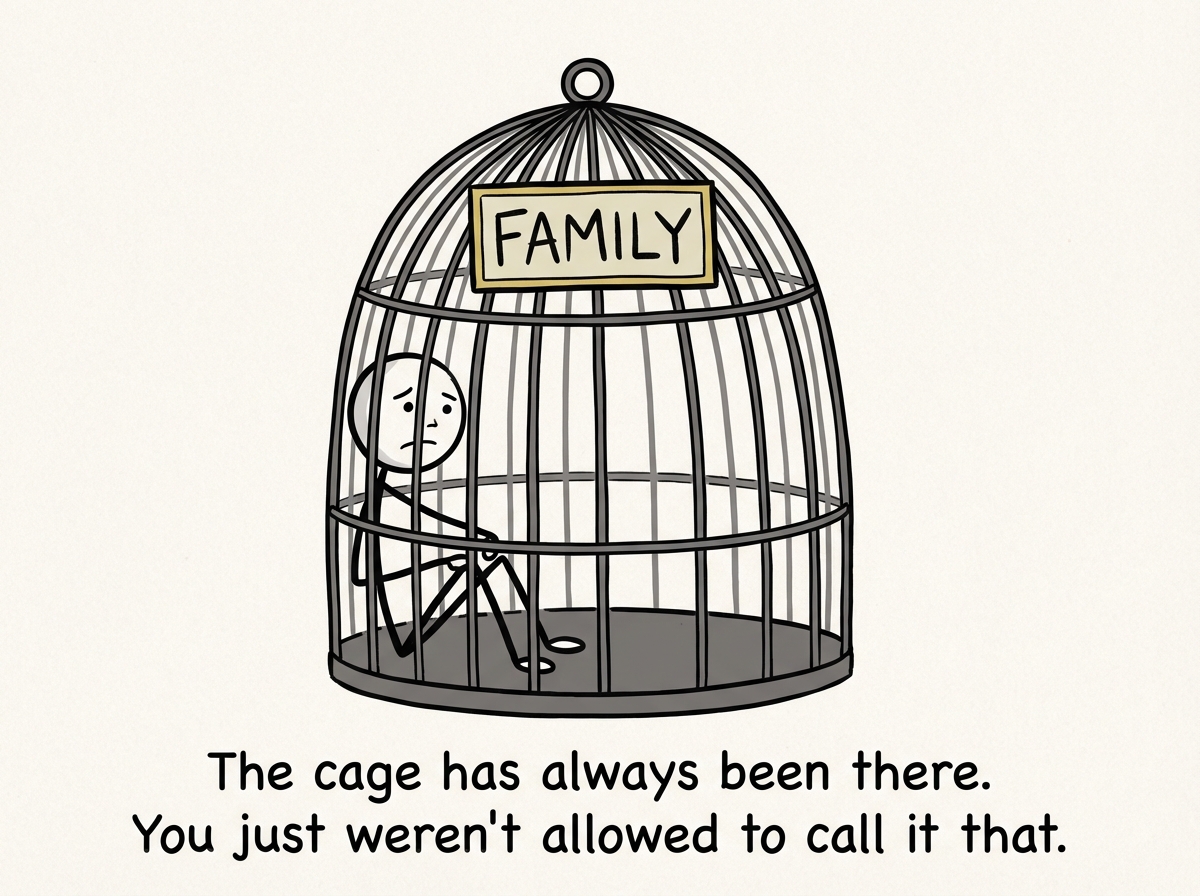
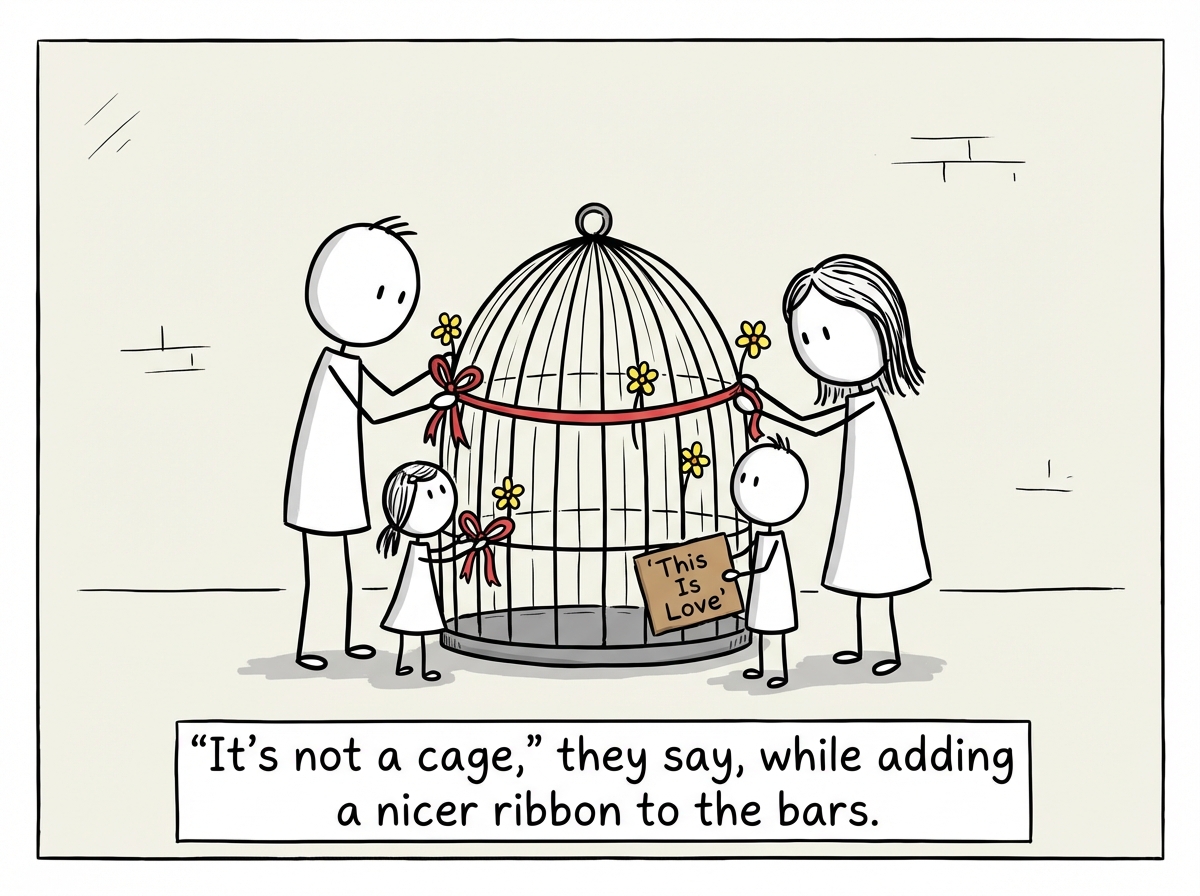
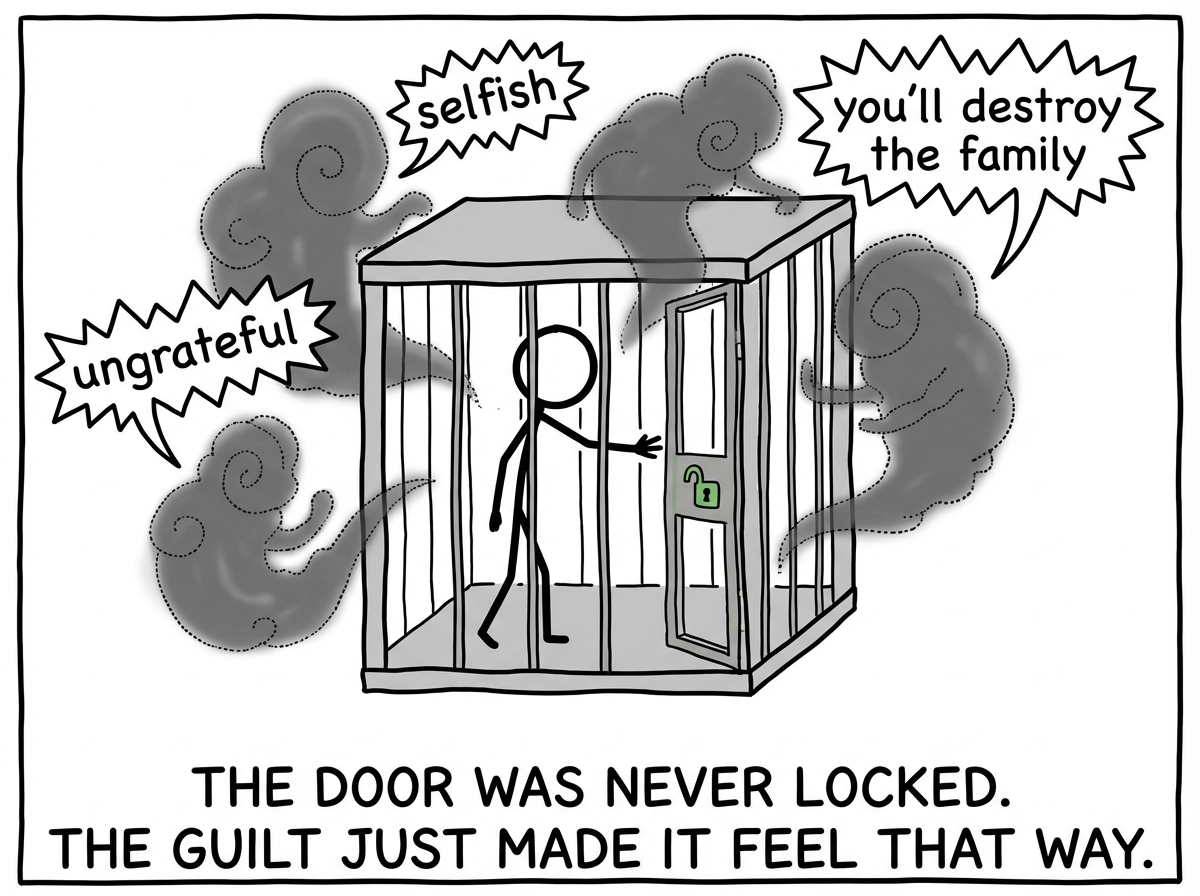
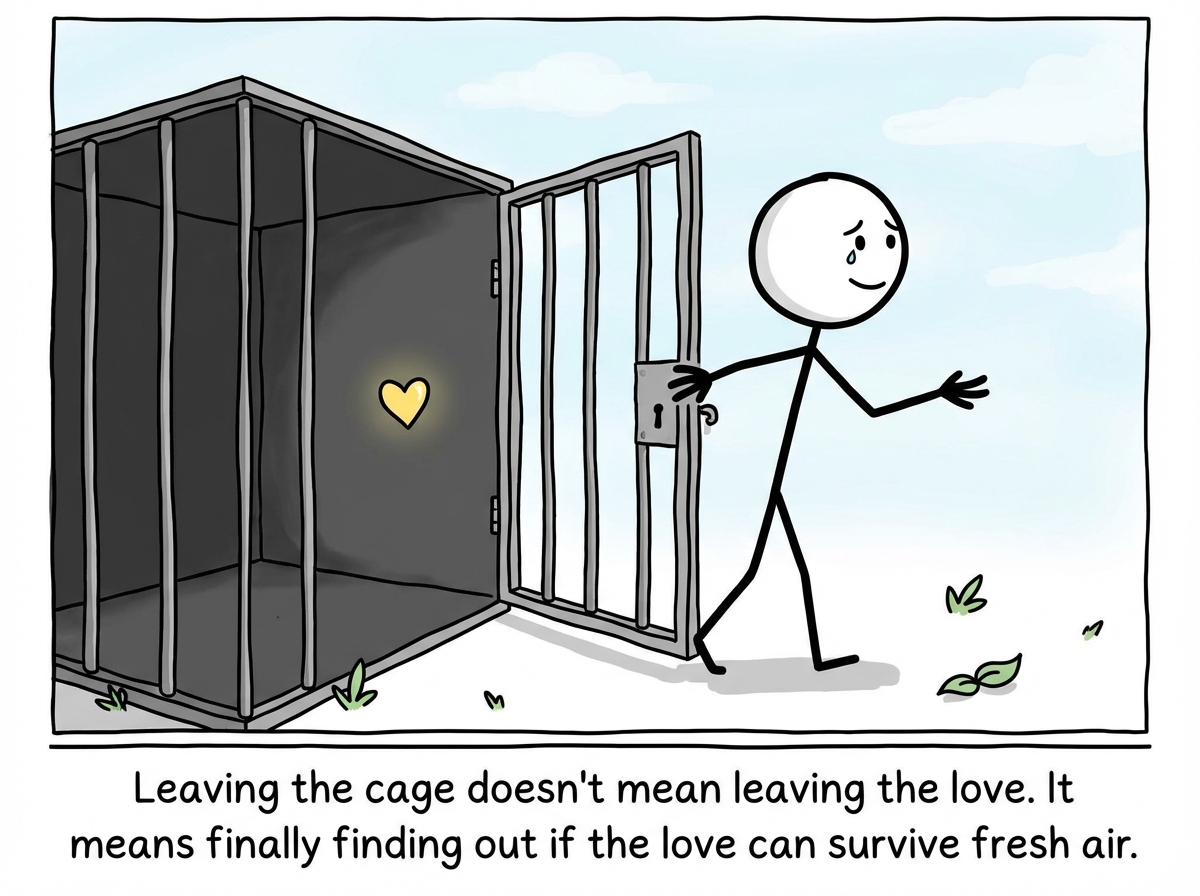
A person sits inside a cage labeled 'family' while relatives gather around insisting the cage is actually love -- a visual metaphor for how toxic loyalty traps you in the name of belonging.
Explanation
You know the cage is a cage. You can feel the bars. But every time you mention them, someone says, 'That's not a cage -- that's how much we love you.' And because you learned loyalty before you learned language, part of you believes them. You stay, not because it feels good, but because leaving feels like the worst thing you could possibly do. The guilt of even wanting out is enough to keep you sitting right where you are. Ivan Boszormenyi-Nagy, a pioneer in contextual family therapy, described what he called 'invisible loyalties' -- the unconscious obligations that bind family members to each other across generations. These loyalties aren't negotiated or discussed; they're absorbed. You learn early that questioning the family is dangerous, that having needs is selfish, and that loyalty means enduring whatever the system requires of you without complaint. The cage doesn't need a lock because the guilt is more effective than any latch. What makes toxic loyalty so insidious is that it disguises control as care, obligation as love, and compliance as closeness. Leaving the cage doesn't have to mean leaving your family -- sometimes it just means refusing to pretend the cage isn't there. It means saying, 'I love you and I also need to breathe.' It means learning that guilt is not the same as wrongdoing, and that a family worth belonging to will survive your honesty. Real loyalty doesn't demand self-erasure. Real love doesn't come with bars.
Key Takeaway
If love requires a cage, it's not love -- it's control wearing love's name.
A stick figure inside the cage, feeling guilt swirl around them, pausing to think 'Is this guilt a sign I am wrong, or a sign I am growing?'
The stick figure pushing the unlocked door open one inch, testing what happens, still breathing
The stick figure standing outside the cage, saying 'I love you and I also need room to exist' while family looks on
The stick figure outside in open air, connected to family by a thread of genuine affection, not bars of obligation