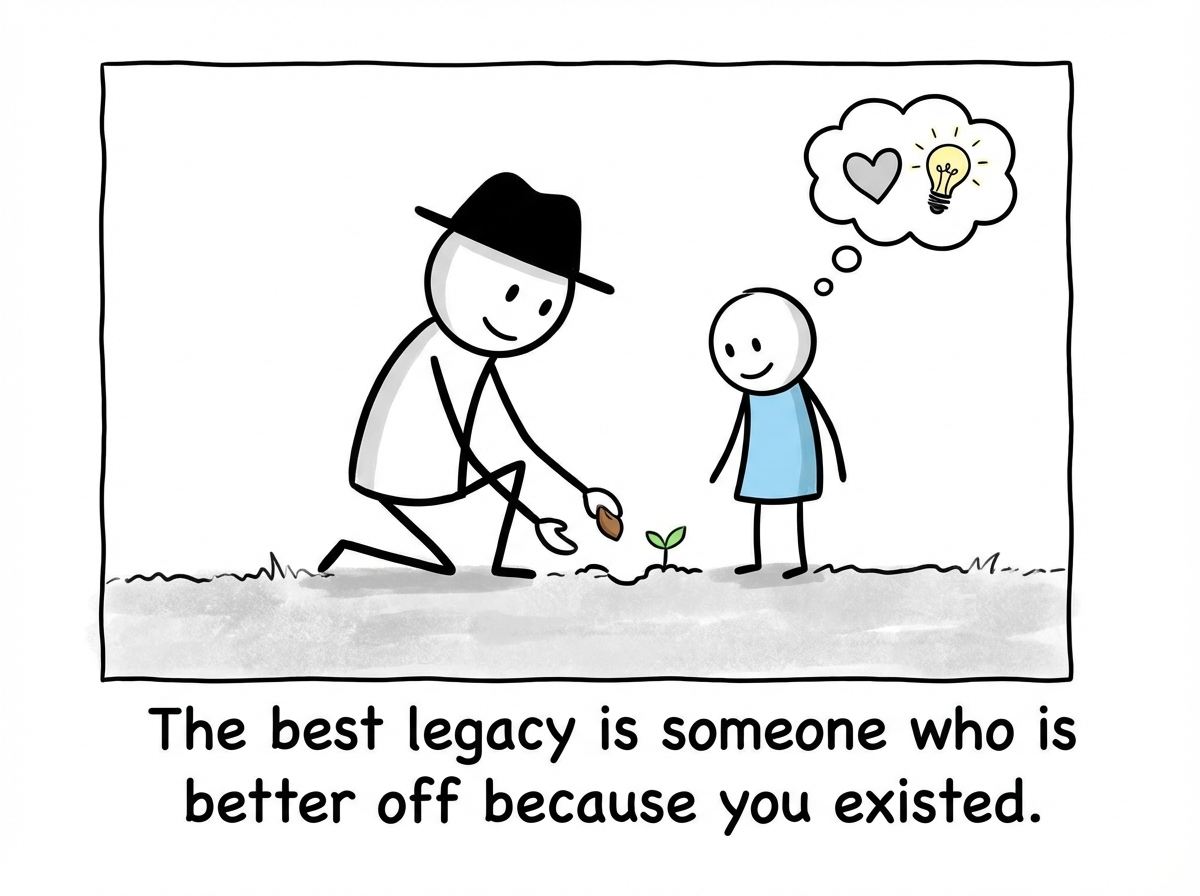
The Meaning Factory
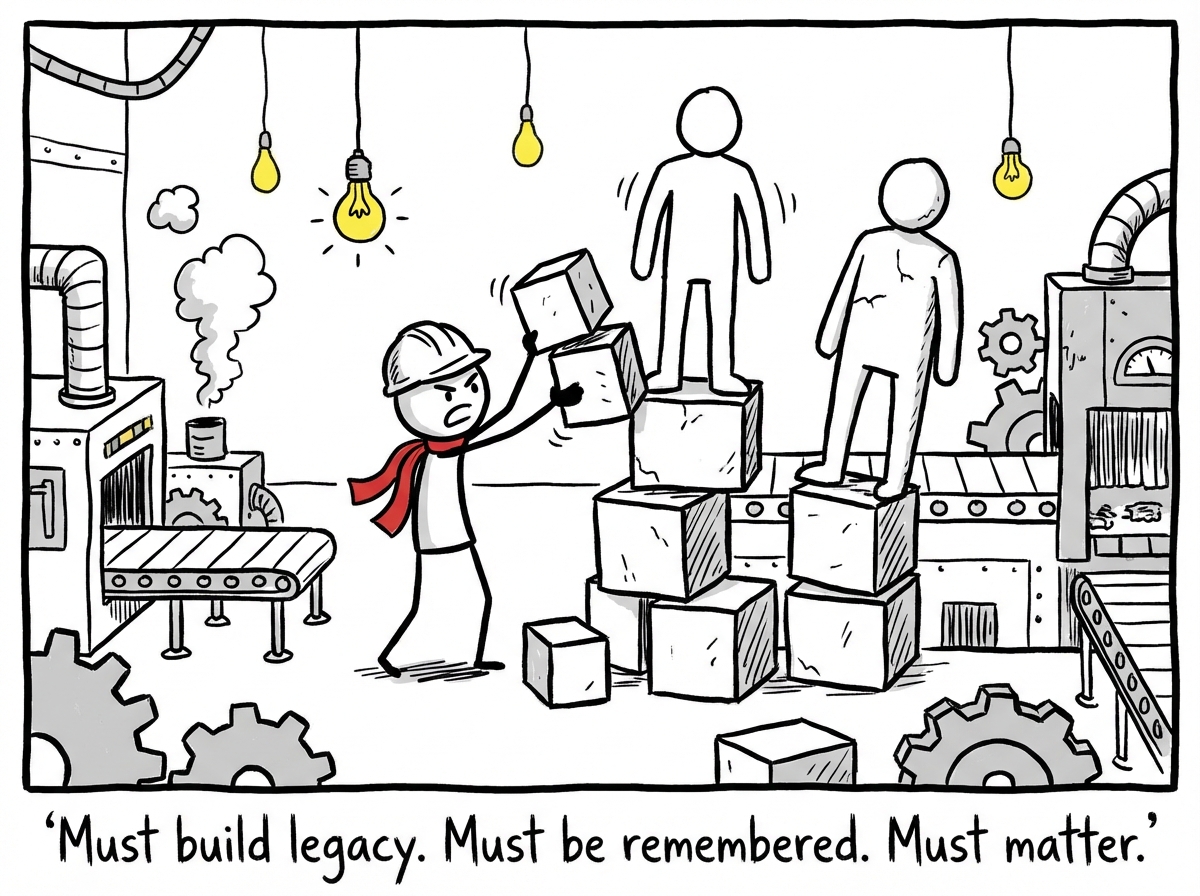
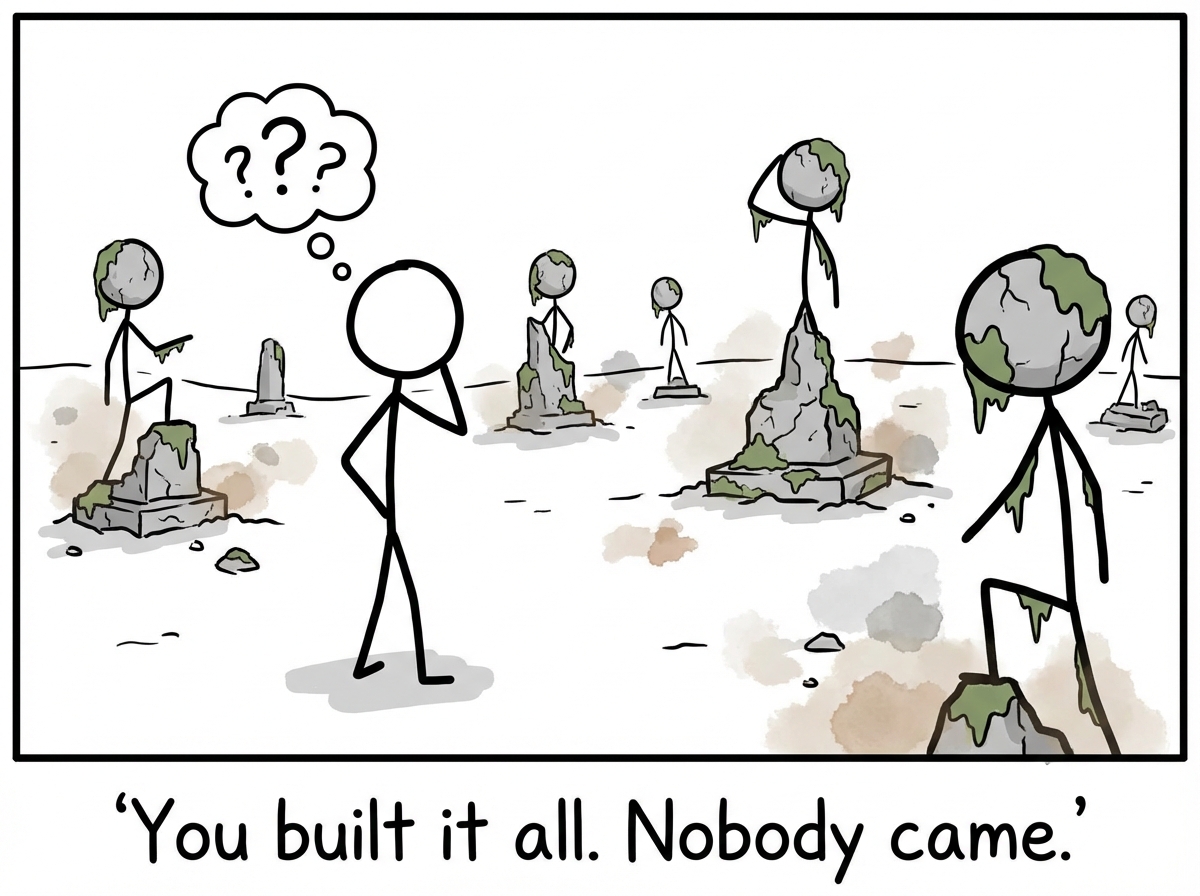
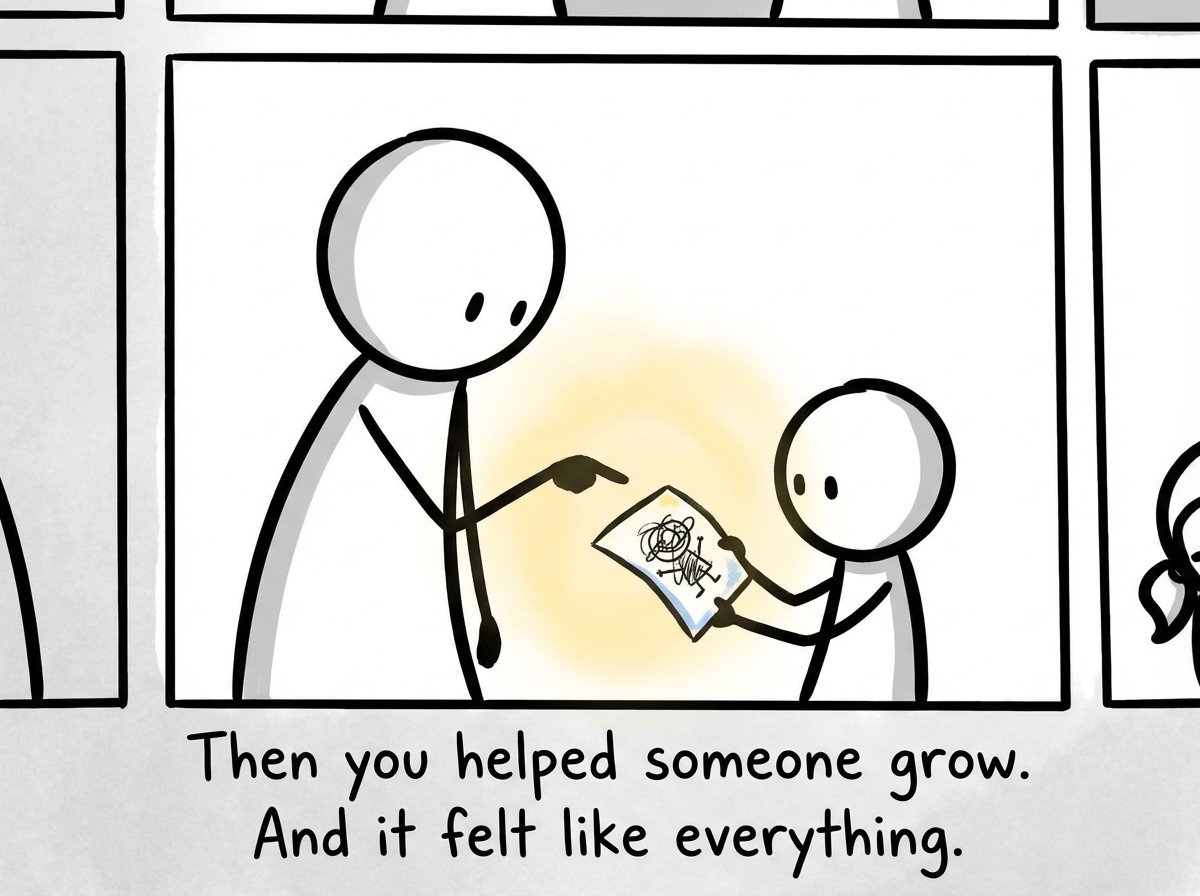
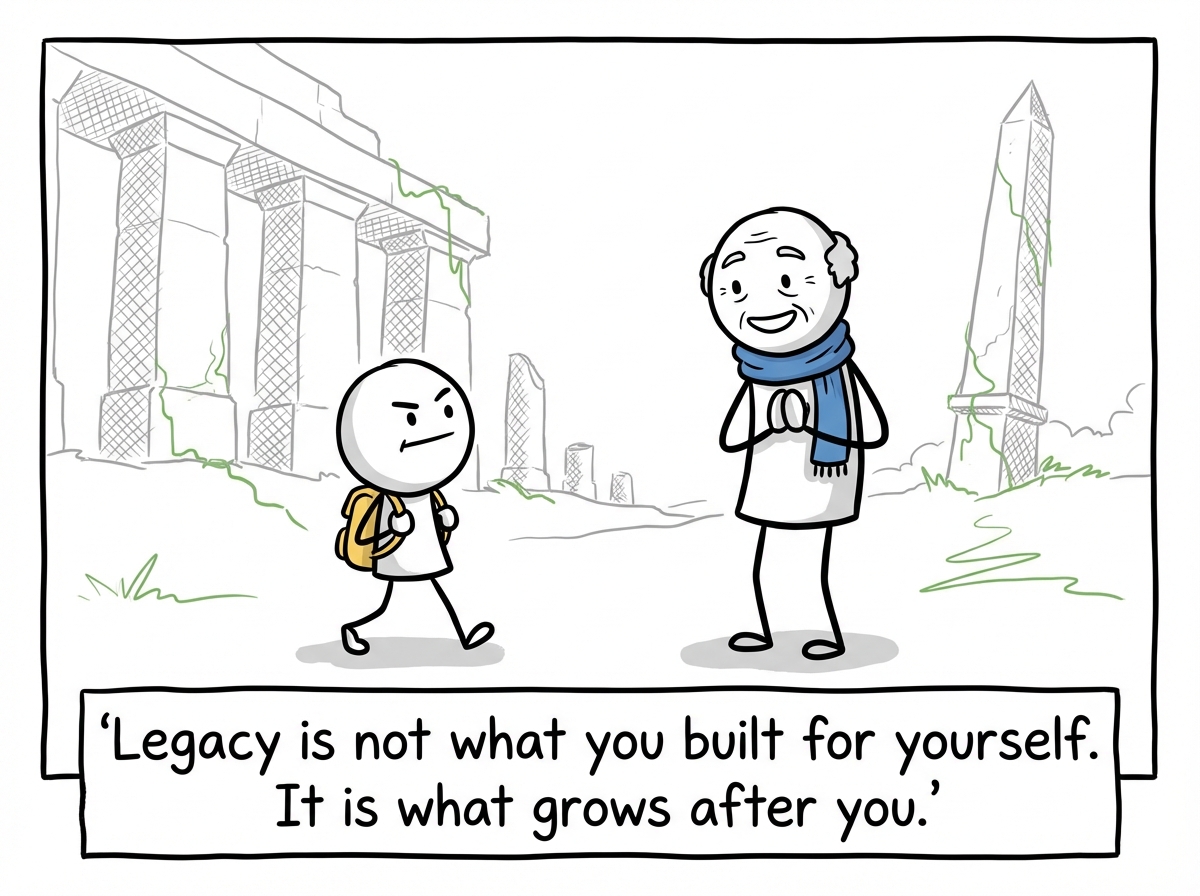
A person discovers their legacy factory has been mass-producing monuments to themselves that nobody wants, and learns that real legacy grows in other people.
Explanation
Erik Erikson's concept of generativity describes the developmental need to contribute something that outlasts you -- but many people confuse generativity with self-monumentalization. Building things that carry your name is not the same as building things that carry your impact. Dan McAdams' research on generative adults found that the people who reported the deepest sense of legacy were not the ones who built the biggest monuments -- they were the ones who invested in other people's growth. The shift from 'what will people remember about me?' to 'what did I help someone else become?' is the psychological pivot point of mature generativity. The factory metaphor captures a common trap: producing legacy like a product, measured by output and visibility, rather than cultivating it like a relationship, measured by what grows after you leave. Erikson warned that the alternative to generativity is stagnation -- a self-absorbed preoccupation with your own comfort and status. The irony is that the more frantically you build monuments to yourself, the more stagnant you actually become.
Key Takeaway
Legacy is not what you build for yourself -- it is what grows in the people you invested in after you are gone.