
The Mirror That Shows Everyone Else
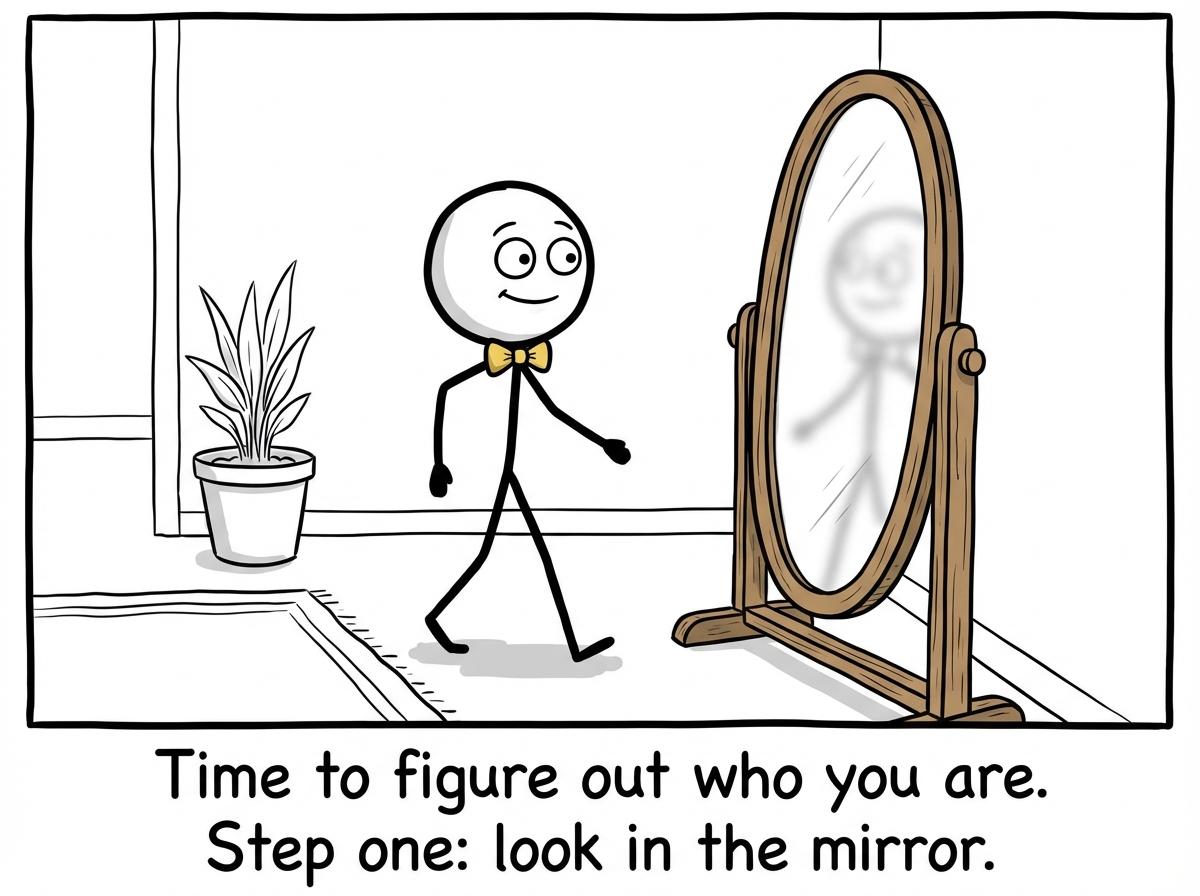
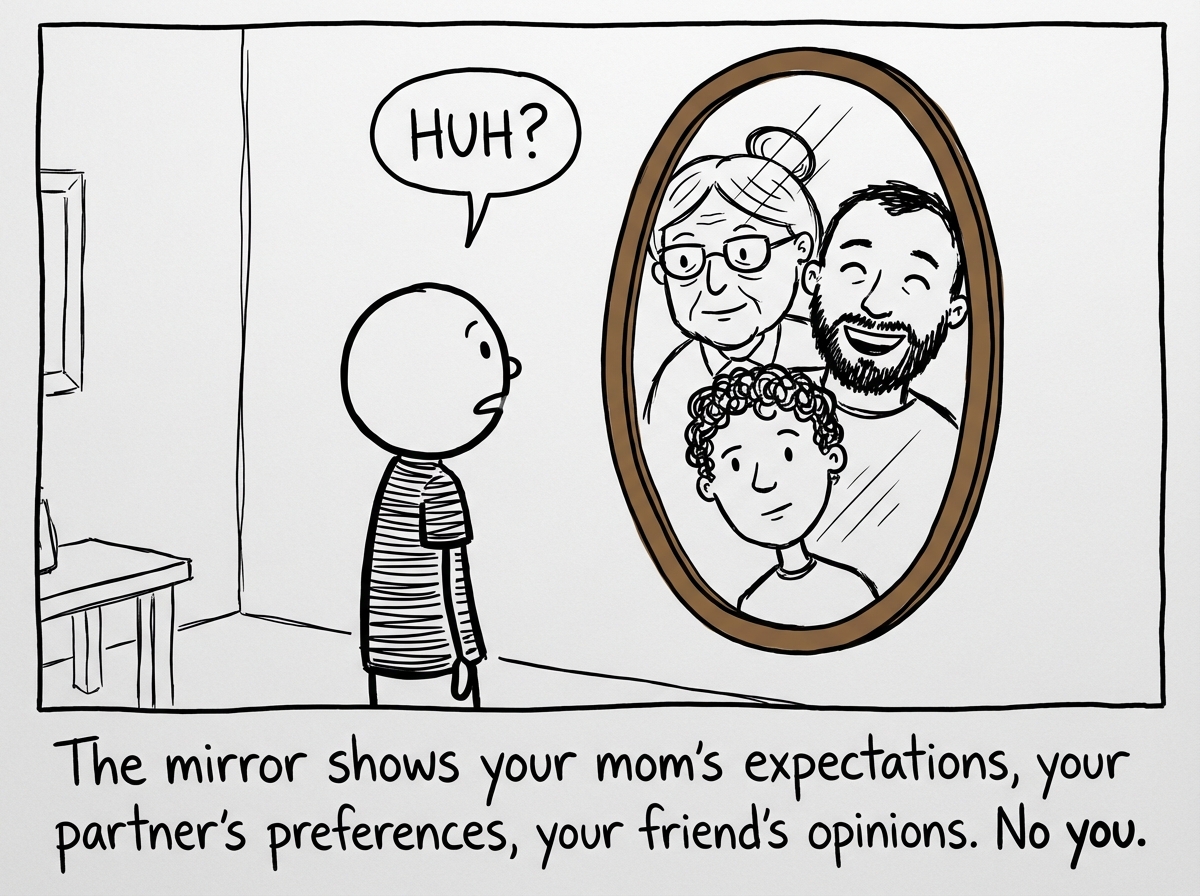
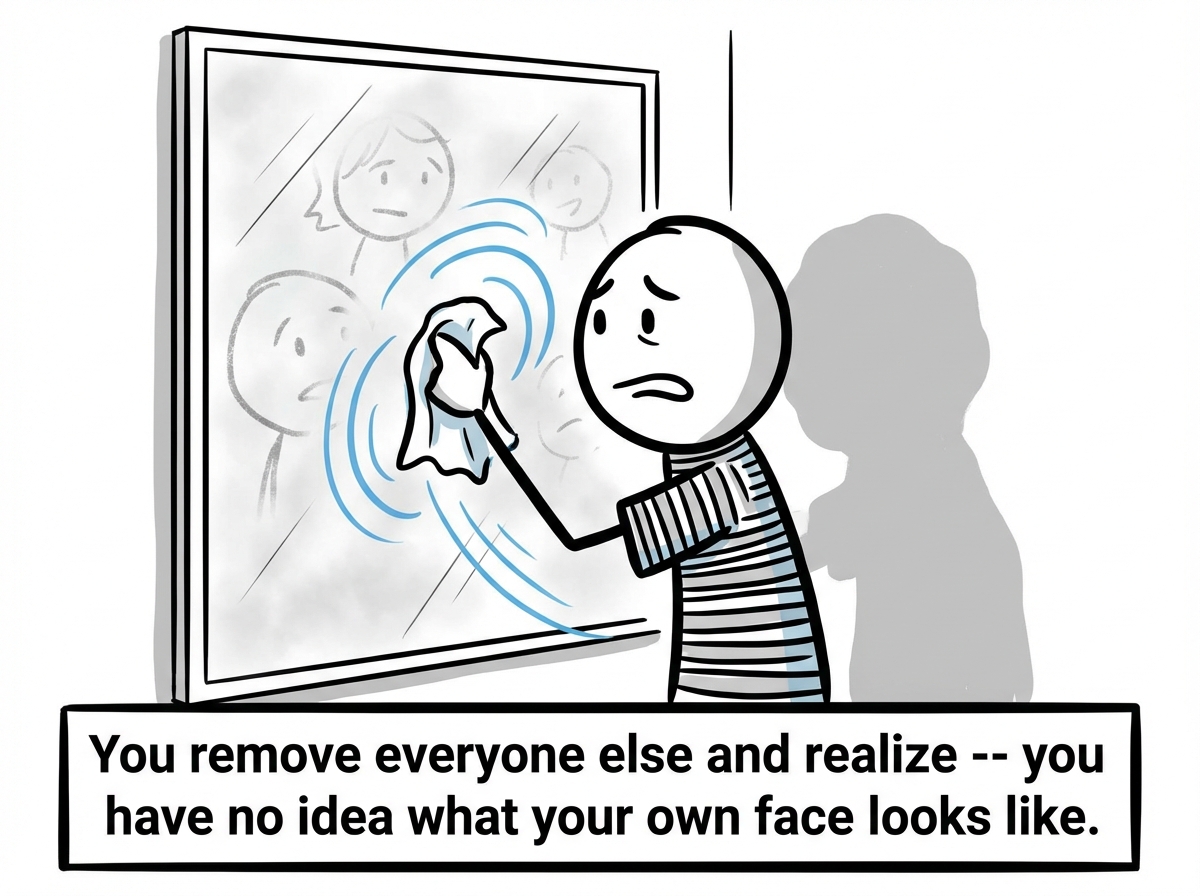
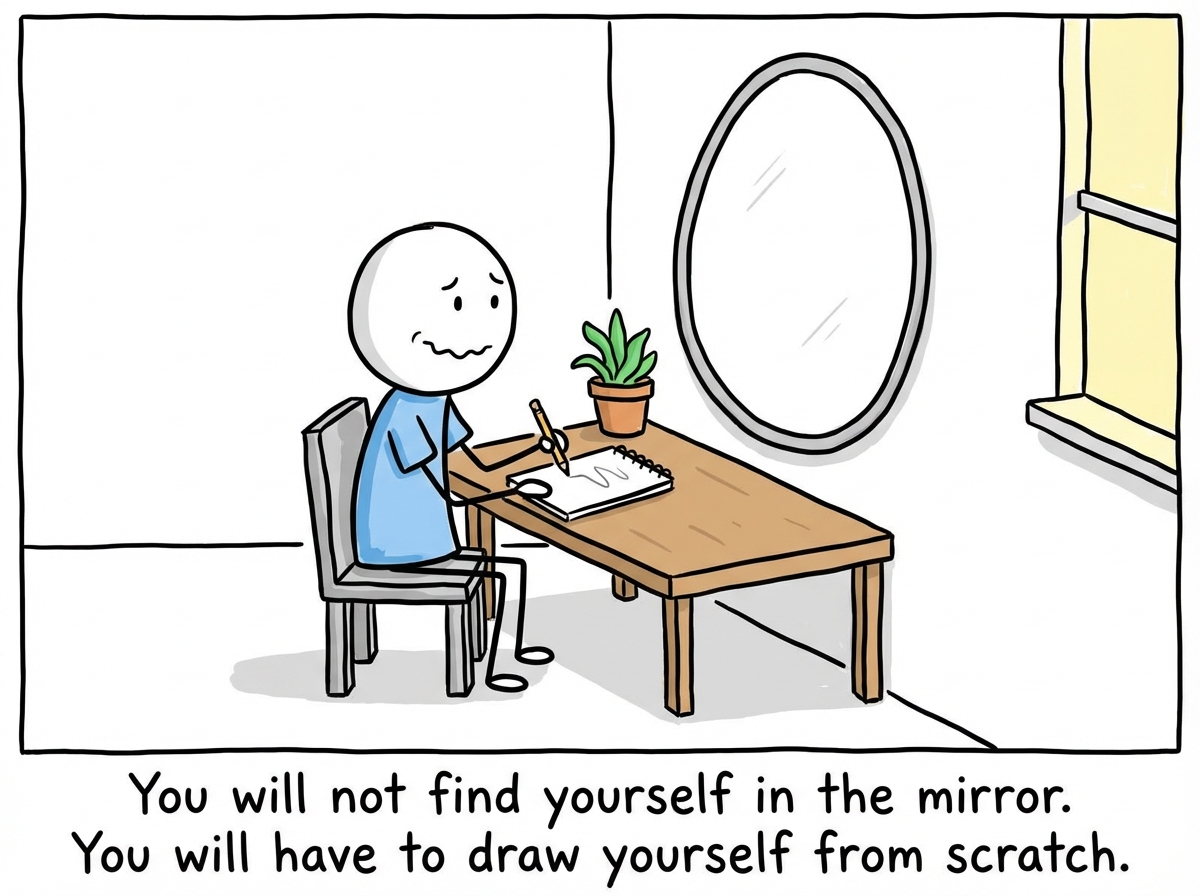
A person looks in a mirror expecting to see themselves but instead sees the faces of everyone they have been enmeshed with -- a partner, a parent, a friend -- because they have no image of their own to reflect.
Explanation
You stand in front of the mirror hoping to see yourself, but the reflection keeps showing other people. Your mother's expectations. Your partner's preferences. Your best friend's opinions. You have spent so long merging with the people around you that when you try to locate your own identity, all you find are fragments of everyone else. It is not that you are empty -- it is that you have been so focused on reflecting others that you forgot to develop a reflection of your own. Salvador Minuchin's concept of enmeshment describes family and relational systems where individual boundaries are so diffuse that members lose their sense of separate identity. When you grow up enmeshed -- or enter an enmeshed relationship as an adult -- your sense of self becomes defined entirely in relation to others. Your likes become their likes. Your goals become their goals. Your emotional state becomes a mirror of theirs. This is not a conscious choice -- it is an adaptive response to an environment that penalized separateness. The enmeshed system rewards unity and punishes individuality, so you learn to survive by erasing the boundaries between yourself and the people you depend on. Recovery from enmeshment starts with the disorienting realization that the mirror is blank when everyone else's faces are removed. That blankness is not a diagnosis -- it is a starting point. Building your own reflection takes time and experimentation. It means asking yourself small questions -- 'Do I actually like this, or did I learn to like it for someone else?' -- and sitting with the discomfort of genuinely not knowing the answer. The mirror will fill in eventually. But this time, it will be your face looking back.
Key Takeaway
If the only way you can describe yourself is through other people, the mirror is not showing you -- it is showing them.
A stick figure standing in front of the blank mirror after removing everyone else's faces. Instead of panicking, they sit down and say 'Okay. The mirror is blank. That is my starting point'
The stick figure trying small experiments: tasting a food and deciding for themselves if they like it, putting on music and noticing their own reaction, writing in a journal
The stick figure looking in the mirror and seeing a faint rough sketch of their own face forming -- imperfect but real. Some features are clear, others still blurry
The stick figure standing in front of the mirror with a recognizable face -- their own. It is not perfect or polished. Other people's faces are gone. A small smile