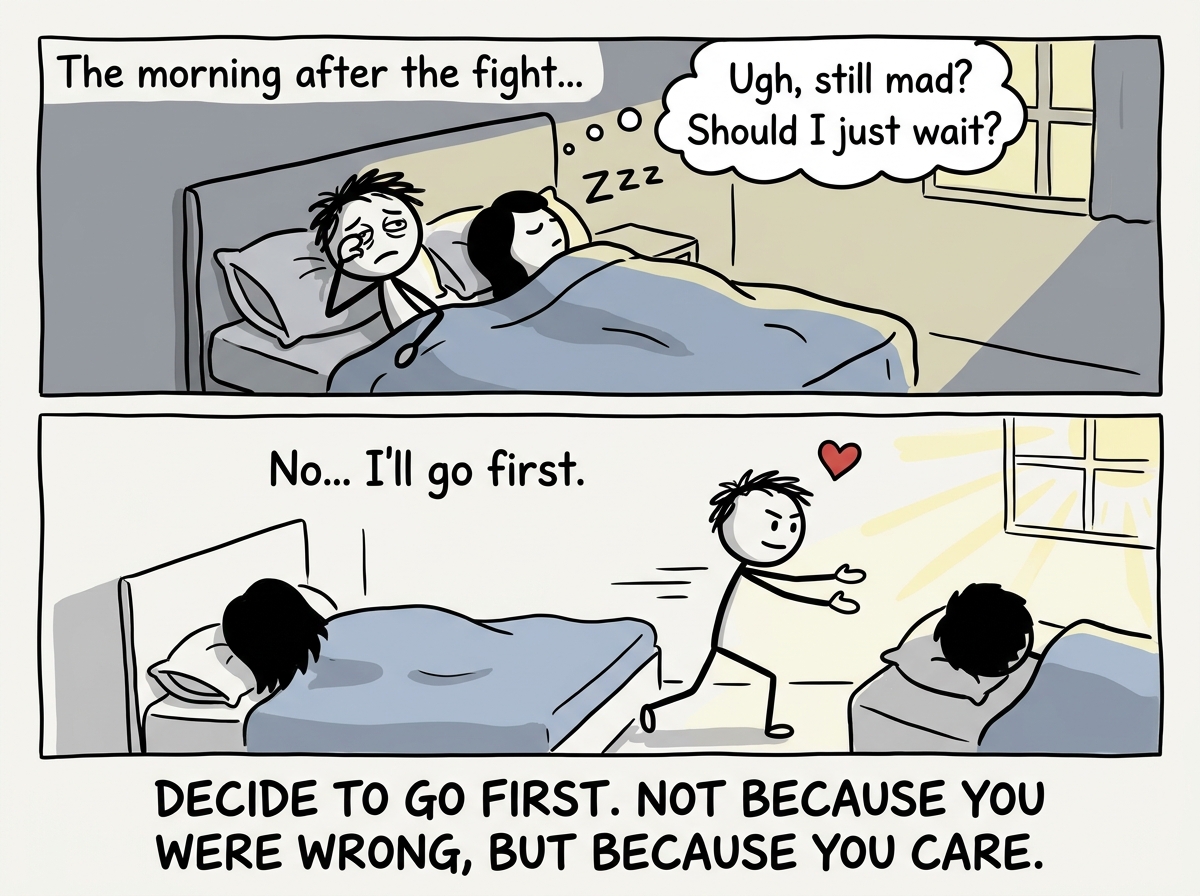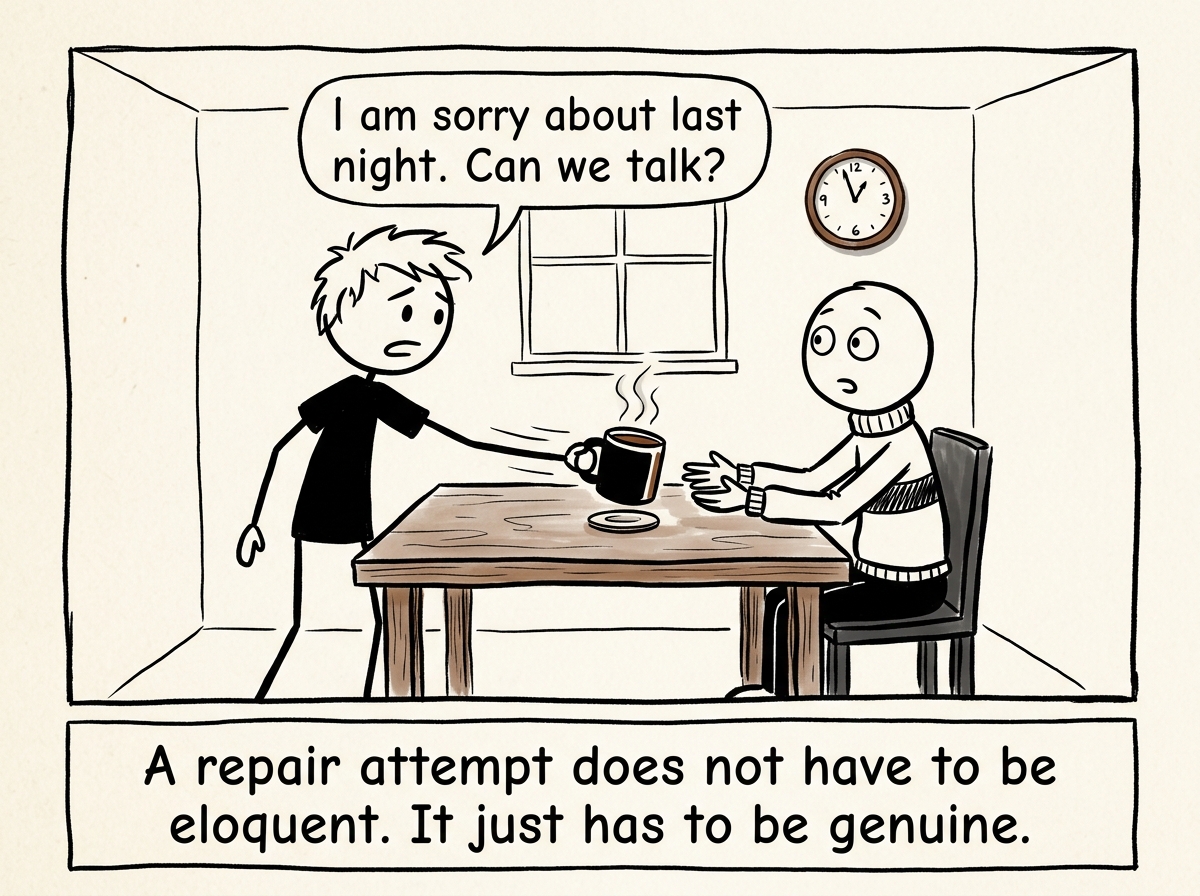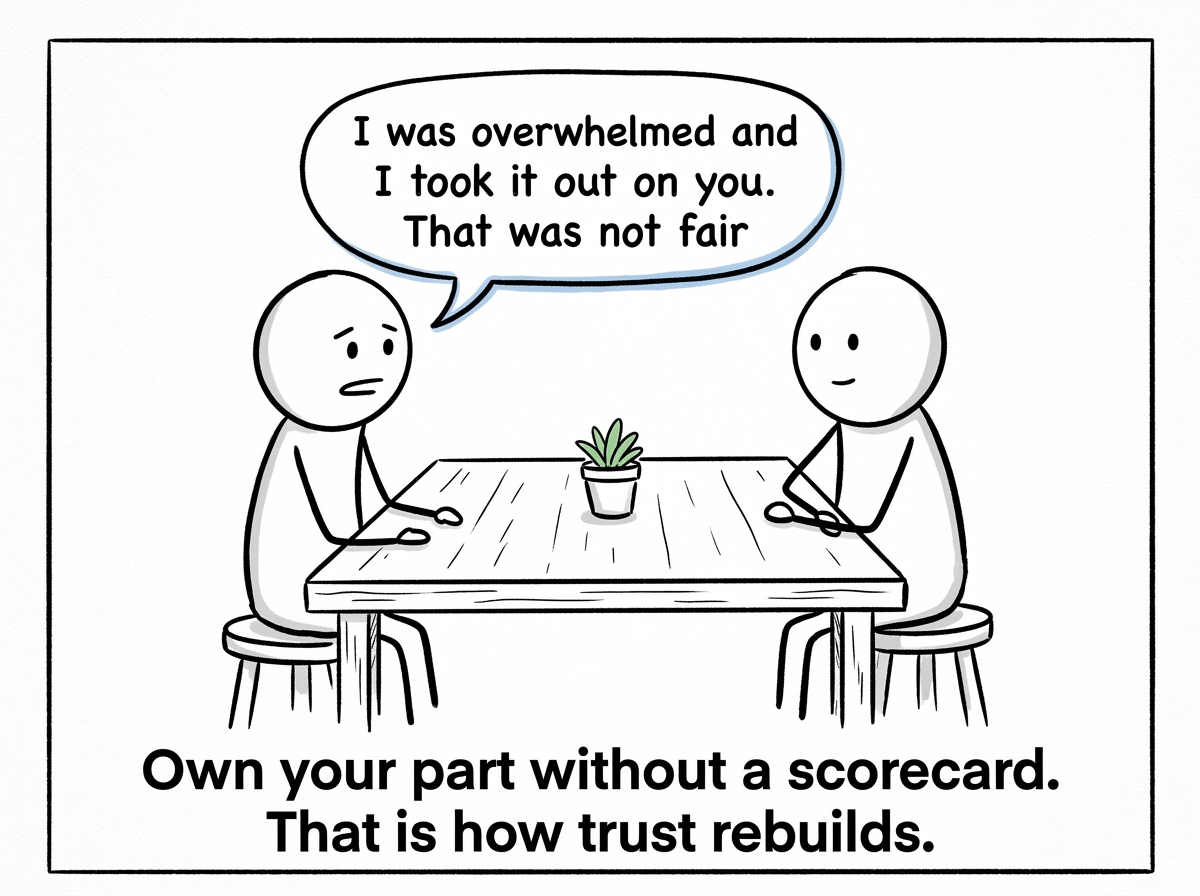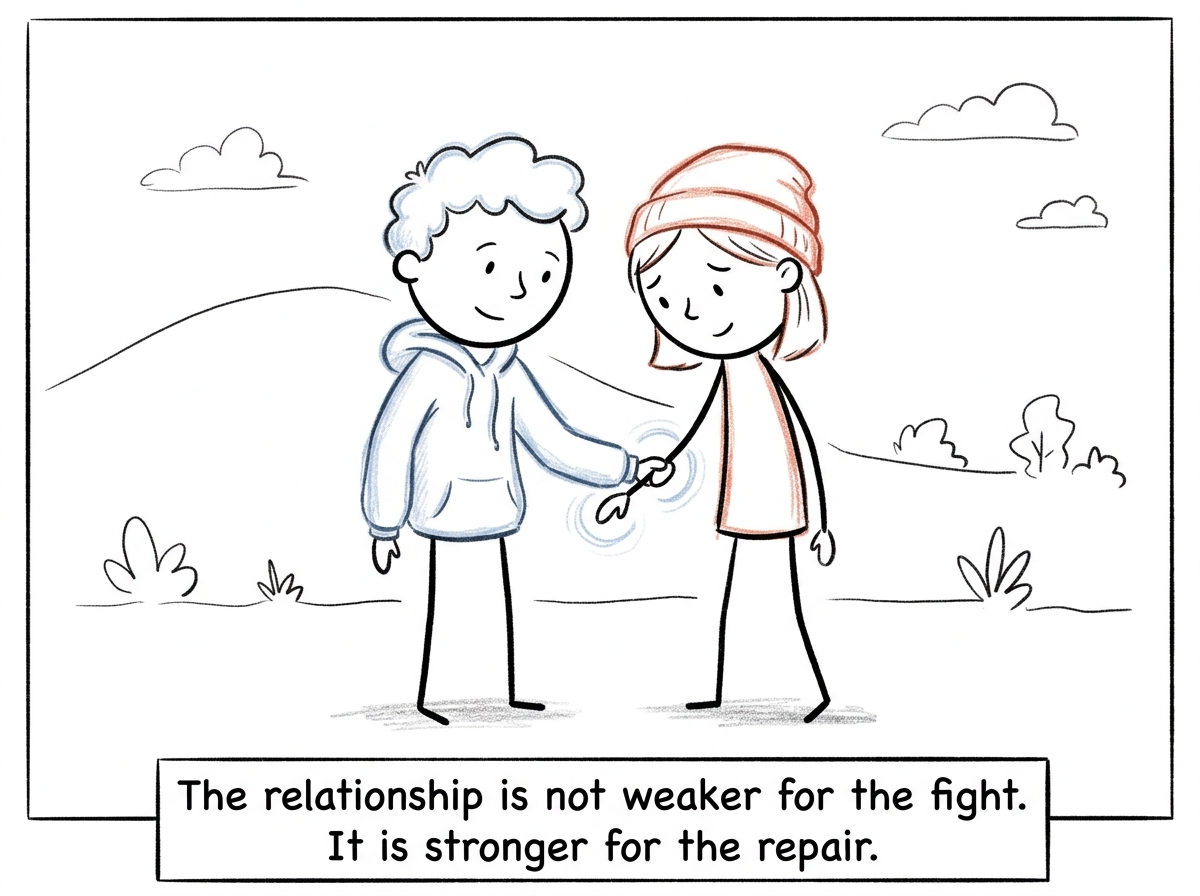
The Morning After the Fight
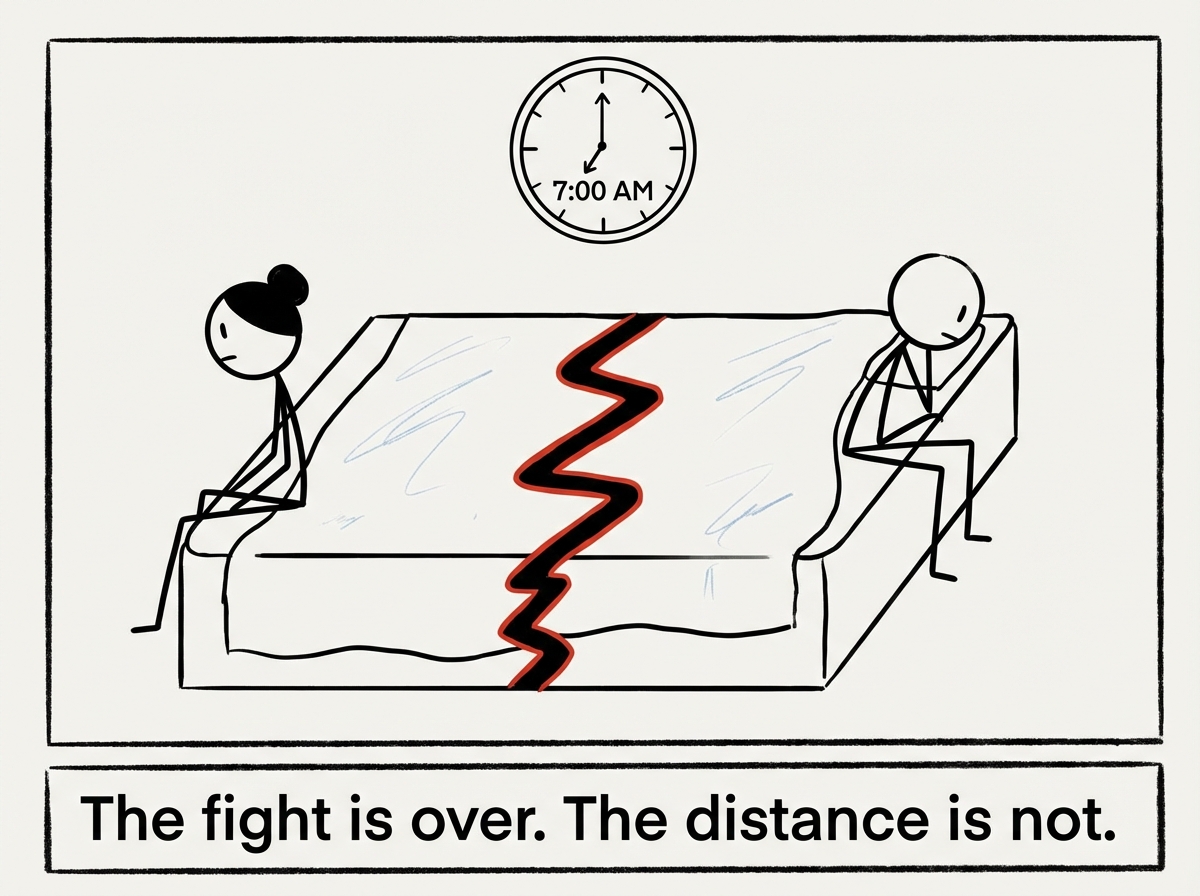
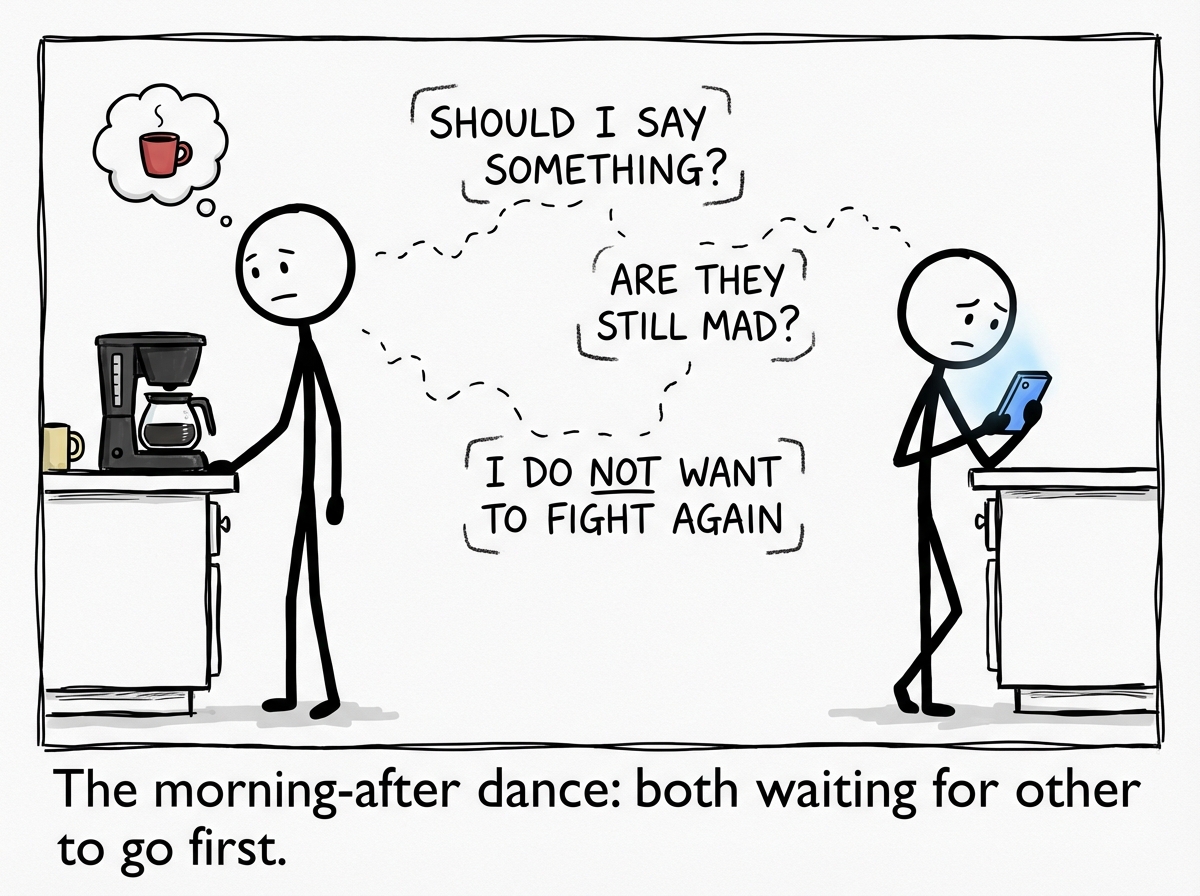
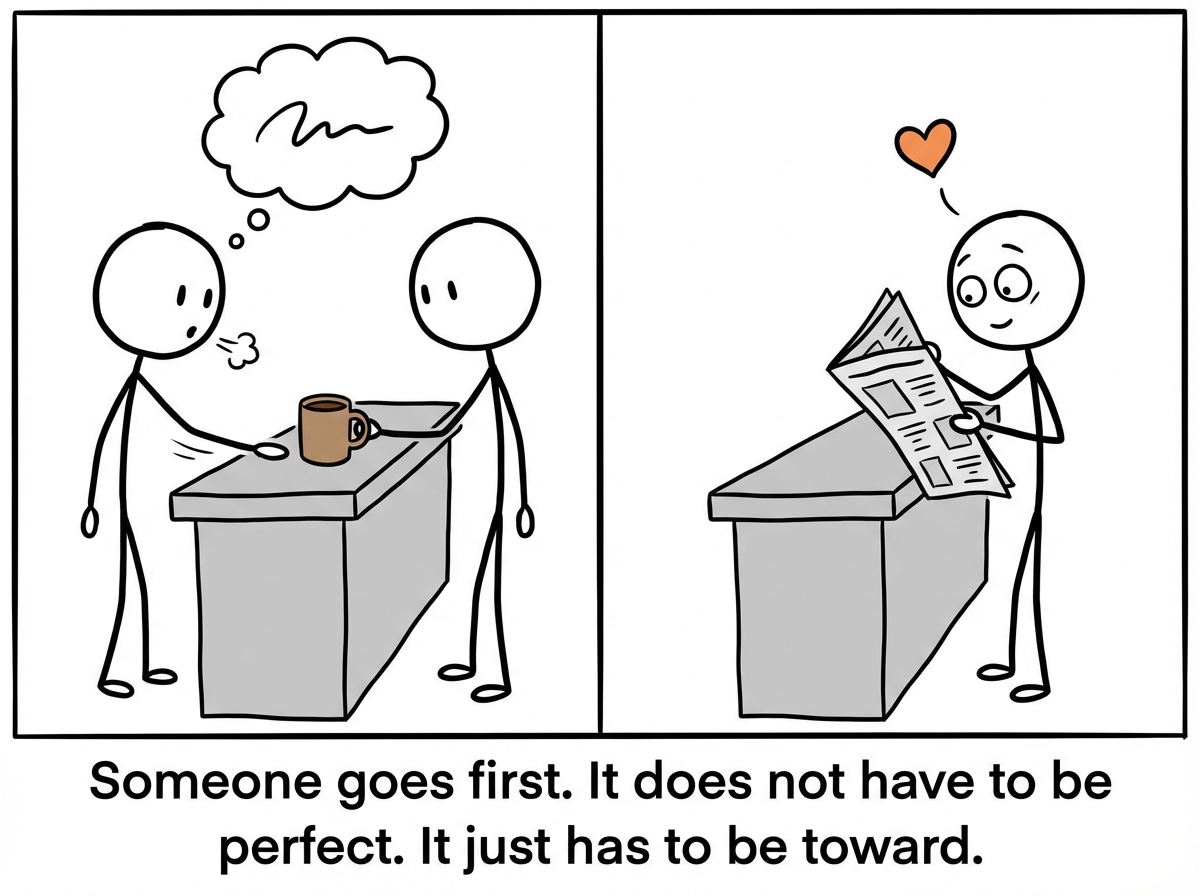
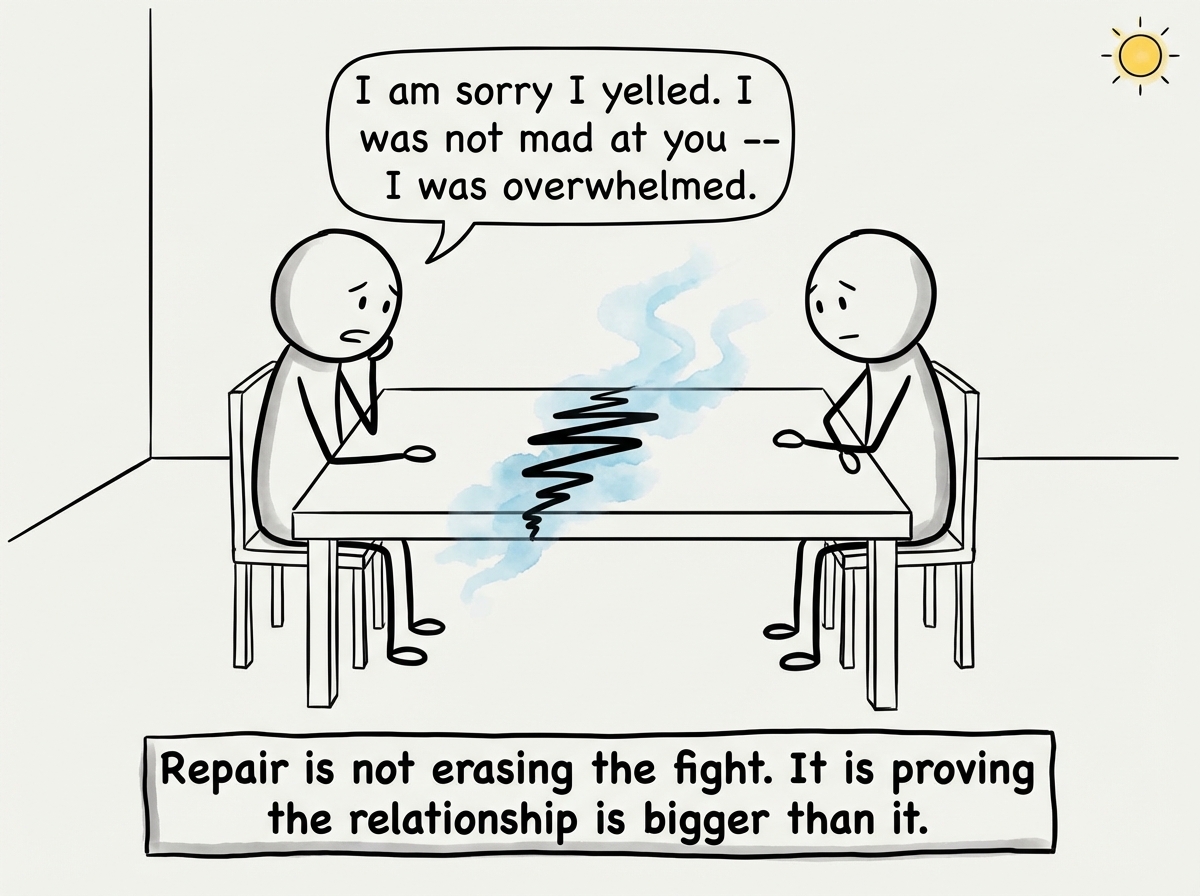
Two people navigate the awkward, vulnerable morning after a big argument -- showing that repair is not about who was right, but about choosing to reach toward each other.
Explanation
The fight is over. Nobody won. You went to bed on opposite sides of the mattress, or one of you slept on the couch. Now it is morning, and the apartment is filled with that particular silence that follows a rupture -- heavy, fragile, and full of unresolved everything. You both move around each other carefully. Someone makes coffee. No one makes eye contact. Both of you are waiting for the other person to go first. This is the repair window -- the space between rupture and reconnection that determines the future of the relationship more than the fight itself ever did. John Gottman's research shows that what separates thriving couples from struggling ones is not the absence of conflict, but the ability to repair after it. A repair attempt can be small: a touch on the shoulder, a quiet 'I am sorry I yelled,' a cup of coffee made without being asked. It does not have to be perfect. It just has to be a movement toward instead of away. Many people never learned repair because they never saw it modeled. In their family, fights ended with silence, blame, or pretending it never happened. So as adults, they do the same thing: wait for the tension to fade on its own, sweep it under the rug, or hold out for an apology that follows their exact script. But real repair is messier and braver than that. It means being willing to say 'I was wrong about this part' without requiring the other person to go first. It means choosing connection over being right.
Key Takeaway
Repair is not about who apologizes first -- it is about who is brave enough to reach toward the other person.