The 'No' That Felt Like Love
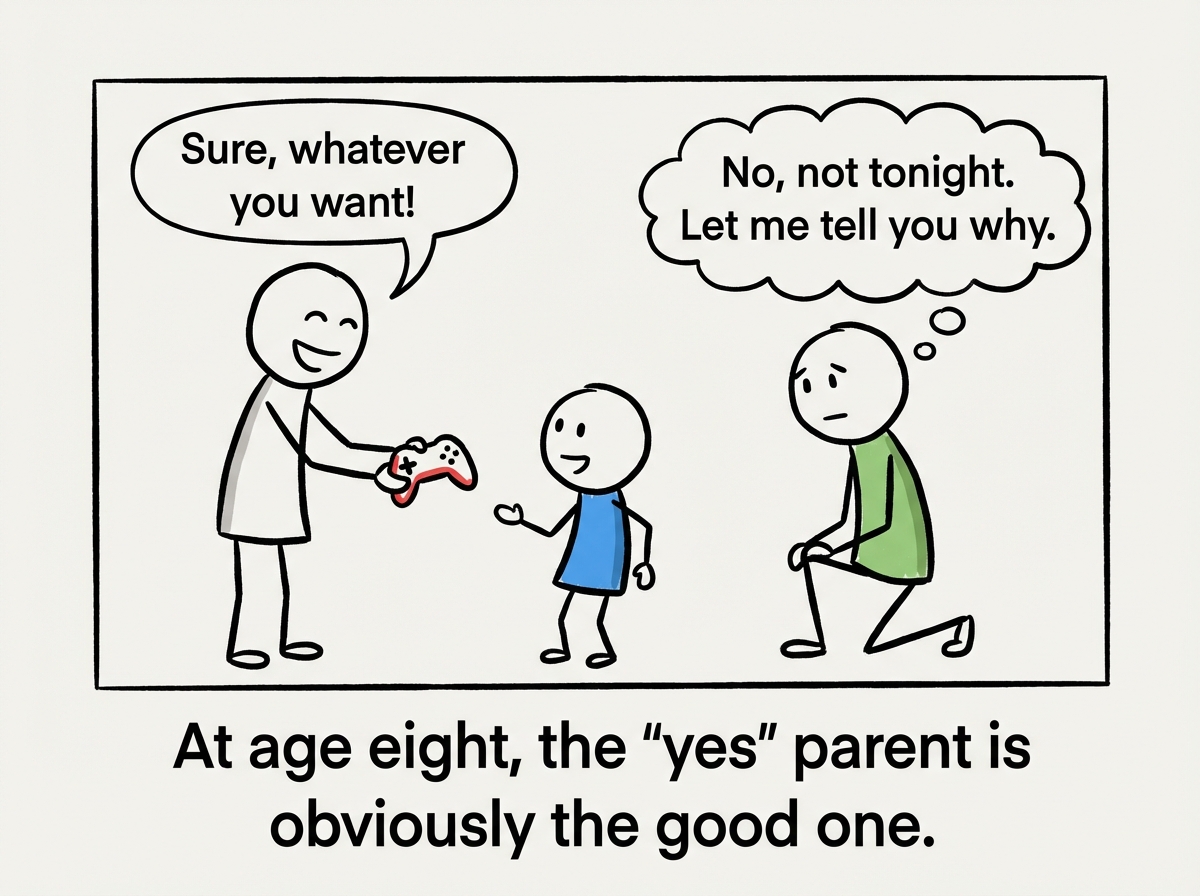
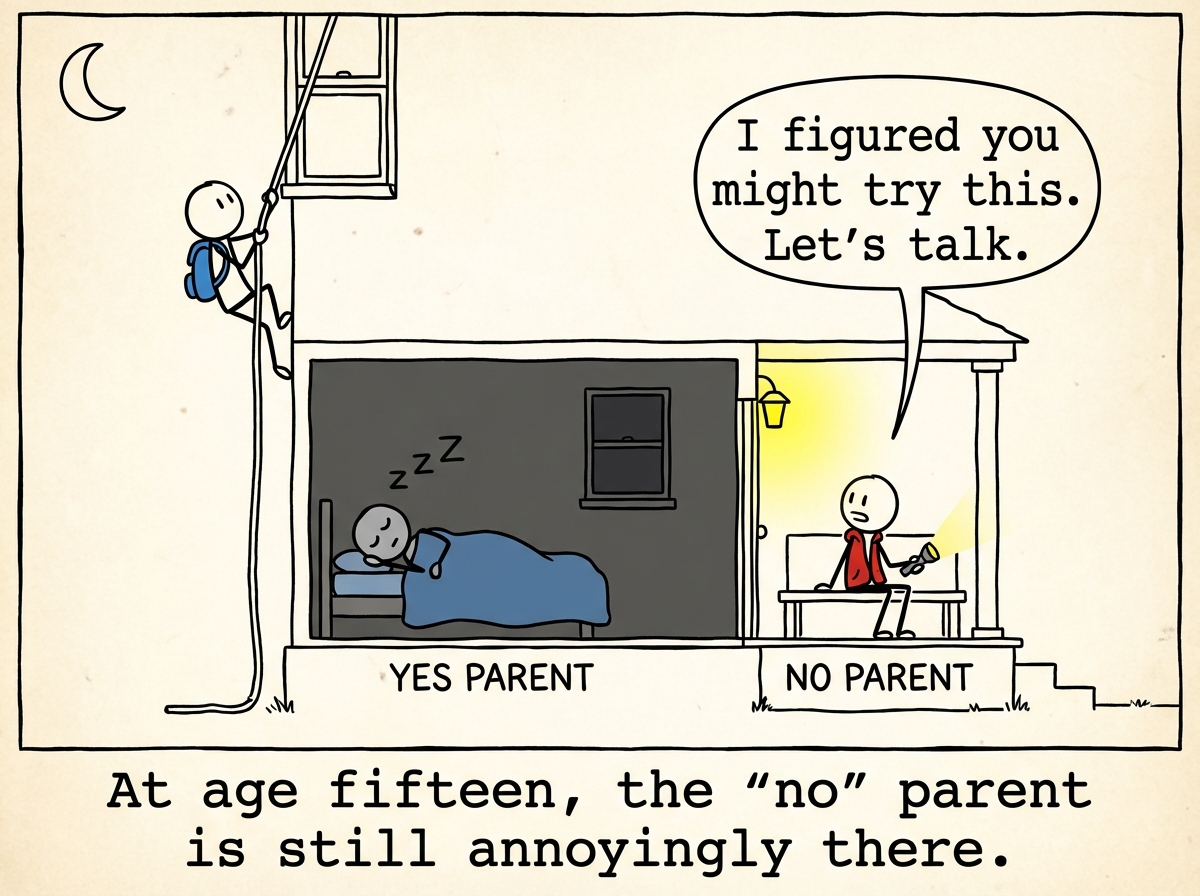
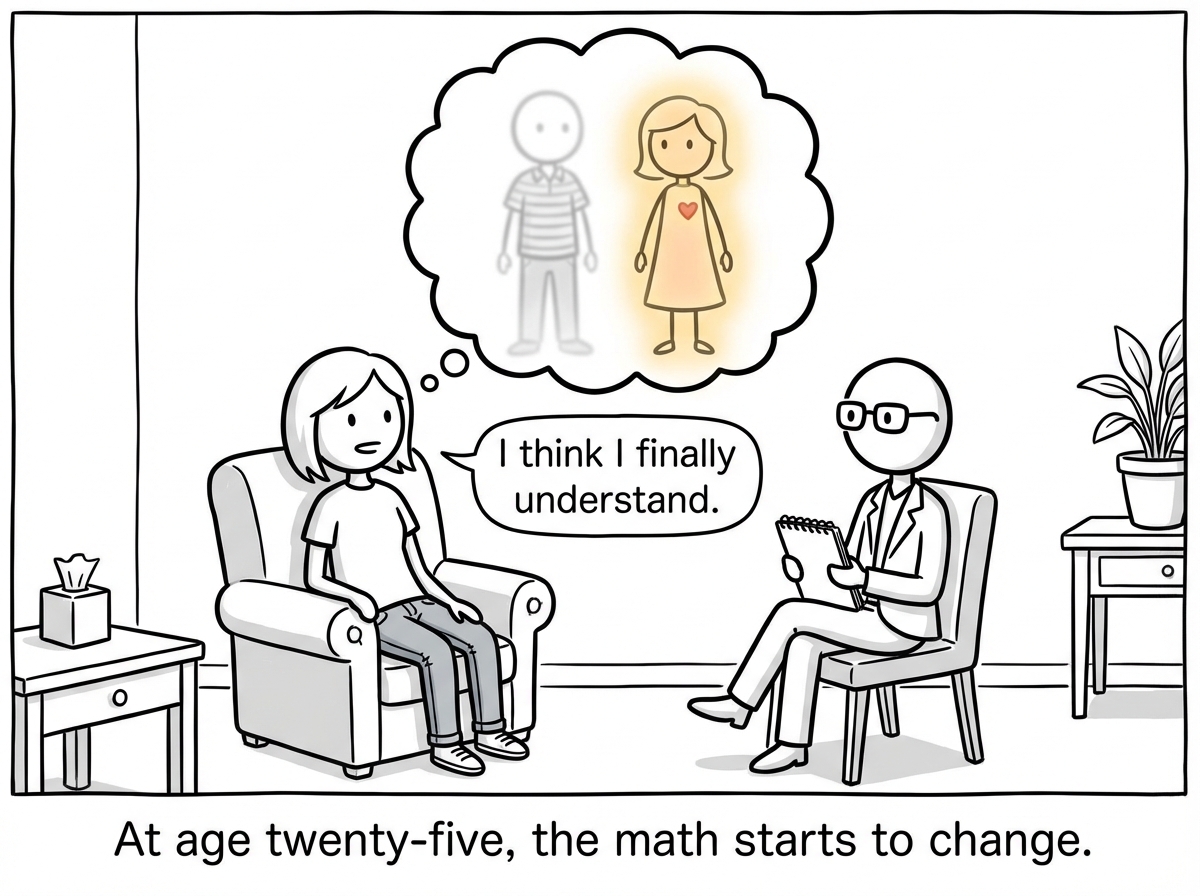
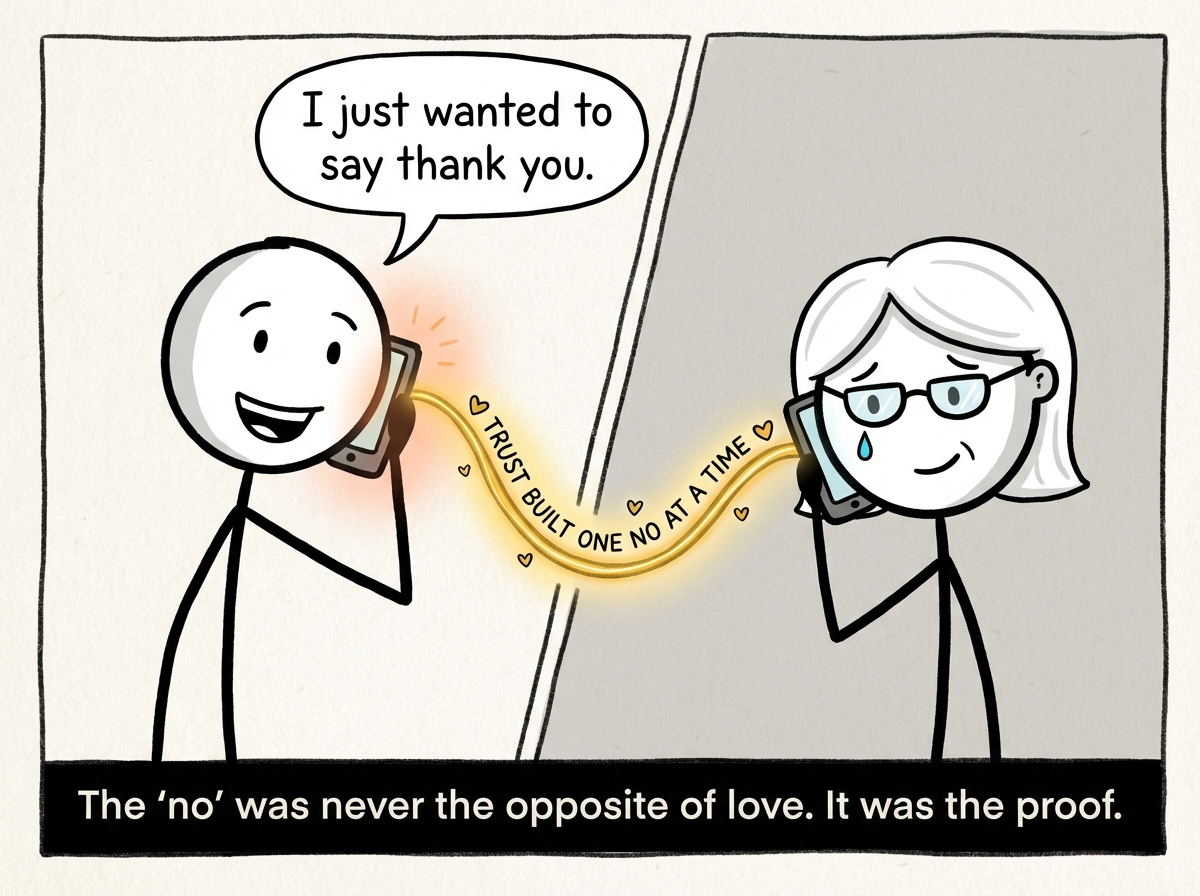
When a child grows up and realizes the parent who said no was the one who made them feel safest.
Explanation
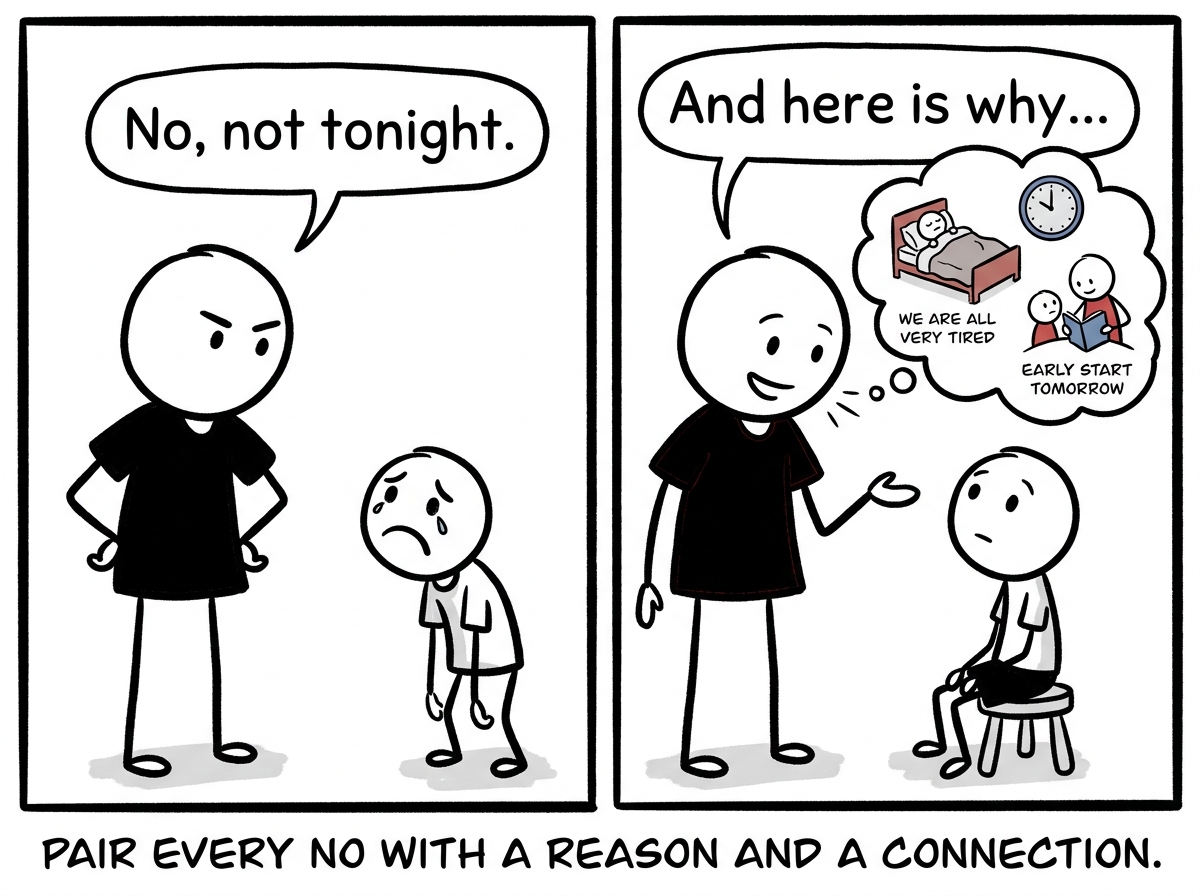
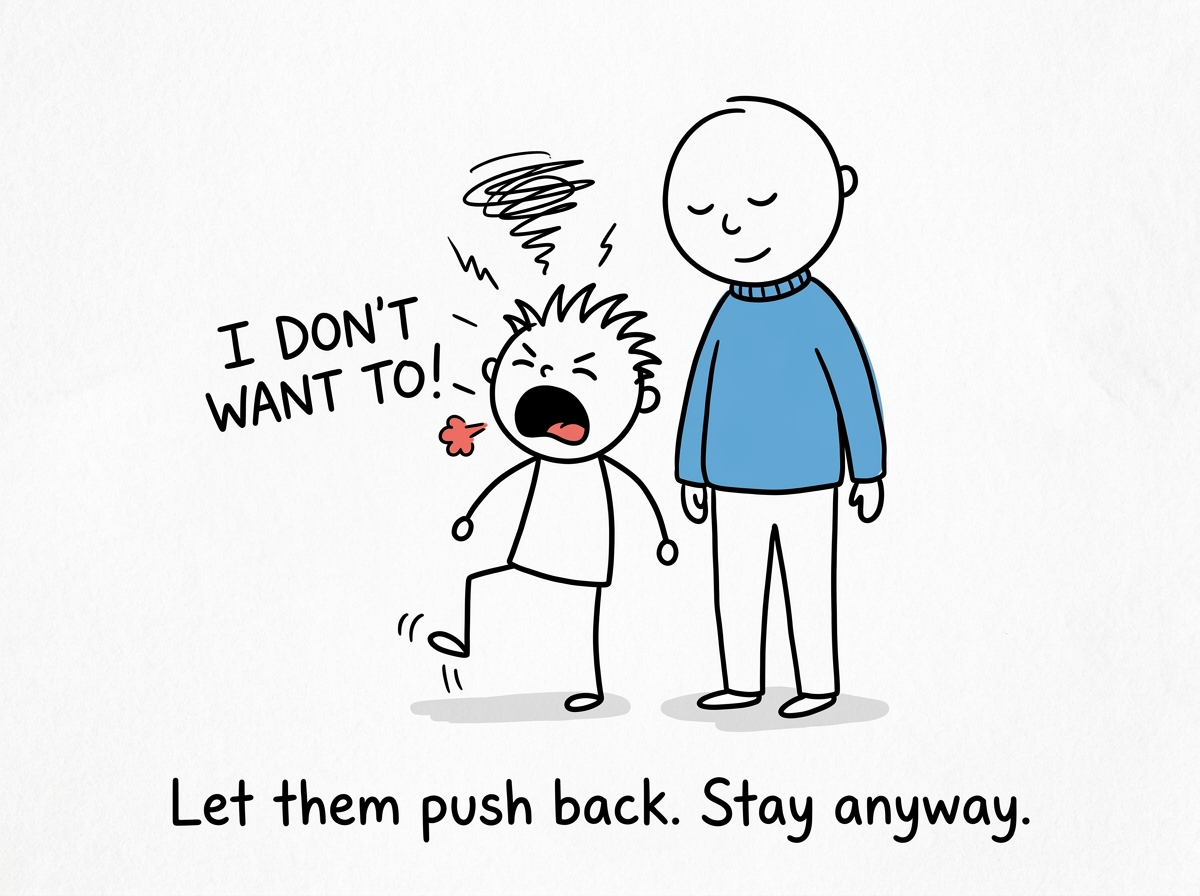
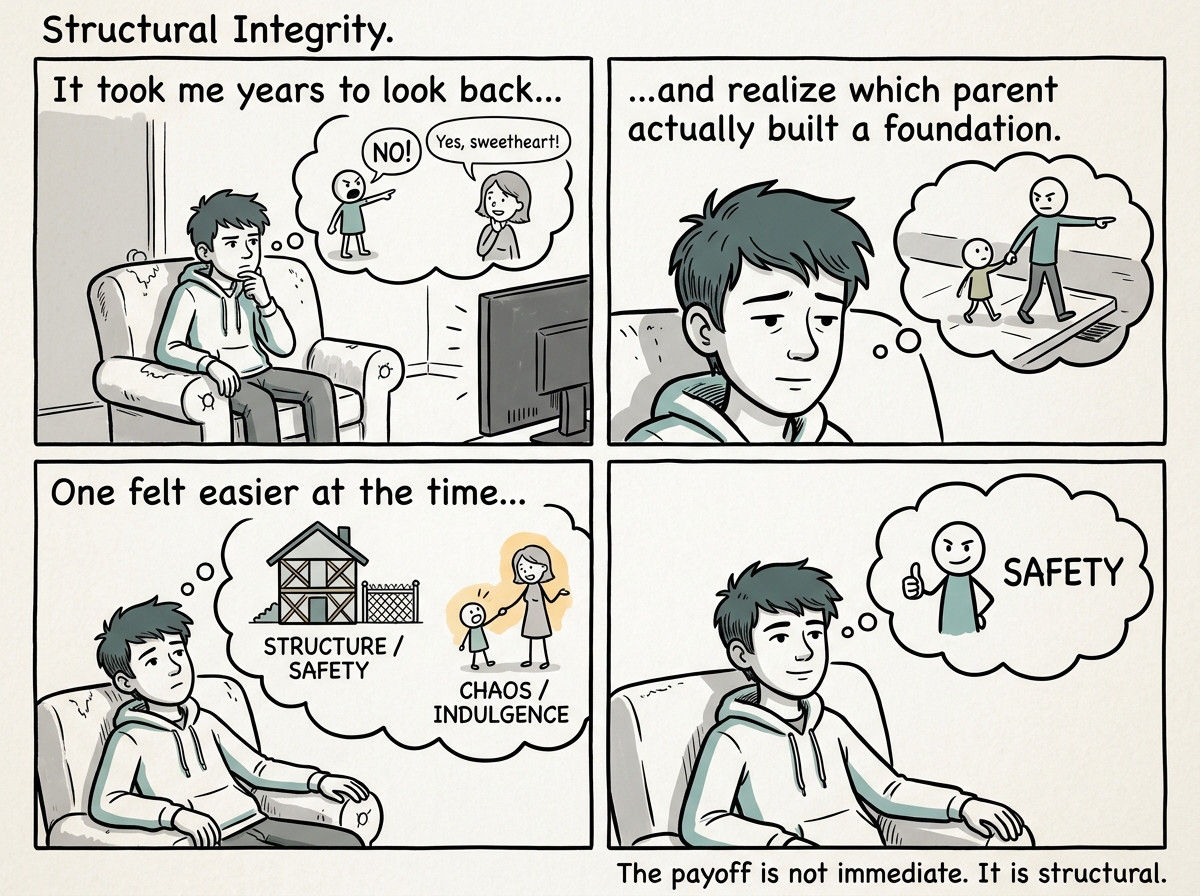
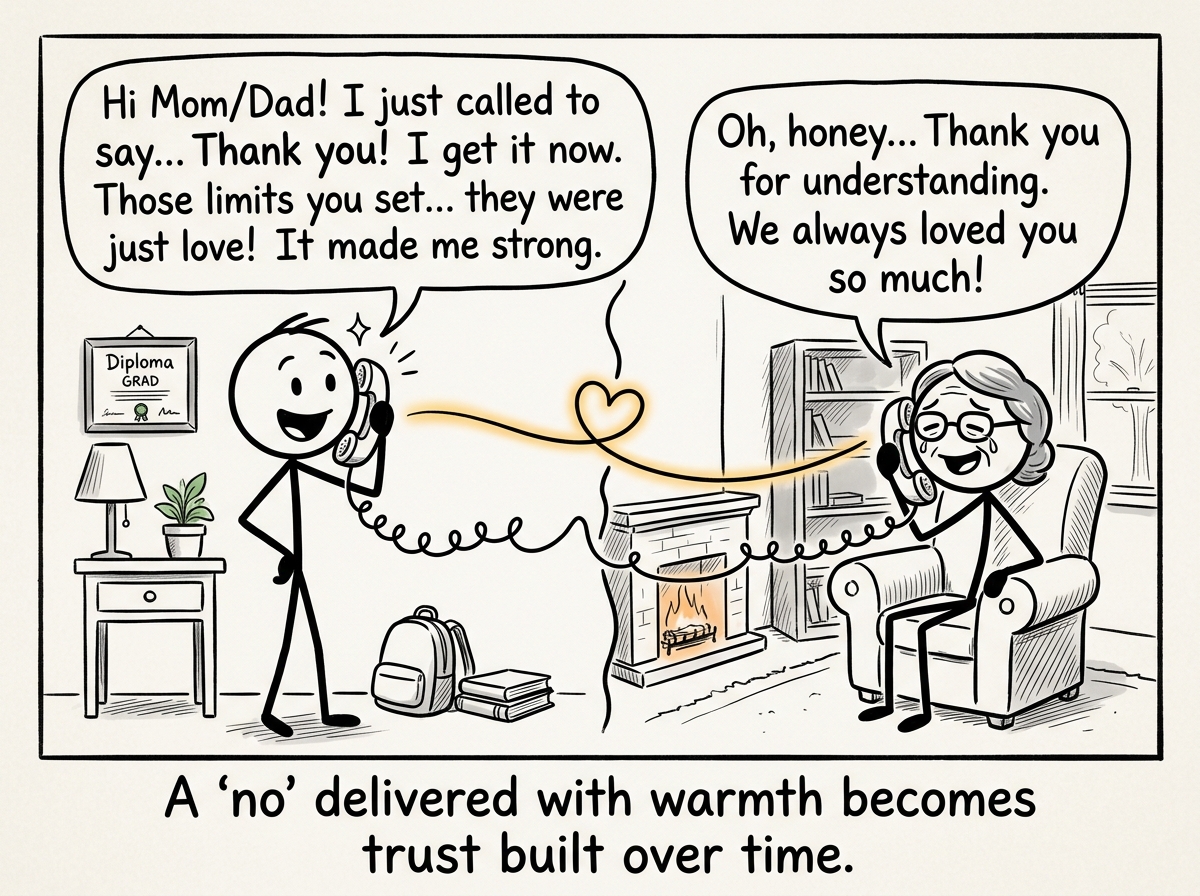
You are an adult now, looking back. One parent always said yes — to the extra screen time, to skipping school, to whatever made you stop crying. The other parent said no. A lot. They said no to the sleepover at the house they had a bad feeling about. They said no to the third hour of video games. They said no, and you hated them for it. But they also explained why. They also held you when you were angry about it. They also did not budge. This is the long game of gentle parenting that nobody talks about at the toddler stage. The payoff is not immediate compliance or a tantrum-free trip to Target. The payoff comes years later, when a child — now grown — realizes that the parent who set boundaries was the parent who felt safe. Psychologist Lisa Damour's research on adolescents confirms this: teenagers consistently report feeling more secure with parents who maintain clear expectations, even when they push back against them in the moment. The boundary itself becomes the evidence of care. The misconception that saying no is the opposite of gentle parenting misses the entire point. Gentleness is not the absence of firmness. It is the presence of respect within firmness. A child who grows up hearing 'no, and here is why, and I love you anyway' develops something priceless: the ability to tolerate frustration, the knowledge that love does not require agreement, and the deep security of knowing that someone cared enough to hold the line.
Key Takeaway
The parent who said no and stayed close taught you that love and limits can live in the same sentence.