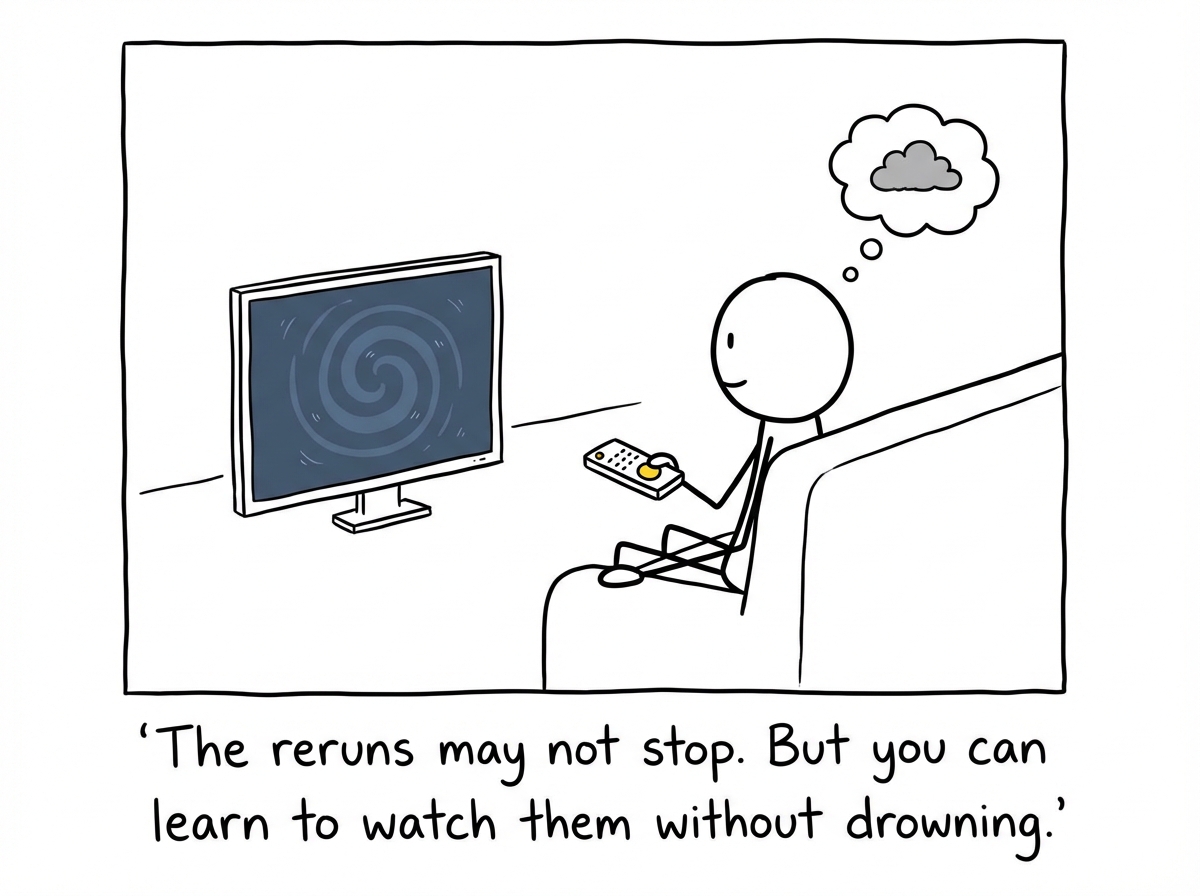
The Reruns You Didn't Ask For
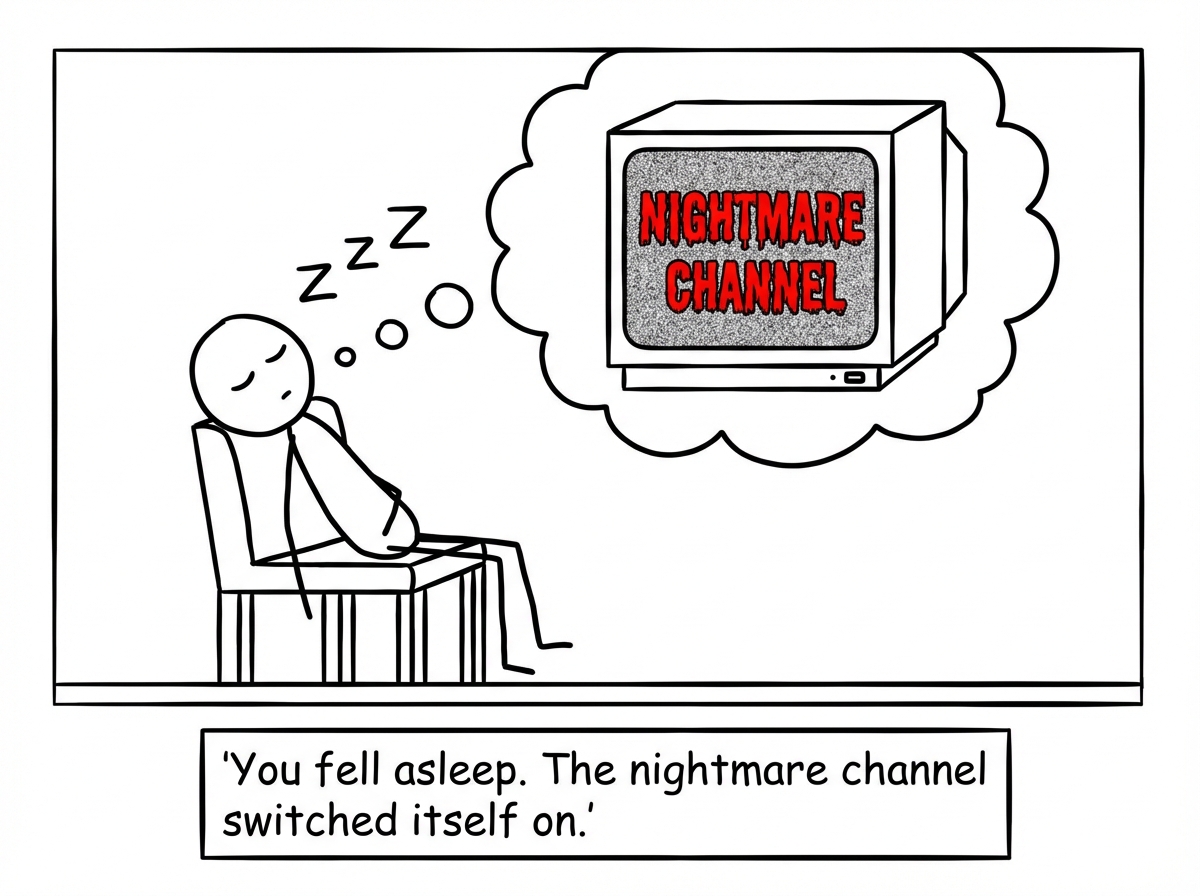
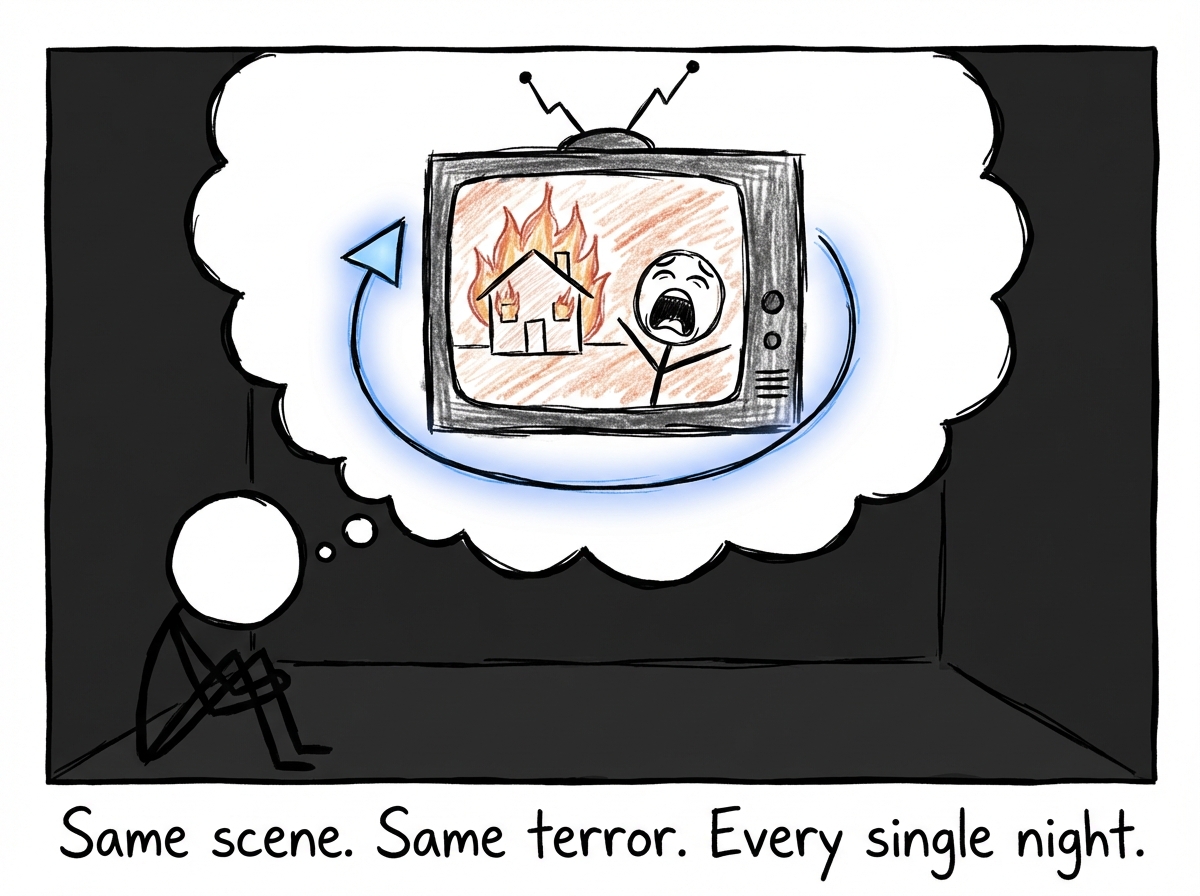
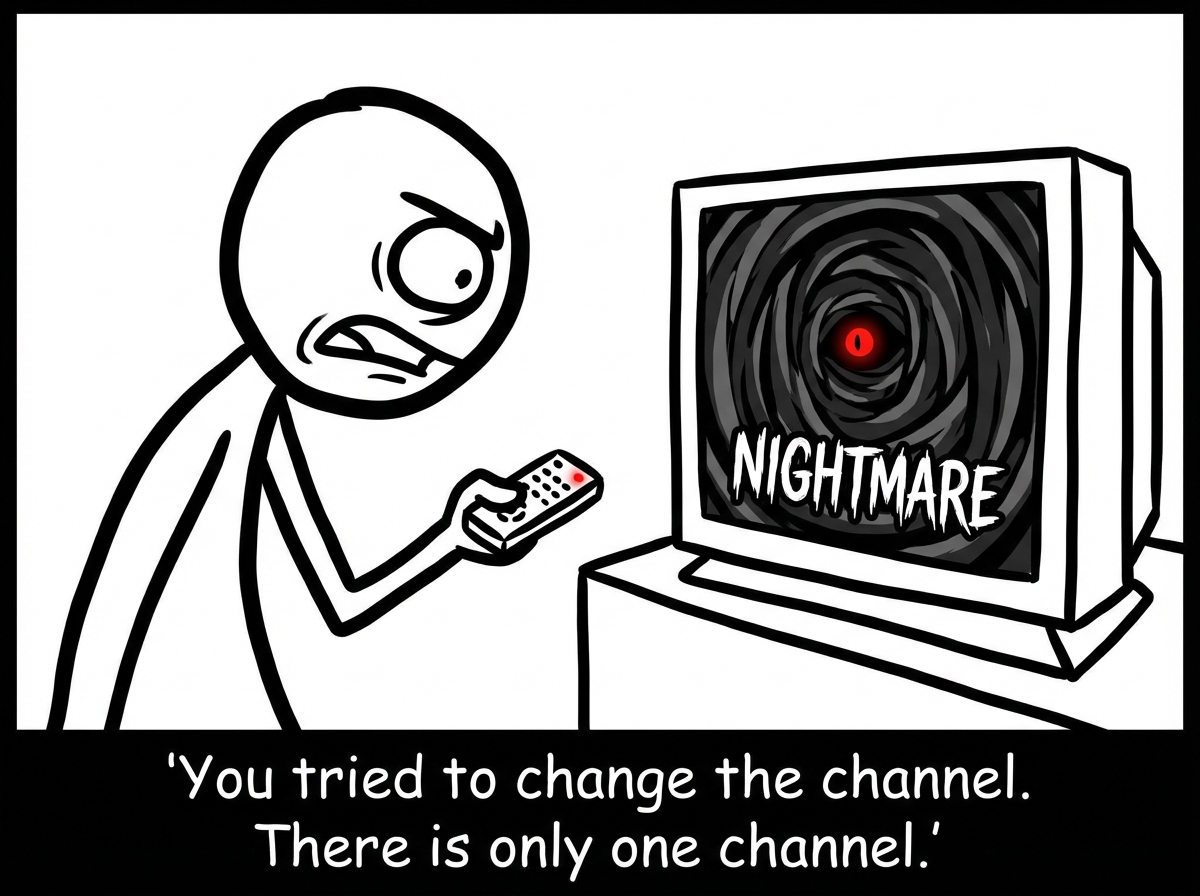
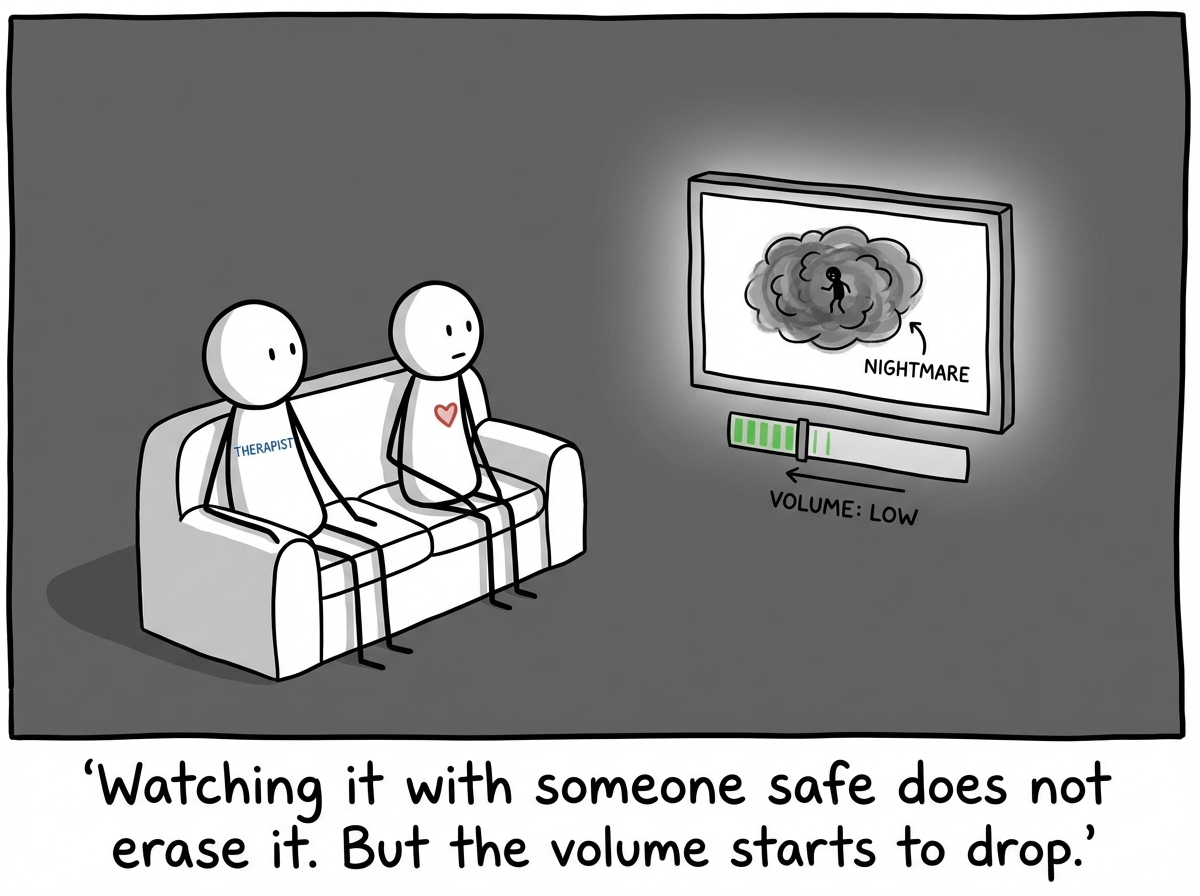
A person's sleeping brain keeps replaying the same traumatic episode on a loop like a broken TV that only has one channel, until they learn to rewrite the script with help.
Explanation
Recurring nightmares after trauma are not your brain being cruel -- they are a sign that your brain's natural processing system is stuck. During normal sleep, the brain replays emotional experiences and gradually files them away with reduced intensity. But trauma can overwhelm this system. The amygdala stays hyperactivated during sleep, hijacking the dream process and replaying the traumatic memory at full emotional volume night after night without resolution. It is like a record skipping on the worst part of the song. Image Rehearsal Therapy (IRT), one of the most effective treatments for trauma-related nightmares, works by having people rewrite their nightmare script while awake -- changing the ending, altering the scene, or introducing new elements. When the brain has an alternative version to rehearse, the loop often begins to break. The nightmare is not your enemy. It is a stuck repair process that needs a new ending.
Key Takeaway
Recurring nightmares are not your brain punishing you -- they are a broken replay button, and with the right help, you can give the story a different ending.