The Smoke Detector That Will Not Stop
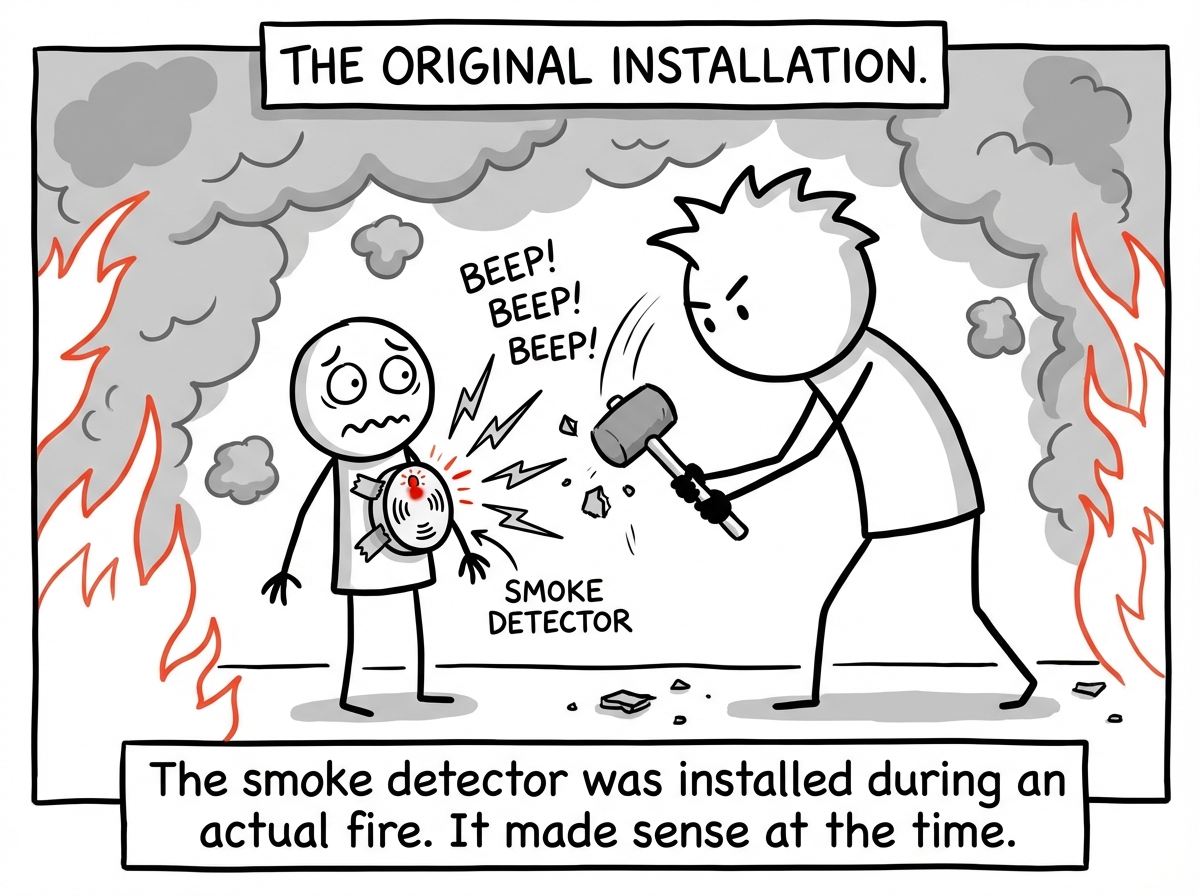
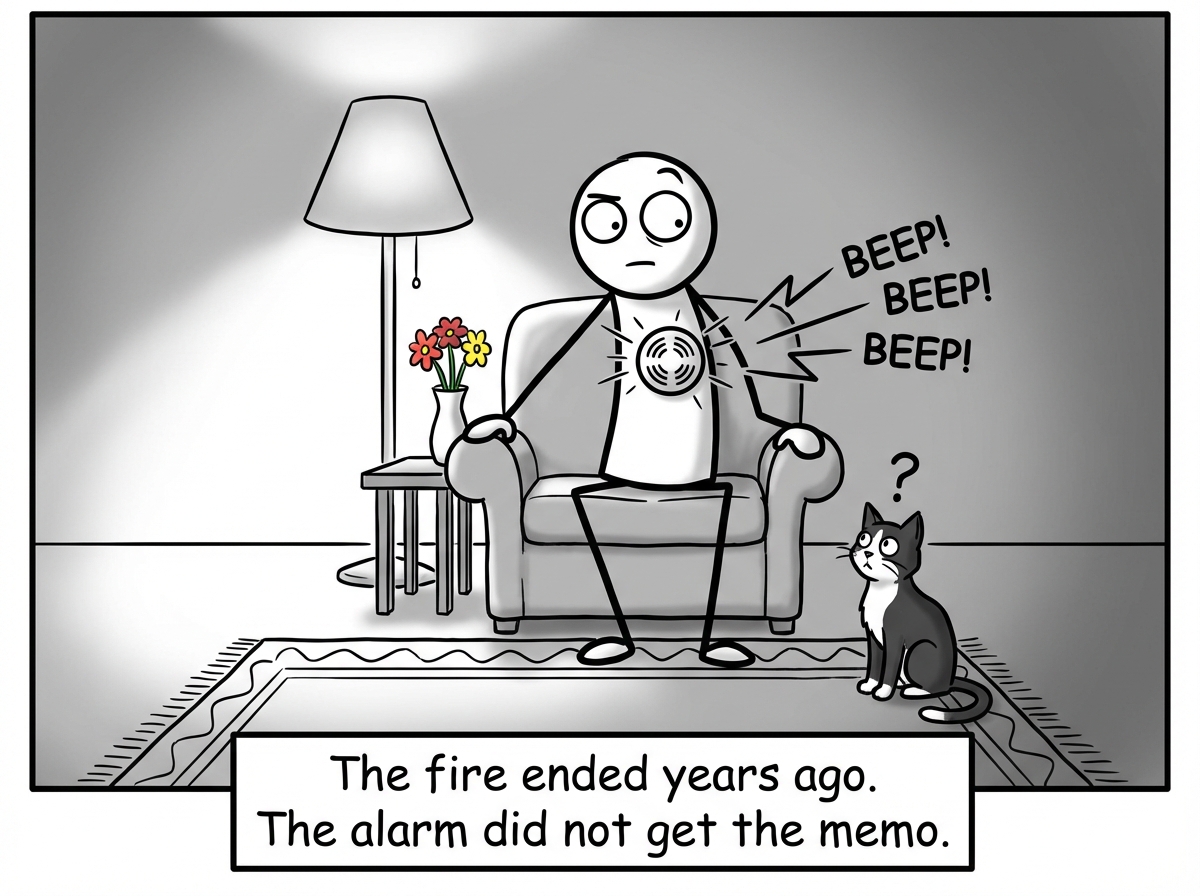
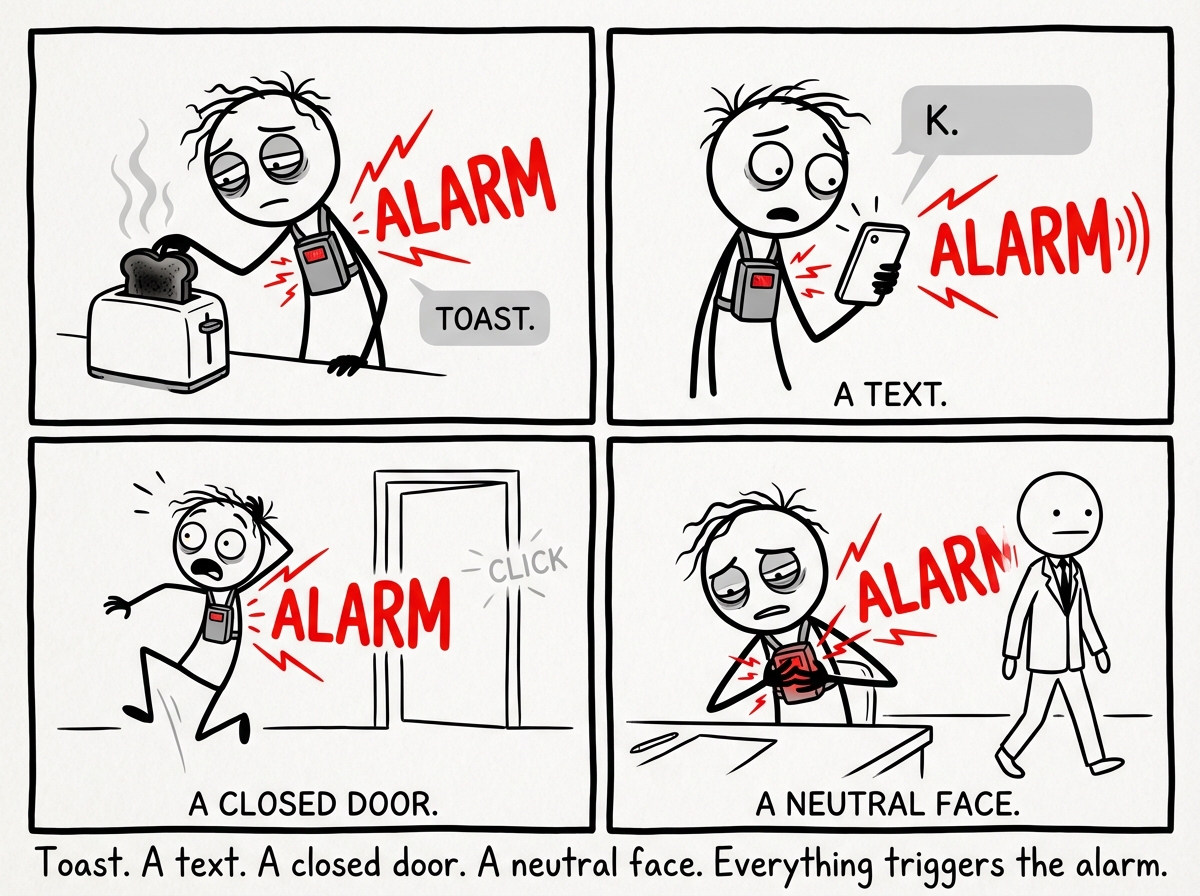
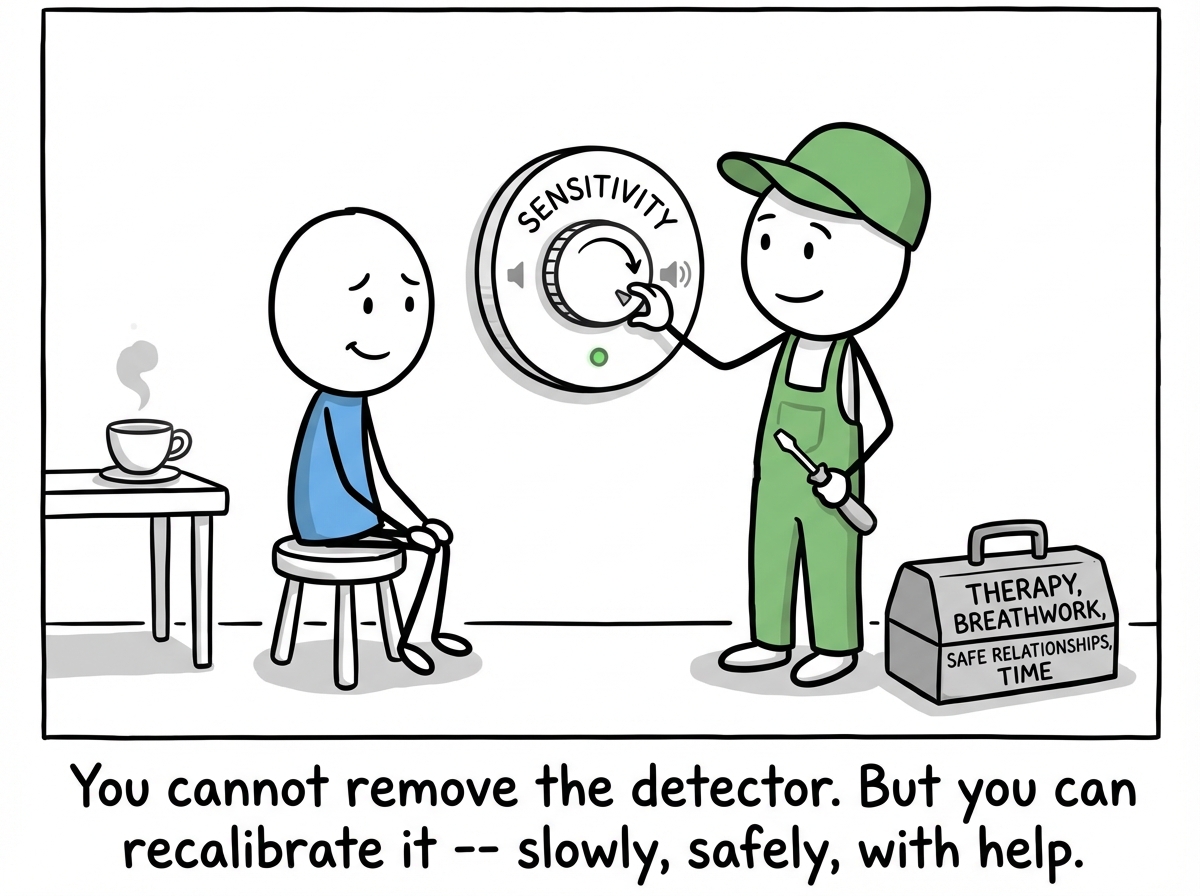
A person's internal smoke detector blaring at full volume in a perfectly safe room -- because it was installed during a fire and never recalibrated.
Explanation
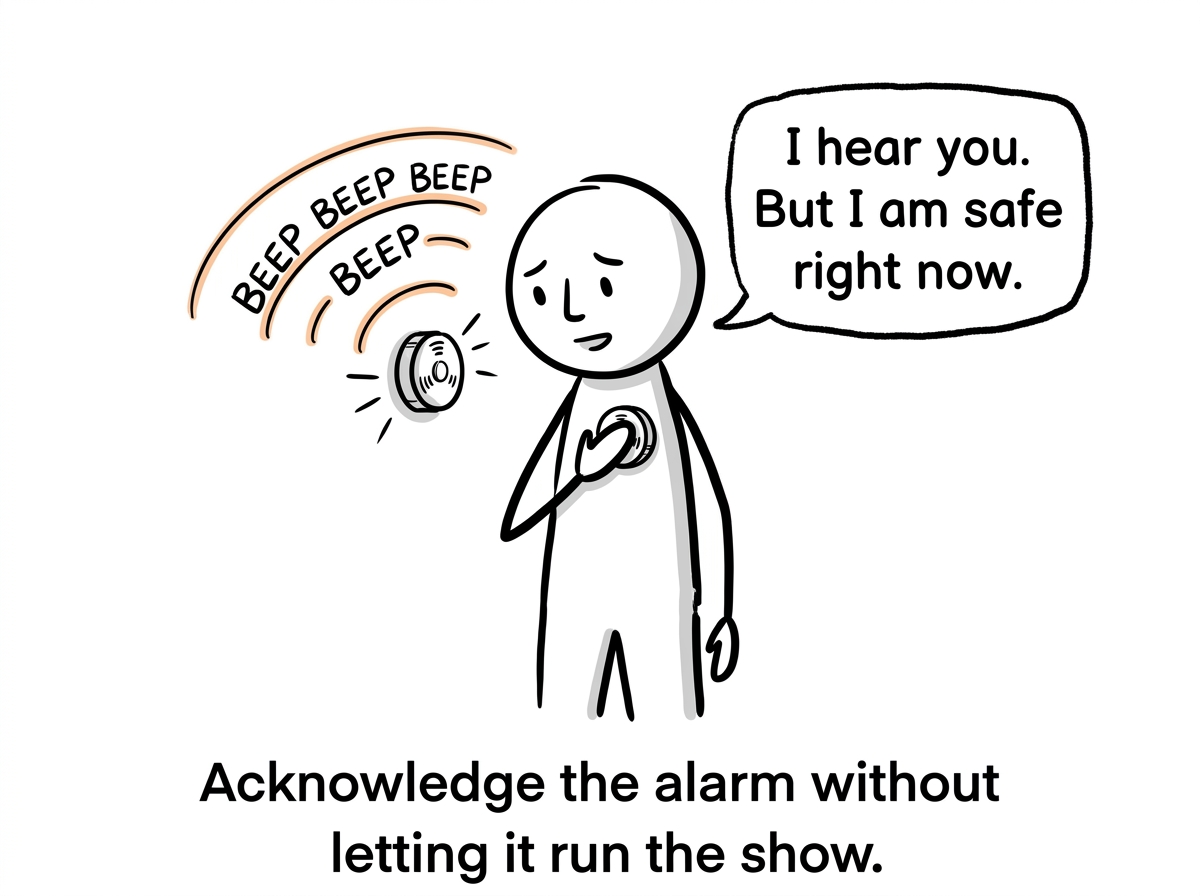
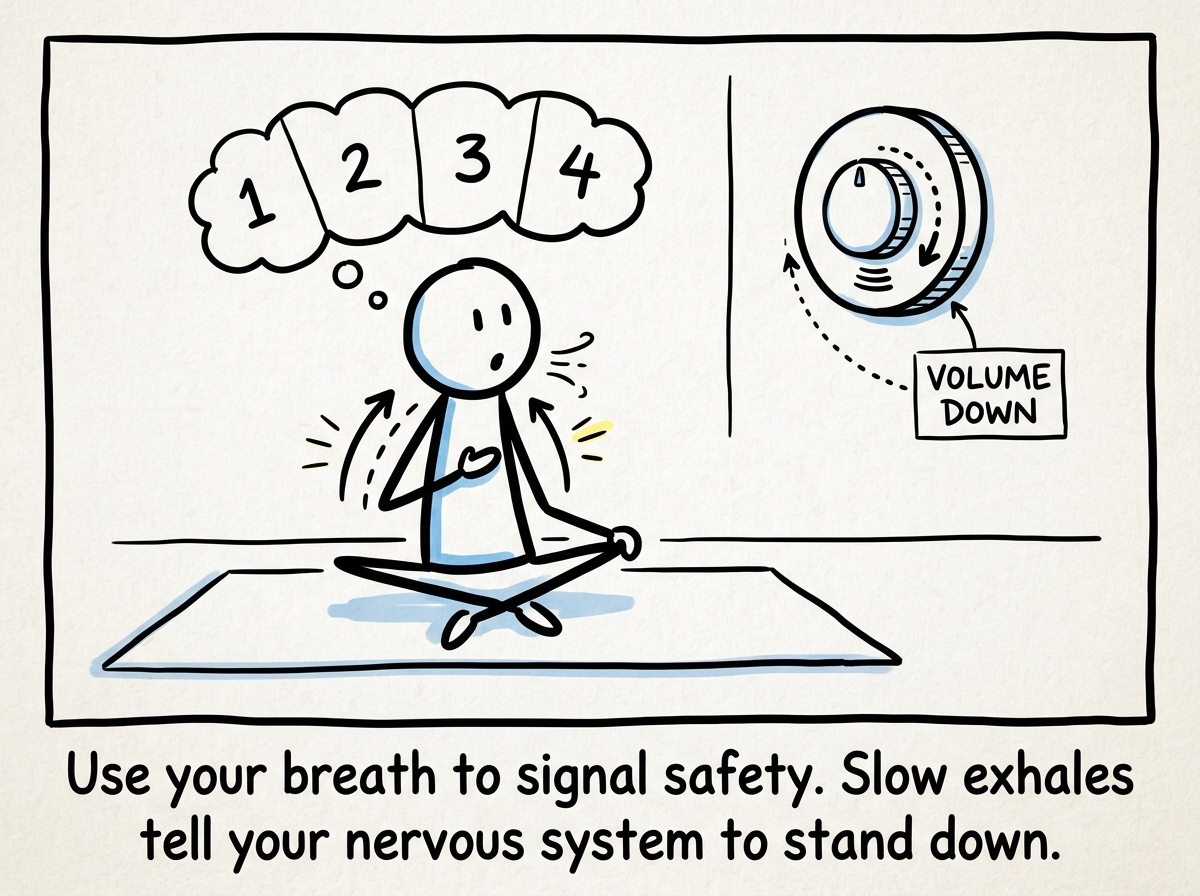
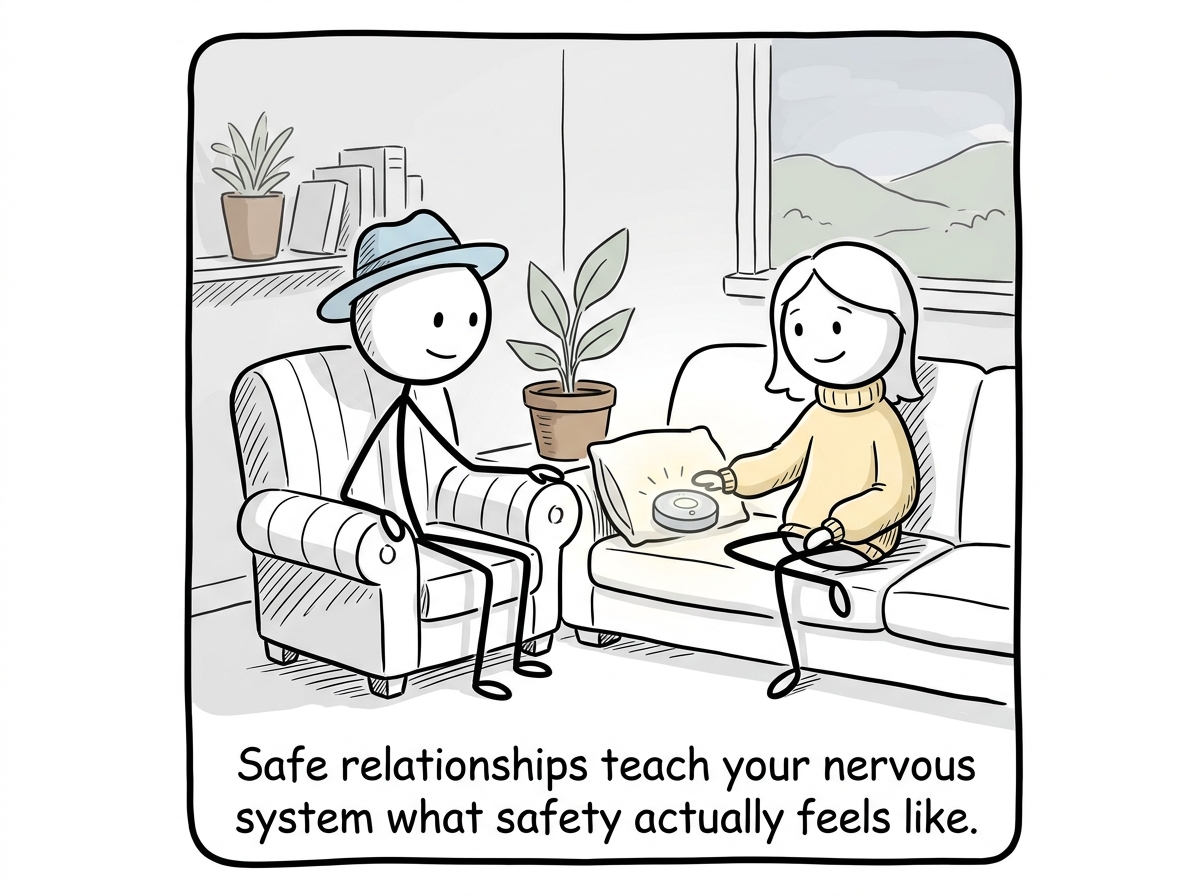
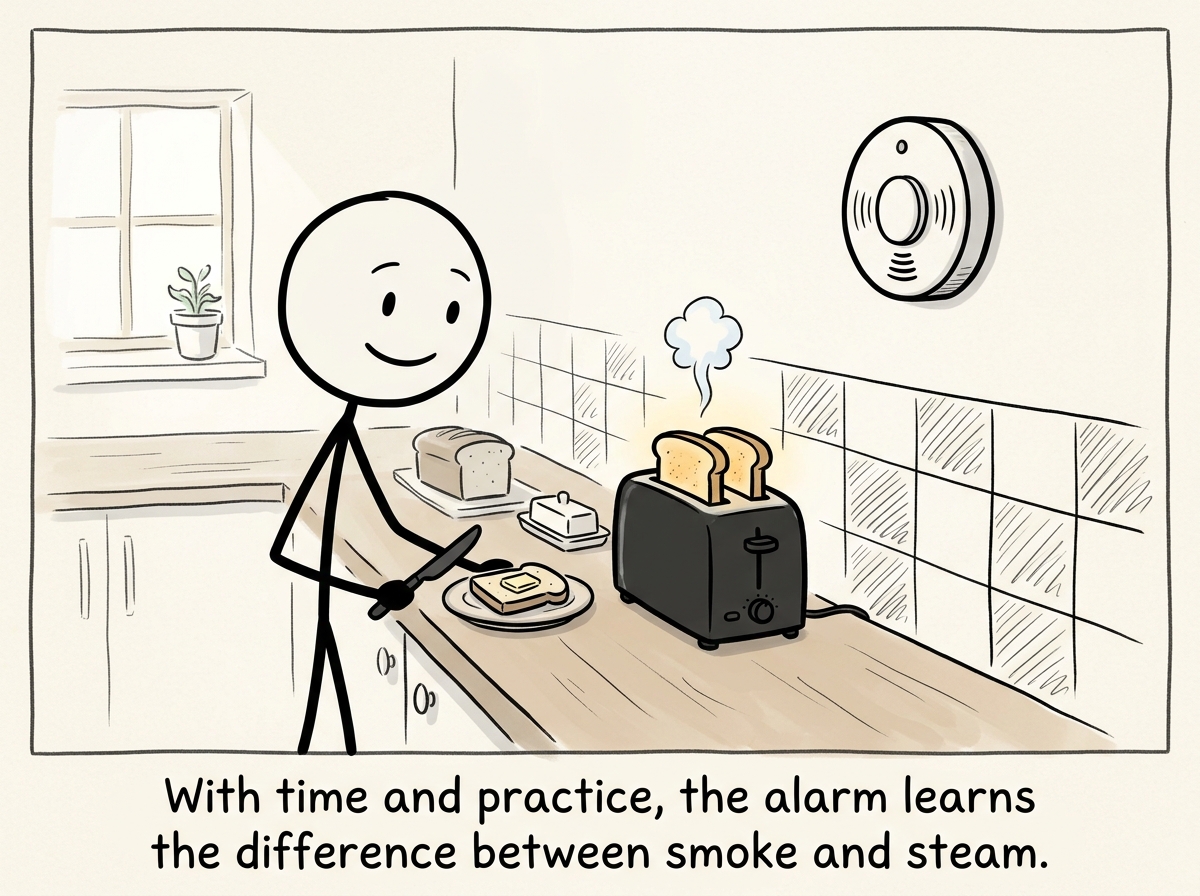
You are sitting in a perfectly safe room. The doors are locked, the lights are on, nothing is burning. But inside your chest, the smoke detector is screaming. Every creak of the house, every unexpected text, every slightly ambiguous look from a coworker sends it into full alarm mode. You scan the room. You check the exits. You rehearse what you would do if something went wrong. The room is safe. You do not feel safe. And you are exhausted from the gap between those two realities. Chronic hypervigilance is your nervous system operating from an outdated threat map. The smoke detector was installed during a real fire -- a chaotic childhood, an abusive relationship, a traumatic experience -- and it did its job. It kept you alert when alertness meant survival. The problem is that the fire ended, but no one came to recalibrate the detector. Bessel van der Kolk's research shows that trauma rewires the amygdala to be hypersensitive, while Stephen Porges' Polyvagal Theory explains that the nervous system can get locked in sympathetic activation -- a permanent state of fight-or-flight that treats neutral stimuli as threats. Your body is responding to a map of a world that no longer exists. Recalibration is possible, but it is not a cognitive exercise -- you cannot think your way out of a nervous system response. It requires body-based work: somatic experiencing, breathwork, safe co-regulation with trusted people, and repeated experiences of safety that slowly teach the smoke detector the difference between smoke and steam. The goal is not to disable the alarm. It is to help it respond to actual fires instead of toast.
Key Takeaway
Your hypervigilance kept you alive during the fire -- but you are allowed to recalibrate now that the fire is out.