
The What-If Machine
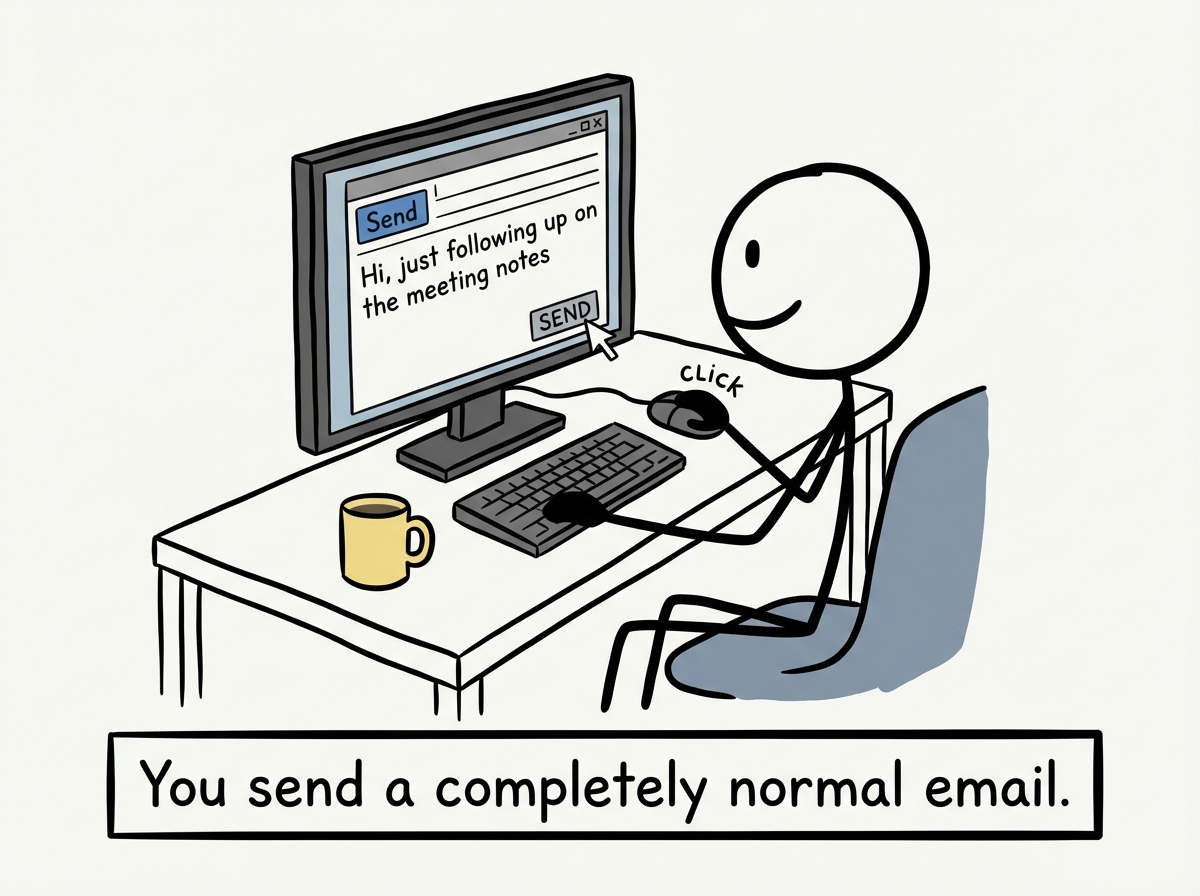
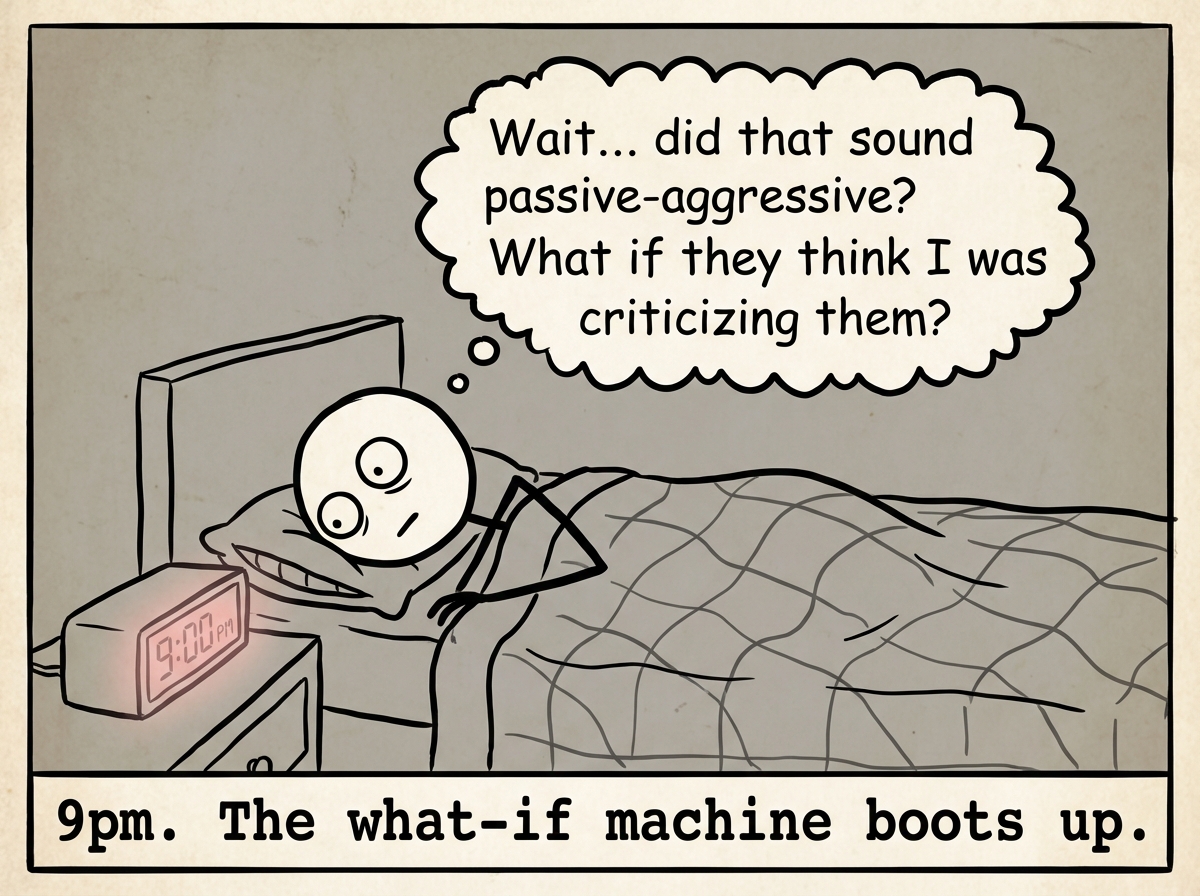
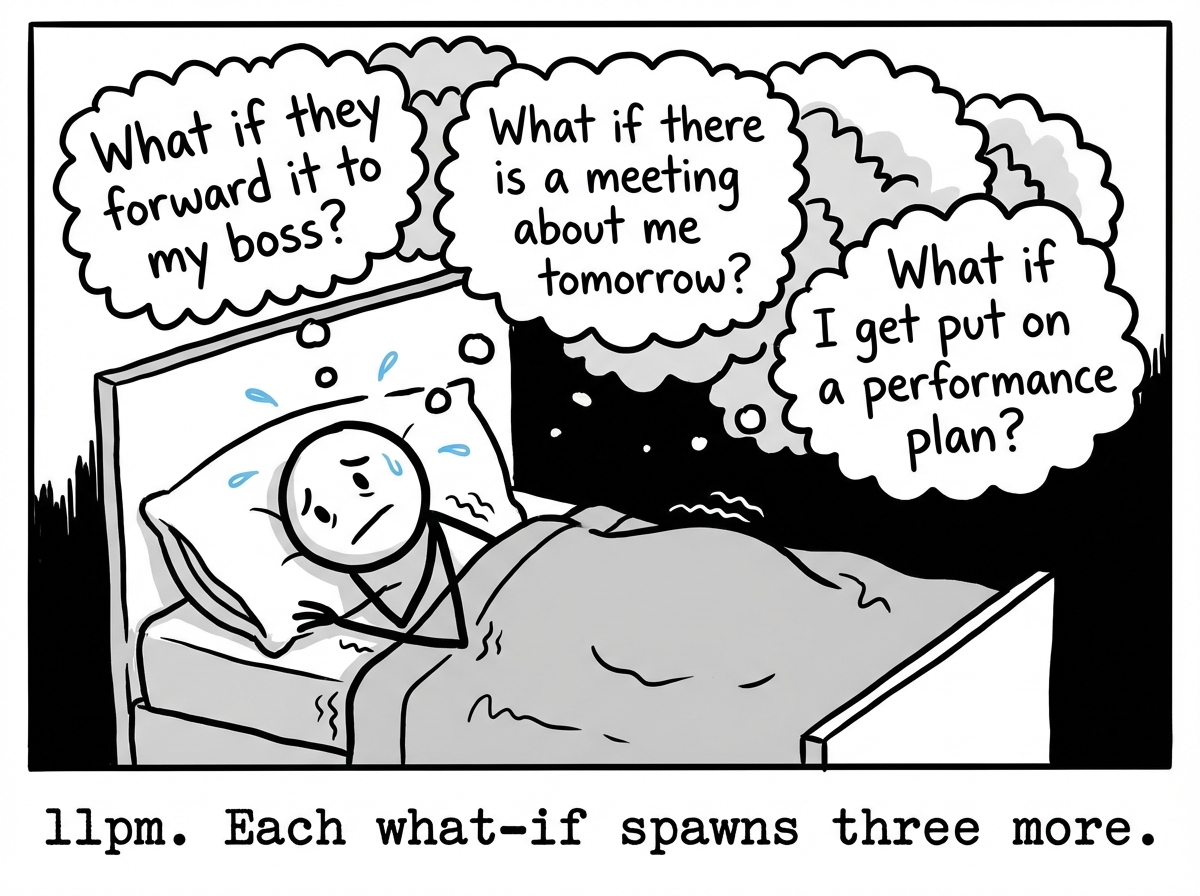
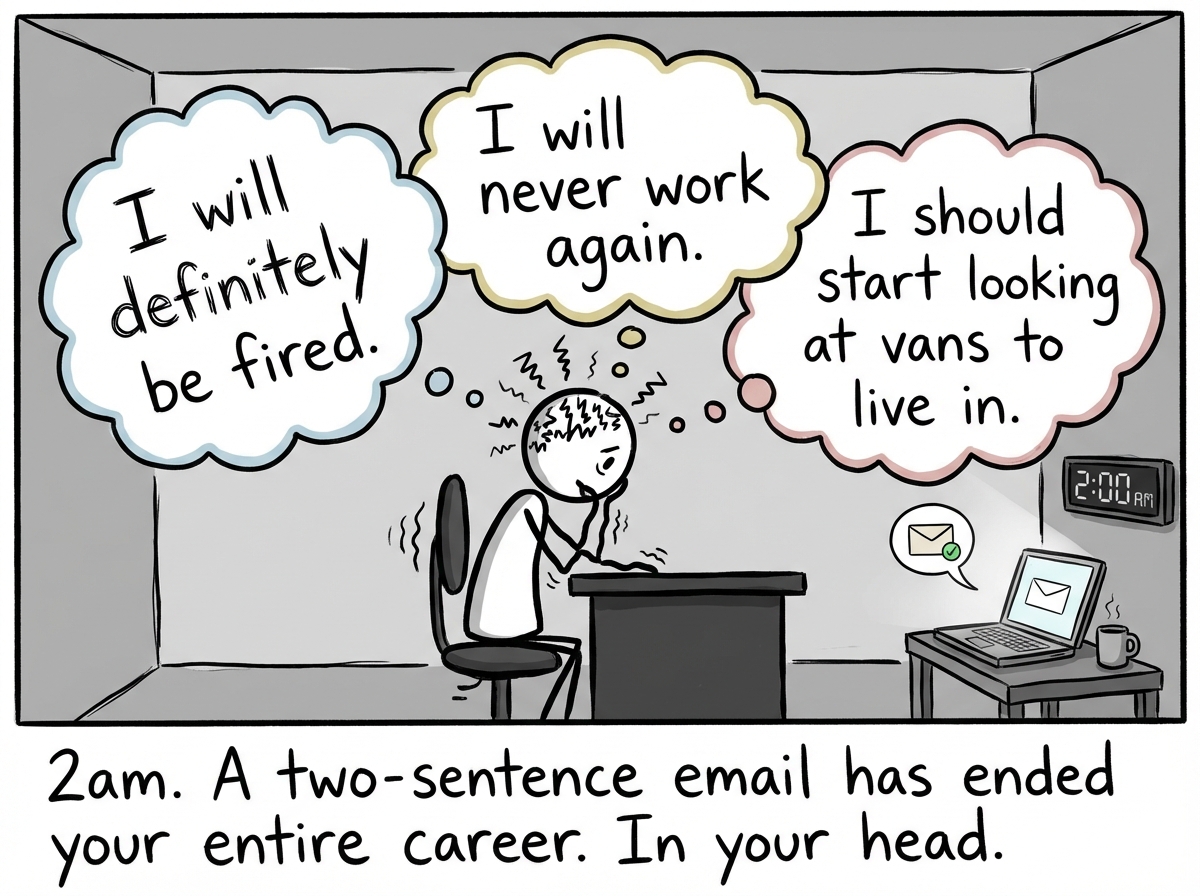
A person lying in bed as their brain generates increasingly absurd worst-case scenarios about a simple work email they sent earlier that day.
Explanation
You sent a normal email at 4pm. By 10pm, you are lying in bed convinced you are going to be fired, blacklisted from your industry, and forced to live in a van. Welcome to the what-if machine -- the anxious brain's favorite late-night program. Anxious overthinking is not random worrying. It is a specific pattern where your mind treats uncertainty as a threat and responds by trying to think its way to safety. The problem is that it never arrives. Each answer generates a new what-if, and each what-if feels more urgent than the last. The what-if machine runs on a simple fuel: the intolerance of not knowing. Your brain would rather simulate a hundred terrible outcomes than sit with the discomfort of 'I do not know what will happen.' It frames this as productive problem-solving, but it is actually anxiety wearing a productivity costume. The thoughts feel important because they are emotionally charged, not because they are realistic. The key to shutting down the what-if machine is not answering every question it generates -- that just feeds it more fuel. Instead, you learn to notice the pattern ('My brain is doing the thing again'), label it without engaging ('That is an anxious thought, not a fact'), and redirect your attention to something grounding -- your breath, your body, or the present moment. You do not need to solve every hypothetical problem tonight. Most of them will never happen, and the ones that do will not be solved by rehearsing them at 2am.
Key Takeaway
Your brain presents worst-case scenarios as problem-solving, but it is actually anxiety wearing a productivity costume.
A stick figure in bed noticing the what-if spiral starting and mentally flagging it: 'This is the what-if machine, not reality'
The stick figure choosing not to answer the what-if, instead labeling it: 'Anxious thought, not a fact' and letting it float past
The stick figure placing their hands on their chest and focusing on their breath, pulling attention from spiraling thoughts into the body
The stick figure drifting off to sleep, the what-if machine still humming softly but no longer in the driver's seat