When Crumbs Feel Like a Feast
Part of the Love Bombing to Trauma Bonding series (Part 3)
A person in a trauma bond receives the bare minimum of kindness from their abuser and experiences it as the most profound love they have ever felt.
Explanation
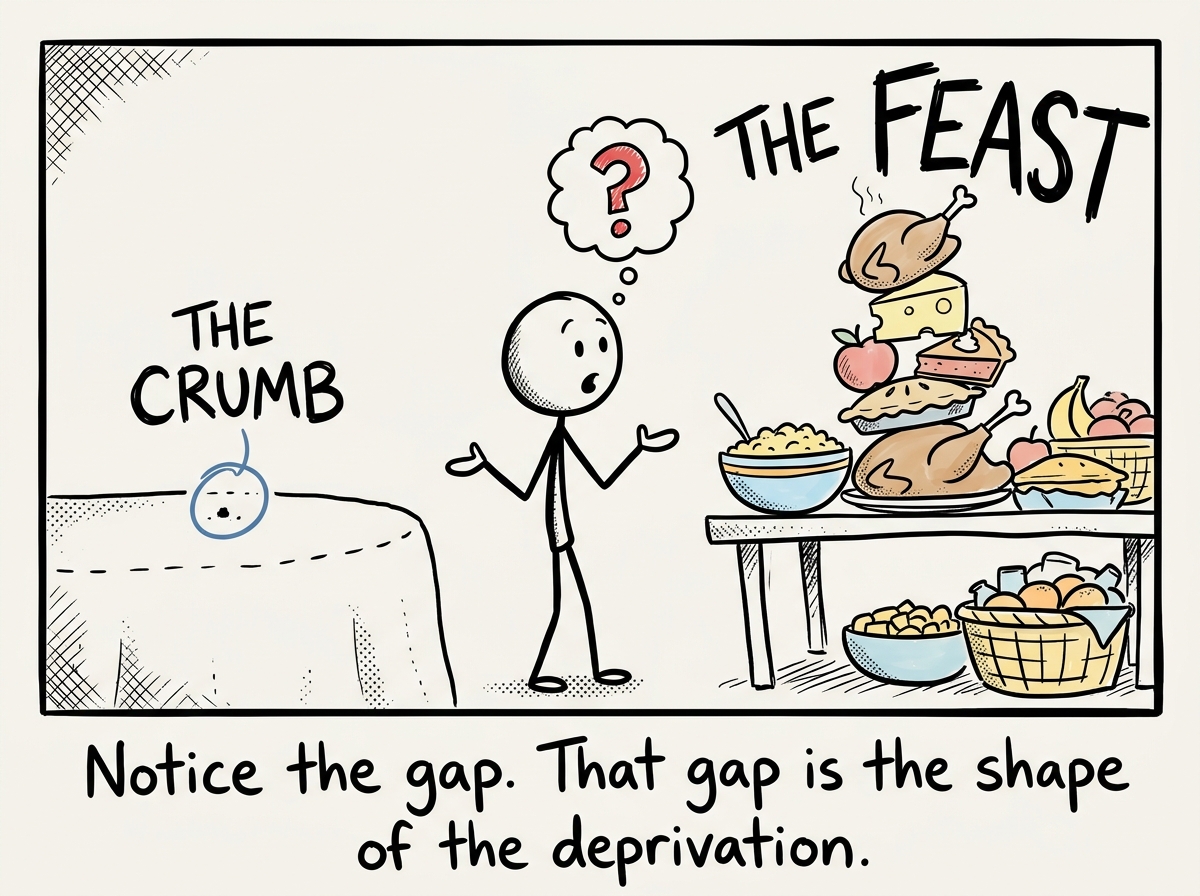
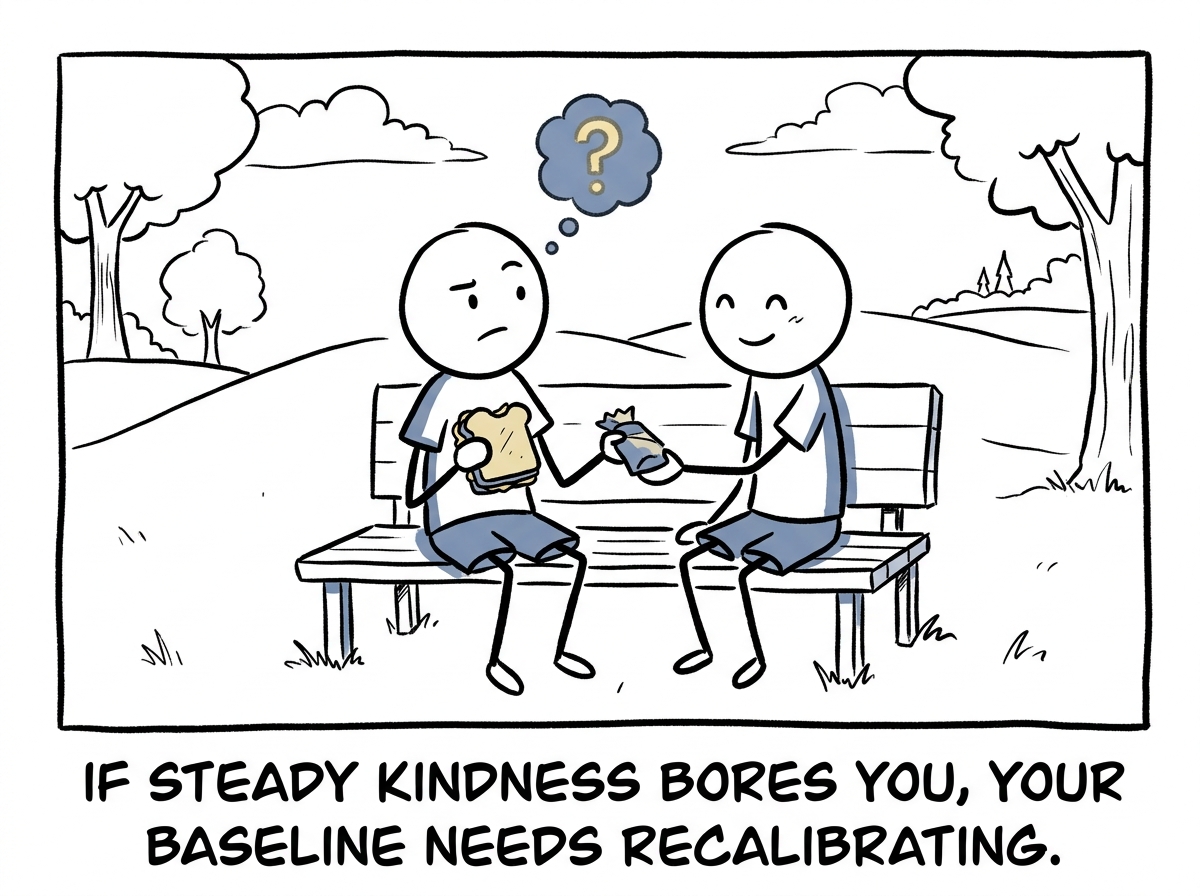
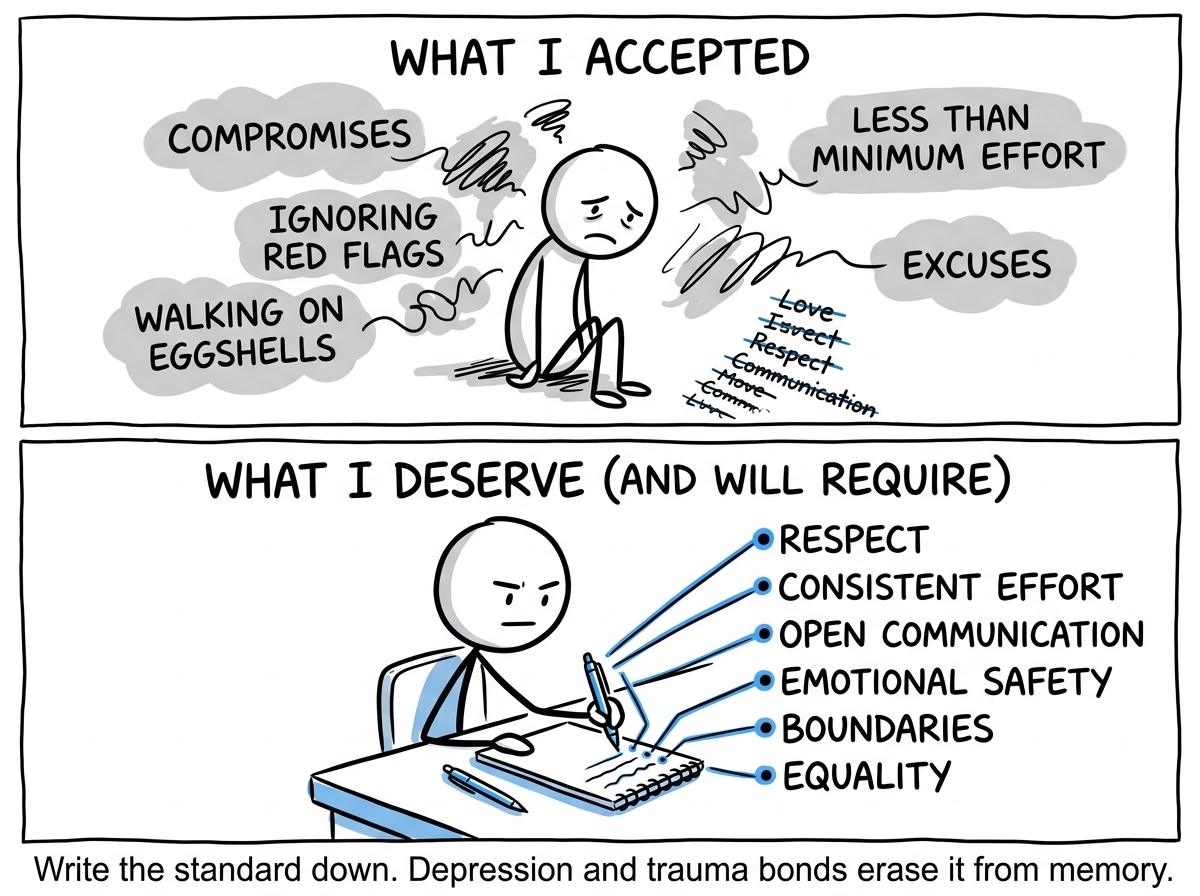
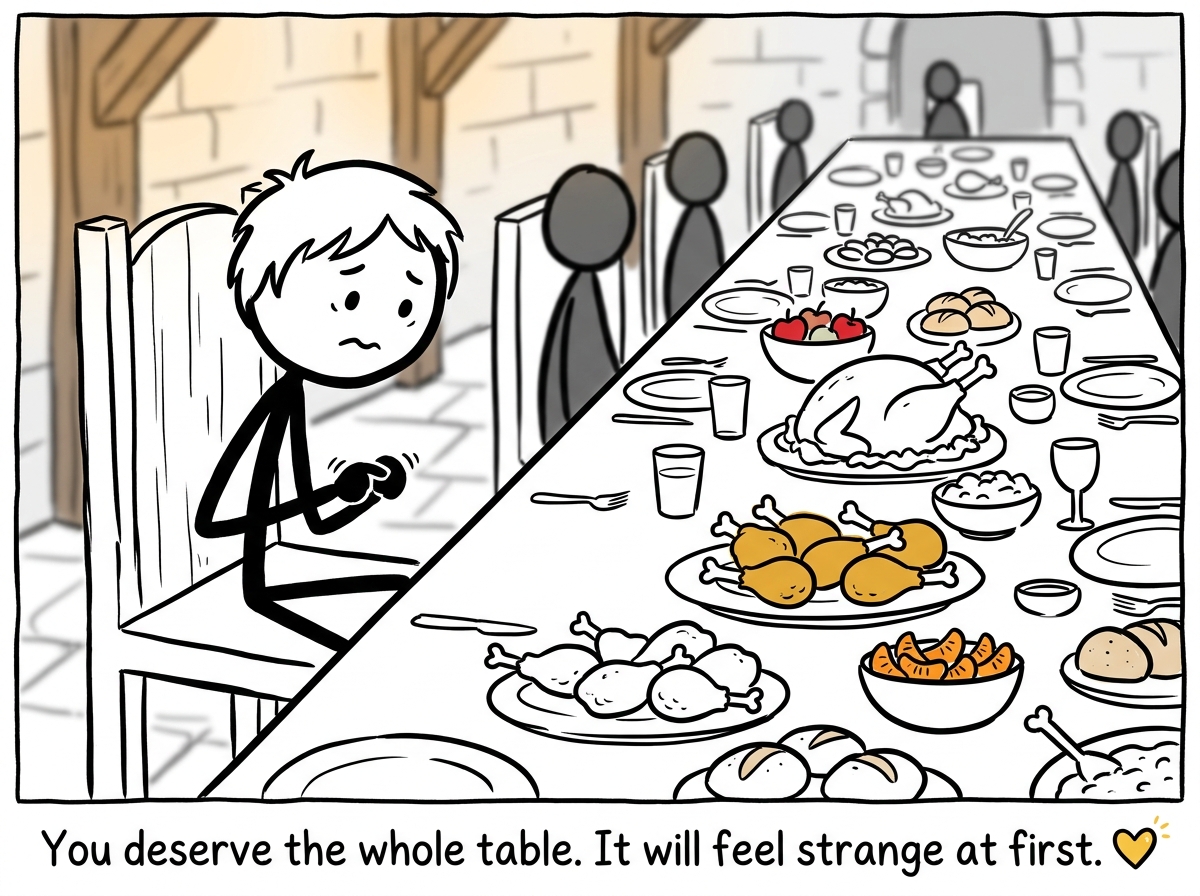
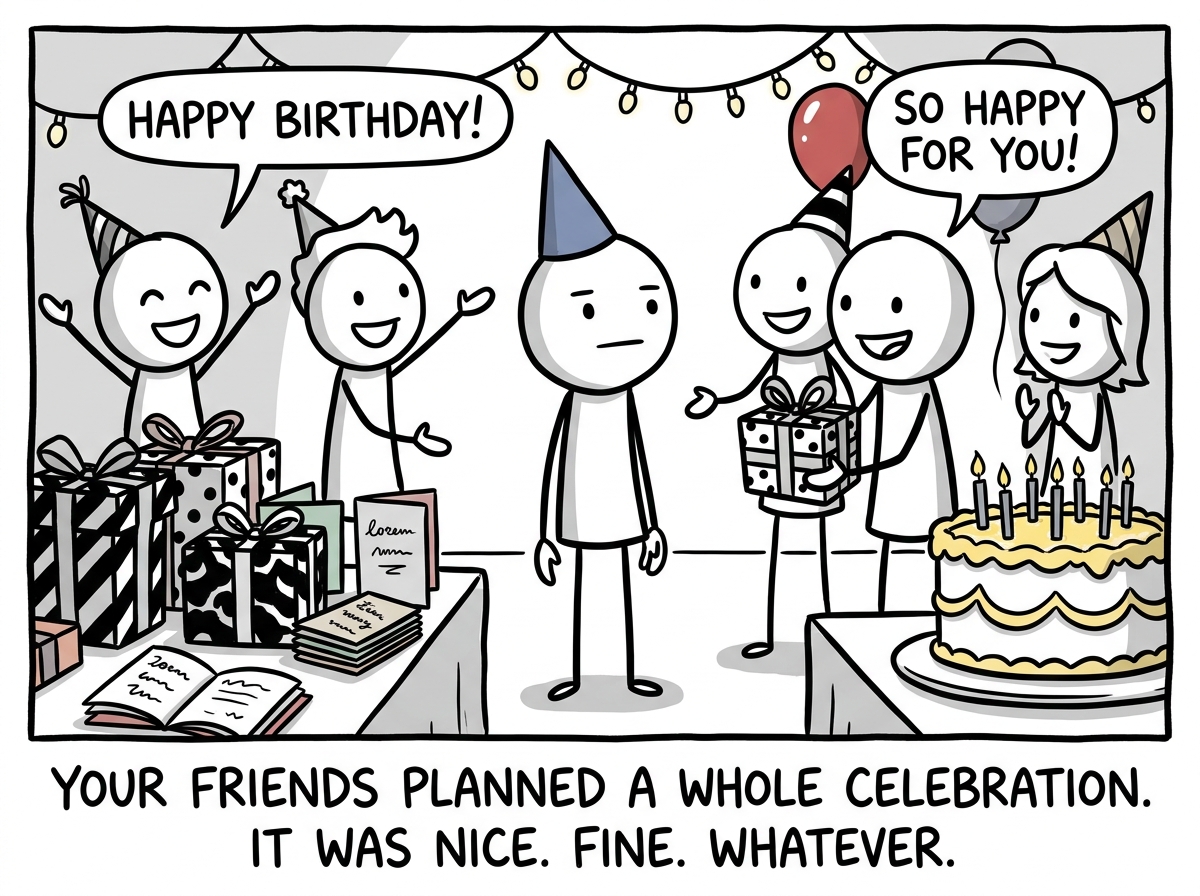
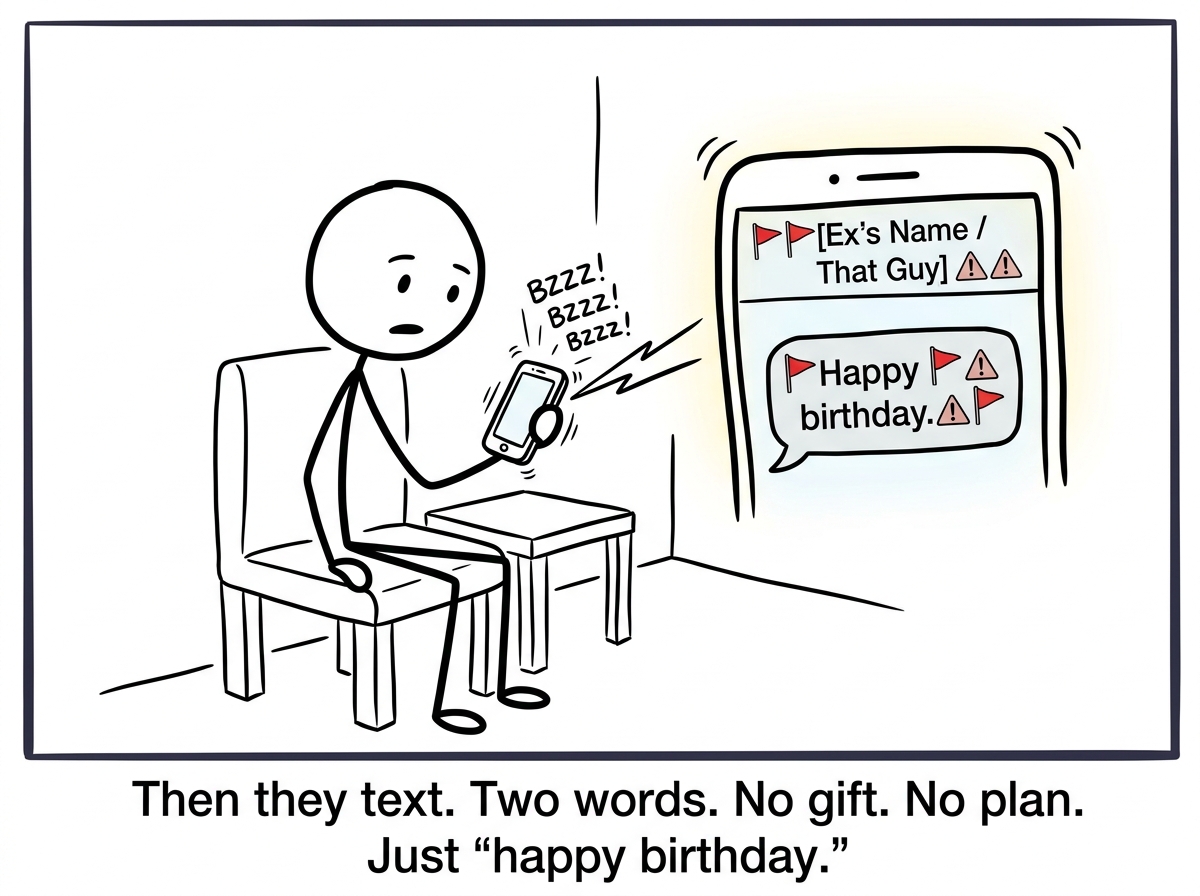
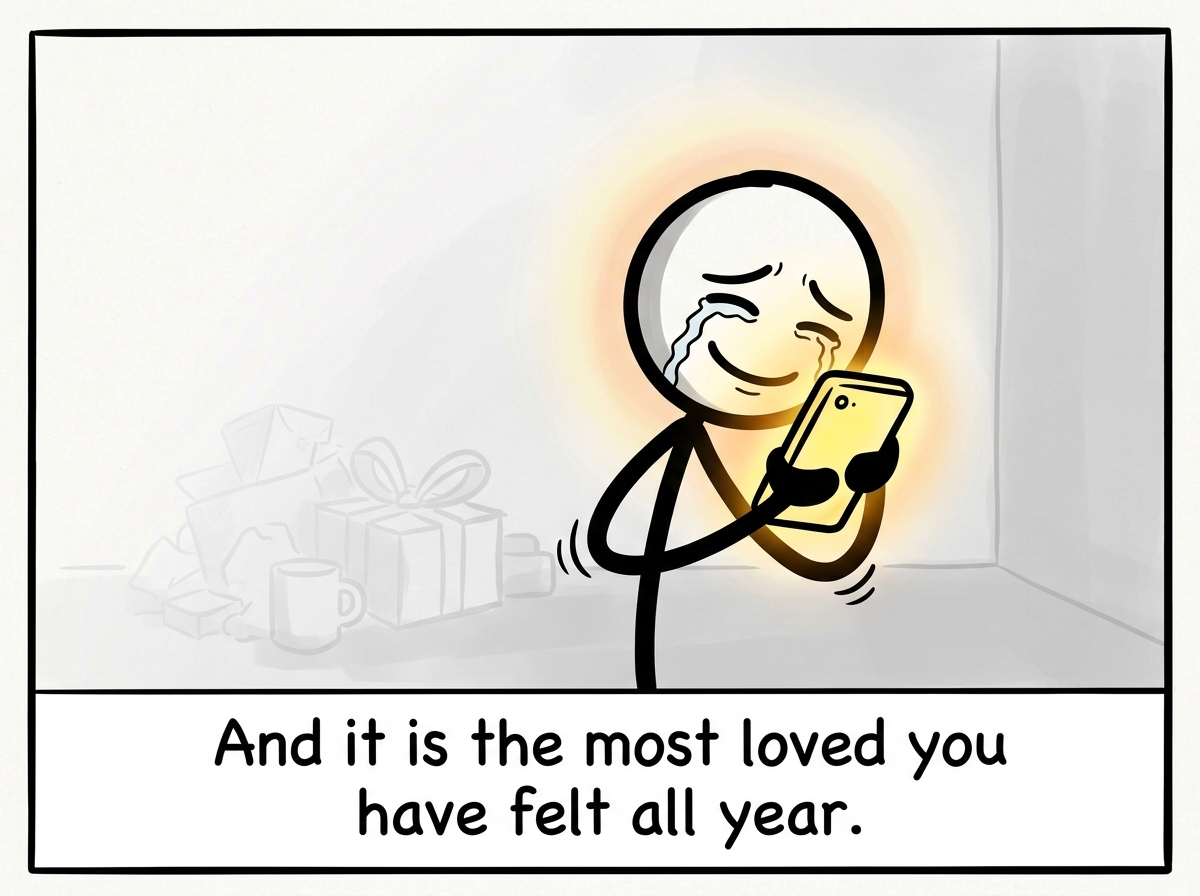
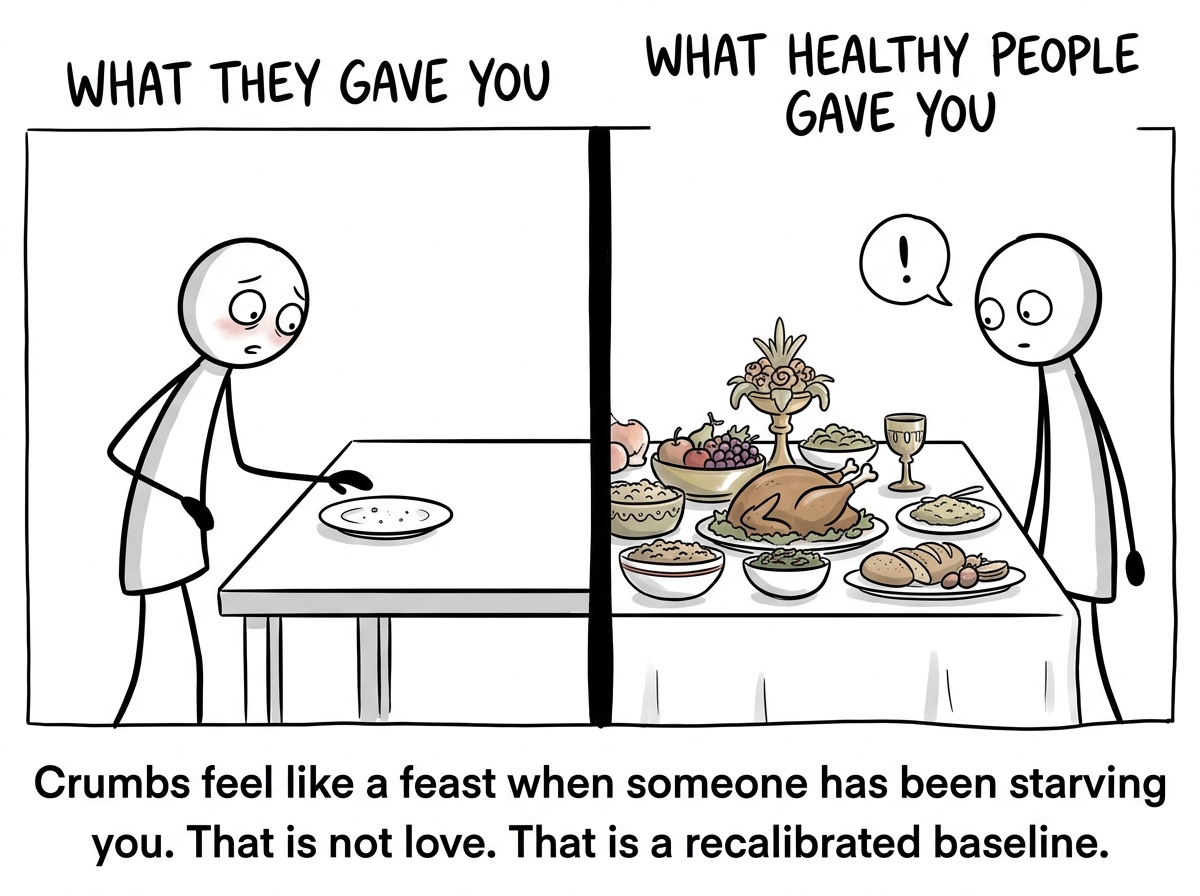
They remembered your birthday. Not with a gift or a plan -- just a text. 'Happy birthday.' Two words. And you cried. Not from sadness but from gratitude so overwhelming it took your breath away. Your friends got you thoughtful gifts, planned a dinner, wrote heartfelt messages. You barely noticed. But those two words from the person who has been tearing you apart? Those were everything. This is what trauma bonding does to your perception of love. When someone alternates between cruelty and occasional kindness, the kindness becomes magnified beyond all proportion. This is called the contrast effect -- after prolonged deprivation, even a small positive gesture feels enormous. It is the same reason a glass of water tastes better when you are dying of thirst. Your baseline for what constitutes 'being treated well' has been systematically lowered until basic human decency feels like extraordinary love. Meanwhile, the consistent kindness from healthy people barely registers, because it lacks the contrast. Recognizing this distortion is painful but essential. If the best moment in your relationship would be an unremarkable Tuesday in a healthy one, that is information. You deserve more than crumbs served on a cycle of starvation. Recalibrating your sense of what love looks like often requires distance from the trauma bond and exposure to genuinely caring relationships -- friendships, therapy, support groups -- that can slowly reset your baseline for how you deserve to be treated.
Key Takeaway
When crumbs feel like a feast, it is not because the crumbs are generous -- it is because you have been starving.