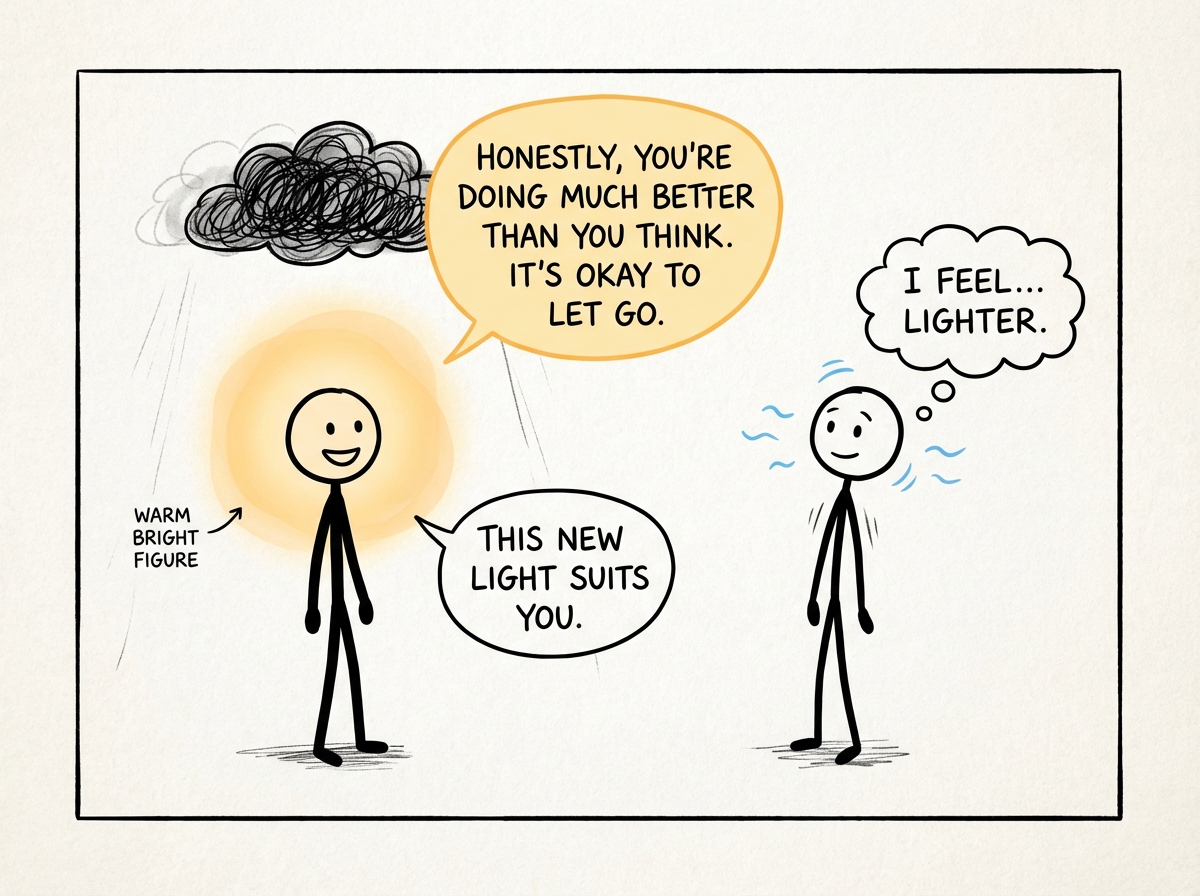
How to Work With Your Inner Critic
Learn to hear your inner critic clearly, understand its origins, and develop a new internal voice that is honest without being cruel.
Before You Begin
Everyone has an inner critic, but for some people it is less of a quiet observer and more of a relentless prosecutor. It tells you that you are not good enough, that you are going to fail, that everyone can see through you, that you are fundamentally flawed. It attacks after mistakes and sometimes attacks for no reason at all. Here is the thing most people get wrong about the inner critic: fighting it does not work. Trying to silence it, argue with it, or overpower it usually makes it louder. The approach that actually works is more counterintuitive -- you have to get curious about it. The inner critic almost always started as a protective mechanism. It developed to keep you safe, to keep you in line, to make sure you were never caught off guard by someone else's criticism. It is not your enemy, but it has long outlived its usefulness. This guide will help you change your relationship with that voice -- not by destroying it, but by outgrowing it.
-
Notice When the Critic Is Speaking
The inner critic is most dangerous when you do not realize it is talking. Its voice often feels so familiar that you mistake it for truth, for just the way things are. The first step is learning to catch it in the act.
- Start paying attention to your internal monologue, especially after mistakes, social interactions, or moments of vulnerability. Listen for language like 'you always,' 'you never,' 'you should have,' 'what is wrong with you,' or 'who do you think you are.'
- Notice the tone. The inner critic does not speak to you the way you would speak to someone you care about. It is harsh, absolute, and contemptuous. If you would not say it to a friend, it is probably the critic.
- Track the timing. When does the critic get loudest? For many people it spikes in the morning, after social events, during quiet moments, or right before sleep. Knowing the pattern helps you prepare.
- For one week, simply tally how many times per day you catch the critic. Do not try to change anything yet. Just count. Most people are stunned by how constant it is.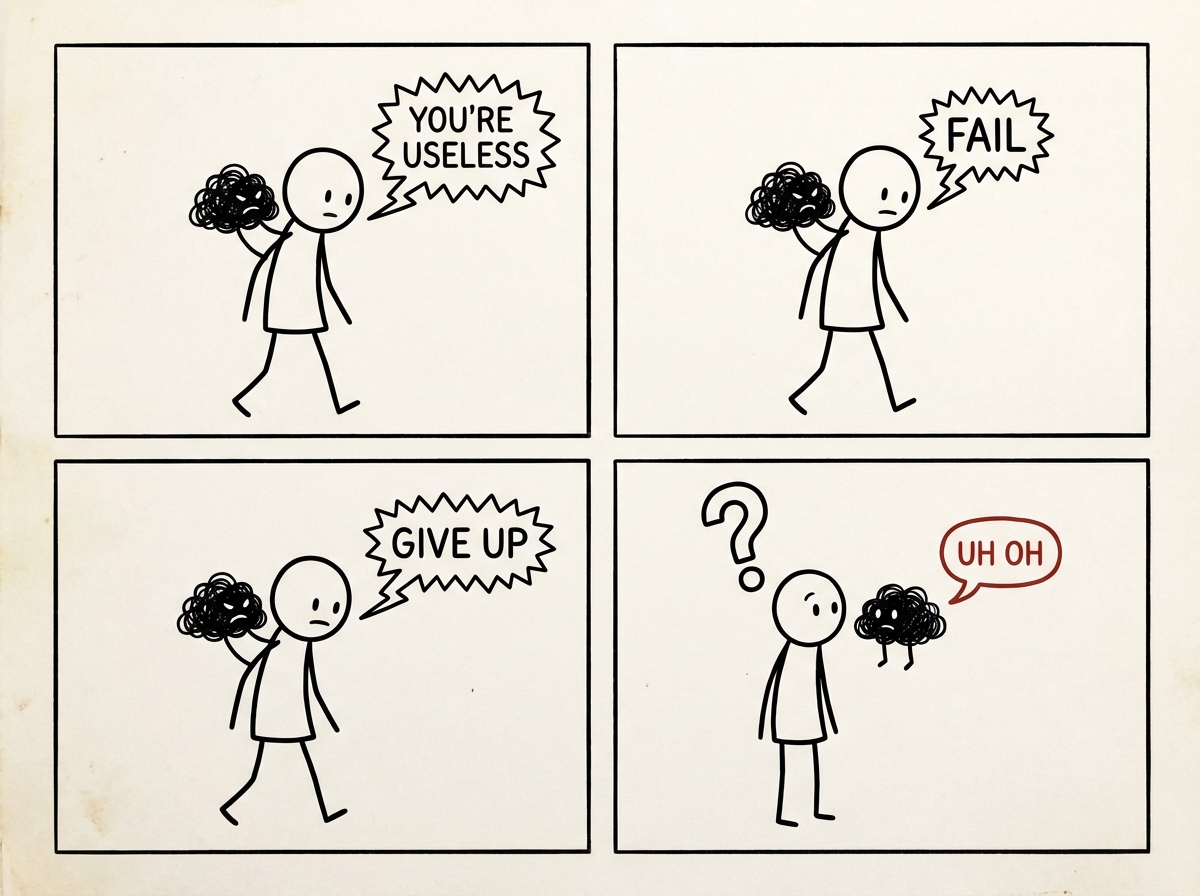
-
Write Down What It Actually Says
The inner critic is powerful partly because it operates in the shadows. Its messages feel overwhelming and true when they stay as vague, swirling thoughts. Writing them down exposes them to daylight, and most of them look very different on paper than they felt in your head.
- The next time you catch the critic, grab a pen and write down exactly what it said. Word for word. Do not soften it or make it more reasonable. Capture the actual brutality of it.
- Read it back to yourself as if someone else wrote it about you. Notice how extreme, unfair, and often factually wrong the statements are. Would you accept this from another person? Would you let someone talk to your child or your best friend this way?
- Look for themes. The critic usually has a few favorite scripts it runs on repeat: you are incompetent, you are unlovable, you are a fraud, you are going to be abandoned. Identifying the scripts takes away some of their power.
- Keep a running log for a week. You will start to see that the critic is not offering new insights. It is playing the same five or six recordings over and over. That repetition is a sign that these are old wounds, not current truths.
-
Ask What It Is Trying to Protect You From
This is the step that changes everything. The inner critic did not show up randomly. It developed for a reason -- usually to protect you from pain that felt unbearable at some earlier point in your life. Understanding its protective function is what allows you to relate to it with curiosity instead of war.
- Ask the critic directly: What are you afraid will happen if you stop? The answer is usually some version of: if I do not keep you small, you will be rejected. If I do not make you perfect, you will be abandoned. If I do not remind you of your flaws, someone else will and it will destroy you.
- Think about where you first heard this voice. Many people realize their inner critic sounds remarkably like a parent, a teacher, a bully, or a cultural message they absorbed in childhood. The critic often adopted someone else's voice because at one time, staying ahead of that person's criticism was a survival strategy.
- Acknowledge the function without endorsing the method. You can say something like: I understand you were trying to keep me safe. That made sense when I was young. But I am an adult now, and this approach is hurting me more than it is helping me.
- This is not about excusing the voice. It is about understanding it deeply enough to loosen its grip.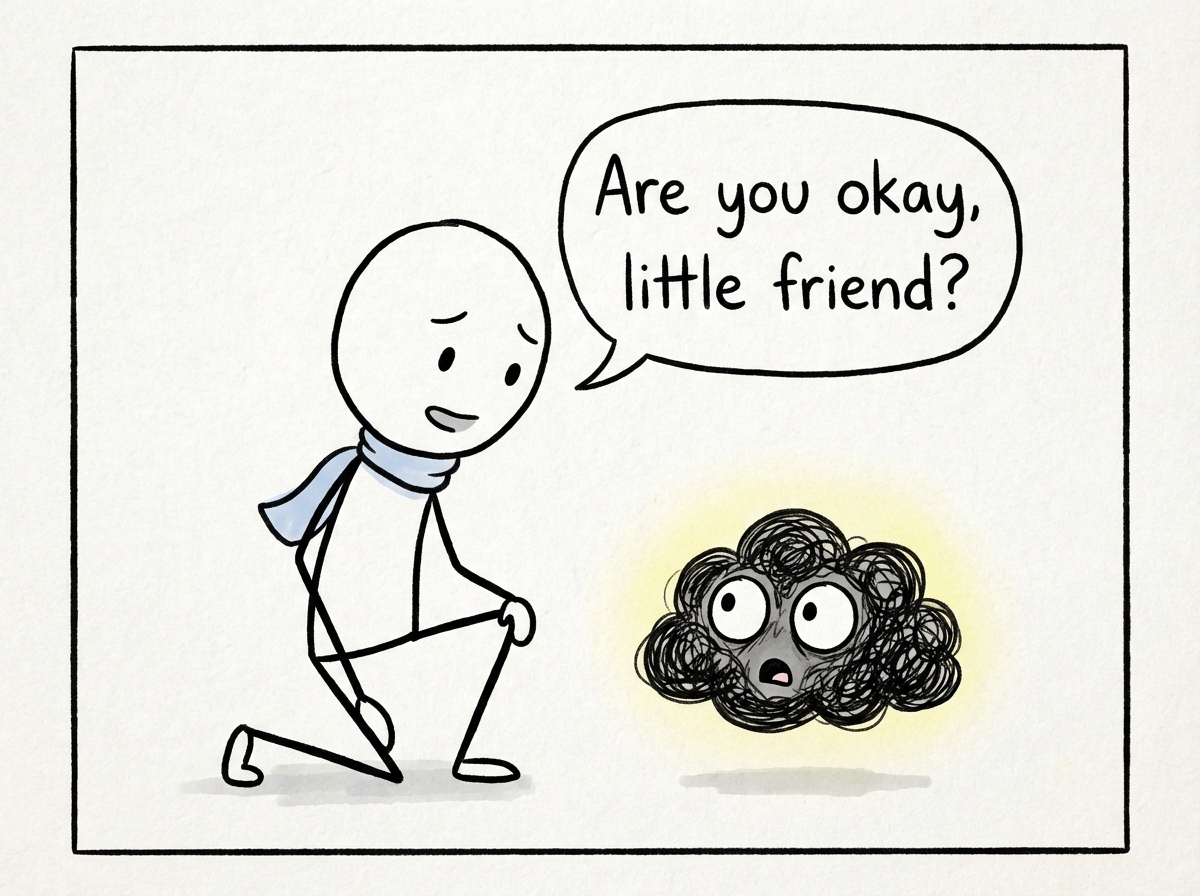
-
Talk Back With a Firm but Compassionate Voice
Once you can hear the critic and understand its origins, you can start responding to it. This is not about positive affirmations or pretending everything is fine. It is about developing a second voice -- one that is honest, grounded, and refuses to accept cruelty as motivation.
- When the critic says something harsh, respond out loud or in writing. If the critic says 'you are going to embarrass yourself,' try: 'I might struggle, and that is okay. Struggling is how people learn.' Match honesty with honesty, but drop the contempt.
- Use a firm tone, not a pleading one. You are not asking the critic for permission to feel okay. You are correcting a distortion. Think of the voice of someone who loves you and also does not lie to you.
- Avoid toxic positivity. Do not counter 'you are terrible at this' with 'you are amazing at everything.' Counter it with 'you are learning, and that is allowed.' The new voice has to be believable or your brain will reject it.
- Practice this dialogue daily, even when the critic is quiet. The more you rehearse the compassionate but firm voice, the more automatically it will show up when you need it.
-
Separate the Critic's Voice From Your Own
One of the most important shifts in this work is realizing that the inner critic is not you. It is a part of you -- a loud, well-rehearsed part -- but it is not your identity, your wisdom, or your truth. Learning to create separation between you and the critic is what makes all the other steps possible.
- Give the critic a name or an image. Some people picture it as a character, an animal, or a caricature. This sounds silly, but it works because it externalizes the voice and makes it easier to observe rather than merge with.
- Practice catching the fusion. When you think 'I am such a failure,' notice that the critic is speaking as you. Reframe it: 'The critic is telling me I am a failure.' That small grammatical shift creates enormous psychological distance.
- Notice that you are the one observing the critic. The part of you that can hear the critic and recognize it as harsh -- that is actually you. The observer is wiser, calmer, and more accurate than the critic will ever be.
- Over time, you will start to experience the critic as a familiar visitor rather than the narrator of your life. It still shows up, but you no longer automatically believe everything it says.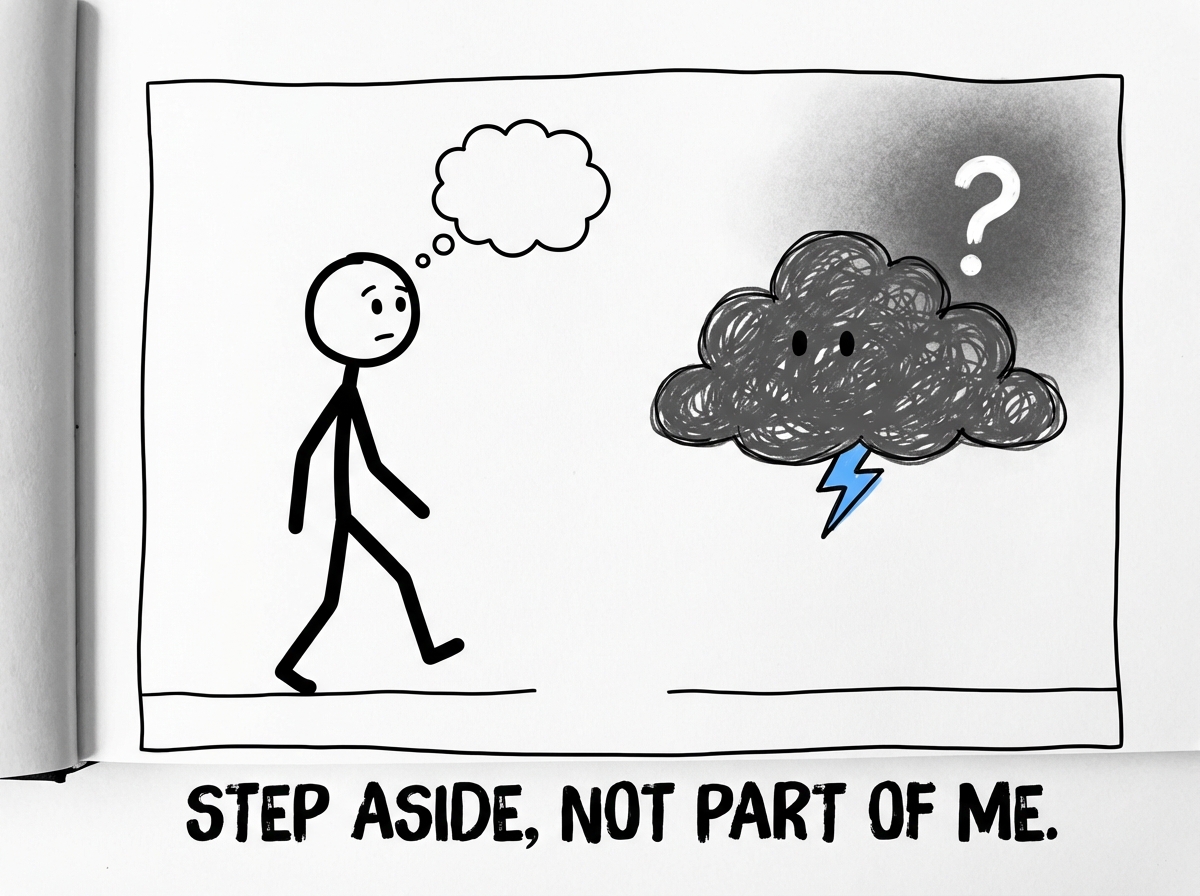
-
Build a New Internal Narrator
The final step is not just quieting the critic -- it is actively building the voice you want running your internal world. Most people have spent so long listening to the critic that they have no idea what a healthy internal narrator even sounds like. You have to build it deliberately.
- Think of someone in your life -- real or fictional -- who is warm, honest, and steady. Someone who would tell you the truth but never with cruelty. Start borrowing their voice when you talk to yourself. How would they respond to your mistake? Your fear? Your shame?
- Practice narrating your day with kindness. Not empty praise, but simple acknowledgment: 'That meeting was hard and I got through it.' 'I am tired and I still showed up.' 'I made a mistake and I can handle the fallout.' This is what healthy self-talk sounds like.
- When you accomplish something, let yourself feel it for more than two seconds before the critic jumps in with 'but it was not good enough.' Pause. Breathe. Say 'I did that.' The critic hates stillness after success -- that is exactly why you should practice it.
- Understand that building a new narrator takes time. You are replacing decades of programming. Some days the critic will be louder than the new voice. That does not mean you have failed. It means you are still in the process of changing, and staying in the process is the whole point.