How to Work Through Jealousy and Insecurity
Learn to manage jealousy by understanding its roots, soothing yourself, and communicating without pushing your partner away.
Before You Begin
Jealousy is one of the most painful emotions in a relationship — a volatile cocktail of fear, anger, and shame that can make you act in ways you barely recognize. At its core, jealousy is almost never about the other person or the perceived threat. It's about a deep belief that you're not enough, and that the person you love will inevitably discover that and leave. This guide won't eliminate jealousy entirely — it's a human emotion and it will visit you sometimes. But it will help you stop letting jealousy run the show, damage your relationships, and confirm the very insecurities it's trying to protect you from.
-
Separate the Feeling from the Story
When jealousy hits, it arrives as a feeling and a story at the same time. The feeling is real — the tightness in your chest, the heat in your face, the sick twist in your stomach. The story, however, is almost always an invention: a worst-case narrative your mind is constructing at high speed. Your first job is to pull these two things apart.
- When jealousy spikes, pause and name it: "I'm feeling jealous right now" — not "They're definitely interested in that person"
- Notice the story your mind is telling — write it down if you can, because seeing it on paper often reveals how much you're filling in gaps with fear
- Remind yourself: the feeling is data, but the story is speculation
- Practice sitting with the feeling for 60 seconds before taking any action — jealousy wants you to react immediately, and that almost never goes well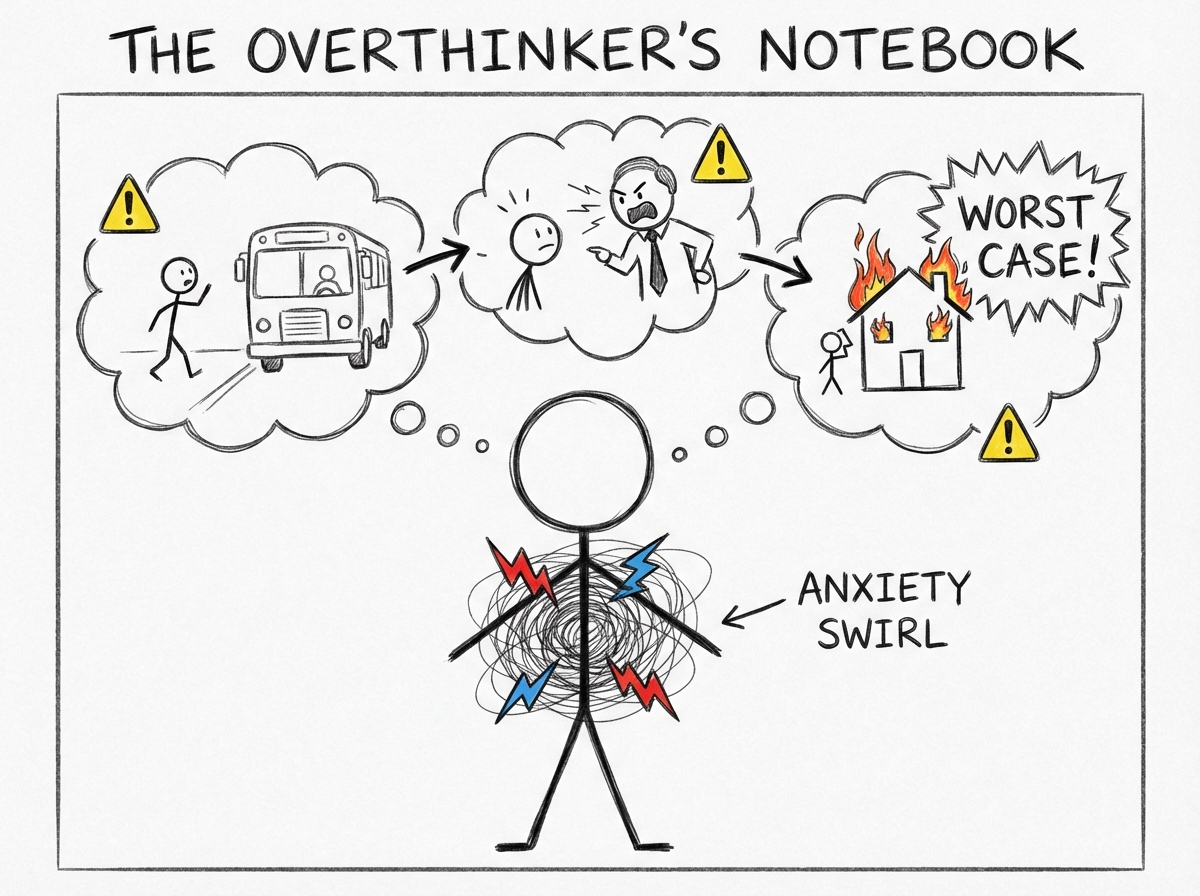
-
Examine the Core Belief Underneath
Jealousy is powered by a belief — usually some version of "I'm not enough." Not attractive enough, not interesting enough, not lovable enough to hold someone's attention. This belief often predates your current relationship by years or decades. Understanding it doesn't make it disappear, but it does loosen its grip.
- Ask yourself: What am I really afraid of here? Go past the surface fear (they'll cheat) to the deeper one (I'm replaceable)
- Consider when you first started believing this — was there an early experience that taught you love was conditional or unreliable?
- Notice whether your jealousy intensity matches the actual situation, or whether it's being amplified by old wounds
- Write down the core belief in plain language: "I believe that..." — seeing it clearly is the first step toward challenging it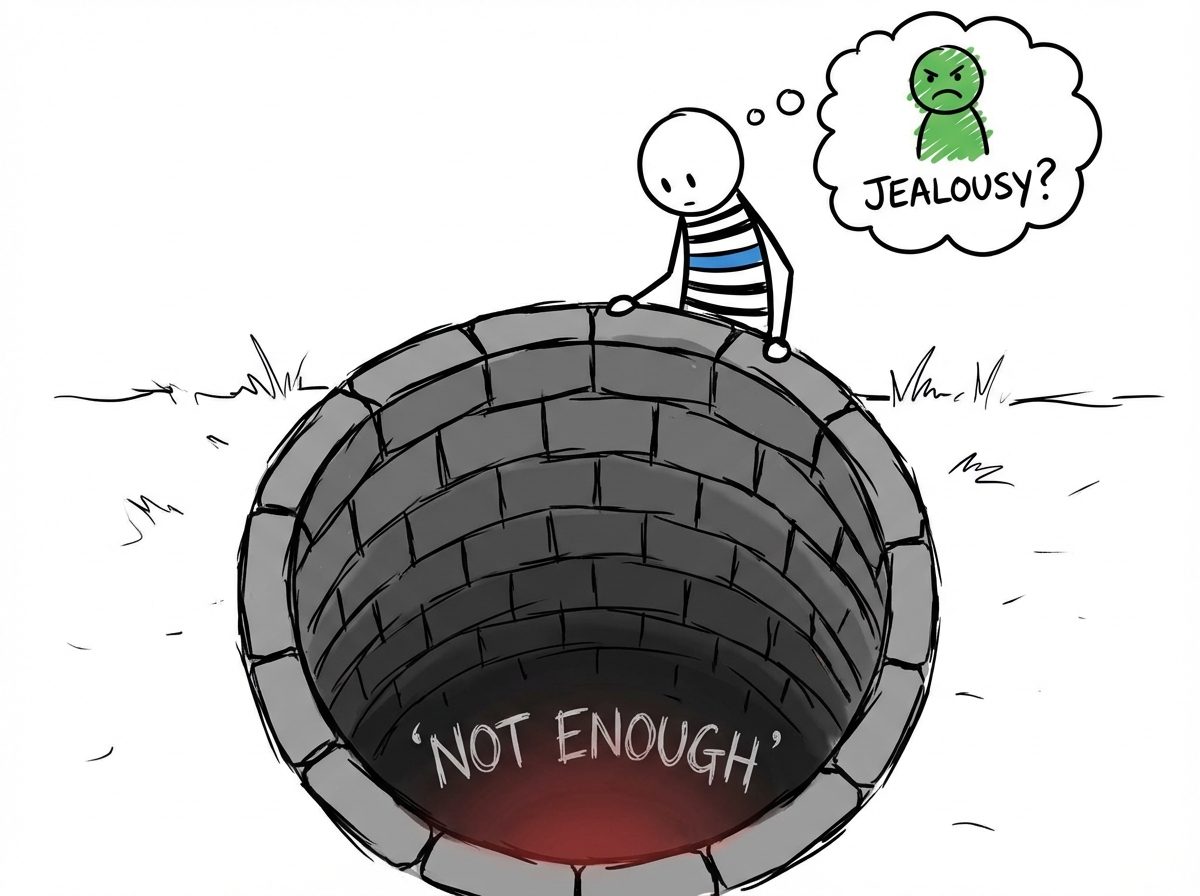
-
Challenge the Evidence
Your jealous mind is an incredibly biased prosecutor — it selects only the evidence that supports its case and ignores everything that contradicts it. It's time to play defense attorney. This isn't about dismissing your feelings; it's about demanding that your thoughts meet a basic standard of evidence.
- List the evidence for your jealous story — then list the evidence against it with equal effort
- Ask yourself: If my best friend told me this same situation, would I agree they should be worried, or would I tell them they're spiraling?
- Check for cognitive distortions: mind-reading ("I know what they're thinking"), catastrophizing ("This definitely means they'll leave"), and emotional reasoning ("I feel threatened, so I must be threatened")
- Remember that jealousy makes you scan for threats — you'll find what you're looking for whether it's there or not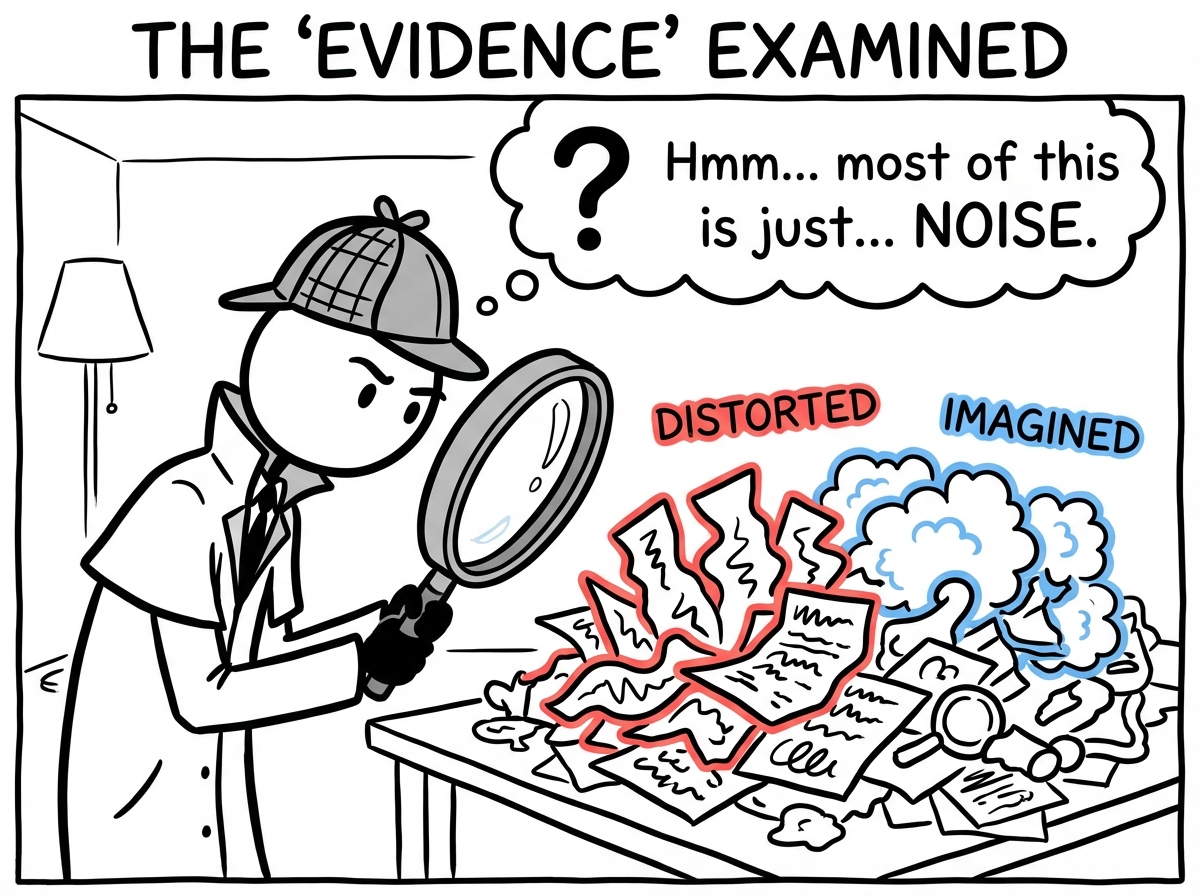
-
Self-Soothe Instead of Seeking Reassurance
When jealousy hits, the instinct is to seek reassurance from your partner — to ask them to prove their loyalty, check their phone, or confirm they don't find anyone else attractive. The problem is that reassurance is addictive and temporary. It works for an hour, and then the anxiety comes back hungrier. Learning to soothe yourself is the only sustainable solution.
- Develop a jealousy response plan: what will you do in the first 10 minutes instead of interrogating your partner? (Walk, breathe, journal, call a friend)
- Practice grounding techniques: name five things you can see, four you can touch, three you can hear — bring yourself back to the present moment
- Remind yourself of your own worth using concrete evidence, not affirmations — things you've accomplished, qualities people value in you, ways you've shown up
- If you must talk to your partner, frame it as your own struggle: "I'm having a jealousy moment and I'm working through it" rather than "Who were you texting?"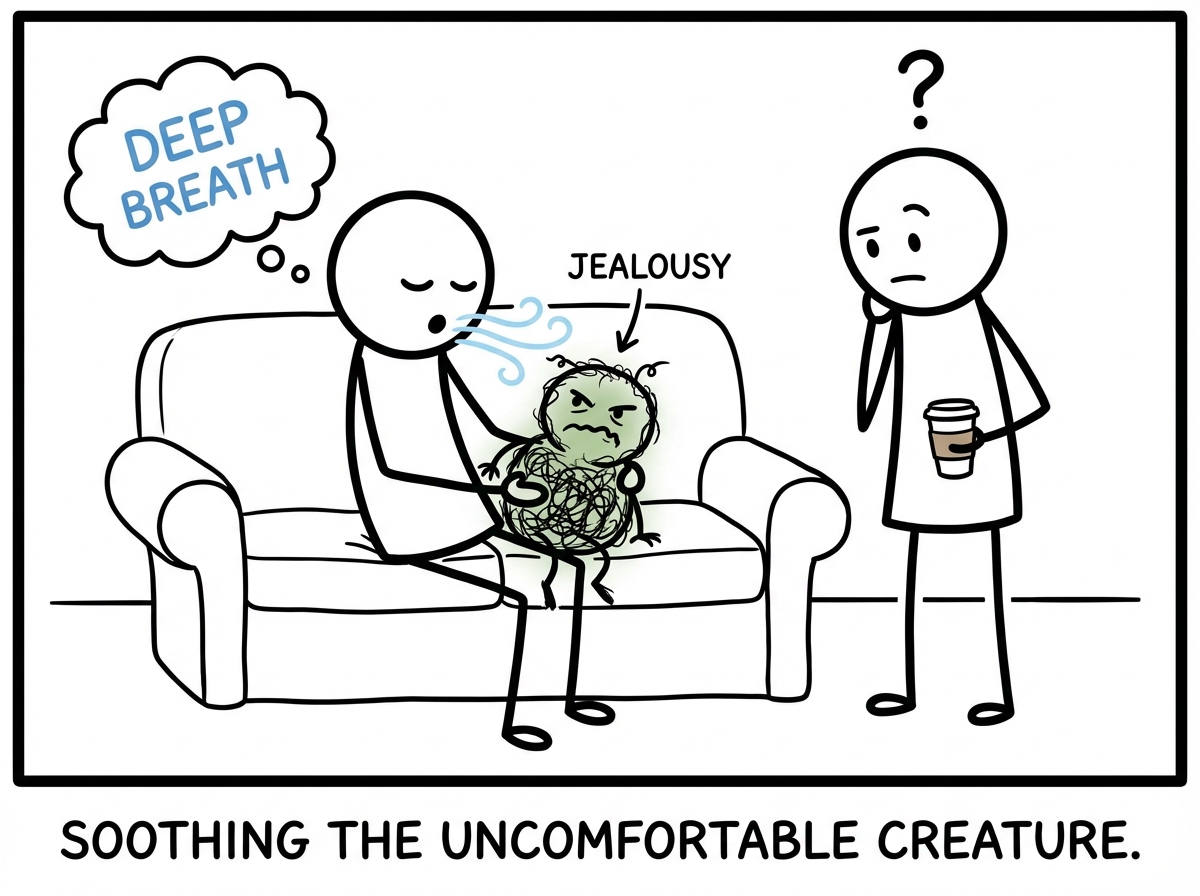
-
Communicate Without Accusing
There will be times when you genuinely need to talk to your partner about something that triggered your jealousy. The key is how you do it. Accusation triggers defensiveness and shuts down honest conversation. Vulnerability — real vulnerability — opens it up.
- Lead with your feeling, not their behavior: "I felt insecure tonight" rather than "You were flirting"
- Own that the feeling might be more about you than about them: "I know this might be my stuff, but I want to be honest about where I am"
- Ask for what you need specifically: "Can you help me understand what happened?" is better than "Explain yourself"
- Listen to their response without cross-examining — if you've asked for honesty, you have to be willing to receive it without punishment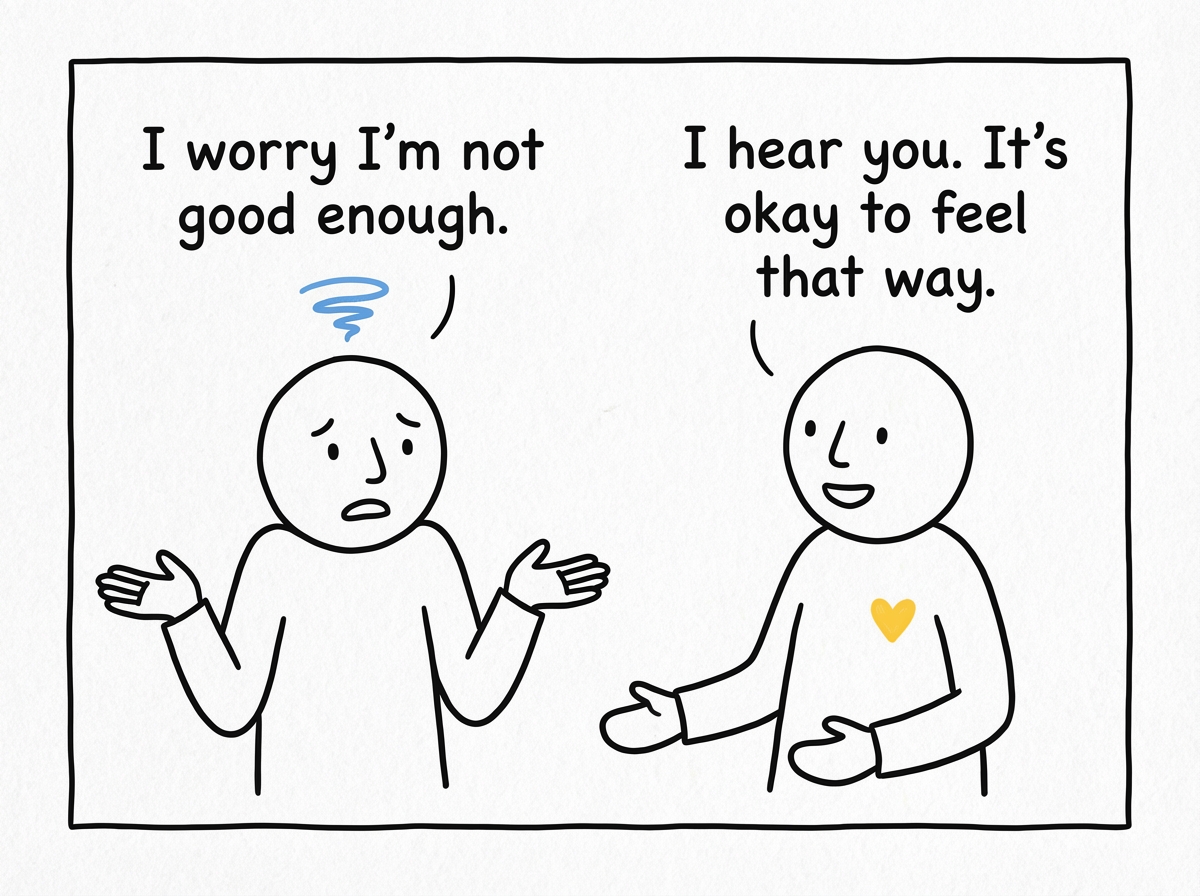
-
Build Your Own Sense of Worth
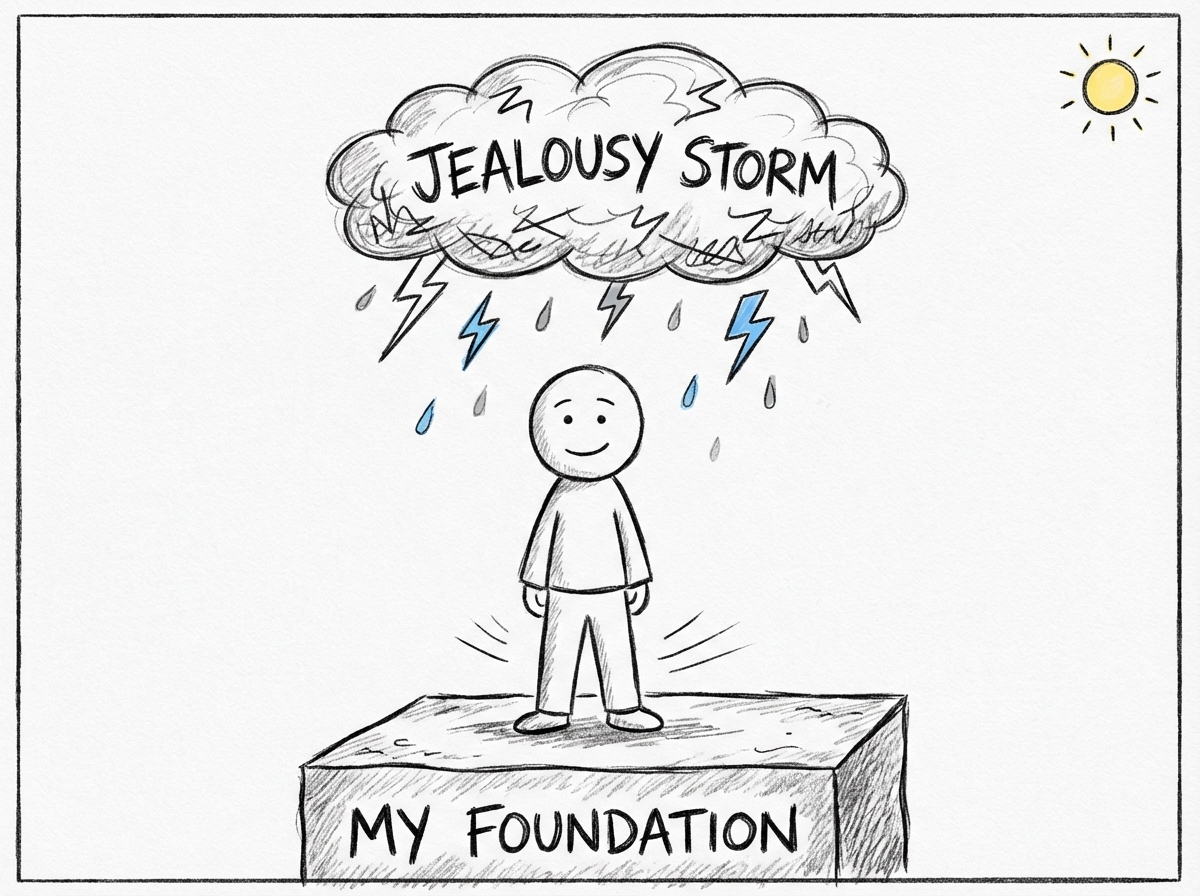
The long-term antidote to jealousy is a solid sense of your own value that doesn't depend entirely on your partner choosing you every single moment. When your self-worth is built on your own foundation, a passing threat doesn't feel like an earthquake. This isn't about becoming arrogant — it's about becoming stable.
- Invest in your own interests, friendships, and goals — a full life is less easily shaken by insecurity
- Notice and challenge the habit of comparing yourself to others — comparison is jealousy's fuel supply
- Work on the attachment wounds underneath the jealousy, ideally with a therapist who understands relational patterns
- Practice this daily reminder: your partner is with you by choice, and that choice is not as fragile as your fear tells you it is