How to Loosen the Grip of Perfectionism
Learn to recognize where perfectionism controls your life, separate your standards from your self-worth, and practice letting things be good enough.
Before You Begin
Perfectionism is not the same as having high standards. High standards push you forward. Perfectionism keeps you stuck. It disguises itself as ambition and discipline, but underneath it is almost always fear -- fear that if something is not perfect, you are not worthy. Perfectionism says: if I can just get this right, I will finally be safe from criticism, rejection, and failure. But the finish line keeps moving. Nothing is ever perfect enough, which means you are never enough. The cost is enormous: chronic stress, procrastination masquerading as preparation, projects that never ship, relationships where you cannot relax, and a persistent feeling that you are falling behind no matter how much you accomplish. This guide is not about lowering your standards or settling for mediocrity. It is about disconnecting your worth from your output, learning that imperfect action beats perfect inaction every time, and discovering that the people in your life are not waiting for you to be flawless -- they are waiting for you to be present.
-
Notice Where Perfectionism Runs Your Life
Perfectionism is often invisible to the person who has it because it feels like normal operating procedure. You do not think of yourself as a perfectionist -- you just think you have standards. The first step is mapping exactly where perfectionism has taken the wheel.
- Look at the areas of your life where you spend disproportionate time and energy on getting things just right. The email you rewrite six times. The project you cannot finish because it is not ready yet. The outfit you change three times. The conversation you replay for hours analyzing what you should have said differently.
- Notice what you avoid starting because you cannot guarantee the outcome. Perfectionism is one of the leading causes of procrastination. If you cannot do it perfectly, you do not do it at all -- and then you criticize yourself for not doing it.
- Pay attention to how you respond to mistakes, yours and other people's. If a small error sends you into a spiral of self-criticism, or if you feel a flash of contempt when someone else does something sloppily, perfectionism is running the show.
- Ask the people close to you where they see your perfectionism. They will have noticed it long before you did. Listen without defending.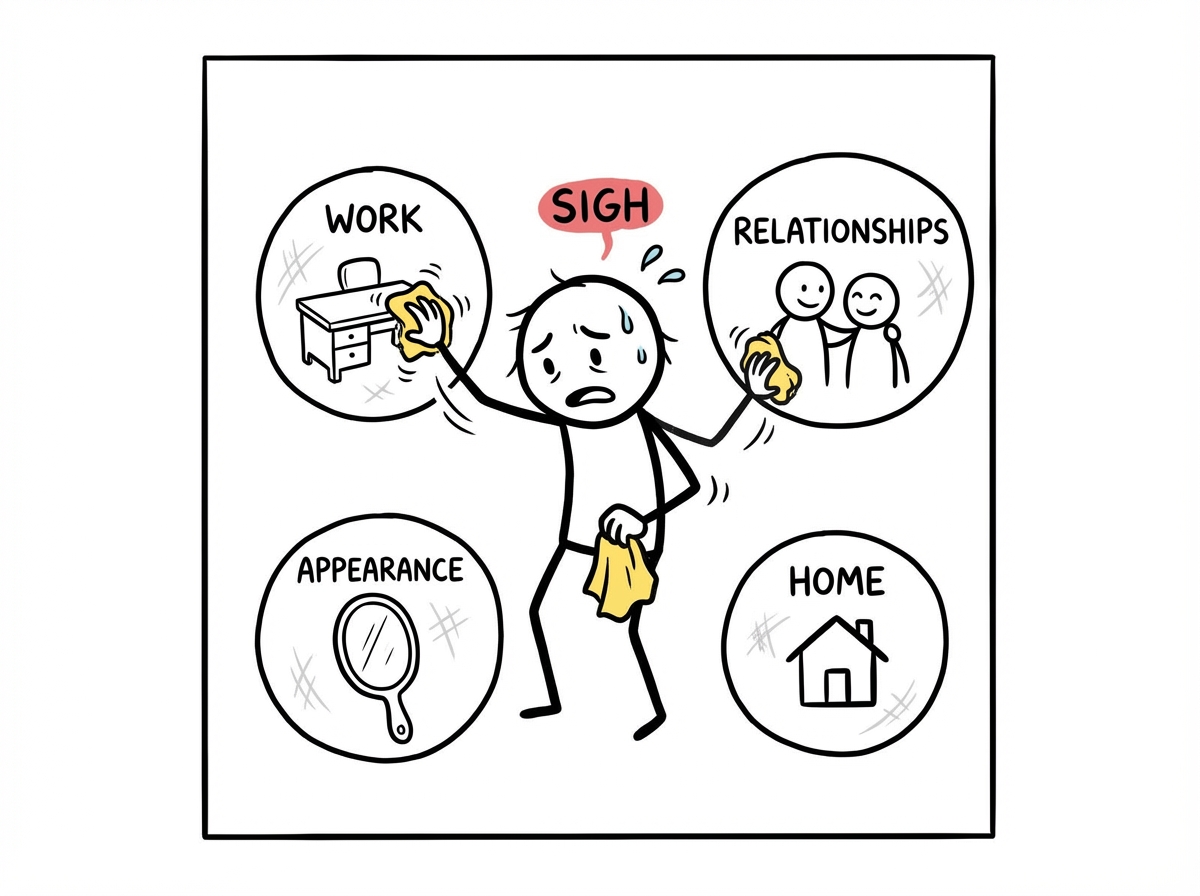
-
Separate Standards From Worth
This is the core shift. Perfectionism fuses two things that should be separate: the quality of what you do and the quality of who you are. When these are fused, every imperfection feels like evidence of personal failure. The work is to pry them apart.
- Notice the equation running in the background of your mind. For most perfectionists it is some version of: if my work is perfect, I am worthy. If my work is flawed, I am flawed. This equation was probably installed early in life, often in environments where love or approval was conditional on performance.
- Ask yourself: would I consider a friend worthless because they made a mistake at work, turned in an imperfect project, or had a messy house? Of course not. So why does that standard only apply to you?
- Practice this reframe: 'My work can be imperfect and I can still be a good, competent, valuable person.' Say it even when you do not believe it. You are laying down a new track in your brain, and repetition is how it takes hold.
- Start noticing people you admire who are visibly imperfect. People who make mistakes publicly, who laugh about their flaws, who ship work that is not polished. Notice that their imperfection does not diminish them. In many cases, it makes them more relatable and more trustworthy.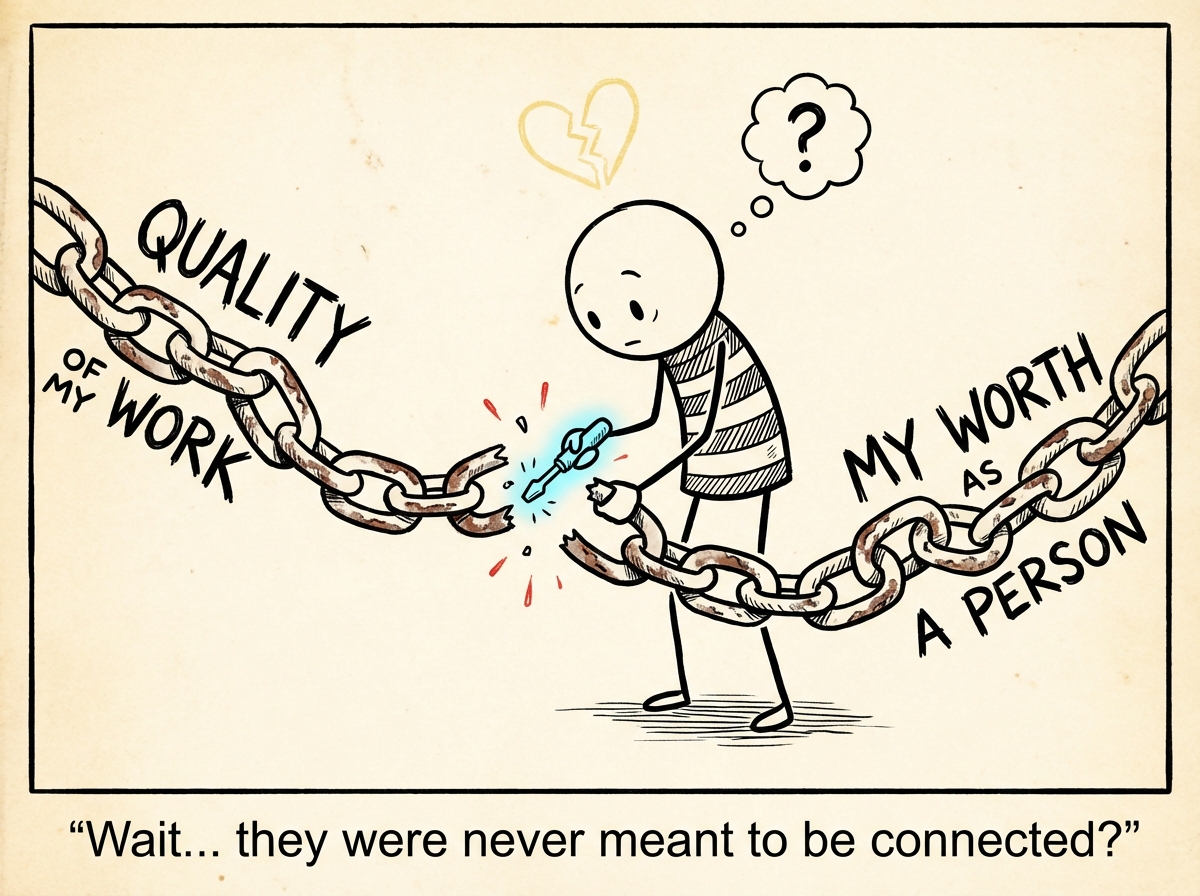
-
Practice Doing Something Imperfectly on Purpose
This is exposure therapy for perfectionism. You are going to deliberately do something below your usual standard and survive the discomfort. This is not about being careless -- it is about proving to your nervous system that imperfection is not catastrophic.
- Start with low-stakes experiments. Send an email without rereading it. Post something on social media without agonizing over the wording. Leave the house with your hair not quite right. Cook a meal without following the recipe exactly.
- Notice the anxiety that rises when you let something go out imperfectly. Sit with it. Do not go back and fix it. Let the email stand. Let the post stay up. The anxiety will peak and then it will fade, and nothing terrible will happen.
- Pay attention to whether anyone else notices or cares about the imperfection. In the vast majority of cases, they will not. The gap between the standard you hold yourself to and what the world actually requires is usually enormous.
- Gradually increase the stakes. Once you can send an imperfect email without spiraling, try submitting an imperfect report, having an imperfect conversation, or letting an imperfect project go live. Each time, you are expanding your tolerance for being human.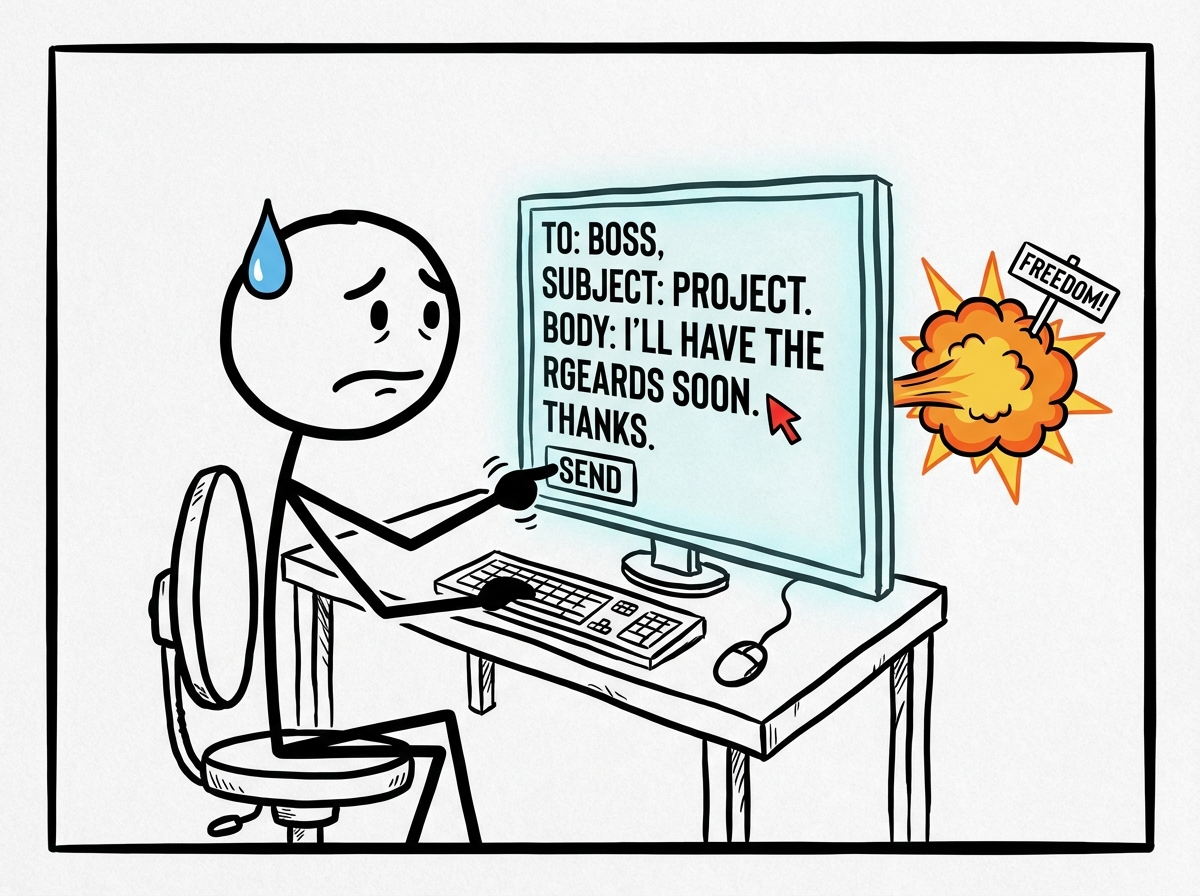
-
Set a 'Good Enough' Threshold
Perfectionists do not have a clear finish line. The standard is always 'better,' which means nothing is ever done. Setting an explicit good enough threshold before you start gives you a concrete stopping point that your perfectionism cannot endlessly move.
- Before you begin a task, define what done looks like. Not perfect -- done. Write it down: 'This report is good enough when it covers these three points and has been proofread once.' 'This dinner is good enough when the food is edible and we are sitting at the table together.'
- Use the 80 percent rule. In most areas of life, 80 percent of the quality can be achieved with 20 percent of the effort. The remaining 20 percent of quality takes 80 percent of the effort. Ask yourself honestly: does this situation require that last 20 percent? Almost always the answer is no.
- Give yourself a time limit. If you tend to spend three hours on something that should take one, set a timer. When it goes off, you are done. The constraint forces you to accept imperfection and teaches you that time-limited output is almost always good enough.
- Notice the relief that comes from having a clear stopping point. Perfectionists are exhausted not because they work hard, but because they never know when they are allowed to stop. The good enough threshold gives you permission to rest.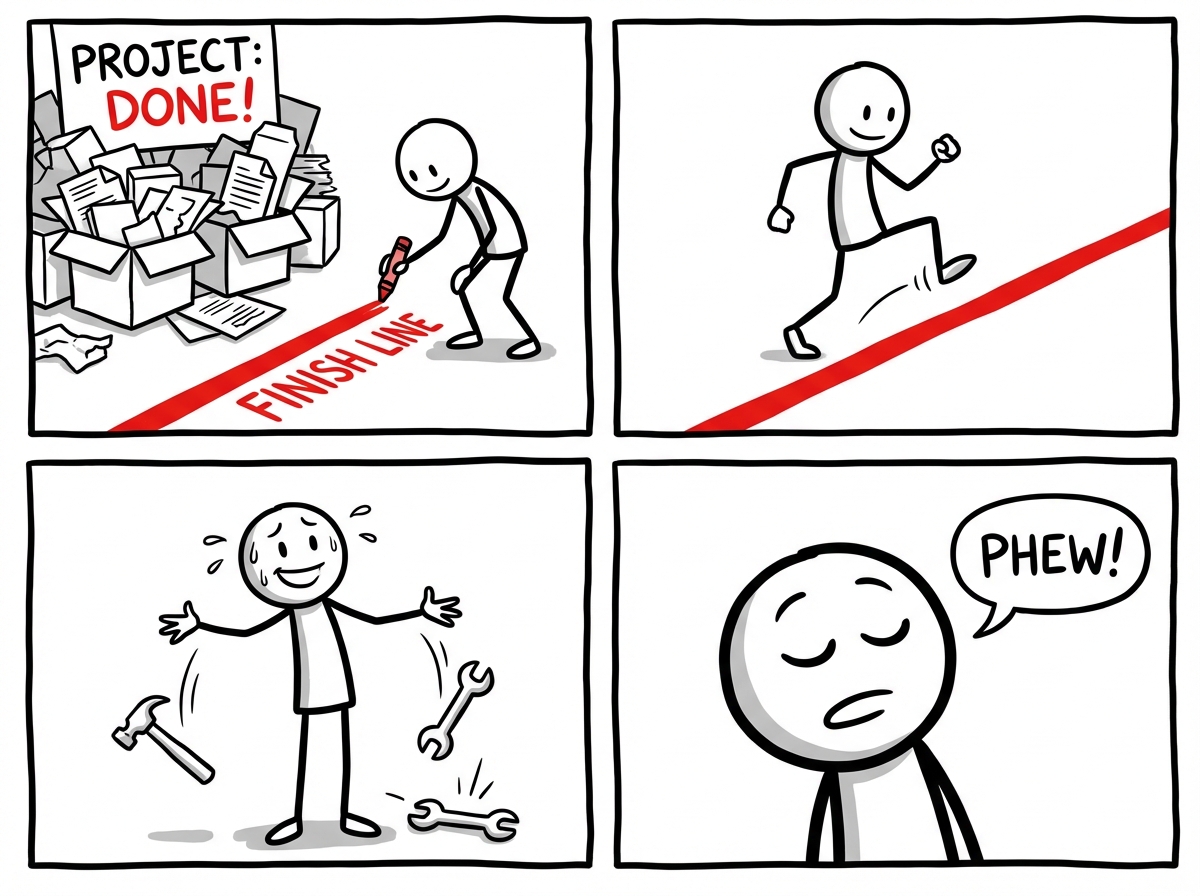
-
Stop Editing and Ship It
Perfectionism's favorite hiding place is the revision phase. One more edit. One more review. One more pass. The truth is, after a certain point, you are not improving the work -- you are managing your anxiety. This step is about recognizing that point and shipping anyway.
- Notice when your edits stop making things better and start making them different. There is a moment where you are no longer improving quality -- you are just rearranging things because hitting publish or submit feels too vulnerable. That is the moment to stop.
- Adopt a shipping practice. Whatever the work is -- an email, a project, a creative piece, a difficult conversation -- give yourself a deadline and honor it. Done is better than perfect because perfect does not exist and done actually makes an impact.
- Remind yourself what unshipped work costs. The project sitting in your drafts is helping no one. The conversation you keep rehearsing is not getting easier. The business idea you are still refining is not generating revenue. Imperfect action in the world beats perfect plans in your head every single time.
- Accept that some things you ship will be criticized. Some will fail. That is not evidence that you should have been more perfect. It is evidence that you are participating in life, which requires risk, and risk sometimes means falling short.
-
Celebrate Effort, Not Outcome
Perfectionism only rewards results. If the outcome is not flawless, the effort does not count. This is a miserable way to live because it means 99 percent of your time -- the time spent working, learning, struggling, and showing up -- has no value. Flipping this is one of the most important changes you can make.
- At the end of each day, name three things you put effort into regardless of how they turned out. 'I worked on the presentation even though it is not done.' 'I had the conversation even though it was awkward.' 'I tried the new thing even though I was not great at it.' Let the effort itself be the win.
- Notice the perfectionist voice that says effort without results is worthless. Challenge it: the person who shows up and tries is always further ahead than the person who waits to be guaranteed success before starting.
- Extend this to other people too. Compliment effort, process, and courage rather than only outcomes. This practice rewires your brain to value engagement over perfection in all areas of life.
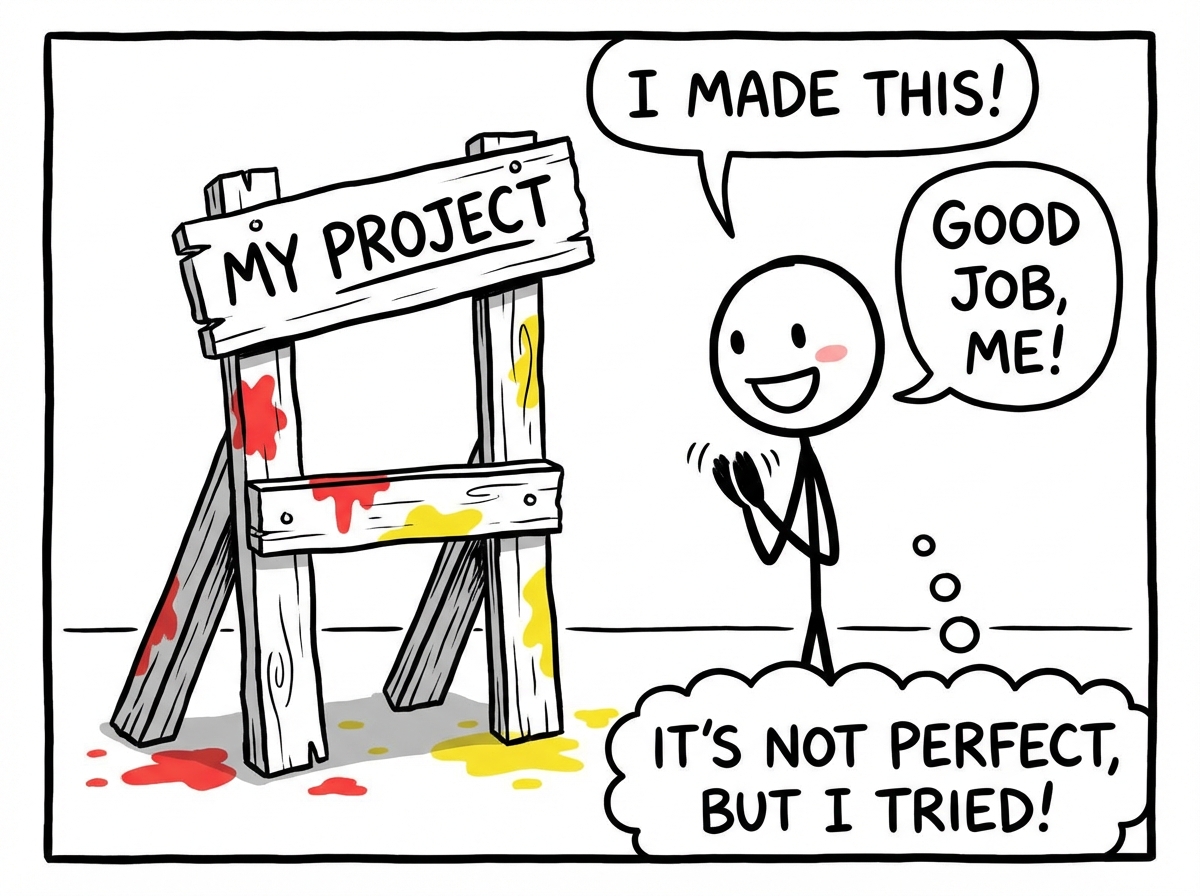
- Accept that loosening perfectionism is itself an imperfect process. You will have days where you fall back into the old patterns, where nothing feels good enough, where you cannot stop editing. That is not failure. That is you being a human who is changing a deeply ingrained habit. The fact that you are trying is the outcome that matters.