How to Repair After a Fight
Reconnect with your partner after a conflict by taking ownership, validating their experience, and building a path forward together.
Before You Begin
Every couple fights. The research is clear on this: it's not whether you have conflict that predicts relationship health — it's how you repair afterward. The hours and days following a fight are when the real relationship work happens. Do you stonewall and pretend nothing happened? Do you keep relitigating the argument until someone surrenders? Or do you find your way back to each other with honesty and care? Repair isn't about who was right. It's about choosing the relationship over the need to win. This guide gives you a structured way to do that, even when you're still hurt, even when it's hard.
-
Cool Down Before Attempting Repair
When your nervous system is flooded — heart pounding, jaw clenched, thoughts racing — you are physically incapable of productive conversation. Your prefrontal cortex goes offline and your threat-detection system takes the wheel. Attempting repair in this state will almost certainly reignite the fight. Give yourself at least twenty minutes, ideally longer, to let your body return to baseline. Go for a walk, take a shower, do something physical. The key is to explicitly name what you're doing: "I need some time to cool down so I can come back to this conversation and actually hear you." This is different from storming off or giving the silent treatment. Storming off says "I'm done with you." A cooldown says "I care about this enough to come back ready." Agree on a time to reconnect so neither person is left wondering if the other has checked out.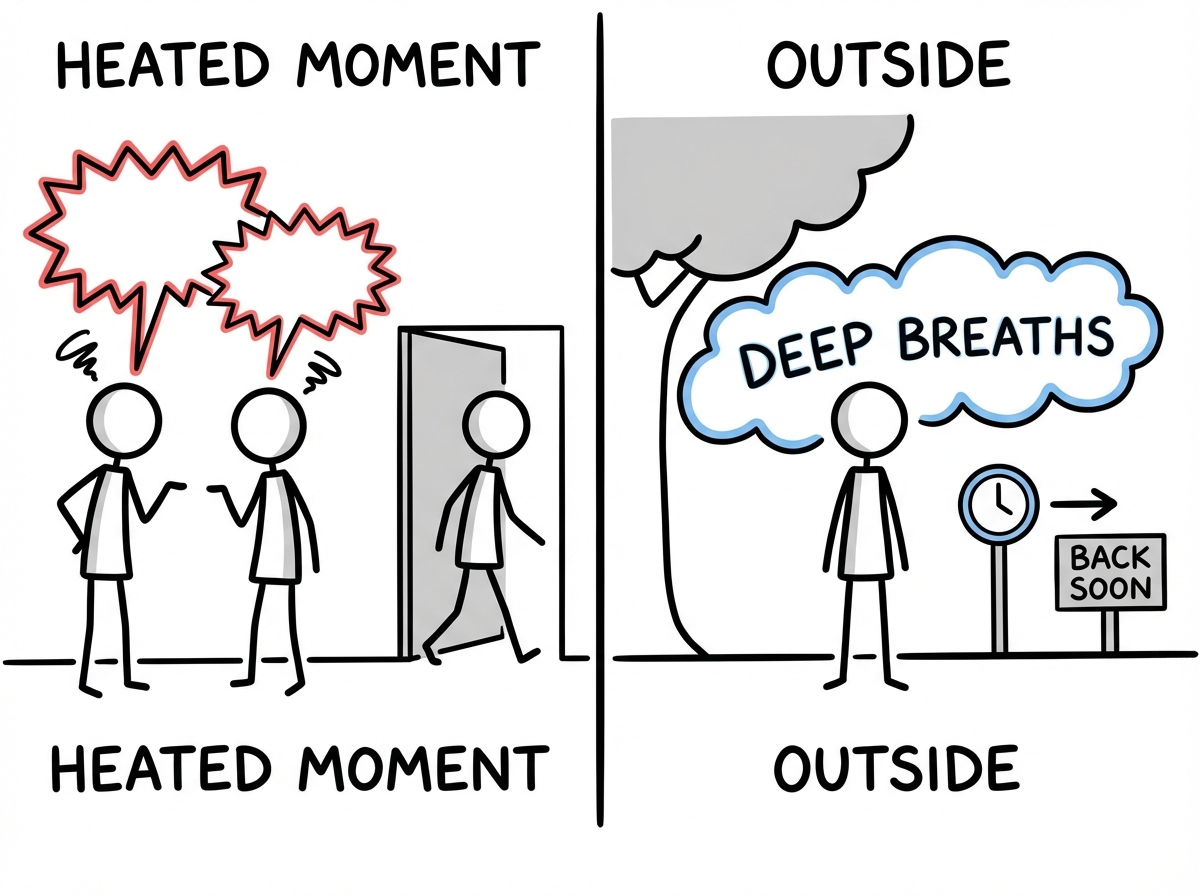
-
Take Ownership of Your Part
This is the hardest step and the most important one. Before you address what your partner did wrong, own what you contributed to the conflict. Even if you believe you were 90% right, there is almost always something you could have done differently.
- Maybe you raised your voice when you could have stayed calm.
- Maybe you brought up an old issue that wasn't relevant to the current fight.
- Maybe you used contemptuous language — eye-rolling, sarcasm, "you always" or "you never."
- Maybe you shut down instead of staying engaged.
- Maybe your timing was terrible and you started a serious conversation when your partner was already depleted.
Name your part specifically and without qualifiers. "I'm sorry I raised my voice" lands. "I'm sorry I raised my voice, but you were being impossible" doesn't. Taking genuine ownership is disarming in the best way — it signals safety, and it invites your partner to do the same.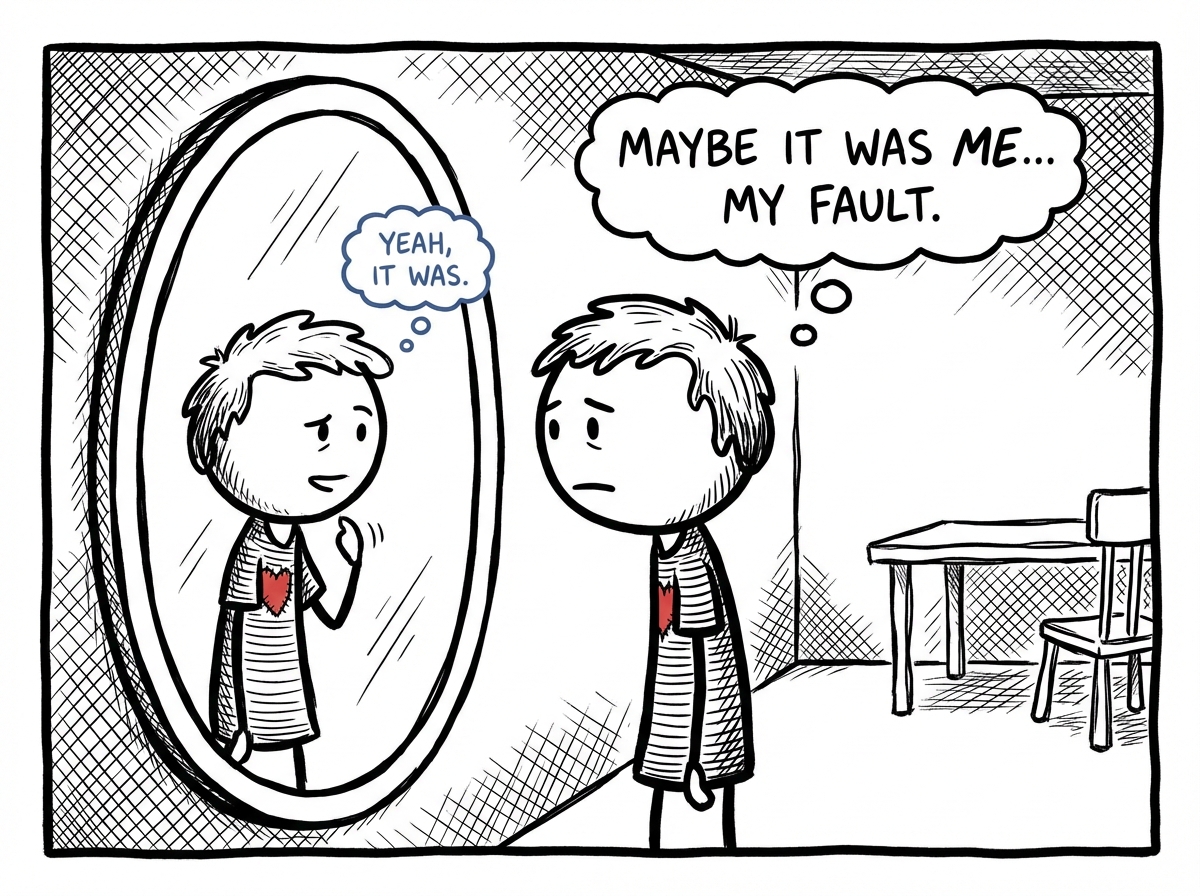
-
Validate Their Experience
After you've owned your part, your next job is to make your partner feel heard — not to agree with everything they said, but to communicate that their feelings make sense from their perspective. This is where most repair attempts fail, because people skip straight to problem-solving or defending themselves. Try language like: "I can see why that hurt you" or "It makes sense that you felt dismissed when I did that" or "I hear you saying that you felt alone in that moment, and that matters to me." Validation doesn't mean you're wrong and they're right. It means two people can experience the same event differently and both experiences are real. When your partner feels genuinely understood, the defensive wall drops and actual conversation becomes possible. If you're struggling to validate because you're still activated, go back to step one. You're not ready yet, and that's okay.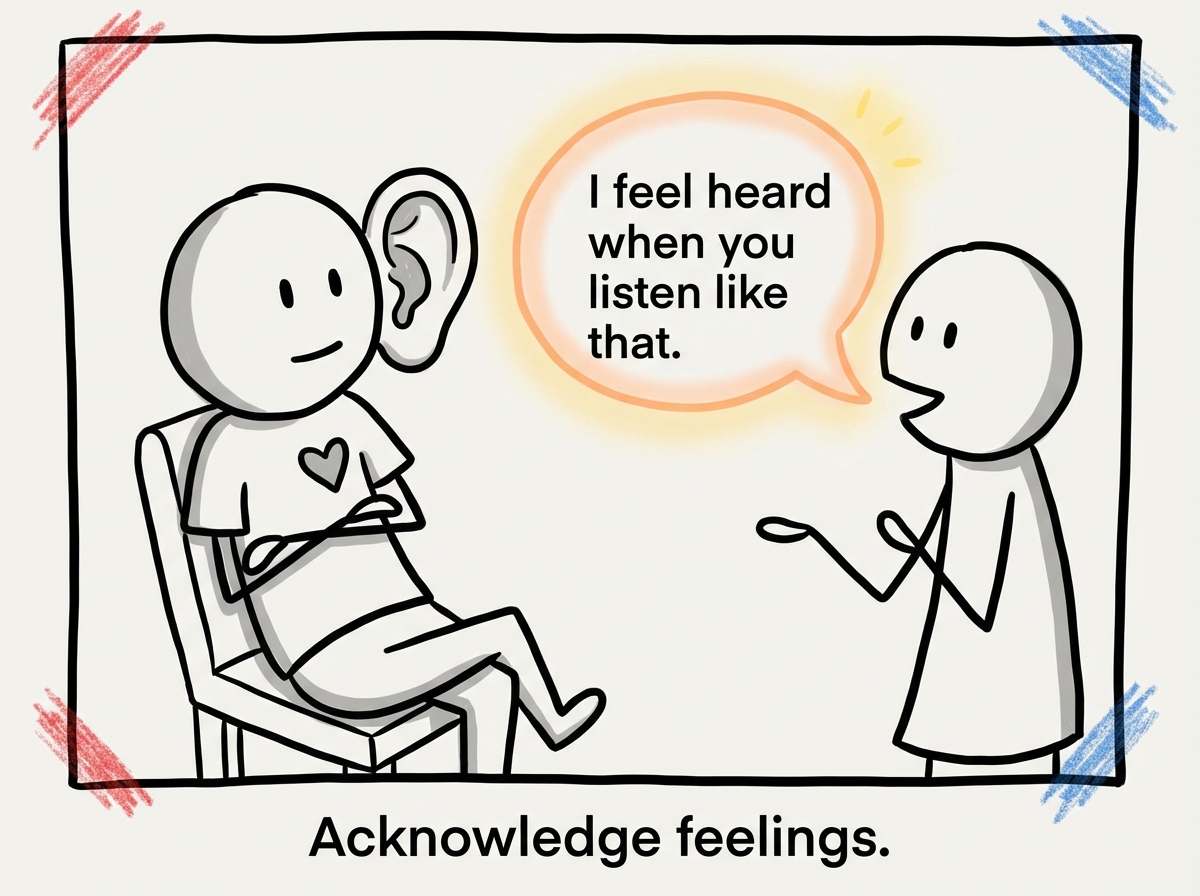
-
Make a Specific Repair Attempt
A repair attempt is any statement or gesture that tries to de-escalate tension and reconnect. The key word is specific — vague apologies like "I'm sorry you're upset" don't land because they don't name what happened or take responsibility for it. Effective repair attempts sound like this: "I was wrong to dismiss what you were telling me. Your concern was valid and I should have listened instead of getting defensive." Or: "I think we got off track when I brought up last month. I want to focus on what's actually bothering you right now." Or even: "I don't fully understand your perspective yet, but I want to. Can you help me see it?" Physical repair attempts work too — extending a hand, offering a hug, making their favorite tea. John Gottman's research shows that successful couples don't avoid conflict; they make and accept repair attempts. The willingness to reach out, even imperfectly, is what separates couples who last from those who don't.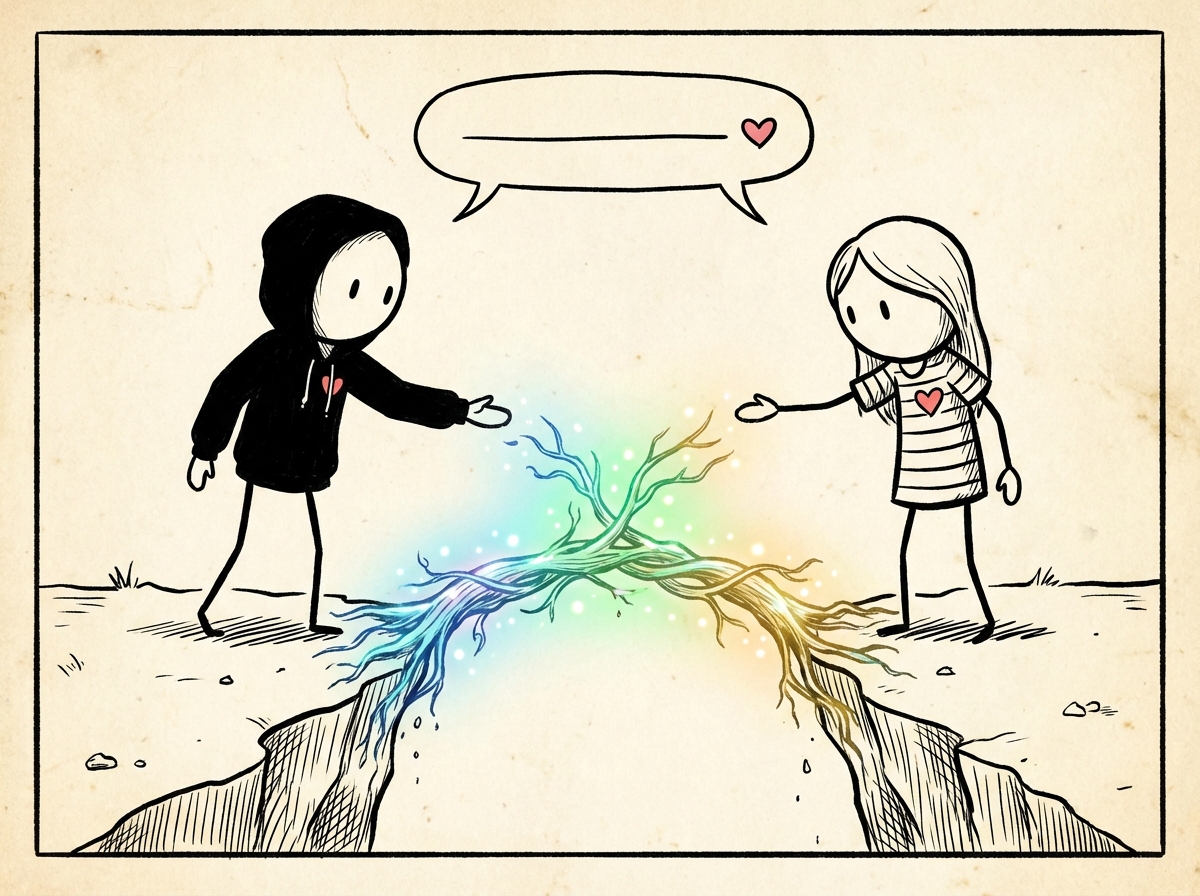
-
Agree on What to Do Differently
Repair without a plan is just a truce until the next fight about the same thing. Once you've both cooled down, owned your parts, and felt heard, it's time to talk about what you'll do differently next time. Be concrete and collaborative.
- "Next time I'm feeling overwhelmed, I'll say 'I need a pause' instead of shutting down."
- "If money comes up, let's agree to have that conversation at the kitchen table with no screens, not in passing."
- "When I feel criticized, I'll try to ask a clarifying question before reacting."
- "Let's agree that we don't bring up old arguments once they've been resolved."
These aren't rules — they're agreements that you both have a stake in keeping. Write them down if it helps. Revisit them after the next disagreement and adjust. The goal isn't to eliminate conflict. It's to fight better each time, with more skill and less damage.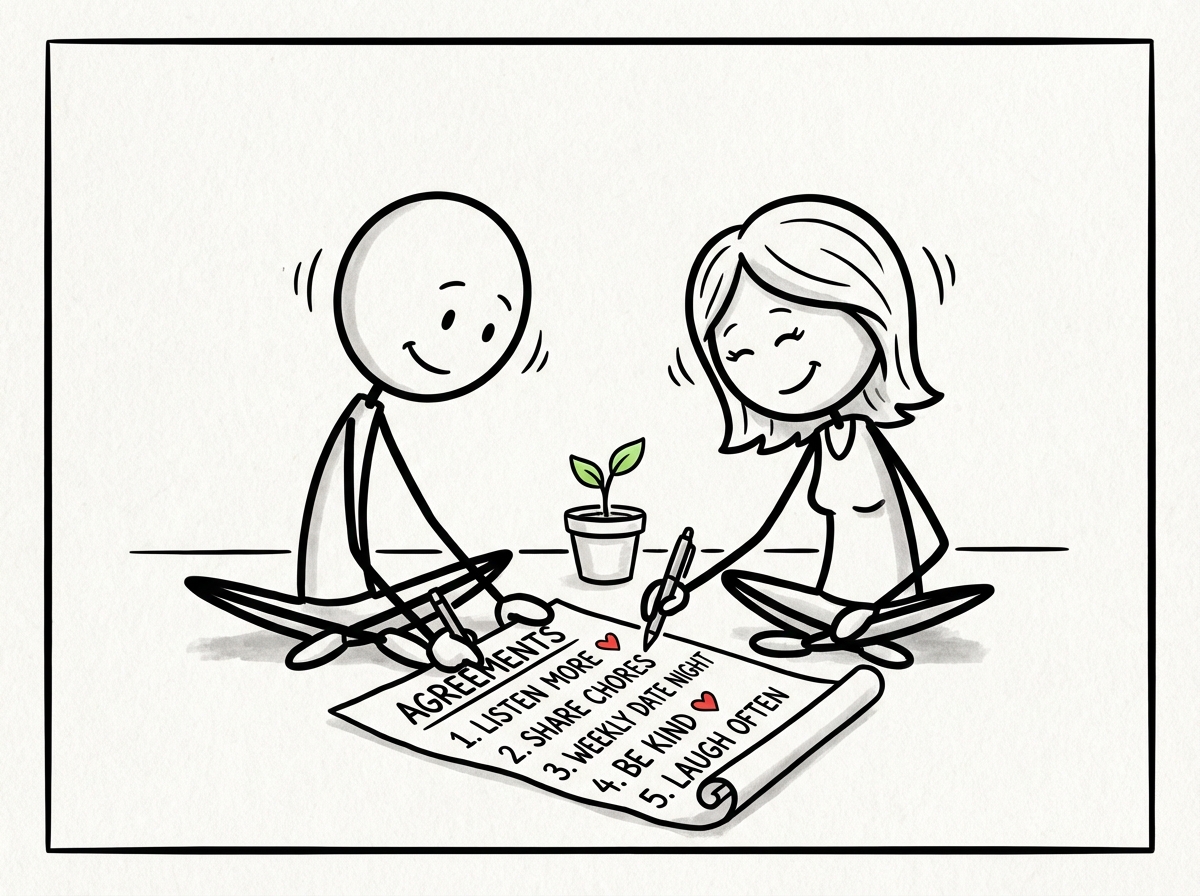
-
Reconnect Physically or Emotionally
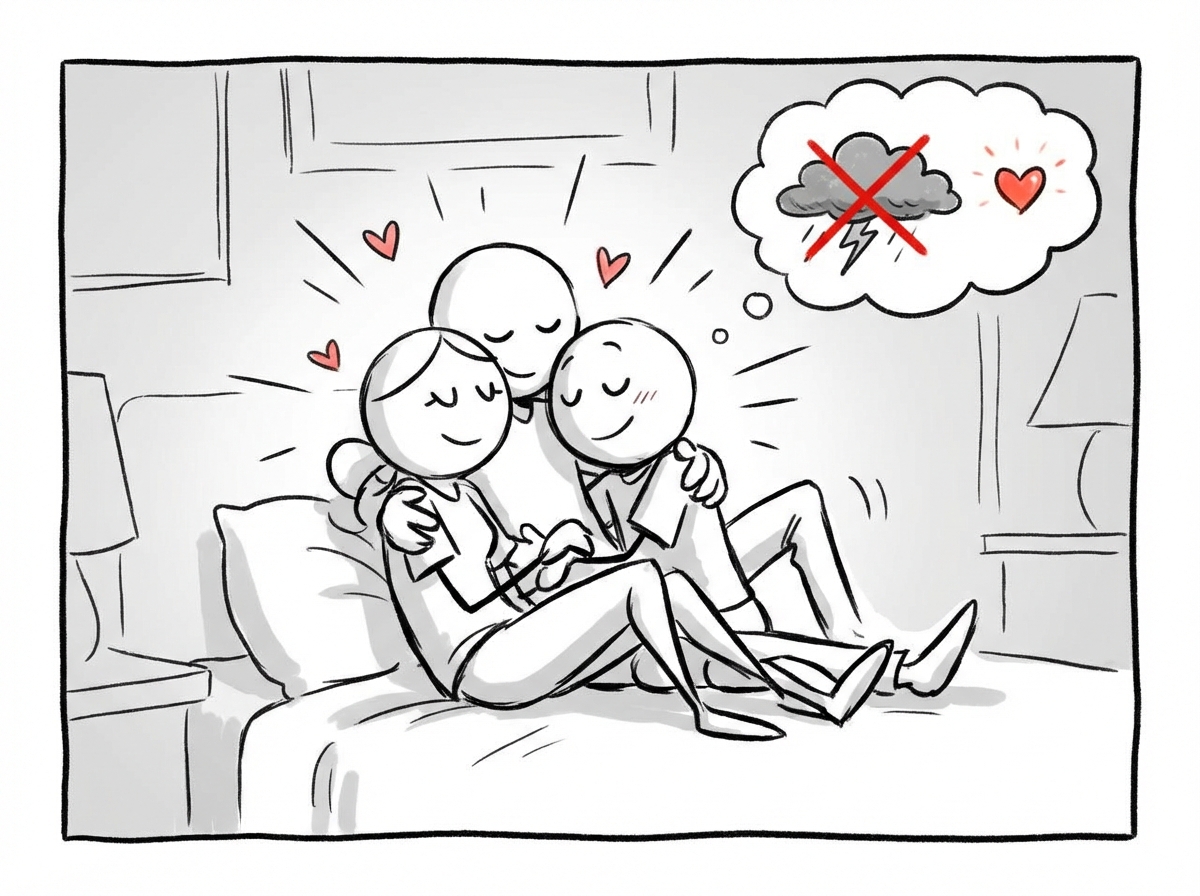
After the hard work of repair, don't just return to business as usual. Take a deliberate moment to reconnect and signal to each other that the relationship is intact and valued. This looks different for every couple. For some, it's a long hug where you just hold each other without talking. For others, it's making dinner together, going for a walk, or watching something lighthearted. Some couples need to verbally close the loop: "Are we okay?" "We're okay." What matters is that you both transition out of conflict mode and back into partnership mode. Don't rush this, and don't skip it. The reconnection after a fight is where intimacy actually deepens, because you've just proven to each other that the relationship can survive disagreement. That's not a small thing. Every successful repair adds to your shared confidence that you can get through hard things together.