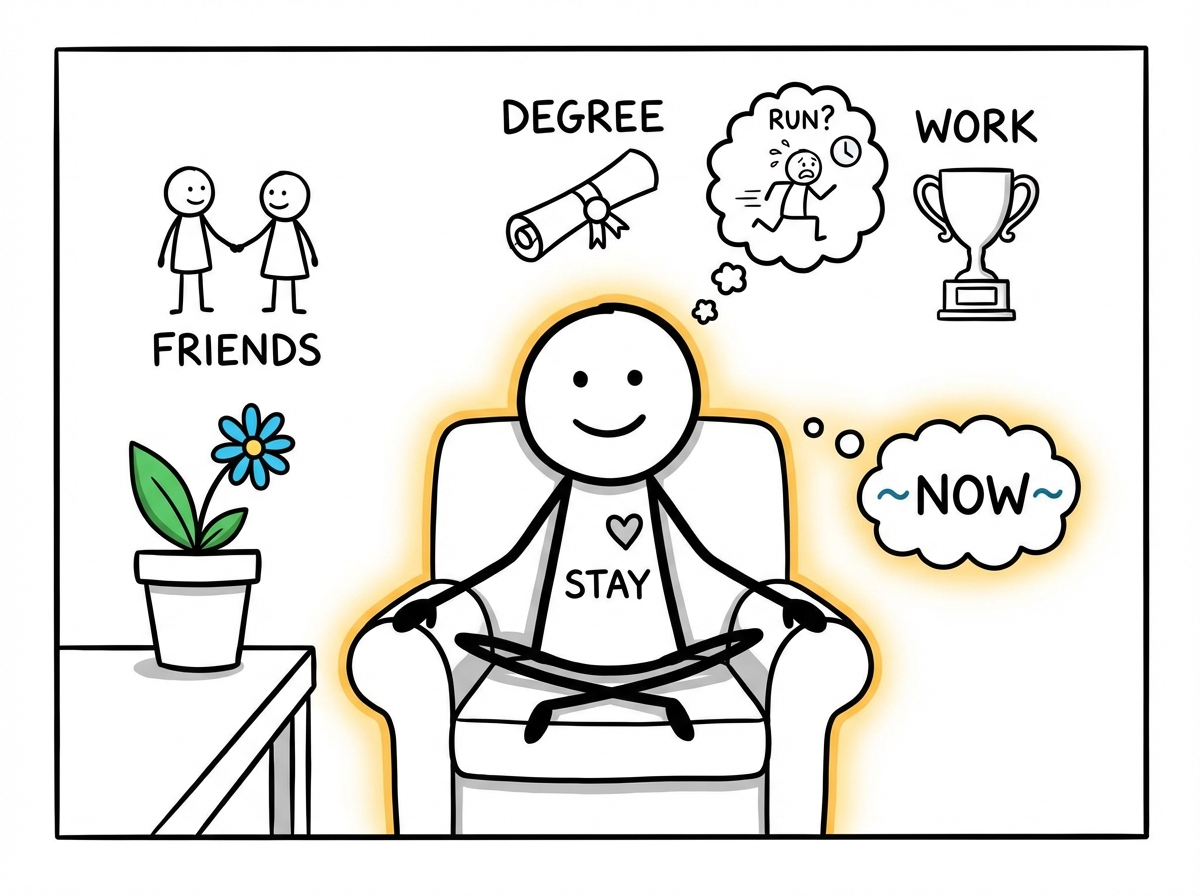
How to Stop Self-Sabotage
Learn to identify your self-sabotage patterns, understand the fear driving them, and replace destructive behaviors with small actions that let good things happen.
Before You Begin
Self-sabotage is one of the most confusing experiences a person can have. You know what you want. You know what you need to do to get it. And then you do the opposite -- or you do nothing at all. You blow the deadline, pick the fight, skip the interview, or burn the opportunity right when things start going well. From the outside it looks like self-destruction. From the inside it feels like something you cannot stop, or worse, like something you deserve. But self-sabotage is not random and it is not proof that you are broken. It is almost always a protection strategy. Some part of you learned that success, happiness, or visibility is dangerous -- that good things get taken away, that you do not deserve them, or that reaching for something and losing it is more painful than never having it. This guide will help you see the pattern, understand the fear underneath it, and start making a different choice -- not through willpower, but through understanding.
-
Identify Your Sabotage Pattern
Self-sabotage rarely looks the same from person to person, but everyone has a signature pattern. Some people procrastinate until opportunities expire. Others pick fights right when a relationship gets close. Some overwork to exhaustion so they have an excuse for falling short. Your job right now is to find your pattern.
- Look at the last three to five times something important did not work out. What happened? What did you do -- or not do -- in the lead-up? Be honest about your role. The pattern is usually hiding in the details.
- Common sabotage patterns include: procrastinating on things that matter to you, withdrawing from people when things get intimate, creating chaos when life feels stable, choosing the wrong person or opportunity on purpose, and quitting right before the finish line.
- Notice the timing. Self-sabotage almost never happens when things are going badly. It happens when things start going well, when you are on the verge of getting what you want, or when someone starts to see and value you. That timing is a clue.
- Write down your pattern in one sentence: 'When _____ starts happening, I tend to _____ .' Seeing it this clearly is uncomfortable, but clarity is the beginning of change.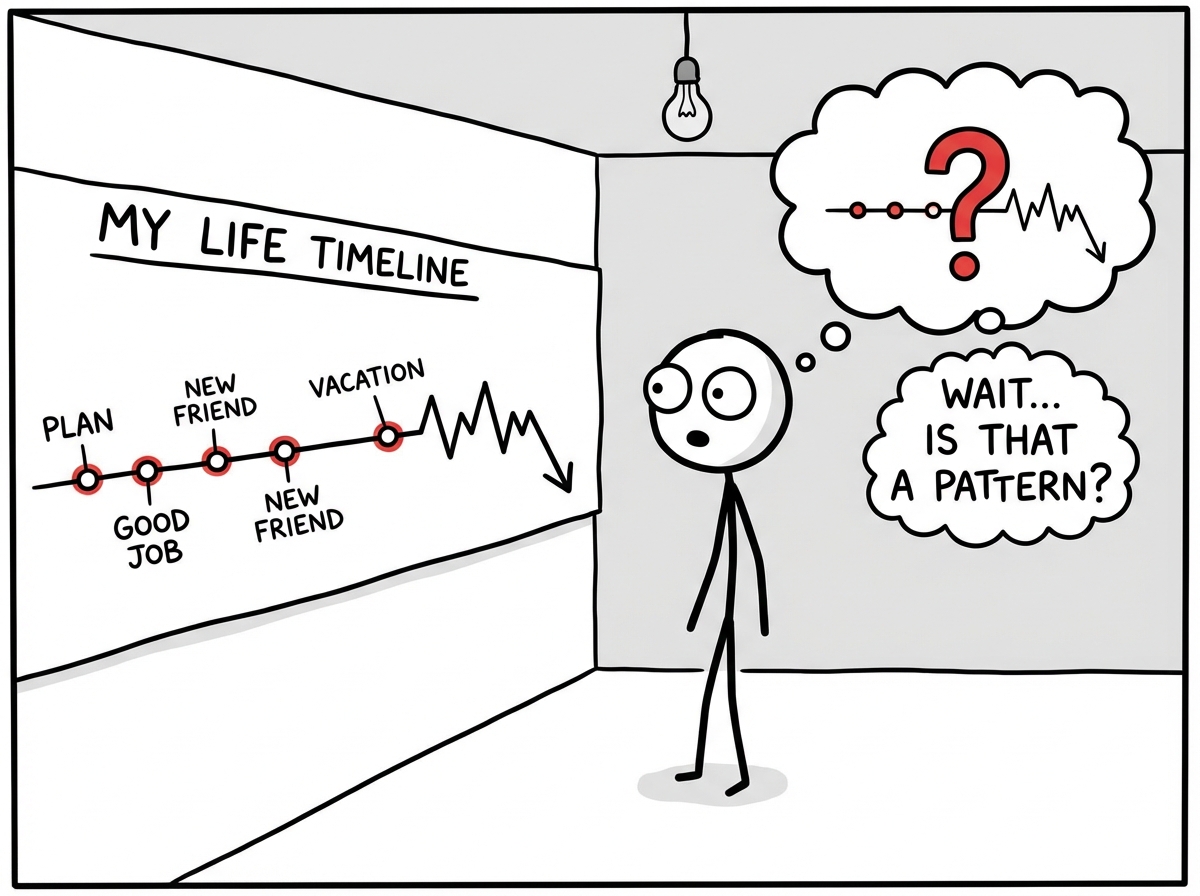
-
Connect the Behavior to the Underlying Fear
Every self-sabotage pattern is powered by a belief. You are not blowing up your life for fun. You are protecting yourself from something that feels more dangerous than failure. Until you identify that underlying fear, you will keep repeating the pattern no matter how many times you promise yourself you will stop.
- Ask yourself: What would it mean if this actually worked out? If the relationship lasted, if I got the promotion, if the project succeeded -- what am I afraid would happen then? The answer is often more revealing than you expect.
- Common fears behind self-sabotage include: fear of being seen and then rejected for who you really are, fear that success will raise expectations you cannot sustain, fear that happiness will be taken away so it is safer never to have it, and the deep belief that you do not deserve good things.
- Think back to where you first learned this belief. Many people trace it to a childhood where good things were unpredictable, where success was punished or met with jealousy, or where they internalized the message that wanting too much was greedy or dangerous.
- You do not need to resolve the origin story right now. You just need to see the connection: I sabotage because I am afraid of _____ . Naming the fear takes away some of its power to operate invisibly.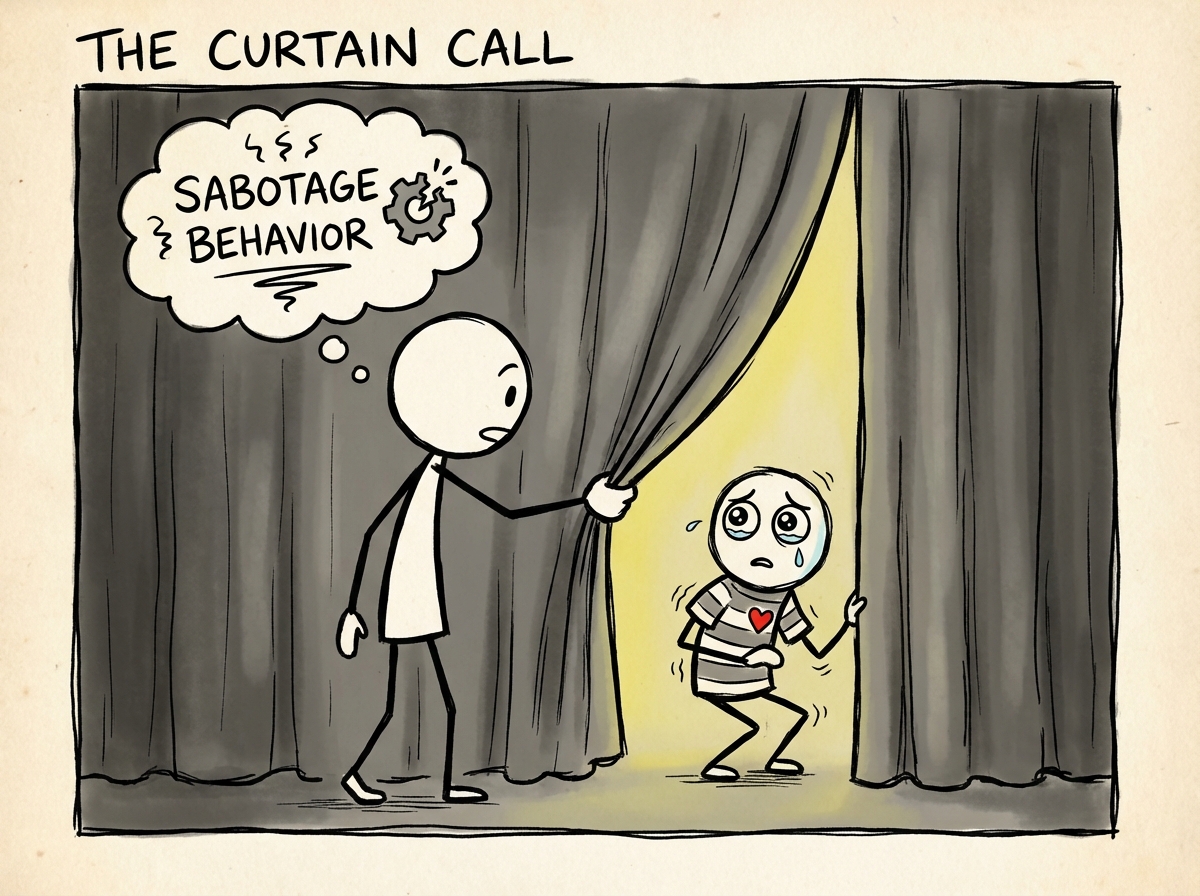
-
Catch It in Real Time
Understanding your pattern intellectually is important but not sufficient. The real work is catching the sabotage as it is happening -- in the moment, not in hindsight. This is harder than it sounds because self-sabotage often disguises itself as reasonable behavior.
- Learn your early warning signs. Before the sabotage itself, there is usually a shift: a sudden loss of motivation, a feeling of restlessness or irritability, the urge to blow something up or run away, or a conviction that this was never going to work anyway.
- When you notice the warning signs, pause. Do not act on the urge. Just name it: 'I am feeling the pull to sabotage right now.' That sentence alone can interrupt the automatic sequence.
- Check the context. Is something good happening? Did someone just compliment you, offer you an opportunity, or get closer to you? If yes, you are likely in the danger zone where sabotage activates.
- Tell someone you trust what you are feeling. Say it out loud: 'Things are going well and I have the urge to mess it up.' Sabotage thrives in secrecy. Exposing the impulse to another person weakens it.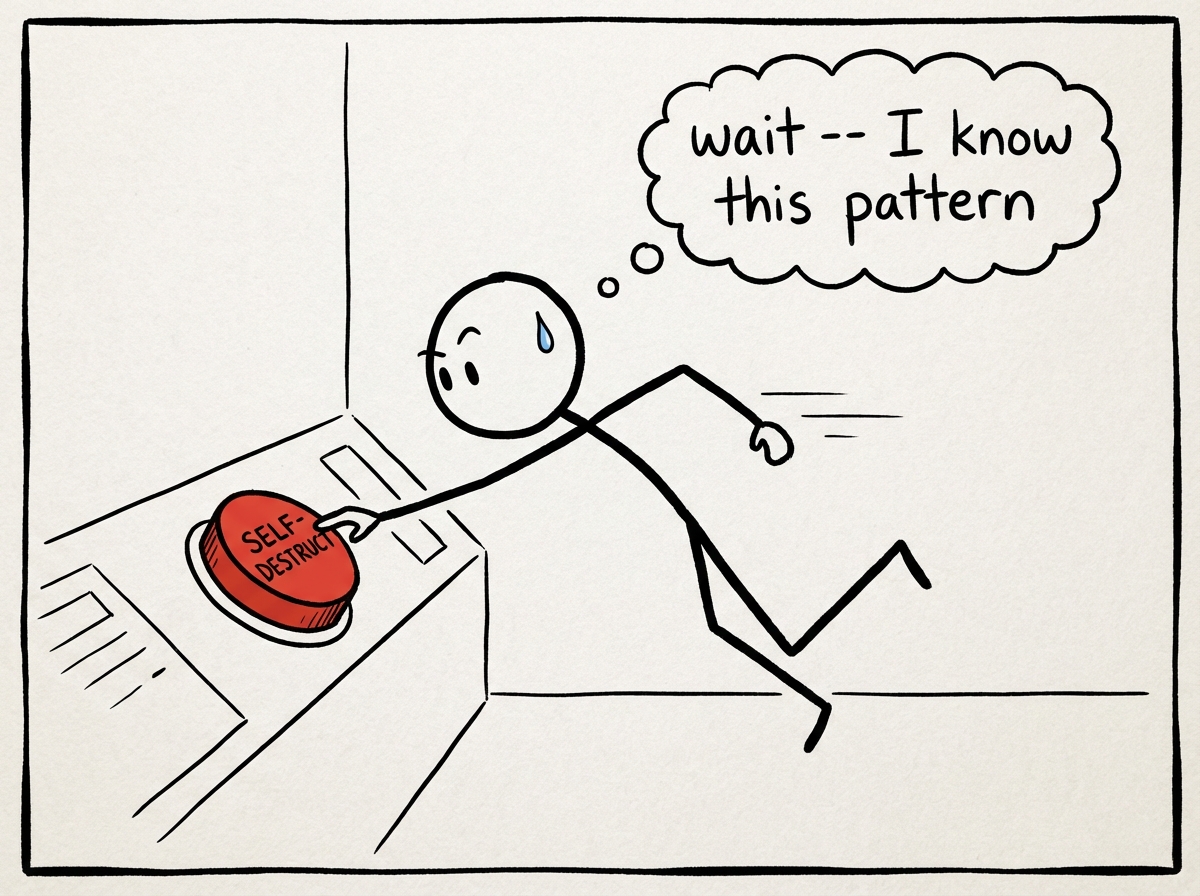
-
Challenge the Belief Driving It
Once you can see the sabotage in real time and name the fear behind it, you can start questioning whether the belief is actually true. Not with empty affirmations, but with honest examination. Most sabotage beliefs were formed in childhood and have never been updated with adult evidence.
- Write down the core belief: 'I do not deserve this,' 'Good things always get taken away,' 'If people really knew me they would leave,' or whatever yours is. Look at it on paper.
- Now ask: Is this true right now, or was it true in the environment where I first learned it? Many people realize the belief made sense in their family of origin but does not reflect their current reality.
- Look for counterevidence. Have there been times when something good happened and it was not taken away? Times when someone saw the real you and stayed? Times when you succeeded and the world did not punish you for it? These moments matter. Collect them.
- The goal is not to replace 'I do not deserve this' with 'I deserve everything.' It is to arrive at something more accurate: 'I am allowed to have good things, and I can handle whatever happens next.' That is a belief you can actually build a life on.
-
Replace the Sabotage With a Micro-Action
When the urge to sabotage hits, you need somewhere else to put the energy. The goal is not to white-knuckle your way through it, but to replace the destructive action with a small, constructive one. Over time, the new action becomes the new habit.
- Identify the specific moment where your sabotage pattern kicks in. If you procrastinate, the moment is when you sit down to work. If you push people away, the moment is when someone gets close. If you quit, the moment is right before the finish line.
- At that moment, commit to one tiny action in the opposite direction. If the urge is to procrastinate, write one sentence. If the urge is to push someone away, send them a message saying you are glad they are in your life. If the urge is to quit, do five more minutes.
- The micro-action does not need to be big or impressive. It just needs to go in the opposite direction of the sabotage. You are not trying to be heroic. You are trying to interrupt the pattern with something small enough that your fear does not activate.
- Track your micro-actions. Every time you choose the small constructive thing instead of the sabotage, you are building new neural pathways. It will feel awkward and forced at first. That is what change feels like before it becomes natural.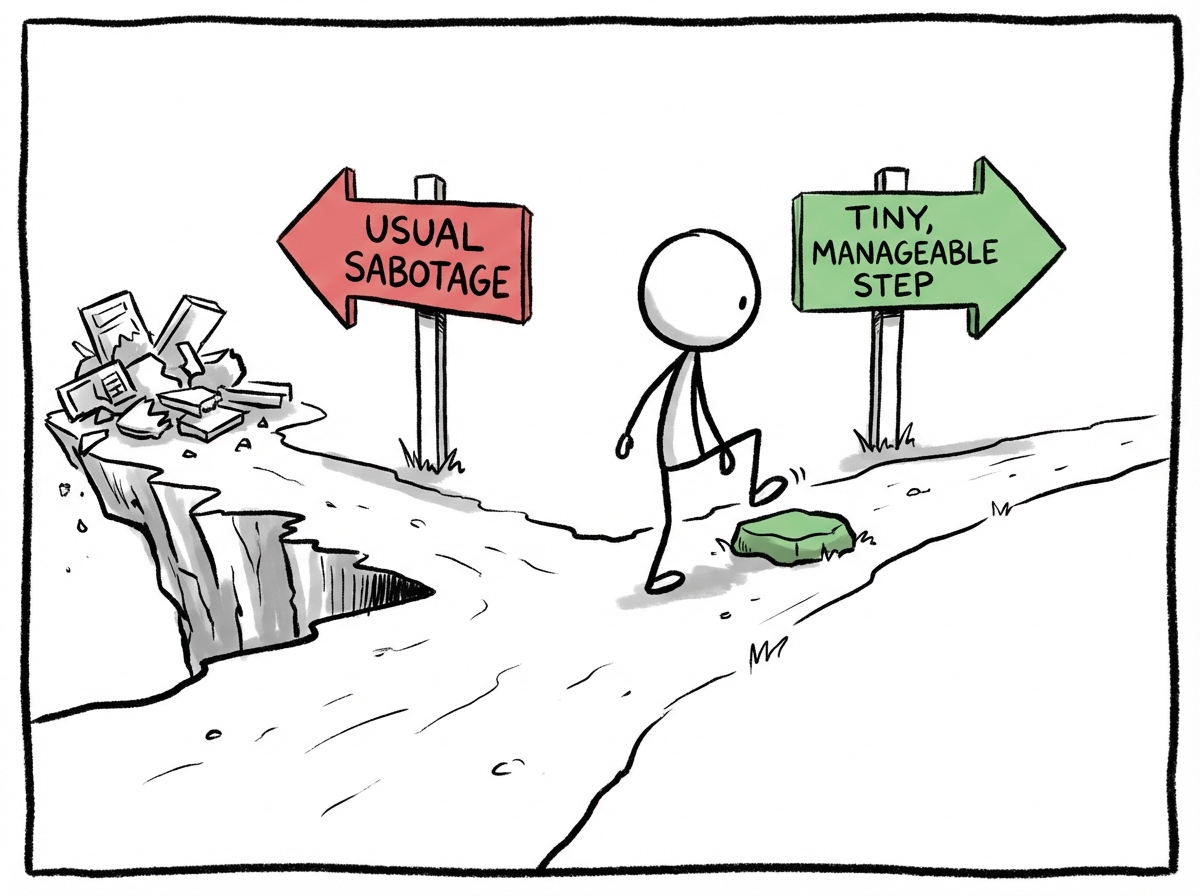
-
Build Tolerance for Things Going Well
This is the step most self-sabotage guides leave out, and it is the one that matters most. For people who self-sabotage, the most uncomfortable feeling is not failure -- it is things going well. Success, intimacy, and happiness can trigger more anxiety than disaster because disaster at least feels familiar.
- When something good happens, practice staying with it instead of immediately looking for what could go wrong. Set a timer for two minutes and just sit with the good feeling. Notice the urge to deflect, minimize, or catastrophize. Do not act on it.
- Resist the urge to qualify every good thing. When someone compliments you, say thank you instead of explaining why they are wrong. When you achieve something, let it land before you start listing all the ways it could have been better.
- Expect the anxiety. When your life starts going well consistently, you will feel a rising discomfort that something bad is about to happen. That is not intuition -- it is your nervous system reacting to unfamiliar territory. You can feel the anxiety and keep going.
- Remind yourself: you are not being reckless by letting good things in. You are being brave. The bravest thing a person who self-sabotages can do is allow themselves to have what they want and not destroy it.