Guide to Rebuilding Your Sense of Self-Worth
Untangle your value as a person from what you produce, earn, or perform, and start treating yourself like someone who deserves good things by default.
Before You Begin
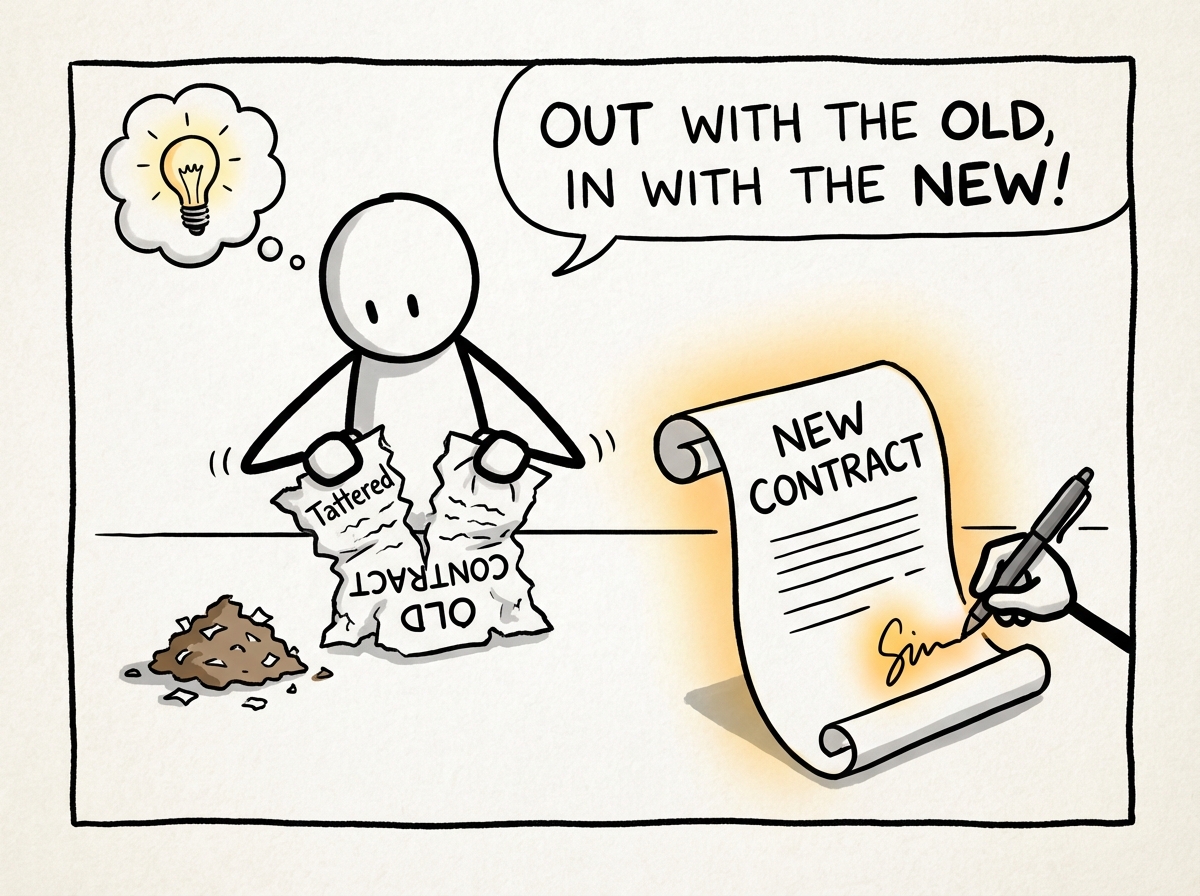
Self-worth is not something you lost. It is something you were talked out of. Somewhere along the way, you picked up a set of beliefs about what you have to do or be in order to deserve love, rest, success, or even basic kindness. Those beliefs feel like facts, but they are not. They are old contracts you signed when you were too young to negotiate. This guide will help you find those contracts, read the fine print, and decide which ones you actually want to keep.
-
Identify your current worth beliefs
Before you can change anything, you need to see what is already running in the background. Your worth beliefs are the quiet rules that dictate how you move through the world. They sound like 'I have to be useful to be wanted' or 'If I rest, I am lazy' or 'I do not deserve help unless I am falling apart.'
Try this: finish these sentences honestly, without editing yourself.
- I am only lovable when I am ___.
- I do not deserve ___ unless I first ___.
- If people really knew me, they would ___.
- I have to earn ___ by ___.
Write your answers down. These are not truths. They are beliefs. And beliefs can be examined.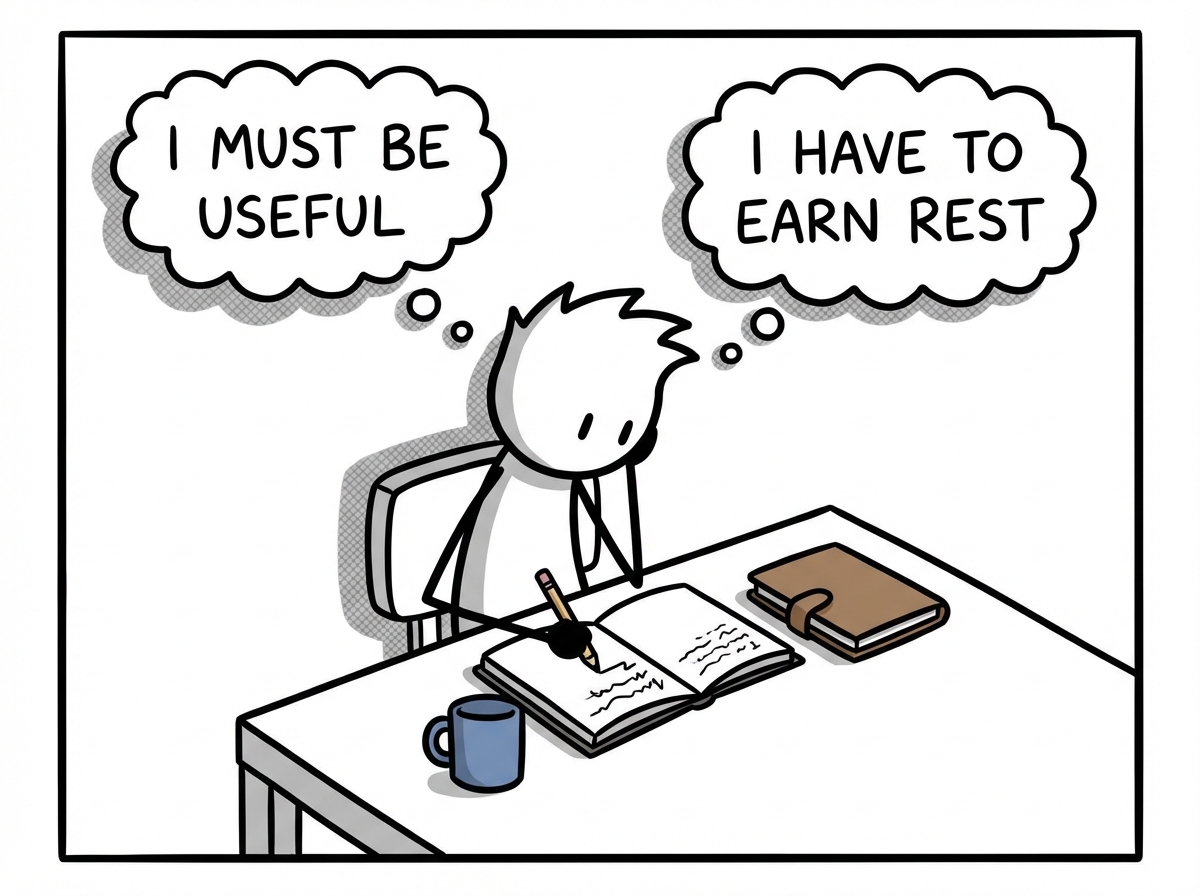
-
Trace where they came from
Worth beliefs do not appear from nowhere. They were installed by specific experiences, usually early ones. A parent who only praised achievements. A household where love was conditional on good behavior. A friendship where you learned that needing things made people leave.
You are not doing this to blame anyone. You are doing it to stop blaming yourself. When you see that a belief was a survival strategy for a specific situation, you can also see that the situation has changed.
Ask yourself: who first taught me this rule? What was happening at the time? Did I choose this belief, or did I absorb it to stay safe? The goal is not to relive the pain but to name it clearly enough that it loses some of its authority.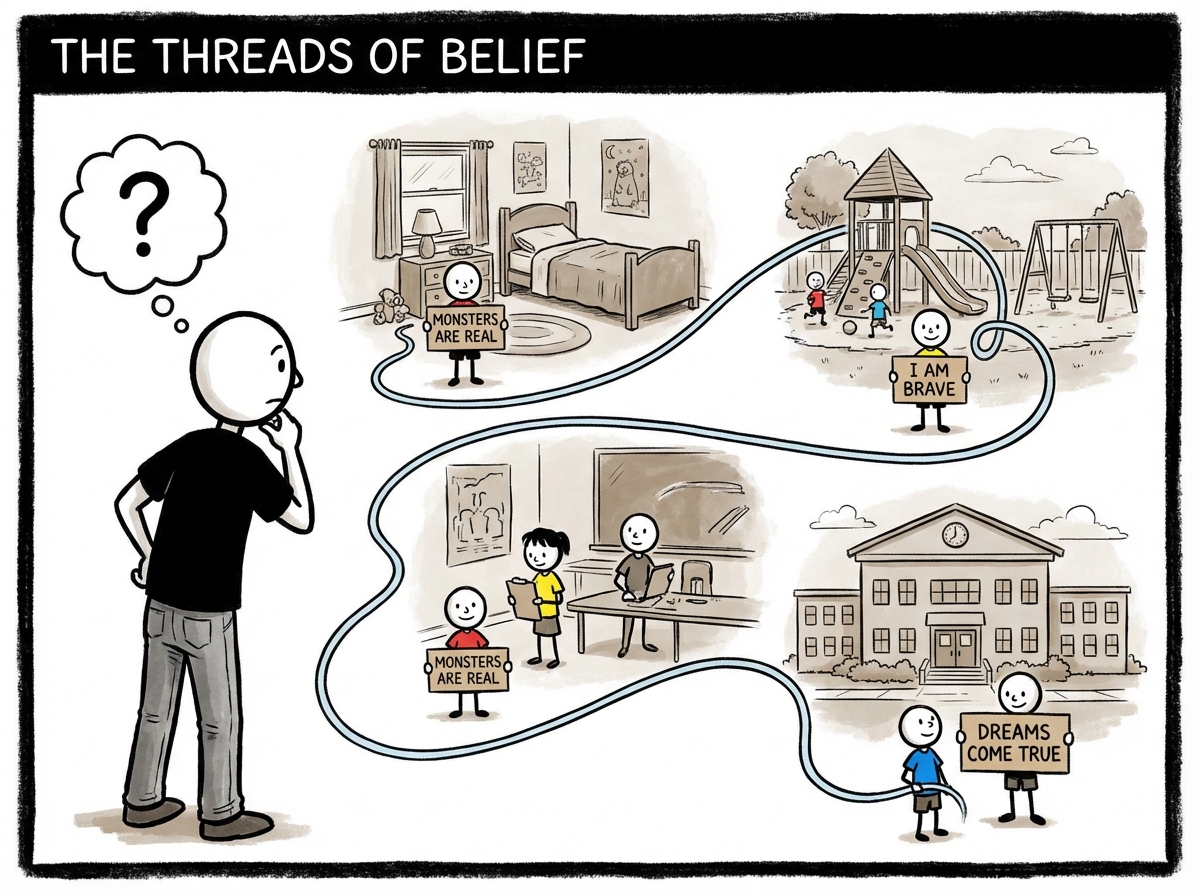
-
Separate worth from achievement
This is the hardest step for high-functioning people. You have probably built an entire identity around being capable, productive, and impressive. That identity is not the problem. The problem is that it is load-bearing. If you remove the achievement, do you still feel like a person worth knowing?
- Notice when you introduce yourself by what you do rather than who you are.
- Pay attention to the panic that rises when you have an unproductive day.
- Watch for the urge to justify rest with exhaustion, as if you need permission.
Your worth is not a salary. It is not a GPA. It is not how many people need you. You were valuable before you could do anything at all, and that has not changed.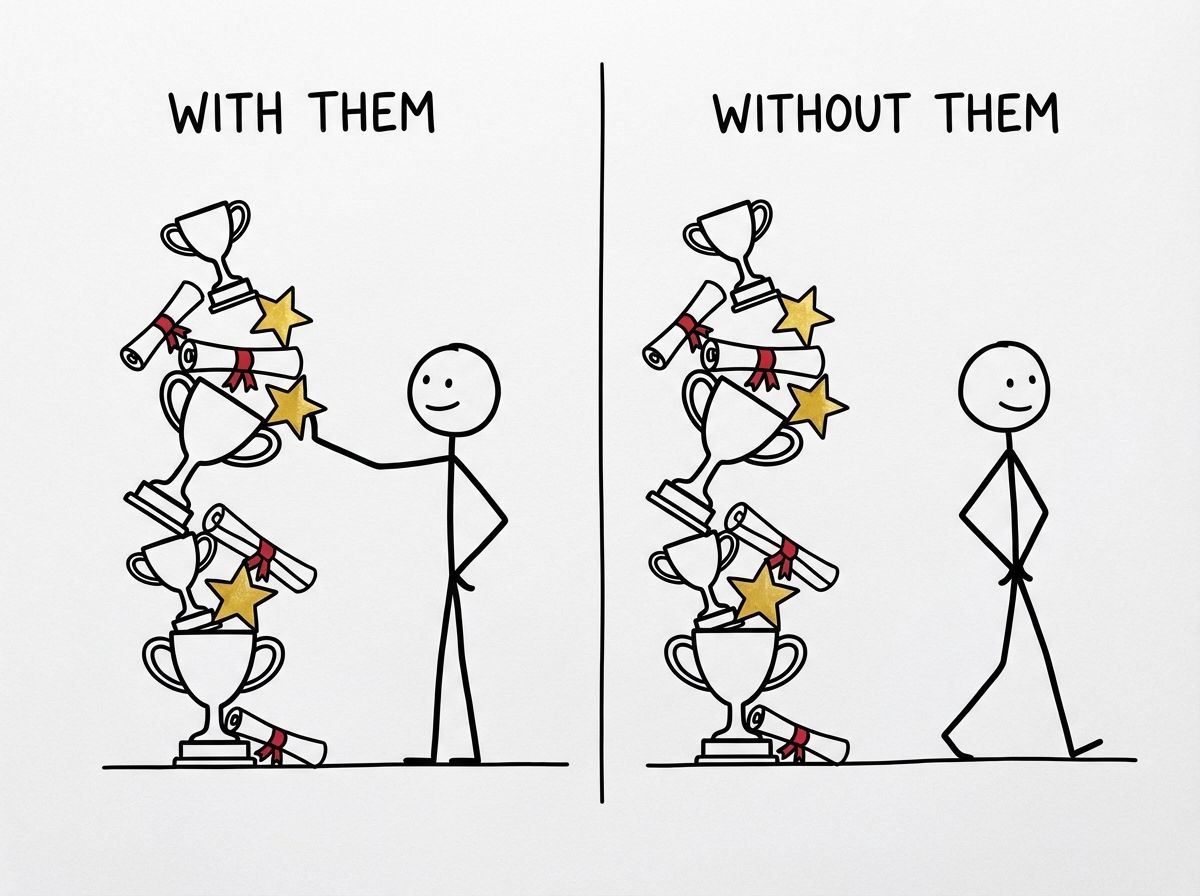
-
Collect evidence that contradicts the old story
Your brain has a confirmation bias problem. It has been filtering the world through 'I am not enough' for years, so it only notices evidence that supports that conclusion. You need to manually override this by collecting counter-evidence.
Start a running list. Write down every time something happens that contradicts your old worth beliefs.
- Someone chose to spend time with you when they did not need anything.
- You made a mistake and the world did not end.
- Someone complimented you and meant it.
- You said no and the relationship survived.
This is not toxic positivity. This is corrective data. You are not making things up. You are finally noticing what was always there.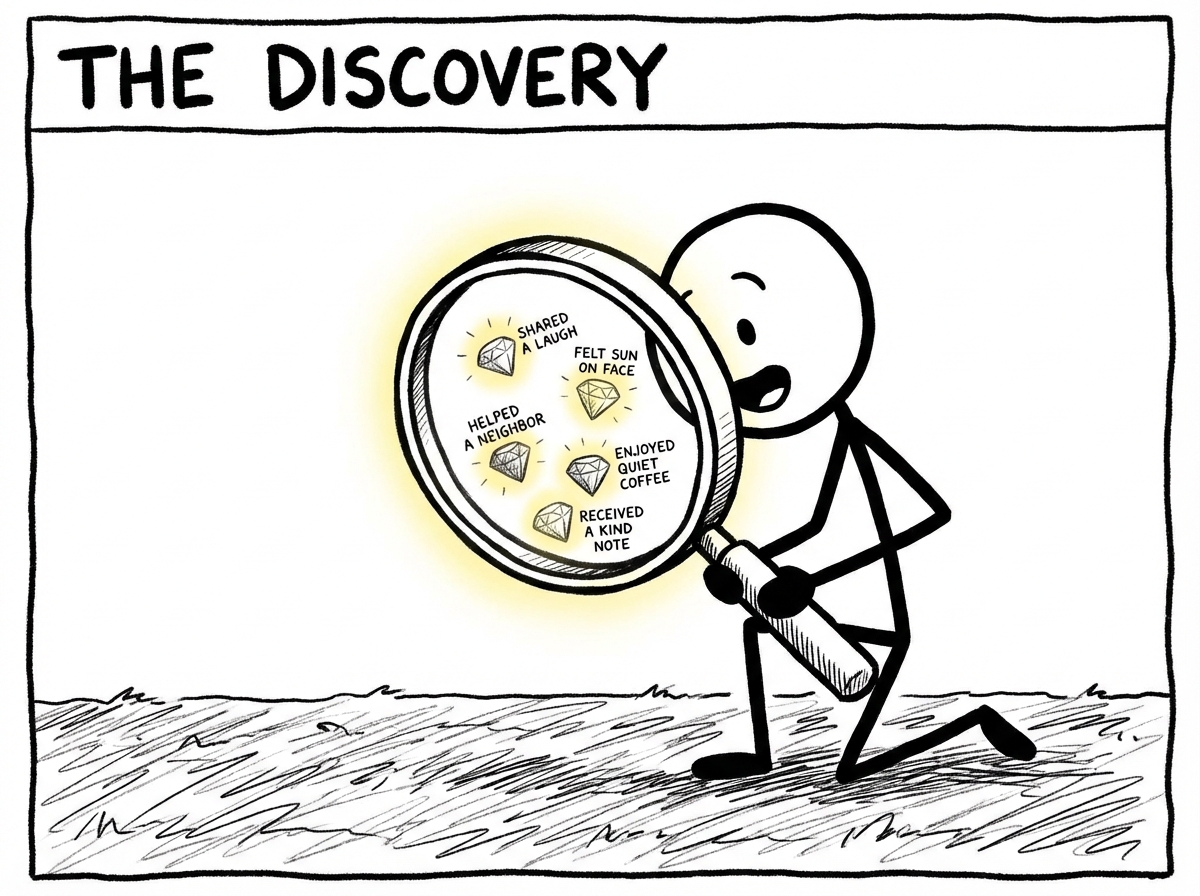
-
Practice receiving without earning
People with low self-worth are often excellent givers and terrible receivers. You deflect compliments. You feel guilty when someone does something nice for you. You immediately try to reciprocate so you do not 'owe' anyone anything. This is not humility. This is a worth problem.
Your practice this week is simple but uncomfortable. When someone gives you something, whether it is a compliment, a gift, help, or their time, just say thank you. Do not deflect. Do not minimize. Do not immediately give something back. Sit with the discomfort of being given to without having earned it.
The discomfort you feel is the old belief pushing back. Let it push. You do not have to obey it.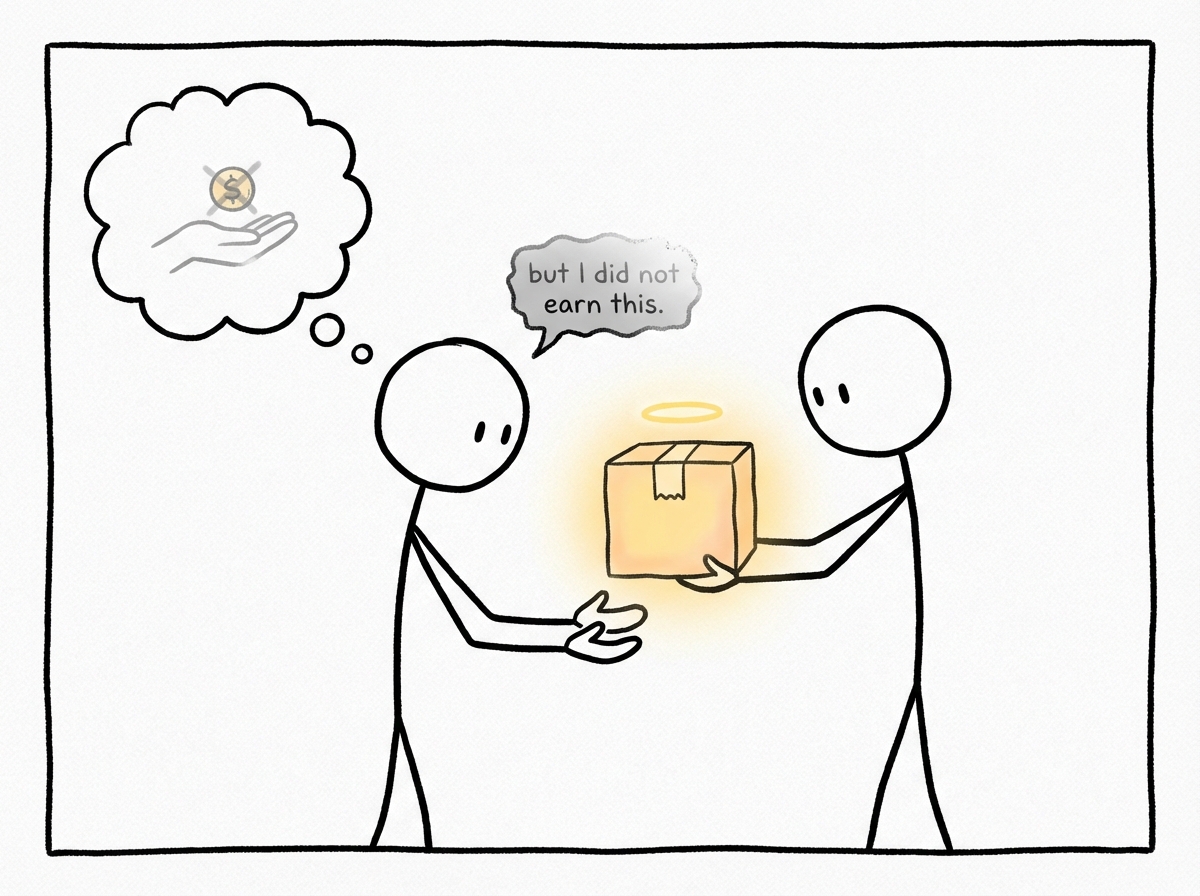
-
Update your internal contract
You have been living under an old contract that says something like: 'I will be good, useful, and low-maintenance, and in exchange, I will be tolerated.' That contract was written by a version of you who had no power and no options. You have both now.
Write a new contract. Make it explicit.
- I am allowed to take up space without apologizing.
- I deserve care even when I am not at my best.
- My needs are not a burden. They are information.
- I do not have to earn the right to exist comfortably.
Read it when the old beliefs get loud. This is not a one-time fix. It is a practice. Some days you will believe your new contract completely. Other days you will have to choose it on purpose. Both count.