The Ghost at the Dinner Table
A person sits across from someone who is physically present but emotionally gone -- eating dinner with a ghost who still has a body.

Grieving someone who is still here but no longer reachable.
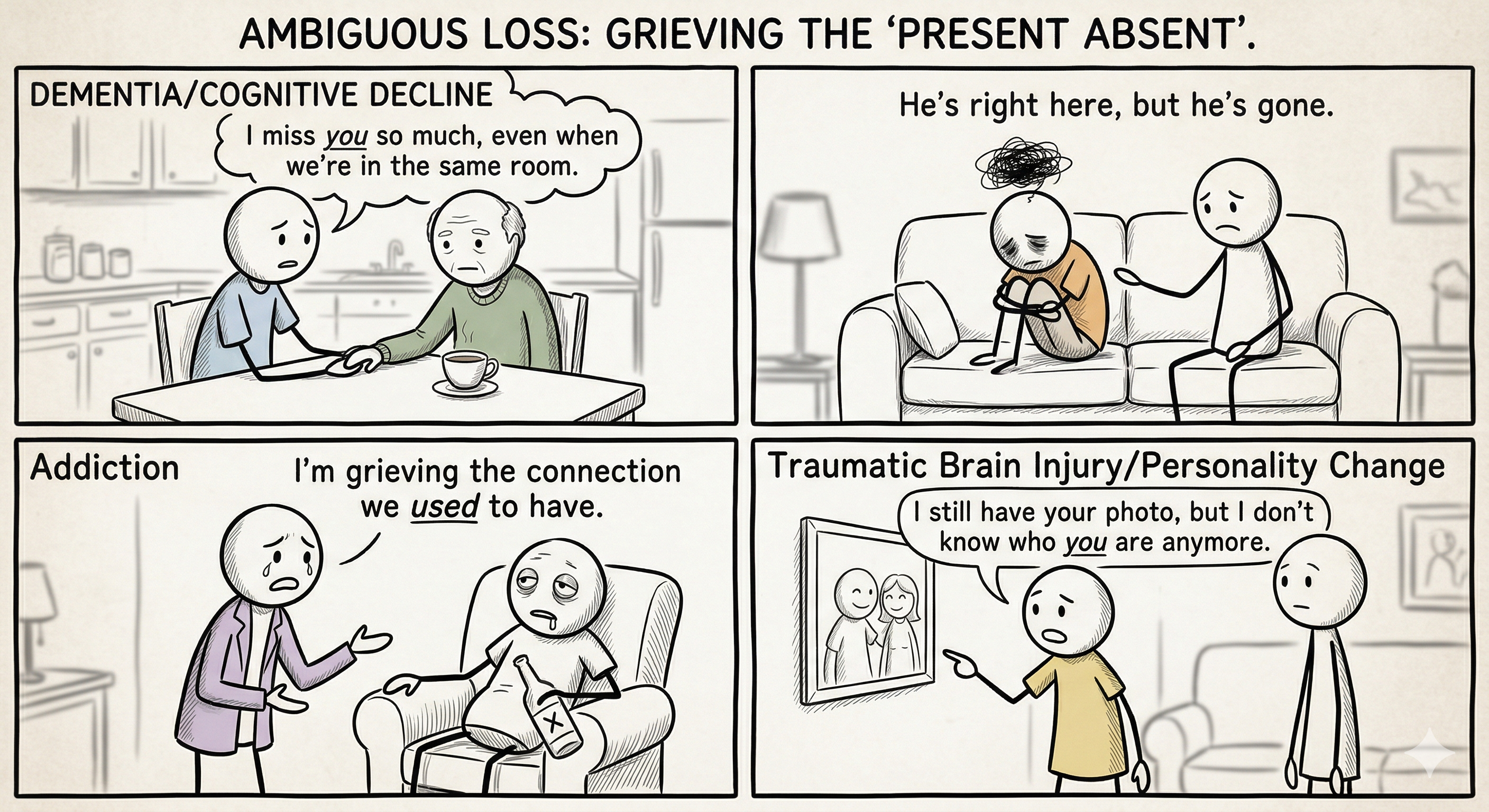
Ambiguous loss is a term coined by psychologist Pauline Boss to describe a type of grief that defies closure because the loss itself is unclear. It happens when someone you love is physically present but psychologically absent -- or psychologically present but physically gone. A parent with dementia still sits across from you at dinner, but the person you knew has slipped away. A partner is in the room but has emotionally checked out. A family member is alive but estranged, and you grieve someone who is technically still reachable but functionally gone. What makes ambiguous loss so uniquely painful is that it does not follow the rules of conventional grief. There is no death, no funeral, no culturally recognized moment of loss. The world expects you to be fine because the person is still there -- but you are mourning them anyway. Boss found that this type of loss is one of the most stressful kinds people experience, precisely because it resists resolution. You cannot move through the stages of grief when the loss keeps shifting and the person keeps almost being there. Healing does not mean finding closure -- it means learning to hold two truths at once: someone can be here and gone at the same time, and you are allowed to grieve both.
You cannot fix ambiguous loss, but you can learn to hold two truths at once -- someone can be here and gone, and you are allowed to grieve both.
A stick figure sitting quietly, placing a hand on their own chest, a thought bubble reading 'This hurts. And that is okay.'
A stick figure crying openly at a kitchen table, tears falling onto a photo album, not wiping them away or hiding.
A stick figure sitting in a support group circle, others nodding with understanding, one person holding a sign that reads 'We get it.'
A stick figure setting the dinner table for two, a gentle expression on their face, one plate for who they are now and one candle for who they were.