The Funeral Before the Funeral
A person grieves someone who is still alive, attending a funeral in their mind that has not happened yet -- mourning in advance while the world tells them it is too soon.

Mourning what has not happened yet.
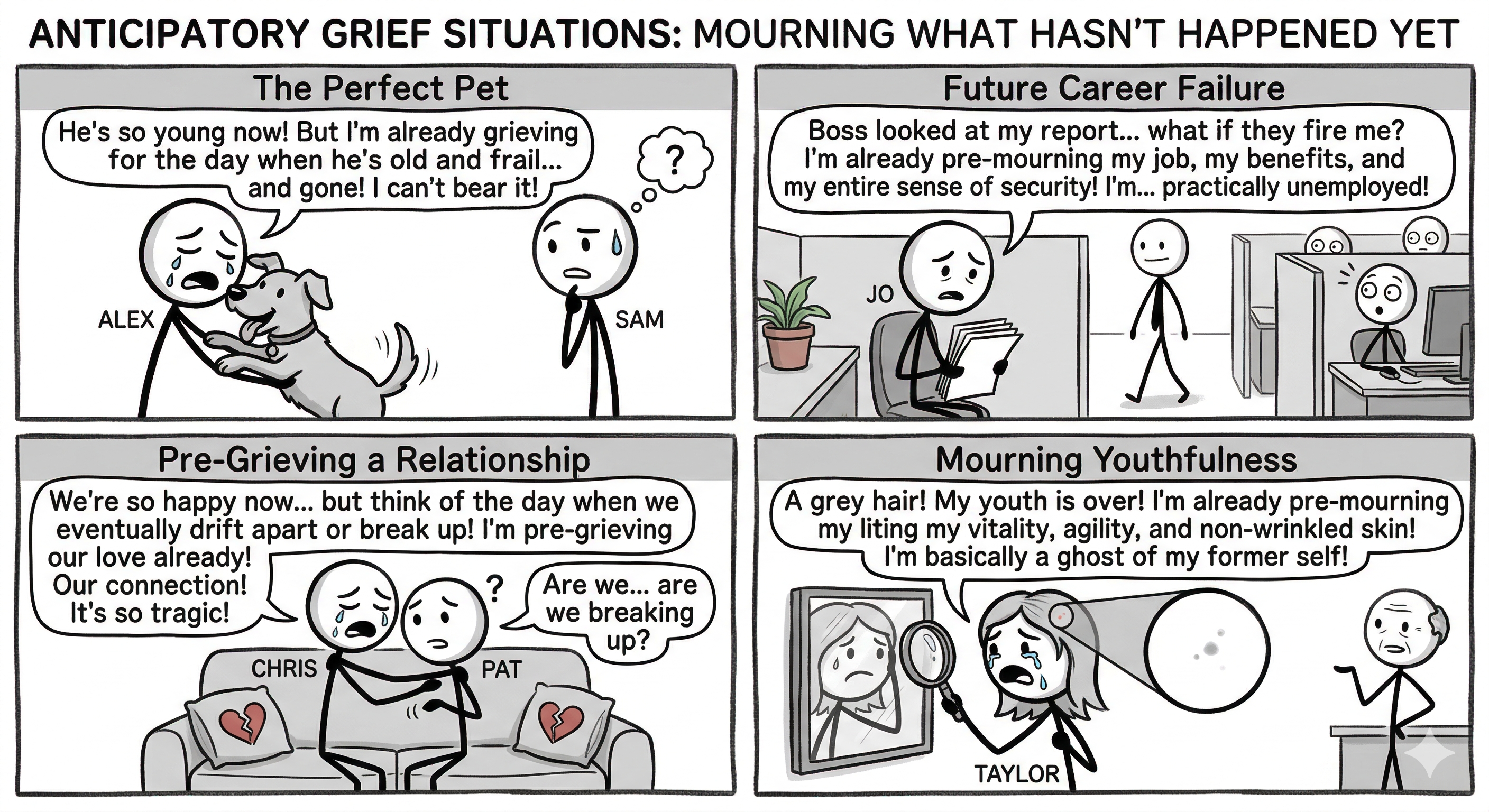
Anticipatory grief is the experience of mourning a loss before it actually occurs. It was first described by psychiatrist Erich Lindemann in the 1940s and has since become a widely studied phenomenon in bereavement research. It shows up when a loved one receives a terminal diagnosis, when you watch a parent's slow cognitive decline, or when you sense a relationship unraveling long before the final conversation. You are grieving in real time -- not for what has happened, but for what you can see coming. The grief arrives early, uninvited, and it brings with it a strange cocktail of emotions: sadness, guilt, exhaustion, and sometimes even a shameful sense of relief or readiness. Many people feel confused by anticipatory grief because it seems premature. How can you mourn someone who is still here? But psychologists now understand that grief does not wait for a specific event -- it begins the moment you start to comprehend the magnitude of what you are about to lose. Therese Rando's work on anticipatory mourning shows that this process can actually help people begin to adjust, make meaning, and prepare emotionally -- though it does not make the eventual loss any less painful. Anticipatory grief is not jumping ahead or being dramatic. It is your psyche doing the difficult, honest work of facing a reality your heart already knows is true.
Grieving before someone is gone is not giving up -- it is your heart doing the honest work of facing what is coming.
A stick figure sitting at a bedside, allowing tears to fall while still holding their loved one's hand, not forcing a smile.
A stick figure writing in a journal by lamplight, the page reading 'Things I want to say while I still can.'
A stick figure talking to a therapist, a thought bubble showing both a hospital bed and a sunset, holding both realities.
A stick figure sitting beside their loved one, laughing together over a shared memory, tears and smiles coexisting on their face.