The Rug That Got Pulled
A person stands confidently on a rug labeled 'Everything Is Fine' until someone yanks it out from under them, and they spend the rest of the cartoon checking every floor they stand on.

The specific psychological wound that occurs when someone you depend on violates your trust in a way you cannot afford to acknowledge.
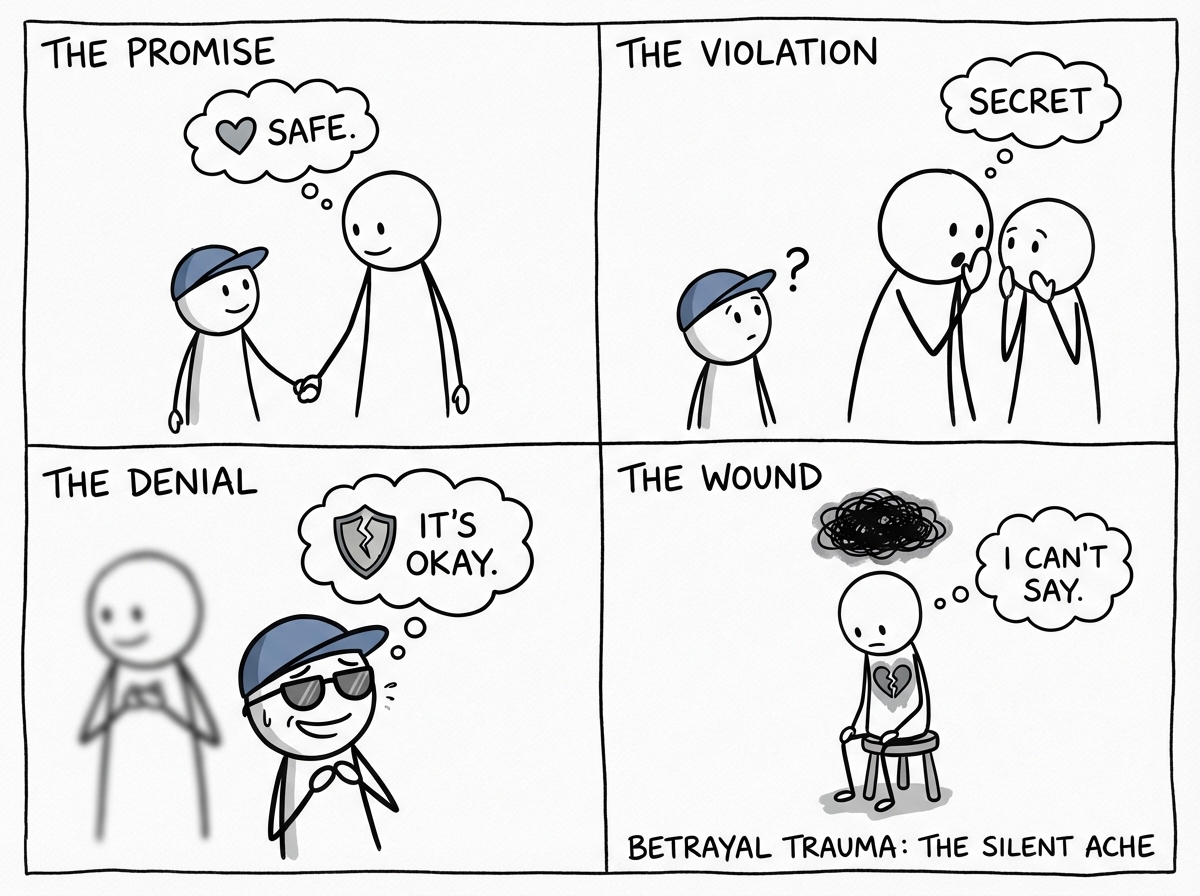
Betrayal trauma, a term coined by psychologist Jennifer Freyd, describes what happens when someone you rely on for survival -- a parent, partner, or institution -- violates your trust. What makes betrayal trauma distinct from other traumas is the impossible bind it creates: you need the person who hurt you. Freyd's Betrayal Trauma Theory explains that in these situations, the mind may suppress awareness of the betrayal itself, not because the person is weak, but because full awareness would threaten a relationship they depend on for safety, shelter, or emotional survival. This is why children often do not recognize abuse until adulthood, and why partners in abusive relationships can struggle to see what others see clearly from the outside. The betrayal is not just an event -- it fractures your ability to trust your own perceptions. Victims often describe feeling like the ground shifted beneath them, because the person who was supposed to be safe became the source of danger. Recovery requires rebuilding not just trust in others, but trust in your own reality -- the ability to believe what you saw, felt, and experienced.
The deepest betrayals do not just break your trust in the other person -- they break your trust in your own perception of reality.