The Inheritance No One Asked For
A family passes down a heavy, unmarked box through generations -- each person receiving it, struggling under its weight, but never opening it to see what's inside.

The patterns and wounds passed down without words.
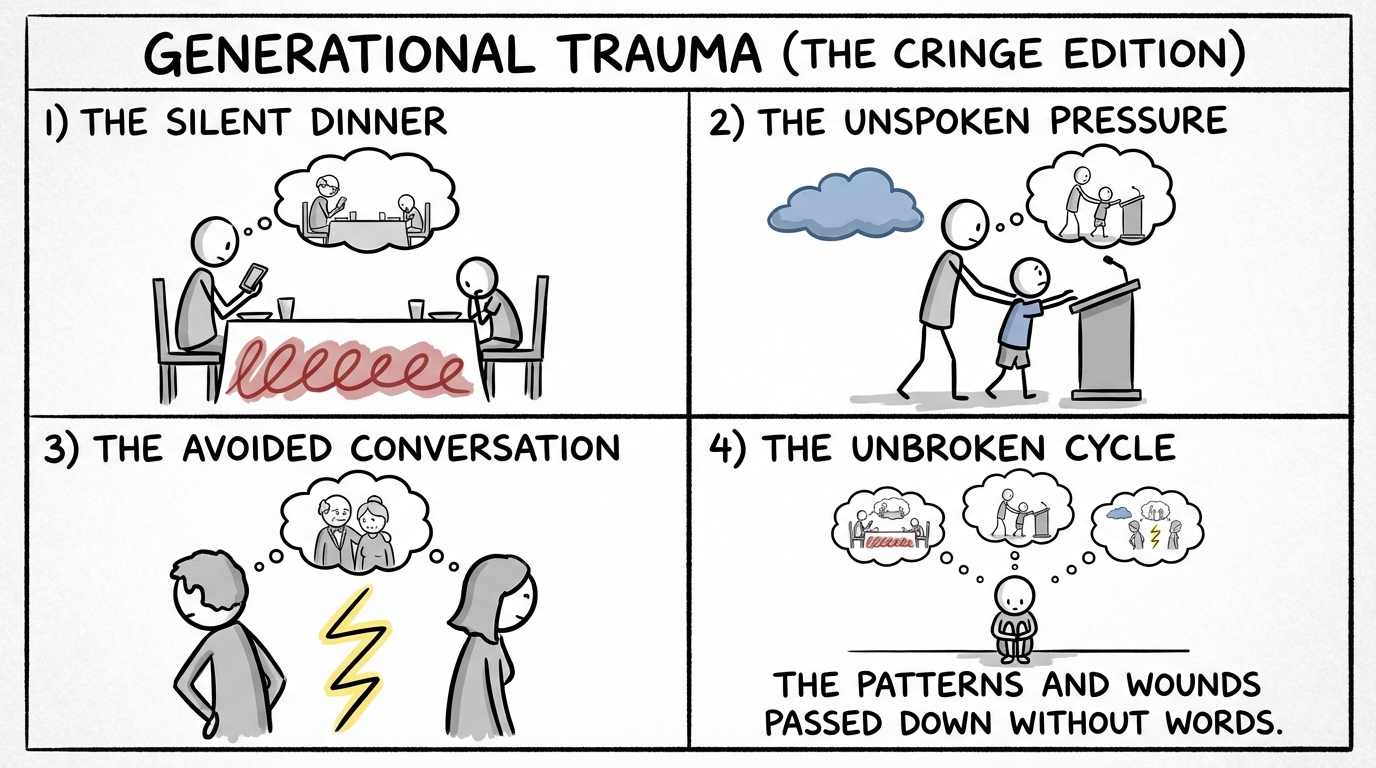
Generational trauma -- sometimes called intergenerational or transgenerational trauma -- refers to the emotional wounds, coping patterns, and unresolved pain that get passed down from one generation to the next, often without anyone naming what's happening. Your grandmother's unprocessed grief becomes your mother's anxiety, which becomes your chronic people-pleasing. It moves through families not in dramatic revelations but in the small, quiet ways: the things that are never talked about, the emotions that aren't allowed, the survival strategies that made sense in one generation but become cages in the next. Researchers like Rachel Yehuda have studied how trauma can even alter gene expression through epigenetic changes, showing that the effects of overwhelming stress can literally be passed down biologically. But most generational trauma travels through behavior -- through parenting styles shaped by pain, through emotional unavailability rooted in survival, through rigid family rules that once protected someone but now just restrict. You might carry grief you can't explain, fears that don't match your own experiences, or patterns you keep repeating despite knowing better. Understanding generational trauma isn't about blaming your parents or their parents -- it's about recognizing that you can be the generation that finally looks inside the box, names what's there, and chooses something different.
You did not choose what was passed down to you, but you can be the generation that opens the box, names what is inside, and chooses something different.
A stick figure holding a heavy inherited box, finally sitting down and saying 'I want to understand what I have been carrying'
The stick figure opening the box and finding labeled items: 'silence about feelings,' 'anger instead of grief,' 'never ask for help'
The stick figure carefully choosing which items to keep and which to set down, saying 'This served you. It does not serve me'
The stick figure handing a much lighter box to the next generation, with a label that reads 'You are allowed to feel'