The Eight-Year-Old Therapist
A child sits in a therapist's chair while their parent lies on the couch, venting about their problems -- a cartoon depiction of what it looks like when a child is forced into the role of emotional caretaker.

When you had to be the responsible one before you were old enough to be -- and the cost you are still paying.
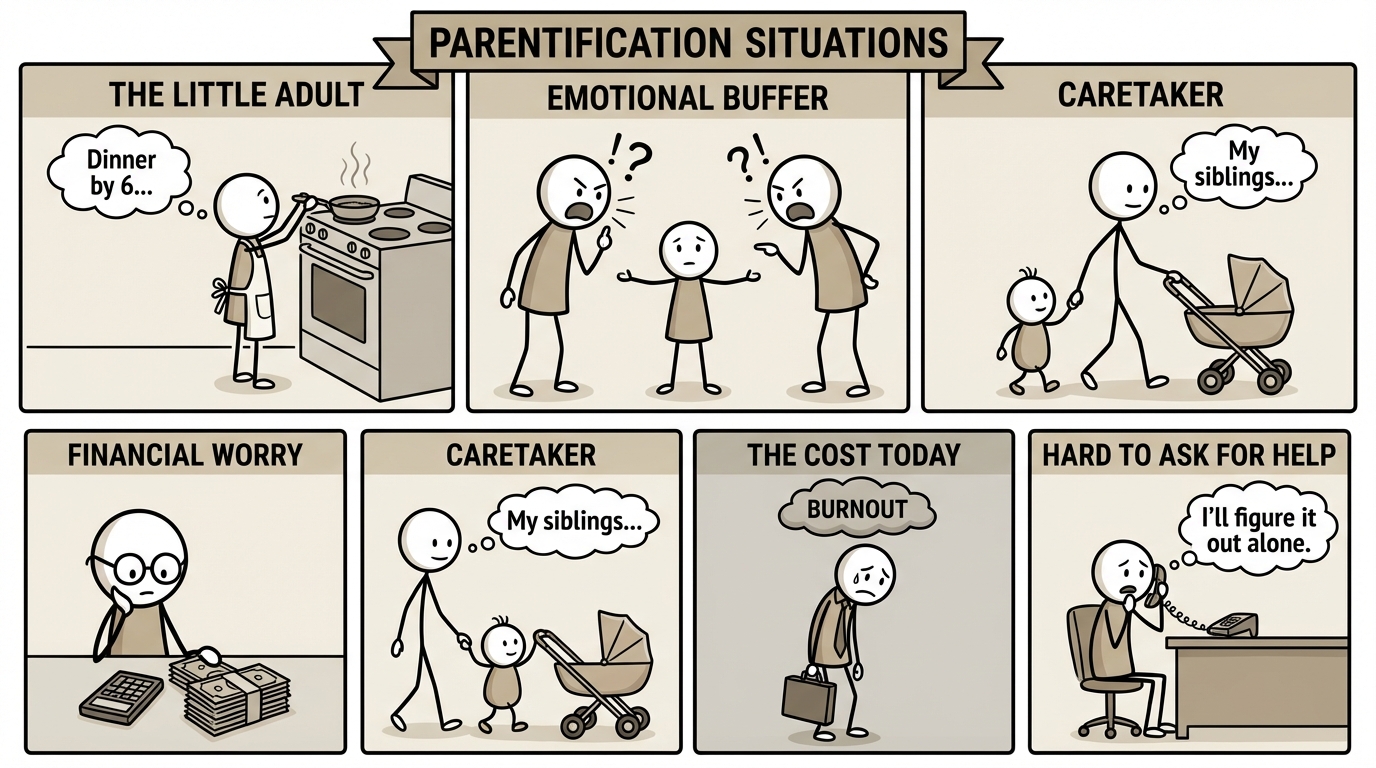
Parentification is a role reversal in which a child is put in the position of meeting the emotional or practical needs of a parent or the family system. Instead of being cared for, the child becomes the caretaker. There are two forms. Instrumental parentification involves taking on adult responsibilities like cooking, cleaning, managing finances, or caring for younger siblings -- essentially running the household. Emotional parentification is subtler and often more damaging: the child becomes the parent's confidant, therapist, mediator, or emotional regulator. They listen to adult problems, manage a parent's moods, keep secrets, or take on the burden of holding the family together emotionally. Parentified children are often described as mature, responsible, and wise beyond their years. These are compliments that mask a deeper truth: the child was forced to skip their own developmental needs to serve someone else's. The long-term effects include chronic caretaking in adult relationships, difficulty identifying your own needs, guilt when prioritizing yourself, burnout, resentment, and a deep sense that your worth is tied to what you do for others. Healing from parentification means learning that you are allowed to have needs, that rest is not laziness, and that you do not have to earn your place in every room by being useful.
Healing from parentification means learning that you are allowed to have needs, that rest is not laziness, and that your worth exists apart from what you do for others.
A stick figure about to jump in and fix a friend's crisis, then pausing and asking themselves 'Is this my responsibility or my old pattern?'
The stick figure sitting down instead of fixing, saying 'I care about you, but I am not the right person to solve this'
The stick figure doing something just for themselves -- reading a book, taking a walk -- while their phone shows an unread message they have chosen to answer later
The stick figure looking in a mirror with a gentle expression, a thought bubble reading 'I matter even when I am not useful'