The Rest Allergy
A person tries to rest but has a full allergic reaction to doing nothing, breaking out in productivity hives before realizing rest is a skill they were never taught.

Why doing nothing feels so dangerous.
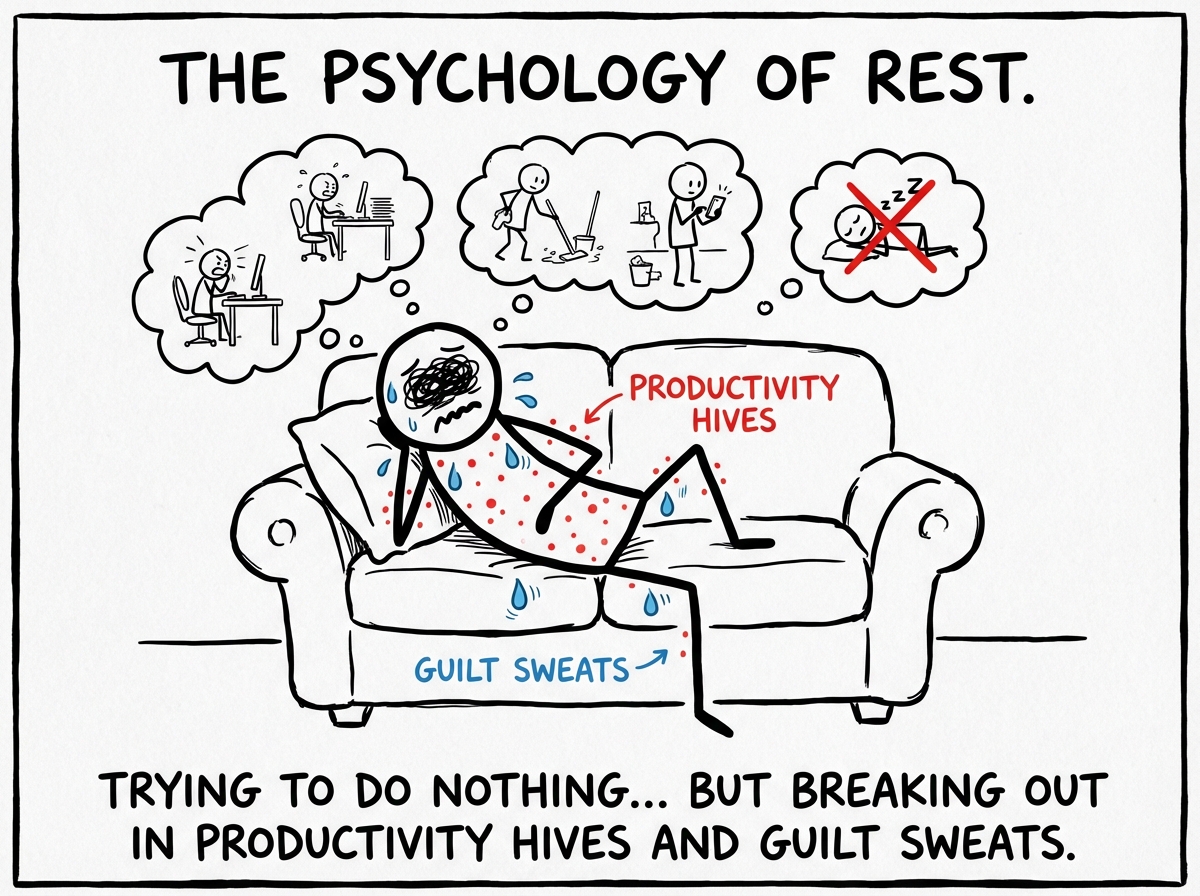
The psychology of rest reveals something uncomfortable: for many people, stillness is not relaxing -- it is terrifying. If your sense of self-worth is built on productivity, doing nothing feels like disappearing. If you grew up in chaos, quiet feels like the calm before the storm. If control is how you manage anxiety, surrendering to rest means surrendering to vulnerability. Rest requires a kind of psychological safety that many people have never learned to feel. It demands that you trust the world will not fall apart if you stop holding it together for an hour. Neuroscience shows that genuine rest activates the default mode network -- the brain's system for self-reflection, creativity, and emotional processing -- but only if you actually let go. Filling every pause with podcasts, scrolling, or mental to-do lists is not rest. It is productivity wearing a costume.
If rest feels dangerous, that is not a sign you need to keep going -- it is a sign your nervous system never learned that stillness is safe.