The Compass That Points Everywhere
A person holds a compass that spins wildly because they have asked everyone else for direction so many times they lost their own internal north, until they finally stop asking and the needle settles.

The ability to rely on your own judgment, feelings, and instincts -- and what happens when that internal compass breaks.
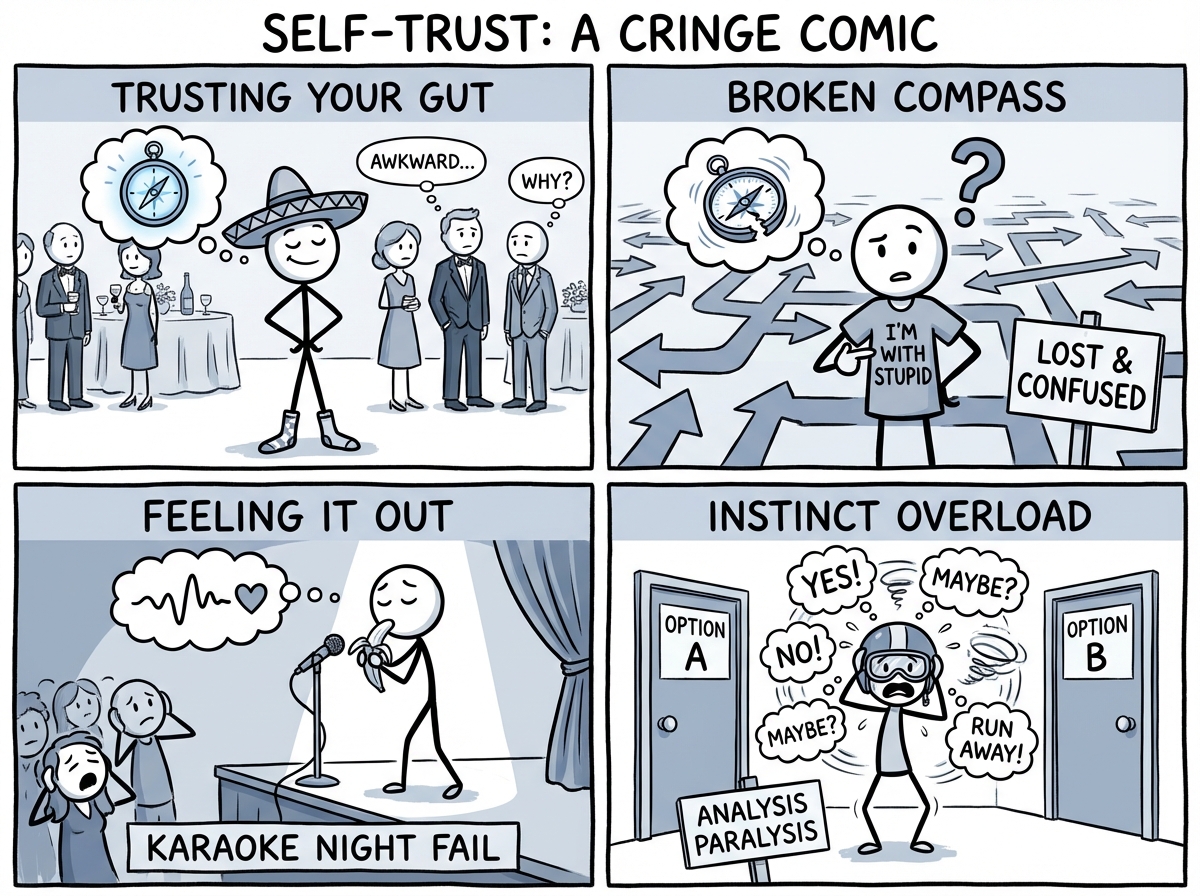
Self-trust is the quiet confidence that you can rely on your own perceptions, make decisions that align with your values, and recover from mistakes. It sounds simple, but it is one of the most commonly damaged psychological capacities. Psychologist Carl Rogers described self-trust as central to the 'fully functioning person' -- someone who uses their own organismic experience as a reliable guide for living. But self-trust erodes in predictable ways: growing up with a parent who told you your feelings were wrong, being in a relationship with someone who gaslit your reality, living in a system that punished your instincts. Each time you were told that what you felt was not real, or that what you wanted was selfish, a small piece of your internal compass was demagnetized. The result is a person who can generate twelve pros-and-cons lists but cannot make a decision, who polls every friend before trusting their own gut, who second-guesses every choice the moment it is made. Rebuilding self-trust requires what Rogers called unconditional positive self-regard -- learning to treat your own inner signals with curiosity and respect rather than suspicion. It means making small promises to yourself and keeping them, tolerating the discomfort of not knowing if you are right, and slowly discovering that your own voice was there the whole time, just buried under everyone else's.
You did not lose your inner compass -- it was buried under years of being told that everyone else's direction mattered more than yours.