The Armor in Bed
A person wearing a full suit of emotional armor during an intimate moment discovers that protection and connection cannot occupy the same space -- and begins the terrifying work of removing one piece at a time.

Why letting someone truly see you feels more dangerous than almost anything else you will ever do.
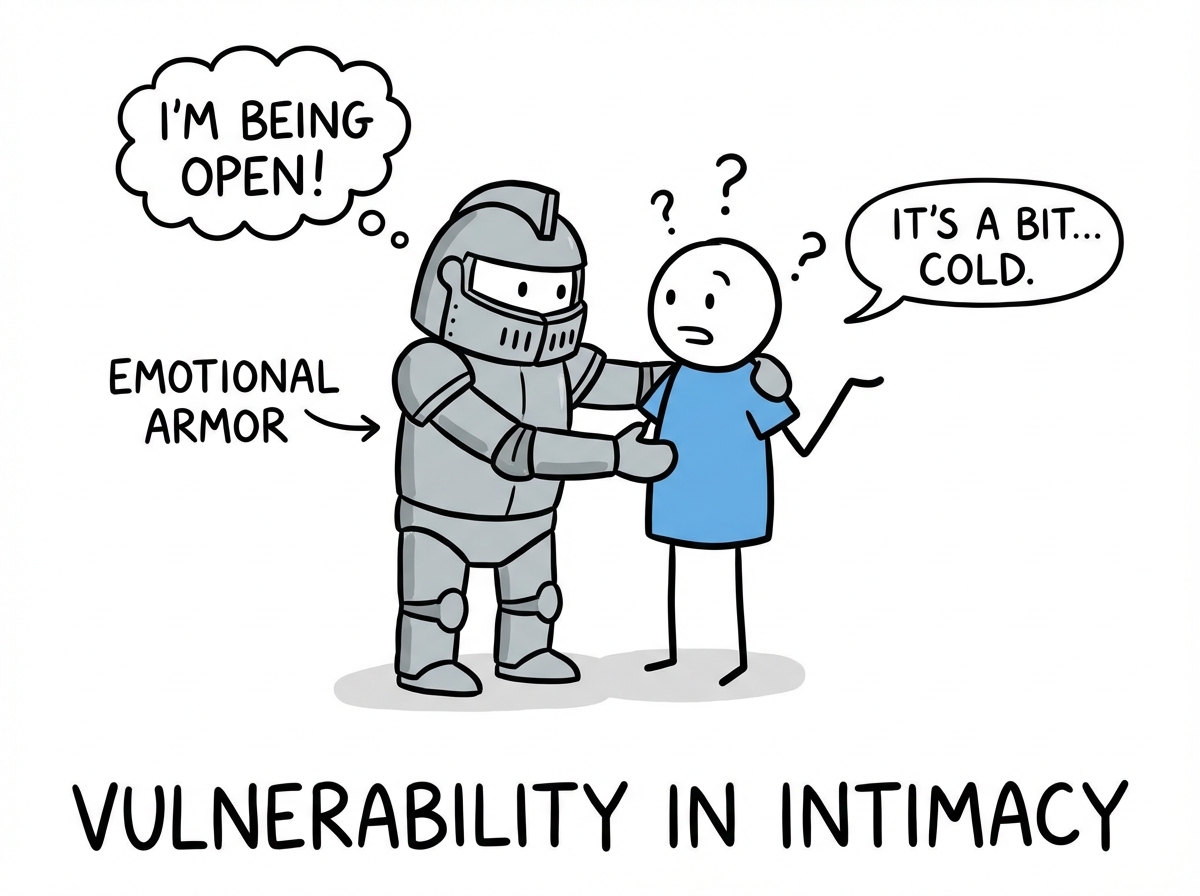
There is a reason people will skydive, give a speech to a thousand strangers, or start a business before they will let a partner see them cry. Physical risk is one thing. Emotional exposure is another. Vulnerability in intimacy means allowing yourself to be seen without your armor -- without the curated version of yourself, without the performance, without the exit strategy. It is showing someone your actual needs, your fears, your body without apology, your desire without pretending you do not care. For many people, this feels more threatening than any external danger because the stakes are deeply personal: if you show someone who you really are and they turn away, there is nowhere left to hide. This fear often has roots in early attachment. If your caregivers responded to your vulnerability with dismissal, ridicule, or unpredictability, your nervous system filed 'being seen' under 'threat.' Now, in adult relationships, the moment things get emotionally or physically intimate, your defenses activate -- humor, deflection, control, withdrawal, or going through the motions while keeping your real self safely locked away. The paradox is that the connection you want requires exactly the thing that terrifies you. Intimacy without vulnerability is just proximity.
Intimacy without vulnerability is just proximity -- real connection requires letting someone see you without the armor.