
The Anxious-Avoidant Dance
Part of the Attachment Styles in Dating Scenarios series (Part 3)
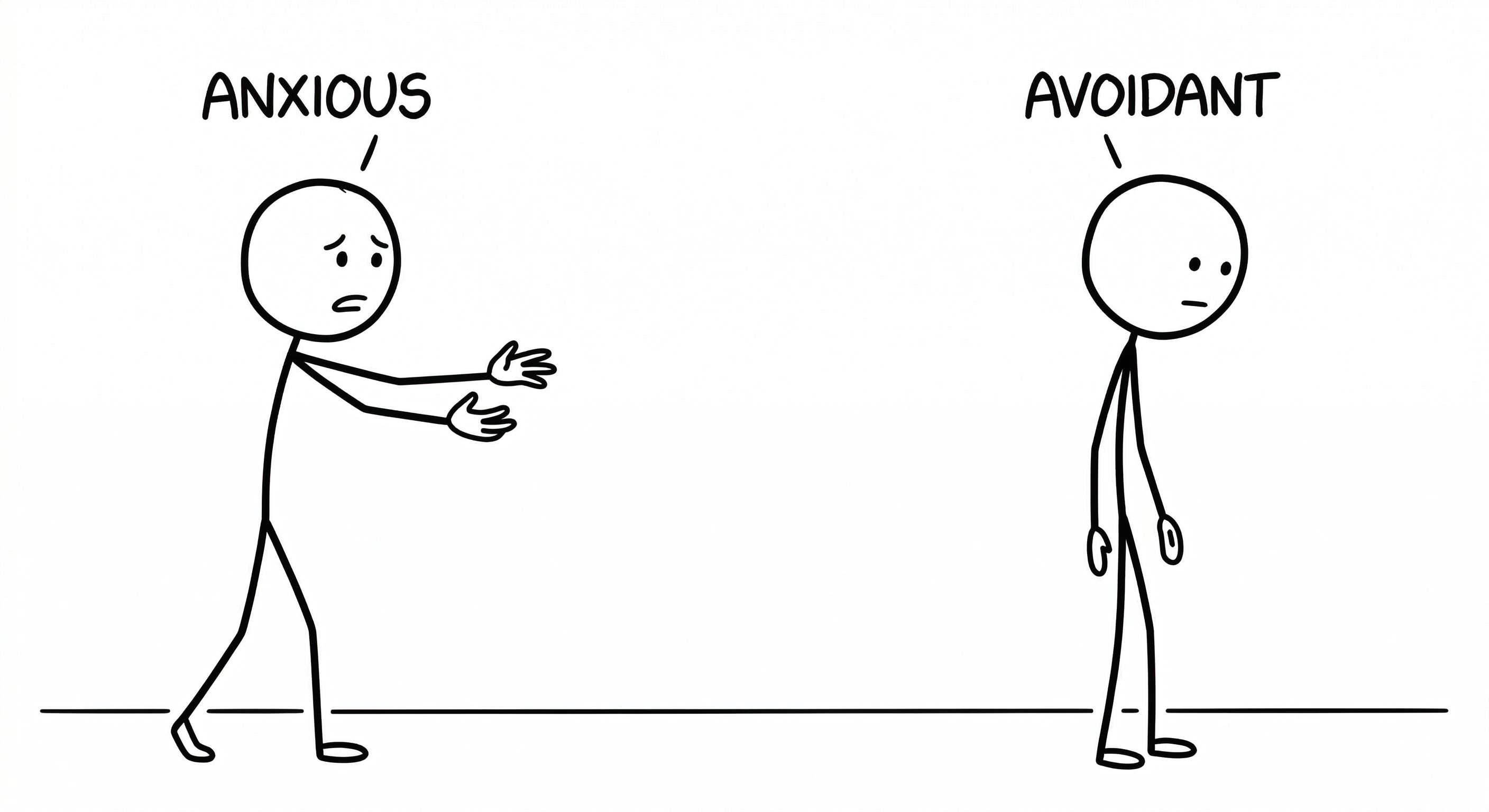
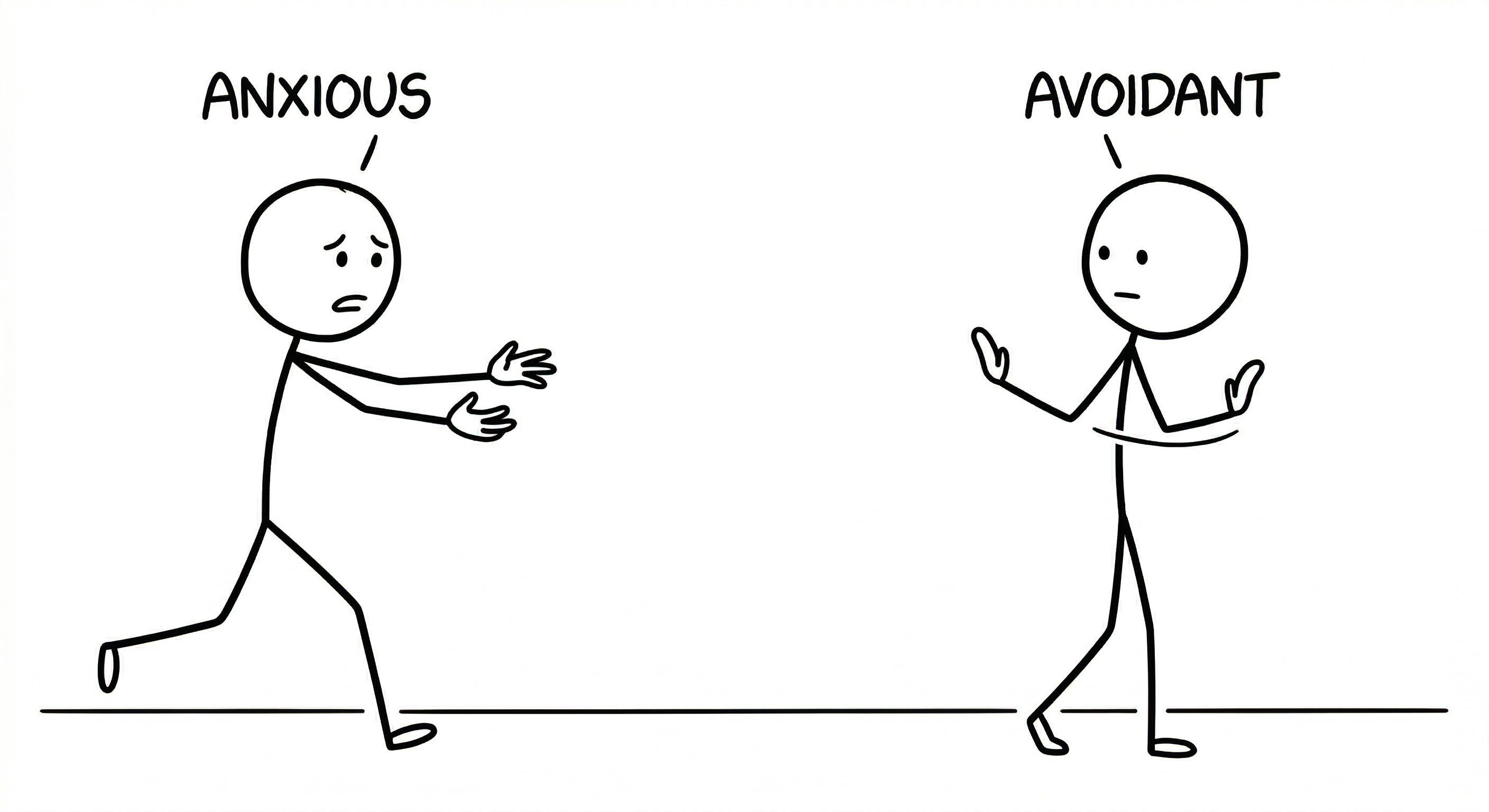
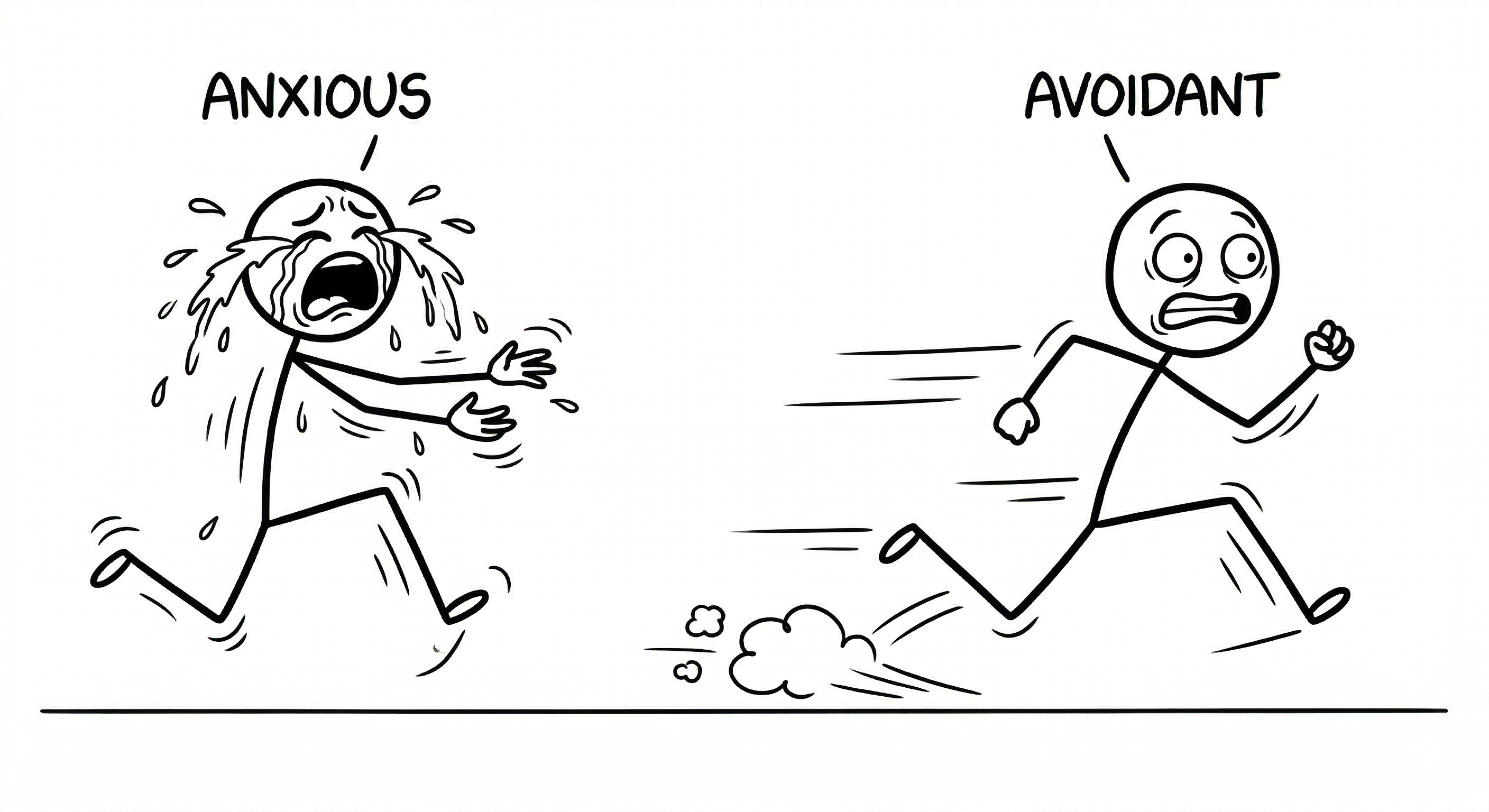
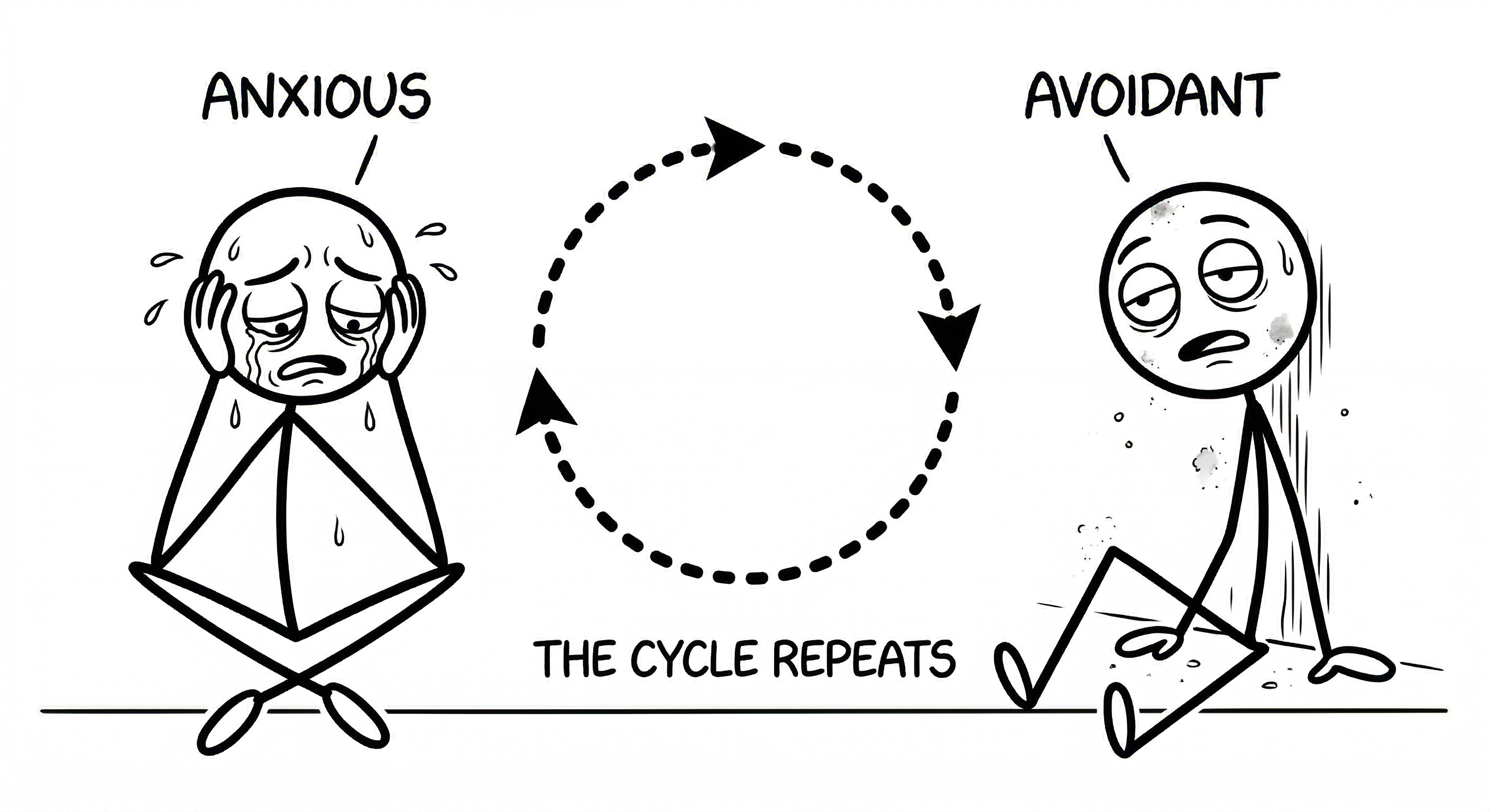
The classic push-pull dynamic between anxious and avoidant attachment styles, where one person chases while the other retreats in an exhausting cycle.
Explanation
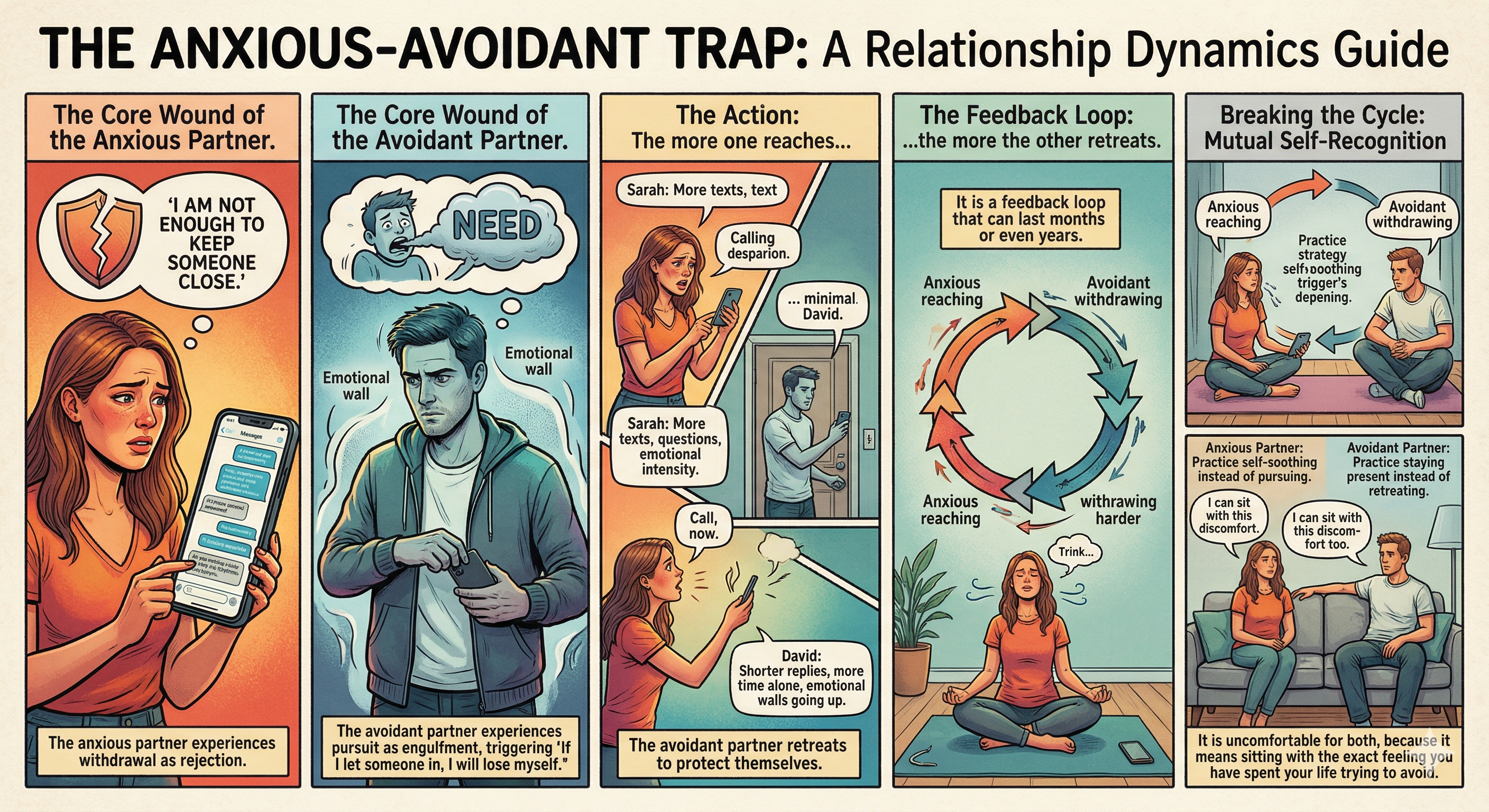
It is the most common toxic relationship dynamic in attachment theory, and if you have lived it, you know exactly how exhausting it is. One person reaches for connection (the anxious partner), and the other pulls away to protect themselves (the avoidant partner). The more one reaches, the more the other retreats. The more one retreats, the more desperately the other reaches. It is a feedback loop that can last months or even years. The anxious partner experiences the avoidant's withdrawal as rejection, which activates their core wound: 'I am not enough to keep someone close.' They respond by pursuing harder -- more texts, more questions, more emotional intensity. The avoidant partner experiences this pursuit as engulfment, which activates their core wound: 'If I let someone in, I will lose myself.' They respond by withdrawing further -- shorter replies, more time alone, emotional walls going up. Each person's coping strategy is the exact thing that triggers the other person's deepest fear. Breaking this cycle requires both people to recognize their own pattern rather than blaming the other. The anxious partner needs to practice self-soothing instead of pursuing, and the avoidant partner needs to practice staying present instead of retreating. It is uncomfortable for both, because it means sitting with the exact feeling you have spent your life trying to avoid.
Key Takeaway
The anxious-avoidant cycle only breaks when both people stop reacting to their fear and start responding to reality.
Both stick figures stopping mid-chase, each recognizing their own pattern with thought bubbles: 'I am chasing' and 'I am running'
The anxious figure sitting with their discomfort instead of texting again, hands in lap, breathing slowly
The avoidant figure staying on the couch during an emotional conversation instead of leaving the room, looking uncomfortable but present
Both figures sitting at a comfortable distance, each with their own space but facing each other, tension replaced by calm