6 steps
How to Work With Your Attachment Style
Understand your attachment pattern and begin building more secure ways of connecting with the people you love.

How your early bonds shape the way you love, fight, and connect in adult relationships.
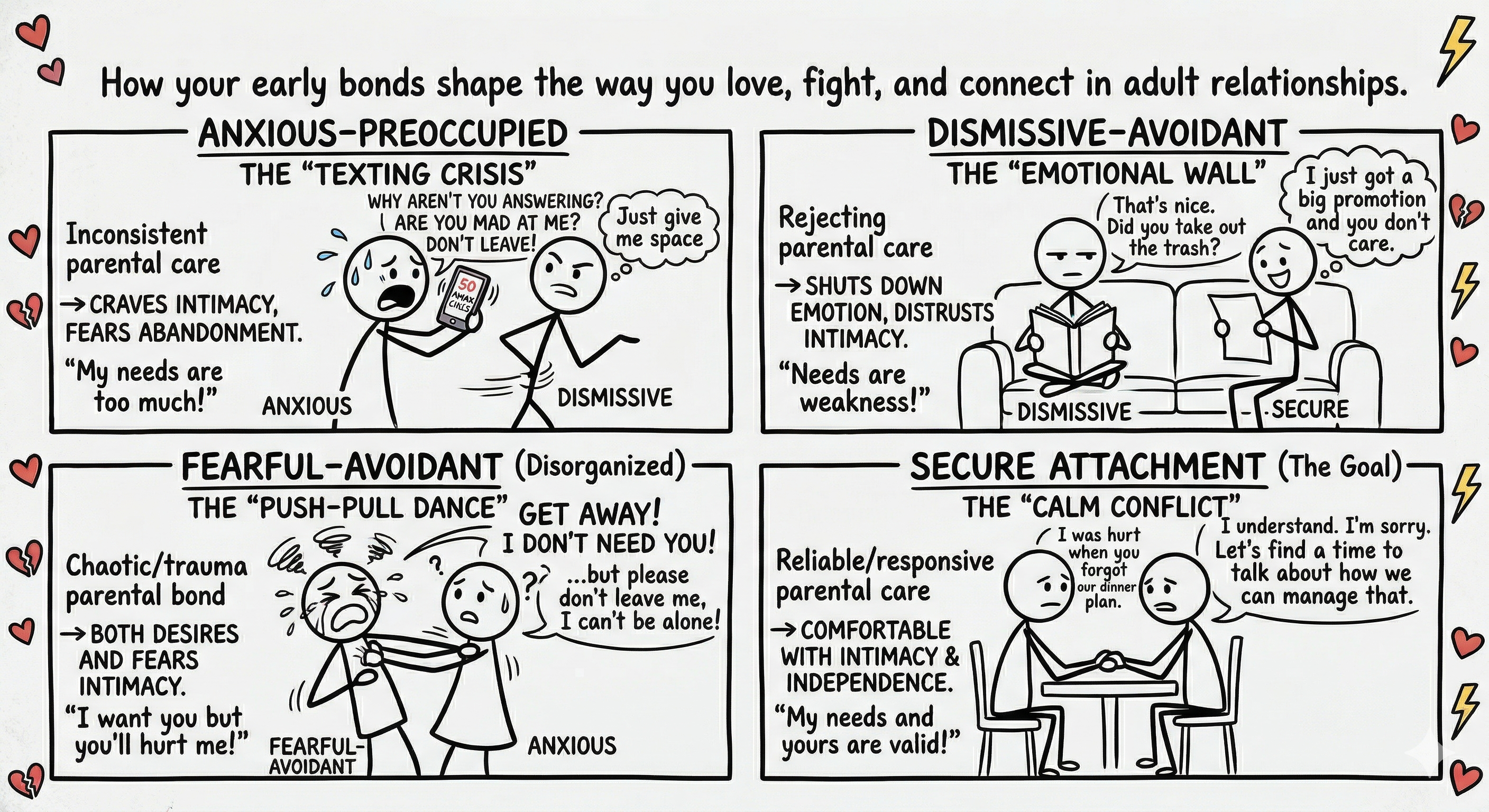
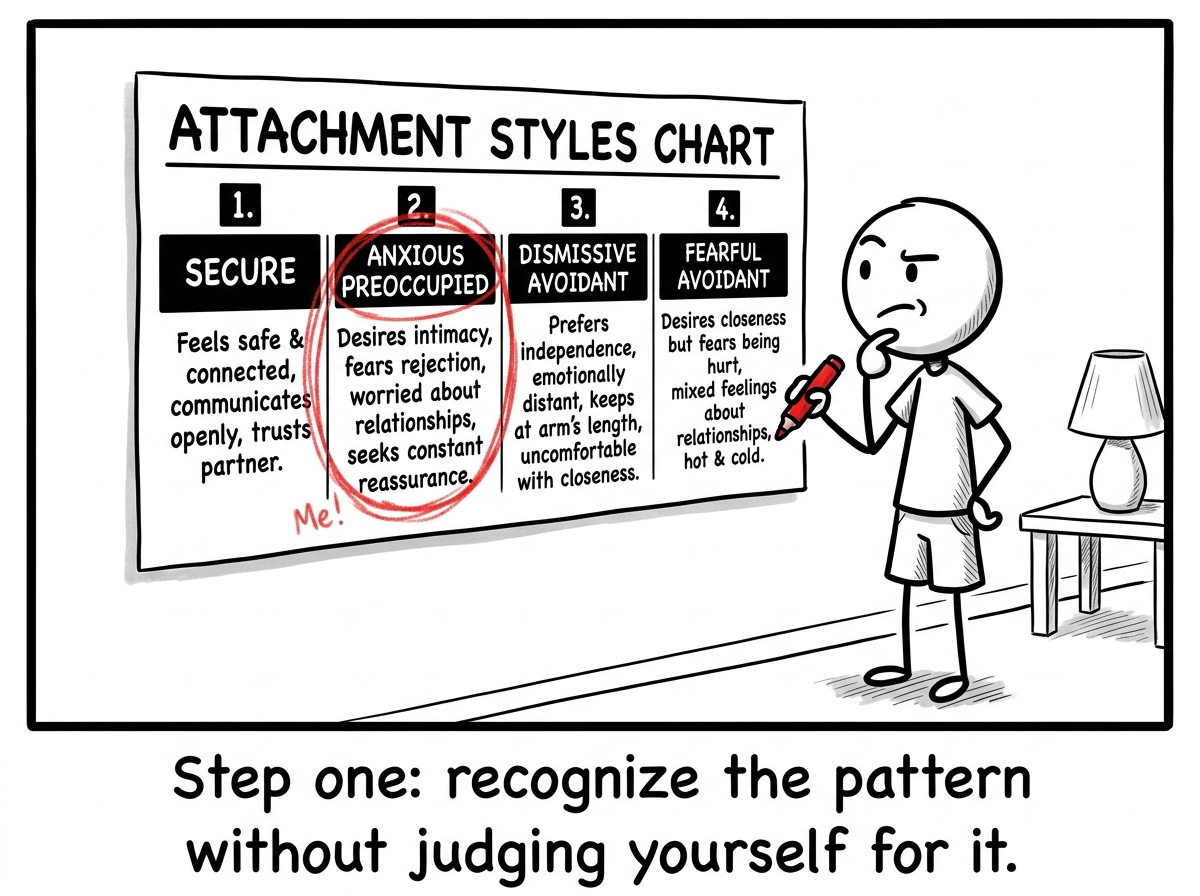
Attachment theory, originally developed by John Bowlby and later expanded by Mary Ainsworth, describes how the bonds we form with caregivers in early life create templates for how we relate to others as adults. There are four primary attachment styles: secure, anxious (also called anxious-preoccupied), avoidant (dismissive-avoidant), and disorganized (fearful-avoidant). Secure attachment looks like comfort with intimacy and independence. Anxious attachment shows up as a deep fear of abandonment and a constant need for reassurance. Avoidant attachment manifests as emotional distancing and discomfort with closeness. Disorganized attachment is a confusing mix of both craving and fearing intimacy. Understanding your attachment style is not about labeling yourself -- it is about recognizing patterns so you can consciously build healthier connections.
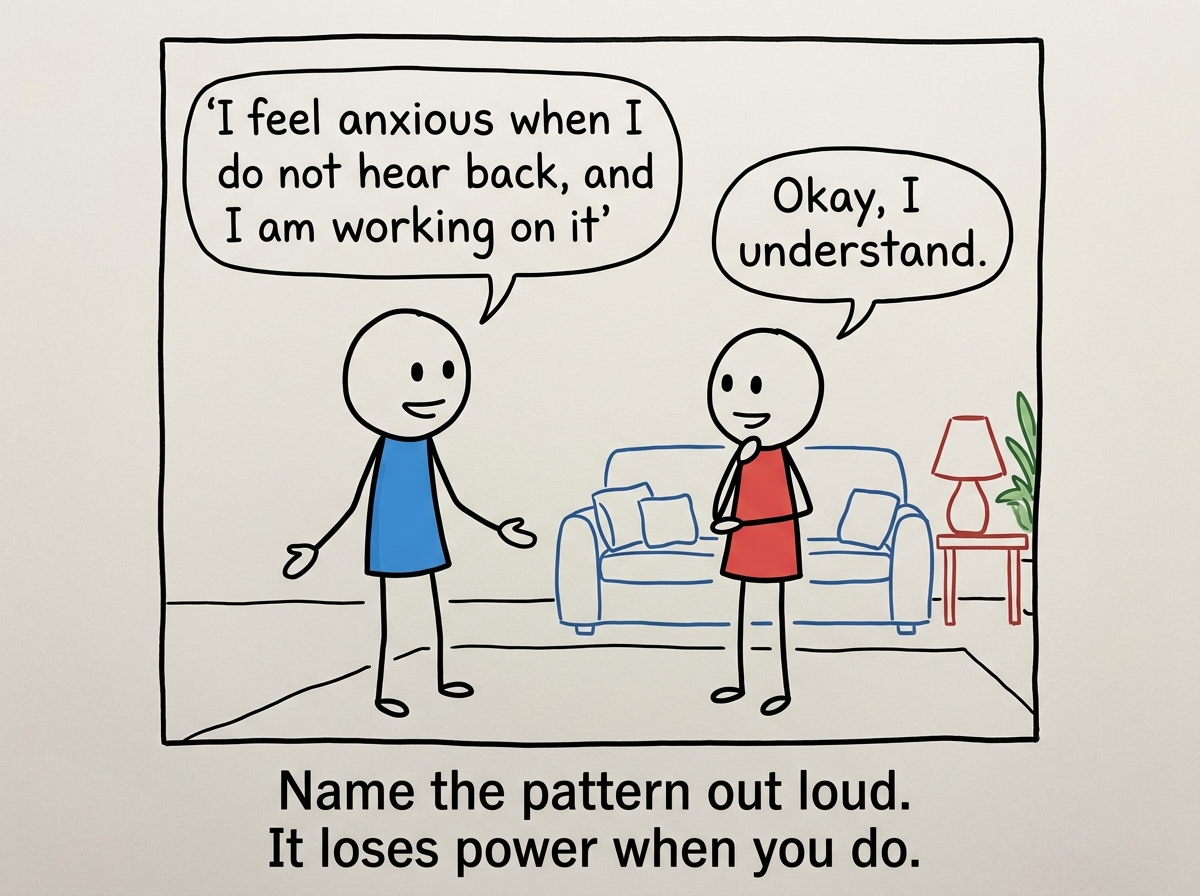
Understanding your attachment style is not about labeling yourself -- it is about recognizing your patterns so you can choose a different response.
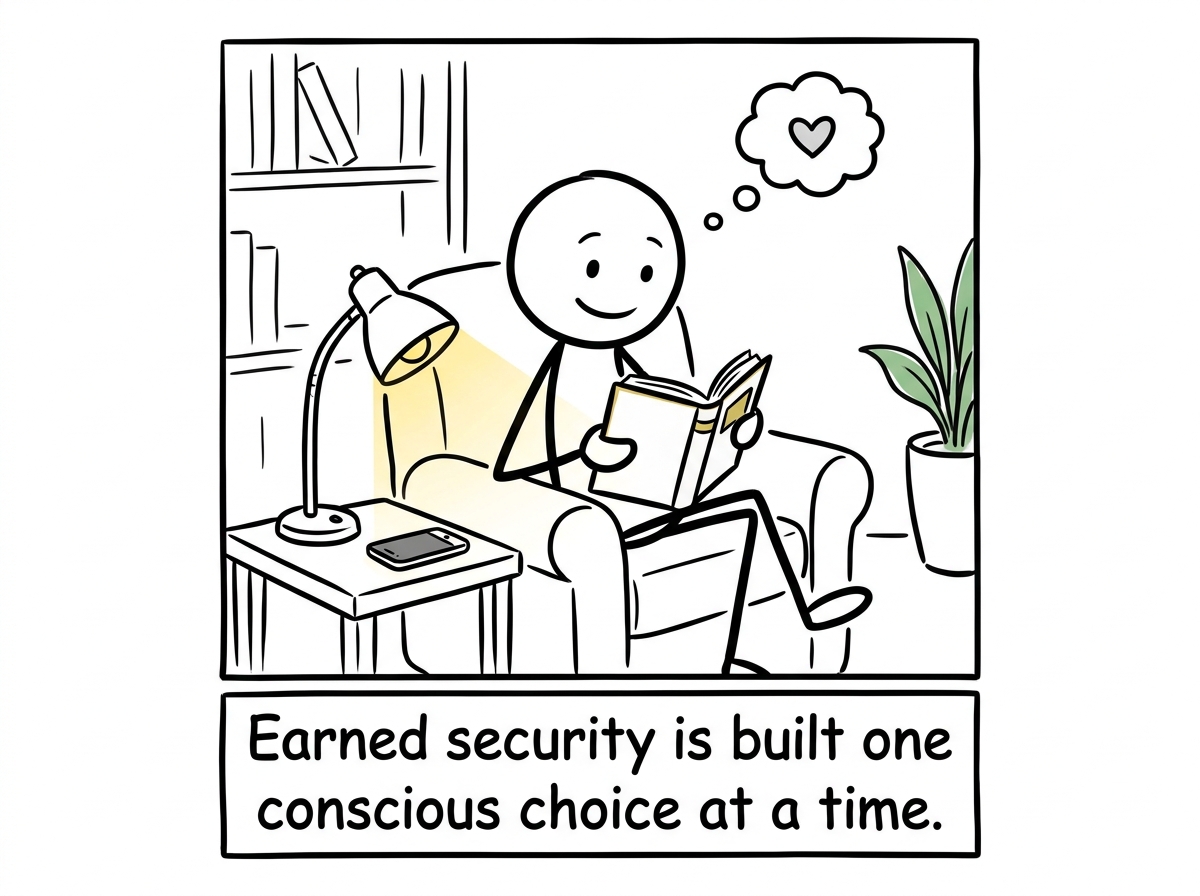
A person with secure attachment handles the same situations that trigger anxious and avoidant patterns -- with calm, clarity, and self-assurance.
The classic push-pull dynamic between anxious and avoidant attachment styles, where one person chases while the other retreats in an exhausting cycle.
A person with avoidant attachment pulls away after a moment of genuine emotional closeness, leaving their partner confused about what went wrong.
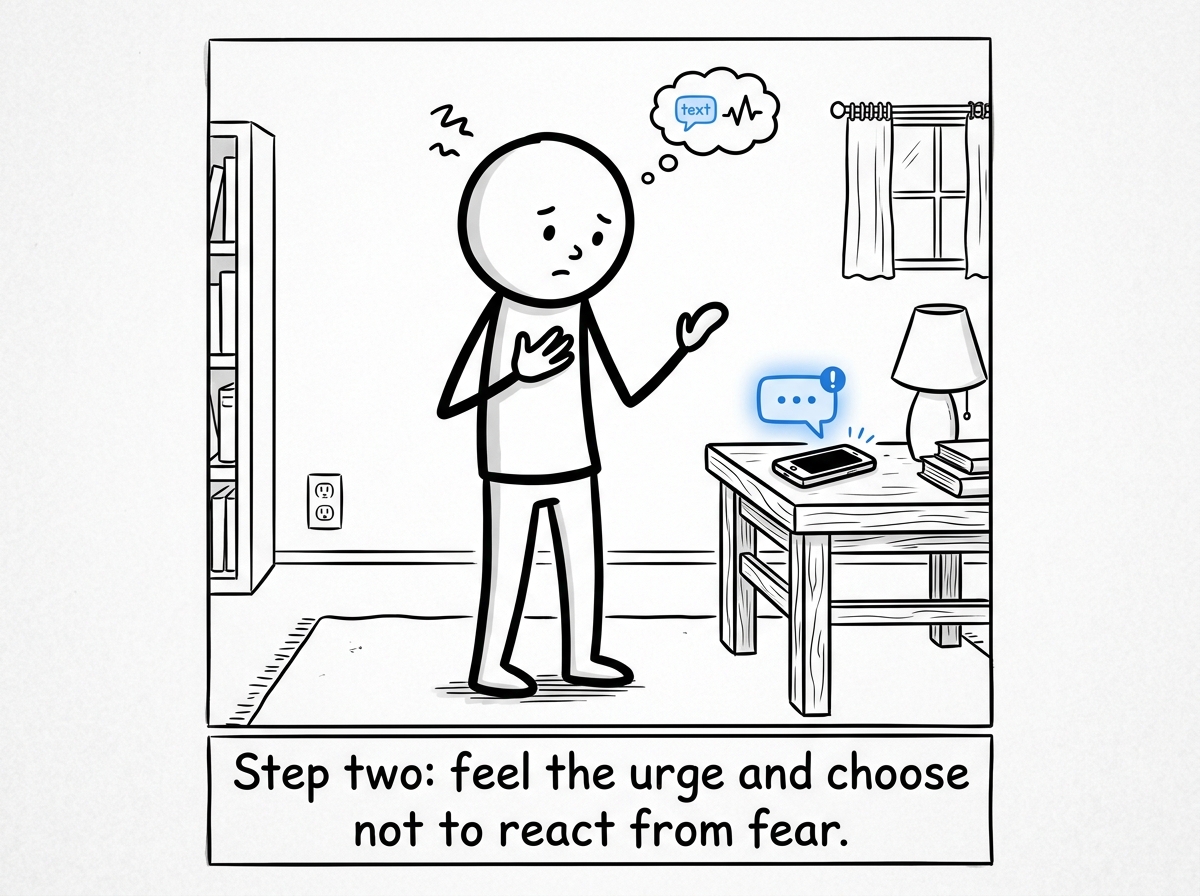
A person with anxious attachment checks their phone obsessively after sending a text, spiraling through worst-case scenarios when they don't get an immediate reply.
Curated videos to deepen your understanding of attachment styles.
How the anxious-avoidant push-pull cycle works and practical ways to break the pattern and build safety in the relationship.
Practical guidance for partners of someone with anxious attachment on how to respond with empathy and create security.
Practical guidance for partners of someone with avoidant attachment on how to approach closeness without triggering withdrawal.
A personal account of healing anxious attachment patterns and moving toward secure attachment.
A clear breakdown of the key differences between dismissive-avoidant and fearful-avoidant attachment styles, and how each shows up in relationships.
Identifies the four warning signs that an avoidant partner is about to ghost, so you can recognize the pattern before it happens.